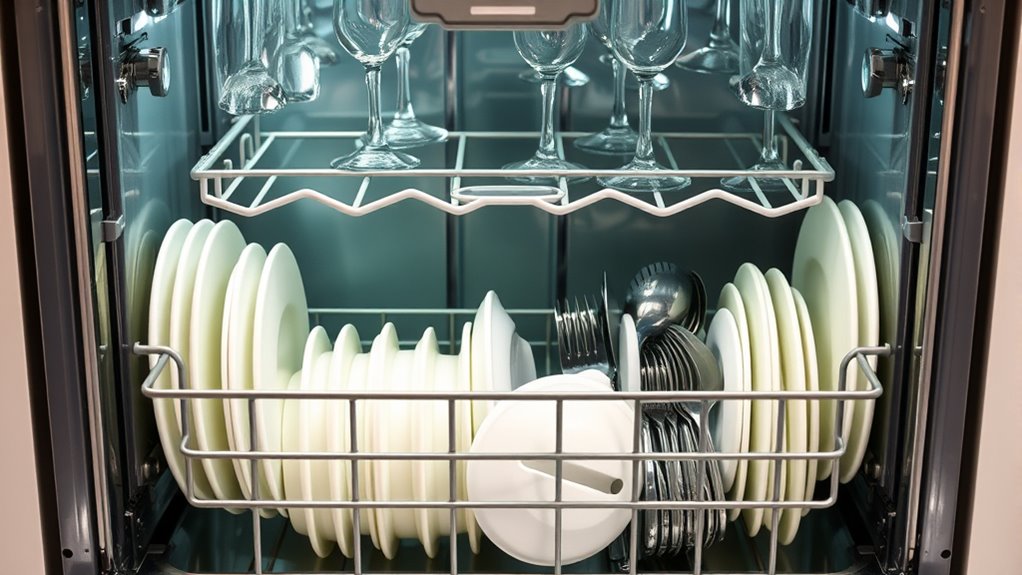

To load your dishwasher the right way and avoid overcrowding, place large pots and pans on the bottom rack, angled downward for water flow. Load glasses and mugs on the top rack, spaced apart. Tilt bowls and cups to prevent water pooling, and separate utensils to guarantee thorough cleaning. Avoid cramming items together, as this can block spray arms. Following these tips ensures spotless dishes, and there’s more to learn that can enhance your dishwasher experience!
Key Takeaways
- Arrange larger items like pots and pans on the bottom rack to maximize spray access and prevent overcrowding.
- Keep glasses and mugs on the top rack spaced apart to ensure effective cleaning and avoid blocking spray arms.
- Tilt bowls and cups to improve water flow and prevent pooling, ensuring all surfaces are cleaned thoroughly.
- Load silverware with handles down and knives with handles up to separate items and enhance cleaning efficiency.
- Avoid cramming dishes tightly; proper spacing allows water and detergent to reach all items effectively.
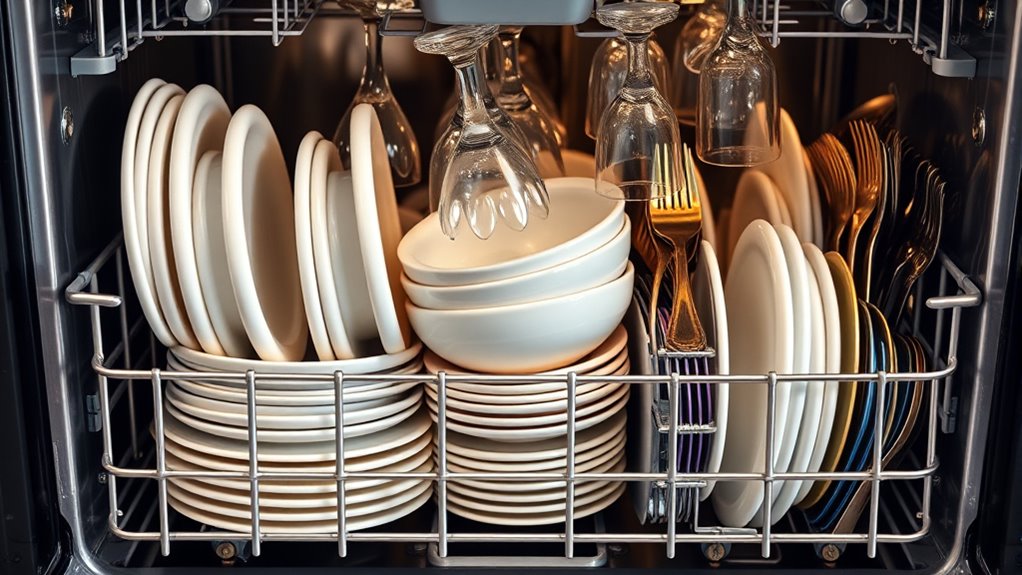
Loading a dishwasher may seem straightforward, but doing it right can make a big difference in how clean your dishes come out. When you load your dishwasher efficiently, you not only maximize its load capacity but also guarantee that each item gets the proper wash it needs. If you crowd your dishes together, you risk food particles sticking around and ending up with dirty plates after a full cycle.
First, think about the arrangement of your dishes. Place larger items like pots and pans on the bottom rack, where the spray arm has the most power. Make sure they’re angled downward, allowing water to flow freely. If you stack them too close together, you’re limiting the water’s ability to reach every surface. This is especially true for deeper bowls—position them at an angle to avoid trapping water inside.
On the top rack, load lighter items such as glasses, mugs, and smaller bowls. Avoid stacking them too closely together, as this can block the spray from getting to all surfaces. If your cups are jumbled, they might not come out clean, which defeats the purpose of using the dishwasher in the first place. Use the designated slots for items like utensils and knives, ensuring they’re placed in a way that prevents movement during the wash cycle.
Don’t forget about the silverware basket! It’s essential to load it correctly for maximum dishwasher efficiency. Place forks and spoons with their handles down, allowing the jets to clean the business ends effectively. Knives should go in handles up for safety and to avoid any potential damage to the blades. If you mix up items, they can easily nest together, which creates more spots for food to cling to.
Finally, be mindful of the dishwasher’s capacity. Overloading it can lead to poor cleaning performance. So, it’s better to run a second smaller load than to cram everything into one cycle. Your dishes will thank you for it. By paying attention to how you load your dishwasher, you increase its effectiveness, save time, and guarantee your dishes come out sparkling clean. The next time you load it up, remember these tips to get the best results every time. Additionally, understanding the importance of proper arrangement can further enhance your dishwasher’s performance.
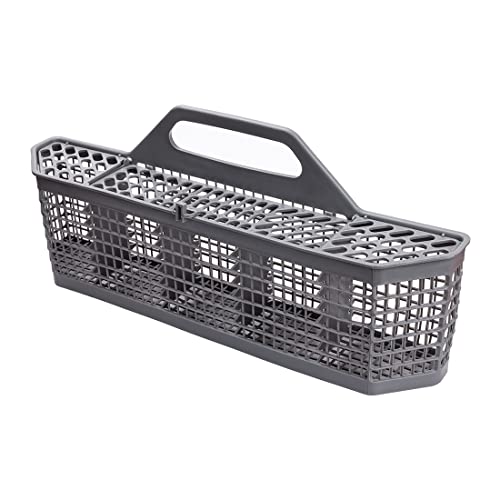
Universal Dishwasher Cutlery Basket Replacement WD28X10128 Dishwasher Utensil Silverware Basket, Compatible with Part No. AH959351, EA959351, PS959351, WD28X10127, WD28X10132
With three center square pockets and two corner pockets, this dishwasher under rack silverware basket has plenty of…
As an affiliate, we earn on qualifying purchases.
As an affiliate, we earn on qualifying purchases.
Frequently Asked Questions
Can I Wash Non-Dishwasher Safe Items in the Dishwasher?
You shouldn’t wash non-dishwasher safe items in the dishwasher. Many materials, like wood or certain plastics, can warp, crack, or get damaged due to high heat and moisture. Instead, stick to non-porous materials that are labeled as dishwasher safe. Always check the manufacturer’s guidelines to verify you’re protecting your items and maintaining dishwasher safety. If you’re unsure, it’s best to hand wash those delicate pieces to avoid any potential damage.
How Often Should I Clean My Dishwasher?
You should clean your dishwasher every month to guarantee ideal performance and hygiene. Establishing a cleaning schedule helps prevent buildup of food particles and odors. Start by removing and rinsing the filter, wiping down the interior, and running a vinegar cycle to eliminate any lingering smells. Regular dishwasher maintenance not only extends its life but also enhances the cleanliness of your dishes. Don’t neglect this task; it’s essential for a sparkling, efficient appliance!
What Detergent Works Best for Dishwashers?
When it comes to choosing the best dishwasher detergents, have you considered the type of cleaning agents that suit your needs? Look for detergents that contain enzymes to tackle tough stains and grease effectively. Brands like Finish and Cascade often receive high marks for their performance. Depending on your preferences, you might opt for powder, gel, or pods, but make sure to follow manufacturer recommendations for ideal results.
Is It Okay to Pre-Rinse Dishes Before Loading?
It’s not necessary to pre-rinse your dishes before loading. Most modern dishwashers are designed to handle food residue, so a quick scrape is usually enough for dishware preparation. Pre-rinsing can waste water and may even reduce the dishwasher’s effectiveness, as it can interfere with the detergent’s ability to cling to food particles. Instead, just load your dirty dishes directly and let the machine do the work. You’ll save time and resources!
How Can I Prevent Bad Odors in My Dishwasher?
To prevent bad odors in your dishwasher, you can use a few simple strategies. First, make certain proper ventilation by leaving the door slightly ajar after a cycle. This helps air circulate and reduces moisture buildup. You can also place odor absorbers, like baking soda or activated charcoal, inside the dishwasher to neutralize smells. Regularly cleaning the filter and running a vinegar cycle can also keep your dishwasher smelling fresh.

JoyJolt Savor Double Wall Insulated Glasses – Coffee Mugs (Set of 2) – 13.5-Ounces
SAVOR DAYS, EVERYDAY: Ahh, the comfort of the diner mug. Thick walled and narrow in the middle, it’s…
As an affiliate, we earn on qualifying purchases.
As an affiliate, we earn on qualifying purchases.
Conclusion
By loading your dishwasher the right way, you not only optimize space but also guarantee cleaner dishes. Did you know that properly loaded dishwashers can save up to 20 gallons of water per cycle compared to hand washing? So, next time you’re filling it up, remember to avoid crowding, place items strategically, and let your dishwasher do its magic. With these tips, you’ll enjoy spotless dishes while conserving water, making your kitchen routine more efficient.

100 Pcs Universal Silicone Dishwasher Rack Tine Prong Repair End Tip Caps, Dishwasher Rack Tine Repair Kit, Round End Caps, Shelf Organizer Tip Cap Wire Thread Protector Cover, Anti Slip,1 inch, White
Suitable Size: The size of white dishwasher rack tine repair end tip cap is about 3 mm/ 0.125"…
As an affiliate, we earn on qualifying purchases.
As an affiliate, we earn on qualifying purchases.
Universal Dishwasher Cutlery Basket Replacement WD28X10128 Dishwasher Utensil Silverware Basket, Compatible with Part No. AH959351, EA959351, PS959351, WD28X10127, WD28X10132
With three center square pockets and two corner pockets, this dishwasher under rack silverware basket has plenty of…
As an affiliate, we earn on qualifying purchases.
As an affiliate, we earn on qualifying purchases.