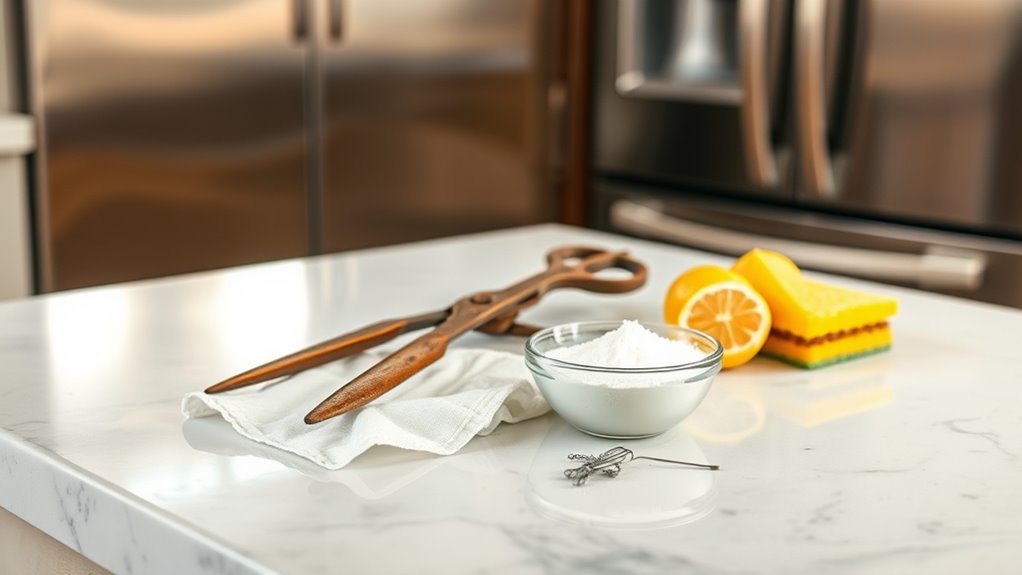

To remove rust from your kitchen tools and appliances, start by evaluating the severity of the rust. For surface rust, mix baking soda with water into a paste, apply it, and scrub with a soft cloth after 30 minutes. For stubborn rust, soak the item in white vinegar for a few hours, then scrub it with a brush or steel wool. Be sure to dry your tools thoroughly afterward to prevent future rusting. Find out more effective techniques next.

Get kitchen gear delivered free — and shop member deals
- Fast, free delivery on millions of items
- Access to Prime Big Deal Days deals on October 6–7
- Prime Video, Amazon Music and more included
Key Takeaways
- Assess rust severity by checking if it is surface-level or deeply ingrained before choosing a removal method.
- Use a baking soda paste on minor rust for 30 minutes, then scrub with a soft cloth or sponge.
- For stubborn rust, soak items in white vinegar for a few hours and scrub with a brush or steel wool.
- Rinse tools thoroughly post-removal and dry completely to prevent future rust formation.
- Apply a light coating of mineral oil or food-safe lubricant to protect tools from moisture.

Whether you’ve discovered rust on your favorite kitchen tools or want to prevent it from happening, tackling this problem quickly is essential. Rust can not only ruin the appearance of your tools but also affect their performance. Fortunately, you can easily address this issue with a few rust removal tips that’ll get your kitchen items back to their former glory.
Discovering rust on kitchen tools requires prompt action to preserve their appearance and functionality. Address the issue effectively with these simple tips.
First, assess the severity of the rust. If it’s just surface rust, you can often remove it with simple household items. Start by using a mixture of baking soda and water to create a paste. Apply this paste to the rusty areas and let it sit for about 30 minutes. Then, scrub the rust away using a soft cloth or a sponge. If the rust persists, you might want to switch to a more abrasive solution, like white vinegar. Soak the rusted item in vinegar for a few hours, then scrub it off with a brush or steel wool. Just be careful not to damage the surface of your tools in the process.
For stubborn rust spots, you might consider using commercial rust removers, which are specifically designed to tackle tough rust issues. Always follow the manufacturer’s instructions, and ensure you wear gloves to protect your skin. After removing the rust, make sure to rinse and dry the tools thoroughly. Leaving them wet can lead to more rust, which brings us to the next important point: preventing future rust.
To keep your kitchen tools in top condition and avoid rust formation, proper maintenance is key. After each use, make it a habit to wash and dry your tools immediately. Prolonged exposure to moisture is a leading cause of rust. Additionally, consider applying a light coating of mineral oil or food-safe lubricant on your metal items. This layer forms a barrier against moisture, helping to keep rust at bay. Regular maintenance routines can improve color accuracy in your kitchen tools, ensuring they perform optimally for longer.
Storing your kitchen tools correctly can also play a significant role in rust prevention. Avoid storing them in damp areas like under the sink or in a humid cupboard. Instead, keep them in a dry, well-ventilated space. If you live in an especially humid climate, consider using silica gel packets or a dehumidifier in your kitchen to minimize moisture.
Frequently Asked Questions
Can Vinegar Be Used to Prevent Rust Formation?
Yes, vinegar can be effective in preventing rust. Its acidic nature helps to create a barrier against moisture, which is essential for rust formation. You can use vinegar as a part of your rust prevention techniques by wiping down metal surfaces or soaking items in it before storage. Just make sure to dry them thoroughly afterward. Incorporating vinegar into your routine can considerably extend the life of your metal tools and appliances.
Is It Safe to Use Rusted Kitchen Tools for Food Preparation?
Using rusted kitchen tools for food preparation is like inviting a swarm of germs to your dinner party! The health risks associated with rust contamination can jeopardize your food safety. You wouldn’t want to serve your loved ones a side of rust, right? If you’re using tools that show signs of rust, it’s best to toss them aside or restore them. Protect your health and keep your kitchen safe—rust doesn’t belong in your meals!
What Are the Best Materials to Prevent Rust in Kitchen Appliances?
To prevent rust in your kitchen appliances, choose materials like stainless steel, which naturally resist corrosion. You can also look for appliances with rust resistant coatings that offer extra protection against moisture and stains. Regularly clean and dry your tools to maintain their longevity. By opting for these materials, you’ll keep your kitchen equipment looking great and functioning well, ensuring a safe and enjoyable cooking experience every time you step into the kitchen.
How Often Should I Check for Rust on Kitchen Tools?
You should check for rust on your kitchen tools at least once a month as part of your maintenance schedule. Regular inspections help you catch any signs of rust early, allowing for timely rust prevention measures. If you notice any discoloration or rough spots, address them immediately to keep your tools in top shape. Staying vigilant will prolong the life of your kitchen tools and maintain their performance.
Can Rust Affect the Taste of Food?
Rusty residue isn’t exactly a gourmet ingredient! It can definitely affect the taste of your food. When corrosion occurs, it can leach into your dishes, introducing metallic flavors that aren’t exactly appetizing. If you notice a hint of something off in your meals, it might be time to examine your kitchen tools. Keeping them rust-free ensures you’re serving up deliciousness without any unintended “flavor enhancers” from corrosion impact.
Conclusion
In conclusion, removing rust from your kitchen tools and appliances can be as satisfying as watching a seed bloom into a beautiful flower. With a little patience and the right techniques, you can restore your utensils to their former glory. Don’t let rust ruin your cooking experience; take action and breathe new life into your kitchen. Remember, a well-maintained tool not only enhances your culinary skills but also brings joy to every meal you create.
Evergreen bestsellers Picks
bestsellers
As an affiliate, we earn on qualifying purchases.