To maintain your vacuum’s peak performance, regularly clean or replace filters and brushes. Check filters every few months for dirt buildup or damage, and wash or swap them as needed—usually every 3 to 6 months. Remove hair and debris from the brushes often, ensuring they spin freely. Consistent upkeep keeps airflow smooth and suction strong. Keep going through these tips to discover even more ways to keep your vacuum running like new.

Get kitchen gear delivered free — and shop member deals
- Fast, free delivery on millions of items
- Access to Prime Big Deal Days deals on October 6–7
- Prime Video, Amazon Music and more included
Key Takeaways
- Regularly inspect and clean or replace filters every 3 to 6 months to maintain suction and air quality.
- Clean washable filters by rinsing with lukewarm water and ensuring they are completely dry before reinstallation.
- Detach and clear debris and tangled hair from the vacuum’s brush roll to improve dirt pickup and prevent clogs.
- Monitor filter condition and brush performance regularly, replacing filters and cleaning brushes as needed.
- Consistent maintenance prevents airflow issues, prolongs vacuum lifespan, and ensures optimal cleaning efficiency.
Understanding Your Vacuum’s Filters and Their Functions

Your vacuum’s filters play a crucial role in maintaining ideal cleaning performance, and understanding how they work is essential for effective maintenance. Different filter types, such as HEPA, foam, and carbon filters, serve specific purposes by trapping dust, allergens, and odors. HEPA filters, for instance, capture tiny particles, improving air quality. Some vacuums feature sensor functions that monitor filter status, alerting you when cleaning or replacement is needed. These sensors help guarantee filters aren’t clogged or ineffective, maintaining suction power and preventing airflow issues. Additionally, filter lifespan depends on proper maintenance and regular cleaning routines. Regularly inspecting and replacing filters can also prevent airflow problems, which is vital for preserving the vacuum’s overall performance. Proper knowledge allows you to keep filters functioning at their best, ensuring your vacuum cleans efficiently and maintains good indoor air quality. Being aware of filter material types can help you choose the most suitable replacements, extending the lifespan of your vacuum. Understanding filter efficacy can further optimize your maintenance routine, ensuring your vacuum operates at peak efficiency.
Identifying When to Clean or Replace Filters

How can you tell when it’s time to clean or replace your vacuum’s filters? Pay attention to any decrease in suction power, which often indicates the filter is clogged or reaching the end of its filter lifespan. If you notice persistent odors despite regular use, it’s a sign that the filter needs attention, as filters play a key role in odor elimination. Generally, filters should be replaced every 3 to 6 months, depending on usage and manufacturer recommendations. If your vacuum has washable filters, look for signs of dirt buildup or damage, and clean them as needed. Regularly filter maintenance is essential for maintaining optimal performance and air quality. Incorporating essential oil treatments during filter cleaning can also help freshen the air and improve overall environment quality. Ensuring proper energetic alignment with your cleaning routine can also enhance overall effectiveness. Additionally, staying informed about crypto market trends can help you make smarter decisions about your investments, especially during pump cycles. Regularly checking your filters for dirt buildup and replacing them when necessary ensures peak cleaning performance and maintains a fresh, odor-free environment.
Step-by-Step Guide to Cleaning Your Vacuum Filters

Cleaning your vacuum filters regularly guarantees peak performance and prolongs their lifespan. Start by removing the filter from your vacuum, and check the filter material—most are made of foam, HEPA, or pleated paper. Gently tap or brush off loose debris to avoid damaging the filter. If the filter is washable, rinse it under lukewarm water, ensuring you remove all trapped dirt. Avoid using harsh soaps or scrubbing too hard, which can harm the filter material. Let the filter air dry completely before reinstalling. Proper cleaning maintains airflow optimization, preventing clogging and loss of suction. Regular maintenance ensures your vacuum runs efficiently and extends the life of its filters. Additionally, understanding filter materials can help you choose the best cleaning method for your vacuum. For optimal results, consider the contrast ratio of your vacuum’s filtration system to assess its effectiveness in trapping fine particles. Being aware of common causes of filter clogging can also help you prevent frequent blockages and maintain better suction performance. To further enhance your vacuum’s efficiency, inspecting and cleaning the brush rolls and attachments regularly ensures optimal dirt removal. Also, checking the seal integrity of your vacuum can prevent loss of suction and improve cleaning performance.
Removing and Maintaining Vacuum Brushes
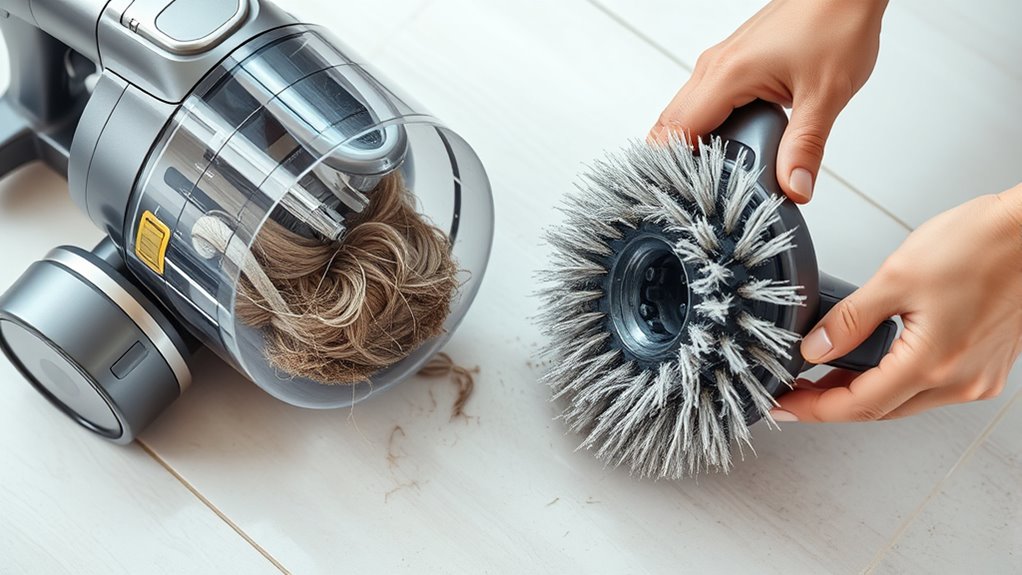
To keep your vacuum working efficiently, you need to remove and maintain the brush roll regularly. Start by detaching the brush and then clear out debris and hair tangled around it. This simple step guarantees your vacuum continues to pick up dirt effectively. Regular maintenance of the vacuum brushes ensures optimal performance and prolongs the lifespan of your appliance. Incorporating auditory feedback therapy principles, such as consistent monitoring of the brush condition, can help identify when maintenance is needed before performance declines. Additionally, paying attention to proper maintenance practices can prevent issues like clogged filters and ensure the vacuum functions at peak efficiency. Checking for dog hair and debris regularly is especially important if you have pets that shed, as this can impact the brush’s effectiveness and overall vacuum performance.
Detaching the Brush Roll
Removing the brush roll is an essential step in maintaining your vacuum cleaner’s effectiveness. To do this, locate the brush roll compartment and carefully detach it. This process allows for thorough brush removal and debris clearing, preventing clogs and ensuring optimal performance. Regularly inspecting and cleaning the brush roll can also help extend the lifespan of your vacuum maintenance routine. Once detached, inspect the brush for tangled hair or debris. Use your hands or tools to clear away anything obstructing the bristles. Proper brush removal keeps your vacuum running smoothly and extends its lifespan, similar to how deep-sky imaging requires careful calibration to maintain image quality. Incorporating timeless design principles into your maintenance routine can also make the process easier and more effective. Additionally, understanding product durability can guide you in selecting tools and methods that ensure long-lasting results. Regular maintenance not only preserves your vacuum’s performance but also helps avoid costly repairs over time.
Clearing Debris and Hair
After detaching the brush roll, it’s important to clear away any tangled hair, string, or debris that may have accumulated around the bristles. Left unchecked, dust accumulation can block airflow, reducing your vacuum’s efficiency. Carefully remove tangled hair and debris using your fingers or a brush, making sure to reach deep into the bristles. This prevents clogs that hinder airflow optimization, allowing your vacuum to perform at its best. Regularly clearing debris also prevents the brush from turning stiff or uneven, which can cause uneven cleaning and damage. Keep the brush area clean to maintain suction power and extend the lifespan of your vacuum. By staying on top of debris removal, you ensure your vacuum runs smoothly and cleans effectively every time.
Tips for Regular Brush and Filter Care

Regularly inspecting and cleaning your vacuum cleaner’s brush and filter is essential for ideal performance. Dust buildup on the brush can hinder its ability to pick up debris effectively, so remove hair, threads, and dirt frequently. A clogged filter reduces airflow, forcing the motor to work harder and shortening its lifespan. To maintain peak performance, clean or replace filters according to your manufacturer’s recommendations, typically every few months. Check the brush for tangled hair or debris and clear it promptly. Regular maintenance ensures your vacuum operates efficiently, prolongs the life of its components, and maintains strong suction power. Staying consistent with these care tips helps prevent performance issues and keeps your vacuum running smoothly. Incorporating simple home maintenance routines can further extend your vacuum’s effectiveness and your home’s overall cleanliness.
Troubleshooting Common Issues With Filters and Brushes

Are you noticing that your vacuum isn’t cleaning as effectively as it used to? Airflow obstruction is often the culprit, blocking suction and reducing performance. Check your filters for dirt buildup or damage, and guarantee they’re compatible with your vacuum model. If a filter isn’t fitting properly or is incompatible, airflow will be restricted, causing poor cleaning results. Inspect brushes for tangled hair or debris, which can also hinder cleaning. Regularly clean or replace filters according to manufacturer instructions to maintain ideal airflow. When troubleshooting, always verify filter compatibility before installing new ones, as using the wrong filter can cause more issues. Keeping filters clean and brushes free of obstructions helps your vacuum perform at its best and extends its lifespan.
Frequently Asked Questions
How Often Should I Replace My Vacuum Filters for Optimal Performance?
You should replace your vacuum filters every 3 to 6 months to guarantee maximum performance. Check the filter’s lifespan regularly, as factors like usage frequency and air quality can affect it. Following a consistent replacement schedule helps maintain suction power and air quality. If you notice reduced suction or a musty smell, it’s time to swap out the filter sooner. Regular replacement keeps your vacuum efficient and prolongs its lifespan.
Can I Wash All Types of Vacuum Filters Safely?
You can’t wash all types of vacuum filters safely because dust accumulation and filter compatibility vary. Check your vacuum’s manual first; many filters are washable, but some are not and could be damaged. For washable filters, rinse gently with water and let them dry completely before reinstalling. Never wash filters that are not designed for it, as doing so can reduce their effectiveness and cause dust buildup.
What Are Signs That My Vacuum Brushes Need Replacing?
Your vacuum brushes are like the beating heart of your cleaner. When you notice signs of brush wear, such as uneven rotation or tangled hair, it’s time to replace them. These issues can cause motor strain, making your vacuum work harder and less effectively. Don’t ignore the wobbling or reduced cleaning power—these are clues that your brushes have seen better days and need fresh life.
Are There Eco-Friendly Options for Vacuum Filters?
Yes, you can choose eco-friendly options like biodegradable filters and reusable filter options for your vacuum. These alternatives reduce waste and are better for the environment. Look for vacuum models that support reusable filters, which you can wash and reuse, or biodegradable filters that break down naturally. Switching to these options helps you maintain effective cleaning while being eco-conscious. Always check compatibility with your vacuum model before making a switch.
How Can I Prevent Future Buildup on Filters and Brushes?
To prevent future buildup on filters and brushes, you should clean them regularly to maintain filter longevity and guarantee ideal brush care. Check your filters monthly, wash or replace them as needed, and clear debris from brushes after each use. Avoid overusing the vacuum on dense carpets, and keep your vacuum’s airflow unobstructed. Consistent maintenance will extend filter life and keep your brushes working efficiently.
Conclusion
Think of your vacuum as a trusty steed, its filters and brushes as essential armor keeping it swift and strong. When you clean and maintain these parts, you’re sharpening its edge, ensuring it gallops through dirt and dust with ease. Neglecting this armor dulls its power, leaving you stuck in the mud of grime. So, stay vigilant, care for your vacuum, and let it continue to be your loyal companion on every cleaning adventure.
Fall Picks
fall essentials
As an affiliate, we earn on qualifying purchases.