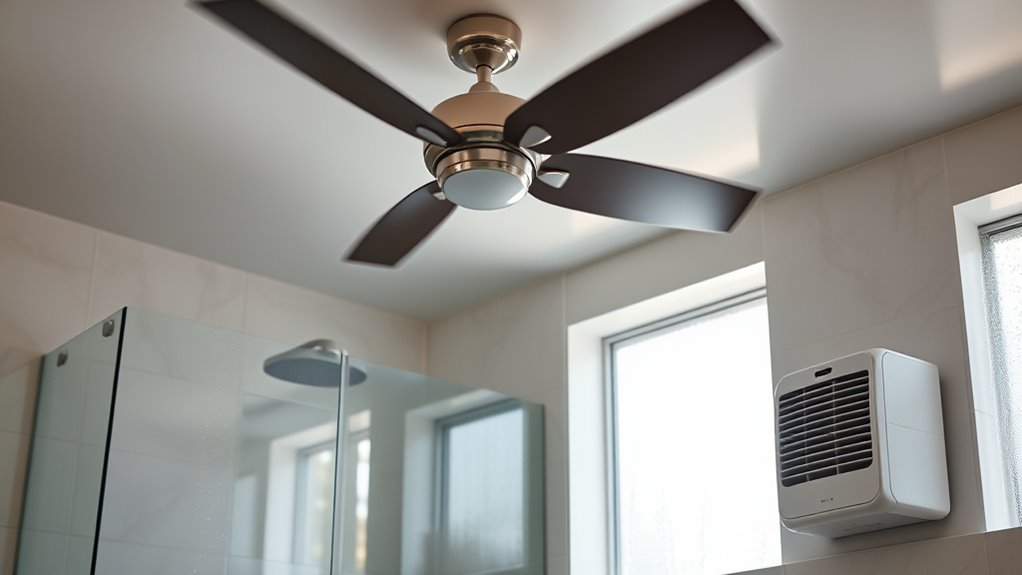

To reduce humidity in your bathroom, run an appropriately-sized exhaust fan during and for at least 30 minutes after showers. Keep the door open to boost air circulation, and consider cracking a window for fresh airflow. You can also invest in a small dehumidifier to actively remove moisture. For added efficiency, integrate smart technology. Don’t forget squeegeeing surfaces and towel drying after use to prevent water buildup. Learn more effective approaches to maintain a comfortable bathroom environment.

Get kitchen gear delivered free with Prime
- Fast, free delivery on millions of items
- Prime Video, Amazon Music and more included
- Member-only deals all year
Key Takeaways
- Install an appropriately sized exhaust fan to effectively remove moist air during and after showers.
- Keep the bathroom door open while the fan runs to improve air circulation and humidity reduction.
- Use a dehumidifier to actively draw excess moisture from the air, choosing one suited for your bathroom size.
- Incorporate quick drying practices, like using a squeegee and towels, to minimize water residue after each shower.
- Consider cracking a window for additional ventilation, even in cooler weather, to enhance fresh air intake.
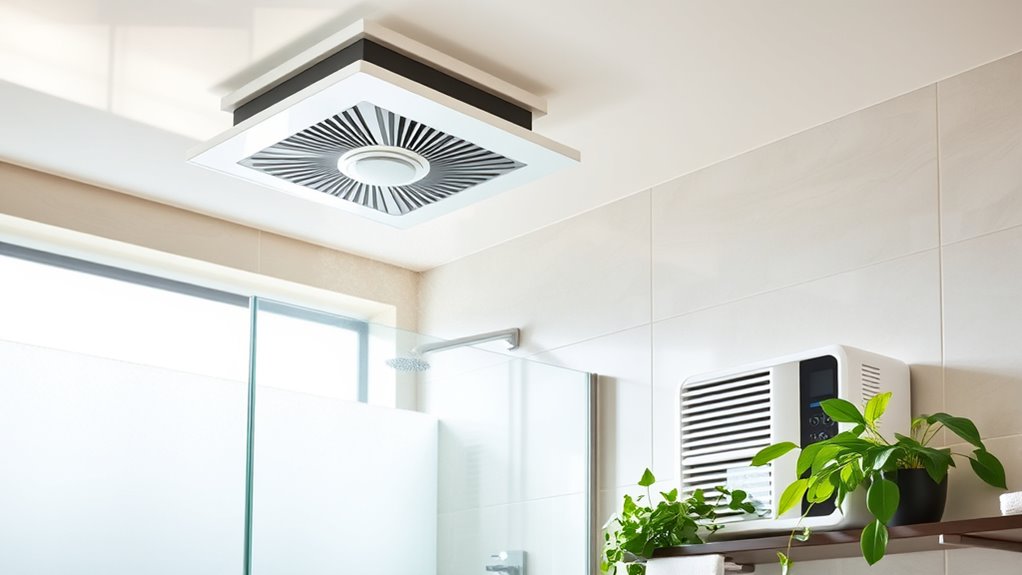
When you step out of a hot shower, the last thing you want is to feel like you’re in a sauna. Excess humidity can make your bathroom uncomfortable, and it can also lead to problems like mold and mildew. To combat this, you need effective ventilation strategies and moisture control techniques that’ll keep your bathroom fresh and dry.
First off, consider using an exhaust fan. It’s one of the best ventilation strategies you can implement. Make sure you run the fan while you shower and leave it on for at least 30 minutes afterward. This will help pull the moist air out and replace it with drier air from the rest of your home. If your bathroom doesn’t have a fan, installing one is a wise investment. Choose a model that’s appropriately sized for your space; a fan that’s too small won’t do the job effectively.
Another essential moisture control technique is to keep the bathroom door open while your fan is running. This allows more air to circulate, helping to reduce humidity levels faster. You might also want to crack a window if it’s safe to do so. Even on a chilly day, a little fresh air can make a *considerably* difference.
Keep the bathroom door open while the fan runs to enhance air circulation and quickly reduce humidity levels.
In addition to fans, think about your shower habits. Shorter showers can help minimize humidity. If you can, try to reduce the water temperature, too. Hot showers produce more steam, which leads to increased moisture levels in the air. You might not want to sacrifice comfort entirely, but even a slight adjustment can help.
Don’t forget about the importance of drying surfaces after you shower. Use a squeegee to wipe down the walls and a towel to dry off any excess water around the sink and tub. This simple practice can *notably* lower the moisture in your bathroom.
Finally, consider investing in a dehumidifier if you live in a particularly humid area or if your bathroom tends to stay damp. A small, portable unit can work wonders, drawing excess moisture from the air and improving overall air quality. Additionally, utilizing smart-home integrations can enhance the efficiency of your dehumidifier and fan, ensuring optimal performance in moisture control.
As an affiliate, we earn on qualifying purchases.
Frequently Asked Questions
What Are the Signs of High Humidity in a Bathroom?
You’ll notice signs of high humidity in your bathroom when you see condensation on mirrors or windows, or if you smell a musty odor. Peeling paint and wallpaper are also red flags. To combat this, you should use effective ventilation techniques, like exhaust fans, to keep air circulating. Regularly checking for mold growth can help with mold prevention, ensuring your bathroom remains a healthy space.
How Often Should I Run the Dehumidifier?
You should run your dehumidifier regularly, ideally for about 8 to 12 hours a day, depending on its capacity and the humidity levels in your bathroom. If your dehumidifier has a higher capacity, it can handle larger spaces and may require less running time. Monitor the humidity; adjust the most effective running time accordingly to maintain a comfortable environment. Don’t forget to empty the reservoir or check the drainage system to keep it efficient!
Can Plants Help Reduce Bathroom Humidity?
Yes, plants can help reduce bathroom humidity! Certain plant types, like peace lilies and spider plants, excel at humidity absorption. They not only enhance your bathroom’s aesthetic but also actively work to balance moisture levels. You’ll find that these plants thrive in humid environments, making them perfect for your space. Just guarantee they receive adequate light and care, and you’ll enjoy a fresher, drier atmosphere while adding a touch of nature.
Is It Safe to Use a Fan While Showering?
Yes, it’s generally safe to use a fan while showering, but you should guarantee proper fan safety. Using a fan can enhance ventilation techniques, helping to reduce humidity and prevent mold growth. Make sure the fan is installed correctly and rated for bathroom use to avoid any electrical hazards. If possible, use a fan with a timer to ensure it runs after you’re done showering, maximizing its effectiveness in reducing moisture.
How Do I Maintain My Bathroom Fan and Dehumidifier?
To maintain your bathroom fan and dehumidifier, start by regularly checking and cleaning both devices. For fan maintenance, remove dust and debris from the blades and housing every few months. make certain the fan operates efficiently by inspecting the wiring and connections. For dehumidifier cleaning, empty the water tank frequently and wipe down the filter and coils to prevent mold buildup. Keeping these appliances clean will enhance their performance and lifespan.
As an affiliate, we earn on qualifying purchases.
Conclusion
In the end, think of your bathroom as a delicate flower that needs just the right amount of moisture to thrive. By using a fan to whisk away excess humidity and a dehumidifier to extract the moisture lurking in the corners, you create a balanced environment. Embrace these tools as your garden shears, trimming away the dampness that could wilt your space. With each effort, you nurture a vibrant, inviting oasis where steam gives way to serenity.
automatic bathroom ventilation fan
As an affiliate, we earn on qualifying purchases.
As an affiliate, we earn on qualifying purchases.
As an affiliate, we earn on qualifying purchases.
Columbus Day / Indigenous Peoples' Day Picks
long weekend sales
As an affiliate, we earn on qualifying purchases.