
Decaf coffee is made by removing caffeine while keeping the rich flavors you love. There are several methods, like the Swiss Water Process, where beans are soaked in hot water to dissolve and filter out caffeine. Other methods use solvents or carbon dioxide to selectively remove caffeine without losing essential oils. Each process aims to keep that satisfying taste intact. If you’re curious about the different techniques, there’s plenty more to uncover about each method.
Key Takeaways
- Decaf coffee is made by removing caffeine while preserving the coffee’s flavor profile through various extraction methods.
- The Swiss Water Process uses hot water and charcoal filters to dissolve and remove caffeine without chemicals.
- Solvent-based methods involve steaming beans and rinsing them with chemicals to selectively extract caffeine, ensuring safety through regulatory oversight.
- Carbon dioxide extraction utilizes liquid CO₂ to target and remove caffeine while maintaining the original flavor of the beans.
- Each decaffeination method aims to create coffee that retains its rich taste and essential oils without the stimulating effects of caffeine.
Have you ever wondered how your favorite coffee can taste just as rich without the caffeine kick? The secret lies in the decaffeination process, which guarantees you can enjoy your beloved brew any time of day without the jitters. This complex process involves various methods that focus on caffeine removal while preserving the flavor profile you love.
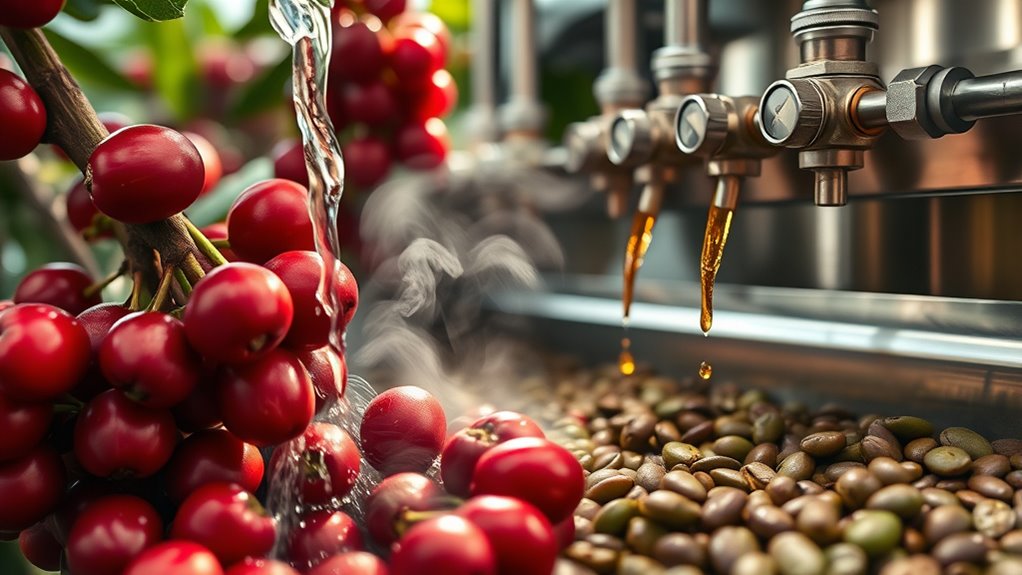
During decaffeination, the coffee beans undergo a meticulous coffee extraction process, where the goal is to extract caffeine without losing the essential oils and flavors that define the coffee. You might be surprised to learn that there are several methods for achieving this, each with its own unique approach. The most common methods include the Swiss Water Process, solvent-based methods, and carbon dioxide extraction.
Decaffeination involves a careful extraction process to remove caffeine while preserving the distinctive flavors and oils of the coffee.
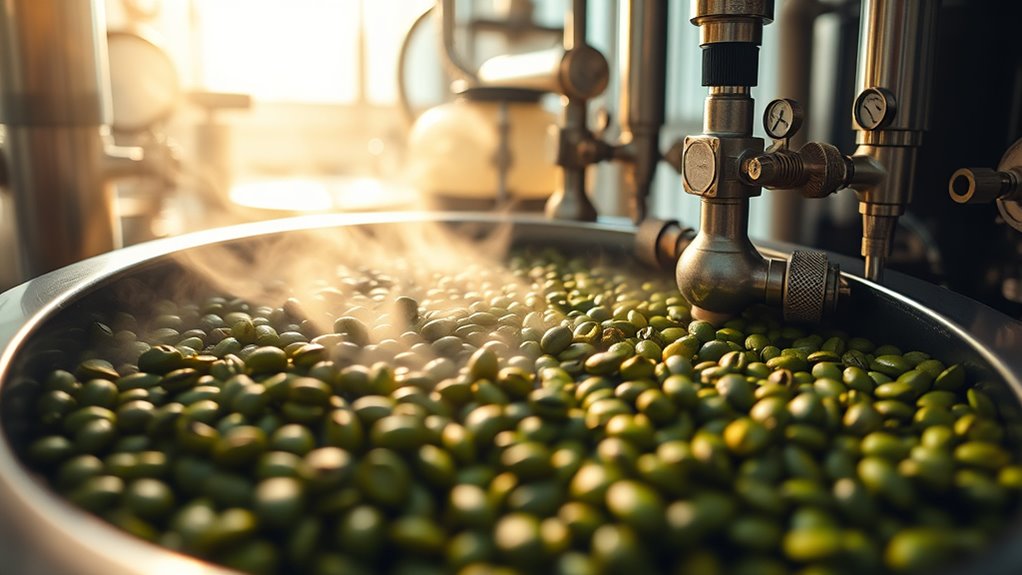
In the Swiss Water Process, the beans are soaked in hot water to dissolve the caffeine. This water, now rich in caffeine and coffee compounds, is passed through a charcoal filter that captures the caffeine molecules while allowing the flavorful oils and sugars to remain. Afterward, the beans are reintroduced to this caffeine-free solution, allowing them to absorb the flavors they lost during the initial soaking. This method offers a chemical-free option that many coffee aficionados appreciate.
Alternatively, solvent-based methods utilize chemicals like methylene chloride or ethyl acetate. Here, the beans are steamed to open their pores before being rinsed with a solvent that selectively removes caffeine. After this process, the beans are steamed again to eliminate any residual solvents. While some folks may have concerns about chemicals, regulatory agencies assure us that the levels present in decaf coffee are safe for consumption.
The carbon dioxide extraction method is another fascinating approach. In this technique, beans are soaked in liquid carbon dioxide, which selectively targets caffeine molecules. This method is highly efficient, preserving more of the coffee’s original flavor compared to other processes. Once the caffeine is extracted, the carbon dioxide returns to a gaseous state, leaving behind the decaffeinated beans.
Regardless of the method used, the end goal is the same: to provide you with a decaf option that maintains the rich, satisfying taste of regular coffee. Effective document management can also help you keep track of your favorite coffee varieties and their decaffeination methods. So, the next time you savor a cup of decaf, you can appreciate the intricate process that allows you to enjoy your favorite beverage without the caffeine kick. Now you know how your favorite coffee can deliver flavor without the buzz!

Amazon Fresh Decaf Colombia Whole Bean Coffee, Medium Roast, 12 Ounce
Balanced, full-bodied medium roast with a smooth finish
As an affiliate, we earn on qualifying purchases.
As an affiliate, we earn on qualifying purchases.
Frequently Asked Questions
Does Decaf Coffee Taste Different From Regular Coffee?
Yes, decaf coffee does taste different from regular coffee. You might notice flavor differences due to the decaffeination process, which can strip some of the coffee’s natural oils and compounds. When brewing, consider using slightly finer grounds or adjusting your brew time to enhance the flavor. Experimenting with different brands or blends can also help you find a decaf that satisfies your palate while still reducing your caffeine intake.
Is Decaf Coffee Caffeine-Free?
No, decaf coffee isn’t completely caffeine-free. You might be surprised to learn that decaf processing removes about 97% of the caffeine, but a small amount remains. Caffeine removal techniques vary, so the exact caffeine content can differ between brands. If you’re looking to cut back on caffeine but still enjoy your coffee, decaf can be a great option. Just remember, it’s not entirely void of caffeine!
Can Decaf Coffee Still Cause Jitters?
Yes, decaf coffee can still cause jitters, though it’s less likely than regular coffee. While decaf has a considerably reduced caffeine content, it isn’t completely caffeine-free—some residual caffeine remains. If you’re sensitive to caffeine, even the small amount in decaf could trigger jitters. However, many enjoy the rich decaf flavor without experiencing anxiety. If you find jitters still occur, you might want to limit your intake or switch to herbal options.
Is Decaf Coffee Safe During Pregnancy?
When it comes to pregnancy safety, you’re in good hands with decaf coffee. While it contains minimal caffeine, it’s wise to keep your overall caffeine intake low during pregnancy. Most experts recommend limiting daily caffeine to about 200 mg, which makes decaf a safer choice. Just remember, moderation is key. So, enjoy that cup of decaf without worry, but always stay informed and consult your healthcare provider for personalized advice!
How Much Caffeine Is in Decaf Coffee?
Decaf coffee typically contains about 2 to 5 milligrams of caffeine per 8-ounce cup, depending on the decaffeination methods used. In comparison, regular coffee can have 95 milligrams or more. If you’re sensitive to caffeine, decaf is a great choice. Just keep in mind that while it’s much lower in caffeine, it’s not completely caffeine-free. So, if you’re watching your intake, always check the specific brand you’re drinking.

Verena Street 11 Ounce Ground, Swiss Water Process Decaf Coffee, Sunday Drive Decaffeinated, Medium Roast Rainforest Alliance Certified Arabica Coffee
11oz. medium roast ground coffee; naturally decaffeinated coffee with a rich yet mellow flavor
As an affiliate, we earn on qualifying purchases.
As an affiliate, we earn on qualifying purchases.
Conclusion
In summary, the decaffeination process transforms your favorite coffee into a delightful, caffeine-free treat without sacrificing flavor. Did you know that nearly 10% of all coffee consumed worldwide is decaf? That’s a staggering number, showcasing how many people enjoy their beloved brew without the jitters. So next time you sip on that smooth decaf cup, remember the meticulous journey it took to get there, allowing you to savor every moment without the buzz.

Coffee Bean Direct CO2 Espresso, Whole Bean Coffee, Arabica Coffee, Dark Roast, 5 Pound Bag (Pack of 1)
Rich Taste In Every Cup – Enjoy a bold, full-bodied espresso experience with a pleasing aroma and a…
As an affiliate, we earn on qualifying purchases.
As an affiliate, we earn on qualifying purchases.

Bulletproof Original Medium Roast Ground Decaf Coffee, 12 Ounces, 100% Arabica Coffee, Clean Coffee Tested for Toxins
Unbeatable Taste: Contains one 12-ounce bag of Bulletproof Original Blend Medium Roast Ground Decaf Coffee, a clean coffee…
As an affiliate, we earn on qualifying purchases.
As an affiliate, we earn on qualifying purchases.