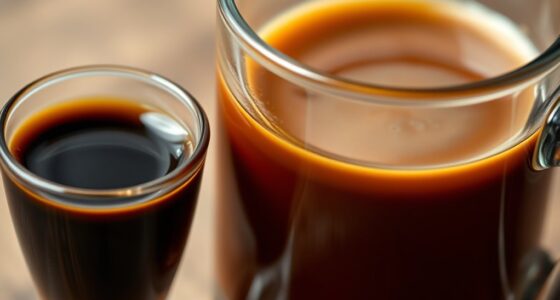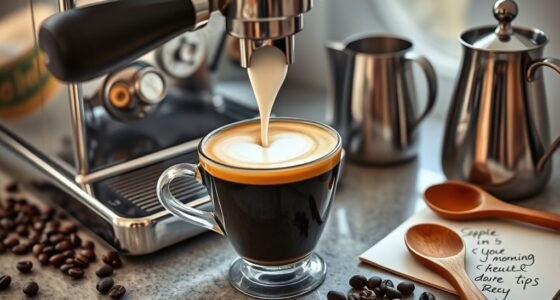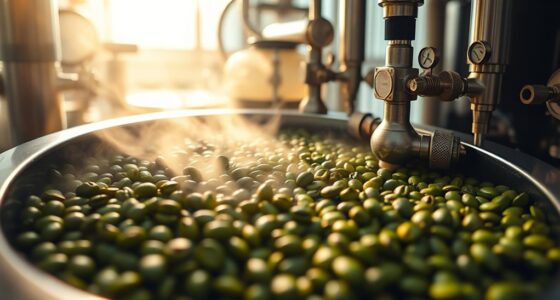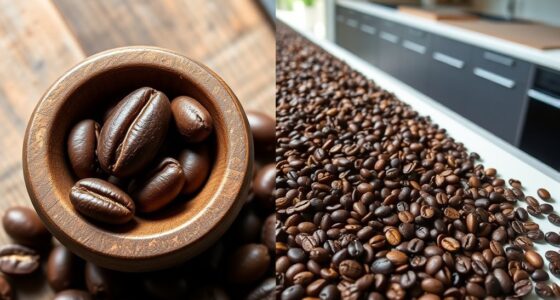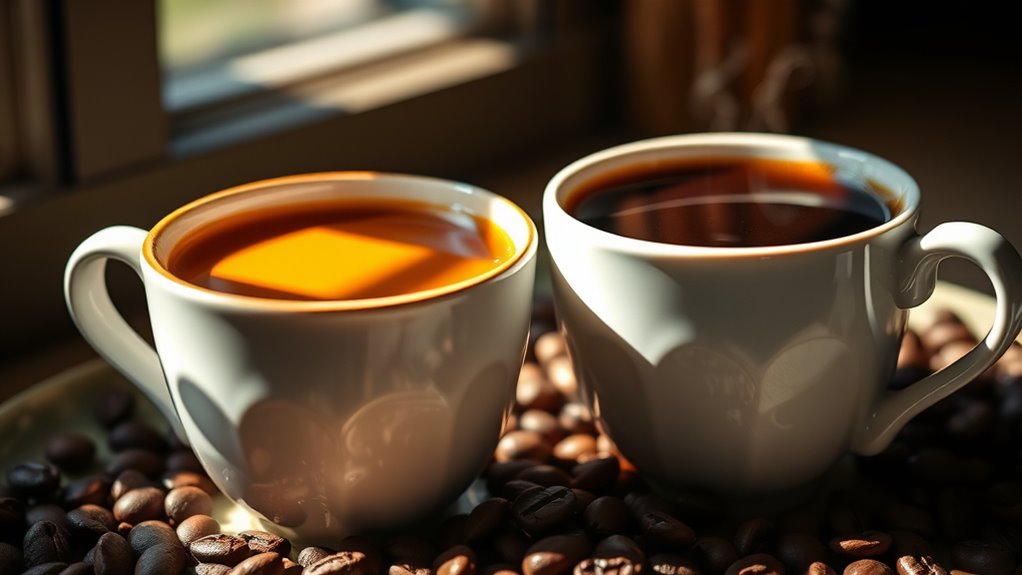

Light roast coffee highlights bright flavors like citrus and floral notes, while dark roast offers bold, deeper tastes with chocolate or caramel hints. Light roasts typically retain more caffeine due to shorter roasting times, though the difference is minimal. Your choice between the two often depends on your taste preferences and brewing method; pour-over works well for light, and espresso suits dark roasts. Discovering more about these differences can enhance your coffee experience.
Key Takeaways
- Light roast highlights the natural flavors of beans, offering citrusy and floral notes, while dark roast provides deeper, bolder flavors like chocolate and caramel.
- Light roast typically uses Arabica beans, while dark roast often blends Arabica and Robusta, affecting flavor and aroma.
- Brewing methods like pour-over and French press best showcase light roasts, whereas espresso and Moka pot enhance dark roast flavors.
- Light roast contains slightly more caffeine due to a shorter roasting time, though the difference in caffeine levels is minimal.
- Individual taste preferences and brewing habits largely determine the choice between light and dark roast coffee experiences.
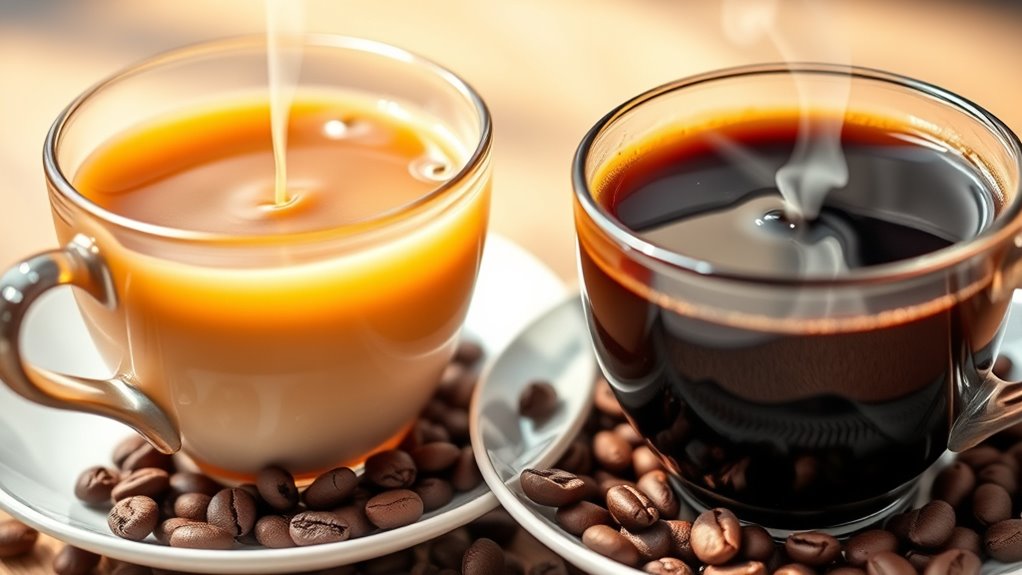
Whether you prefer a bright, fruity flavor or a bold, rich taste, the choice between light roast and dark roast coffee can profoundly impact your morning routine. The flavor profiles of these two types of roasts hinge on several factors, including the coffee bean origins and the brewing methods you choose.
Light roast coffee, often made from Arabica beans, tends to highlight the natural flavors of the beans, which can vary considerably depending on where they’re grown. For instance, beans from Central America often deliver a citrusy brightness, while Ethiopian beans might bring out floral notes. These distinct flavors are best showcased through brewing methods like pour-over or French press, which allow the subtle nuances to shine through. If you’re looking for a morning cup that wakes up your senses without overwhelming them, light roast might be your go-to.
Light roast coffee beautifully highlights the unique flavors of the beans, offering a refreshing and nuanced morning experience.
On the other hand, dark roast coffee, typically using a blend of Arabica and Robusta beans, undergoes a longer roasting process, which creates a deeper, bolder flavor profile. These beans often carry notes of chocolate or caramel, and they lose some of the original characteristics tied to their coffee bean origins. If you enjoy a strong, robust cup of coffee that packs a punch, you’ll likely favor the dark roast. Brewing methods like espresso or a stovetop Moka pot can amplify its rich flavors, making it a favorite for those who appreciate intensity in their caffeine fix.
Caffeine content is another factor to think about. Contrary to popular belief, light roast coffee generally contains slightly more caffeine than dark roast due to the shorter roasting time. This means if you’re looking to kickstart your day with a bit more energy, reaching for that light roast might give you the boost you need. However, the difference in caffeine is minimal, and personal preference often plays a more prominent role in your choice.
Ultimately, the decision between light roast and dark roast boils down to your taste preferences and how you enjoy brewing your coffee. Whether you lean towards the fruity brightness of light roast or the bold depth of dark roast, both offer unique experiences that can elevate your morning ritual. Understanding the role of color accuracy in coffee brewing can also enhance your overall experience. So, the next time you brew a cup, think about what flavors resonate with you and how they can enhance your day.
light roast coffee beans
As an affiliate, we earn on qualifying purchases.
As an affiliate, we earn on qualifying purchases.
Frequently Asked Questions
Can I Mix Light and Dark Roast Coffee Together?
Yes, you can definitely mix light and dark roast coffee together! Flavor blending can create a unique taste experience, balancing the brightness of the light roast with the boldness of the dark roast. Experimenting with different roast combinations allows you to find the perfect balance that suits your palate. Just start with equal parts of each roast and adjust according to your preference. You might discover a new favorite blend!
How Should I Store Roasted Coffee Beans?
To preserve your precious coffee’s freshness, pick proper storage containers. Seal your beans in airtight, opaque jars to guard against light and moisture. Keep them cool, dark, and dry—just like a secret stash. Avoid the fridge, as humidity can harm flavor. Instead, a pantry works perfectly. Remember, the quicker you use your beans, the better your brew! Enjoy every delightful drop of your expertly stored coffee.
Does Brewing Method Affect Coffee Flavor?
Yes, brewing method definitely affects coffee flavor. The grind size and brewing time play vital roles; a finer grind often extracts more flavors, while a coarser grind may lead to a milder taste. If you brew for too long, your coffee might taste bitter, but if you brew for too short a time, it could be weak. Experimenting with different methods can help you find the perfect balance for your taste buds.
Are There Health Benefits to Different Roast Levels?
Yes, there are health benefits tied to different roast levels. Light roasts generally have higher antioxidant levels, which can help combat free radicals and reduce inflammation. On the other hand, dark roasts may offer digestive benefits and a richer flavor profile. The roasting health impacts vary, so if you’re looking for maximum antioxidants, you might prefer lighter roasts. Ultimately, your choice can influence both flavor and health outcomes, so consider what benefits matter most to you.
What’s the Best Temperature for Brewing Coffee?
Imagine the steam curling up from your freshly brewed cup, the aroma wrapping around you like a warm embrace. For the best coffee, aim for a brew temperature between 195°F and 205°F. This range maximizes extraction efficiency, ensuring you capture all those rich flavors without bitterness. If it’s too hot, you’ll scorch the beans; too cool, and you won’t extract enough. So, find that sweet spot, and enjoy every sip!
dark roast espresso coffee
As an affiliate, we earn on qualifying purchases.
As an affiliate, we earn on qualifying purchases.
Conclusion
In the great coffee debate, whether you lean toward light roast or dark roast, it all boils down to personal preference. Light roasts offer bright, fruity flavors, while dark roasts deliver bold, rich notes. And just like your favorite retro mixtape, each brew has its own unique vibe. So, grab your mug, sip away, and enjoy the journey through these delightful flavors. After all, there’s no wrong way to brew a perfect cup!
pour-over coffee maker for light roast
As an affiliate, we earn on qualifying purchases.
As an affiliate, we earn on qualifying purchases.
Moka pot for dark roast coffee
As an affiliate, we earn on qualifying purchases.
As an affiliate, we earn on qualifying purchases.