
TL;DR

Get kitchen gear delivered free — and shop member deals
- Fast, free delivery on millions of items
- Access to Prime Big Deal Days deals on October 6–7
- Prime Video, Amazon Music and more included
Online search and coverage interest in whether it is safe to run a slow cooker overnight is rising sharply, though no specific new incident, recall, or product warning has been confirmed as the trigger. Long-established safety standards indicate slow cookers are designed for unattended operation, but the cause of the current interest spike remains unconfirmed.
Online searches and coverage asking whether it is safe to run a slow cooker overnight are rising sharply, according to trend data, even though no specific new recall, product warning, or reported incident has been confirmed as the cause. The spike reflects a recurring consumer question about leaving an electrical appliance unattended for eight hours or more, a practice that safety standards have long addressed.
The confirmed development is the surge in interest itself: search volume and media coverage around overnight slow cooker use have climbed noticeably in recent days, according to the trend signal. What remains unconfirmed is why — no manufacturer has issued a new advisory, and no safety agency has announced a related recall tied to this specific question.
What is long-established is the safety framework around slow cookers. These appliances are designed for unattended cooking, with low-wattage heating elements that maintain food at temperatures between roughly 170°F and 280°F on the low and high settings. Models sold in the U.S. and Canada carry certification from recognized testing organizations such as UL (Underwriters Laboratories) or the Canadian Standards Association, which evaluate them for prolonged operation.
Manufacturer instructions have typically permitted overnight cooking, and the U.S. Department of Agriculture’s guidance on slow cookers notes that the appliance’s low heat is sufficient to bring food to a safe internal temperature, provided the cooker is filled properly and the food reaches at least 140°F within a reasonable window. The USDA also advises keeping the lid on to maintain heat and refrigerating leftovers promptly after cooking.
Why This Question Keeps Resurfacing
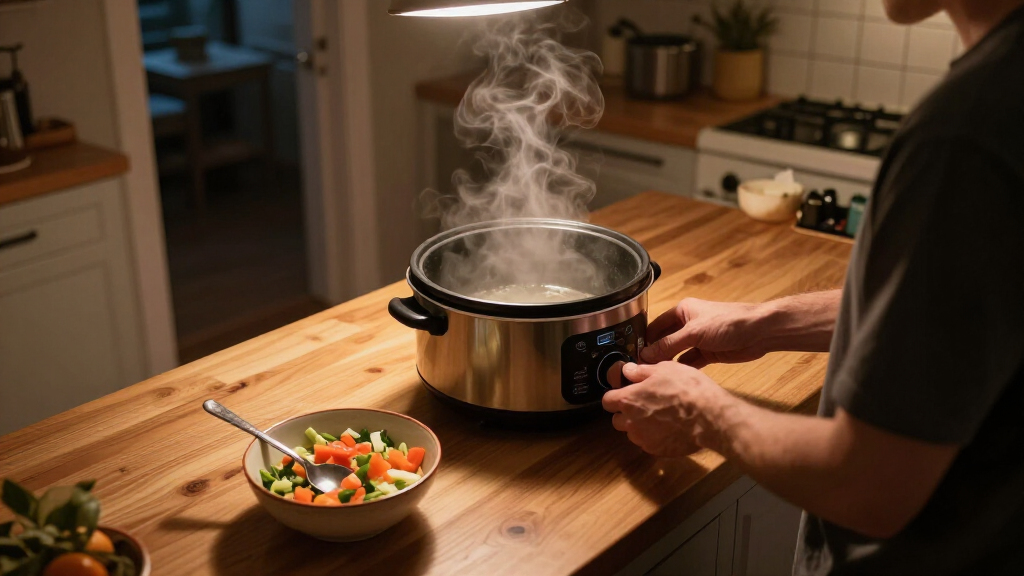
The question matters because slow cookers are among the most widely used kitchen appliances, and overnight cooking is a common convenience for busy households — setting a stew or oatmeal before bed to be ready by morning. A spike in safety-related searches suggests many users are weighing that convenience against concerns about fire risk, food safety, and appliance failure while they sleep.
For readers, the practical stakes are straightforward: understanding what safety standards actually say can prevent both unnecessary fear and genuinely risky practices. The distinction between a certified appliance used per instructions and a damaged or misused unit is the difference between a safe overnight cook and a potential hazard. The trend also highlights how quickly a routine question can circulate online, often outpacing clear, authoritative answers.
Slow Cookers and the Unattended-Cooking Debate
Slow cookers have been a staple of American kitchens since the 1970s, valued precisely for their ability to cook food unattended over long periods. Safety standards for these devices were developed around that intended use, with testing that includes prolonged operation and thermal stability.
The overnight-safety question is not new — it recurs periodically, often tied to viral social media posts, seasonal cooking pushes, or general electrical-safety awareness campaigns. This current spike follows that pattern: a familiar concern resurfacing without an obvious external trigger. Past discussions have centered on the same variables: the condition of the appliance, the adequacy of the cord and outlet, and whether the food reaches safe temperatures quickly enough.
What Is Driving the Current Spike
The specific trigger for the recent surge in interest is unconfirmed. No new recall, no newly reported fire, and no fresh manufacturer statement has been verified in connection with this trend. It is possible the spike stems from a widely shared social media post, a seasonal article, or a general increase in home-cooking queries, but none of these causes can be confirmed from the available data.
It is also unclear whether the interest reflects genuine new incidents or simply a recurring seasonal question gaining traction. Details about the geographic spread of the searches, the exact time frame of the increase, and any specific appliance models involved are not available at this time.
Where the Overnight-Cooking Question Goes Next
Until a specific trigger is confirmed, the practical next step for readers is to rely on established guidance: follow the manufacturer’s instructions, use a certified appliance in good condition, place it on a stable heat-safe surface away from combustibles, and confirm food reaches a safe internal temperature before serving. If the trend is tied to a viral post or a specific product, a follow-up clarification from a safety agency or manufacturer may emerge, but none has been announced.
Consumers who notice any signs of damage — frayed cords, cracked inserts, or scorch marks — should stop using the appliance and replace it rather than risk unattended operation.
Key Questions
Is it safe to leave a slow cooker on overnight?
According to long-established safety standards, slow cookers are designed for unattended operation, including overnight use, when the appliance is in good condition and used per the manufacturer’s instructions. Certified models are tested for prolonged operation.
What temperature does a slow cooker reach on low?
Slow cookers typically maintain temperatures between roughly 170°F and 200°F on the low setting, which is sufficient to cook food safely over several hours. The USDA advises that food should reach at least 140°F within a reasonable time to avoid bacterial growth.
Could a slow cooker cause a fire if left on overnight?
Fires are rare but possible if the appliance is damaged, the cord is frayed, or it is placed near combustibles. Using a certified appliance in good condition, on a stable surface, and away from flammable materials reduces the risk.
Why is interest in this question spiking right now?
The specific trigger for the current increase in searches and coverage is unconfirmed. No new recall, incident, or manufacturer warning has been verified in connection with the trend.
What should I check before using a slow cooker overnight?
Inspect the cord and plug for damage, ensure the ceramic insert has no cracks, place the cooker on a heat-safe surface away from walls and curtains, and follow the manufacturer’s fill and temperature guidelines.
Source: rss
Fall Picks
fall essentials
As an affiliate, we earn on qualifying purchases.