
TL;DR

Get kitchen gear delivered free with Prime
- Fast, free delivery on millions of items
- Prime Video, Amazon Music and more included
- Member-only deals all year
California is considering a ban on producing quartz countertops because cutting and fabrication can expose workers to crystalline silica dust, which can cause silicosis. The proposal has not yet taken effect, and Good Housekeeping reports that its lab tested silica-free countertop products and other alternatives for performance.
California is considering a ban on quartz countertop production because workers can inhale crystalline silica dust while slabs are cut and fabricated, according to Good Housekeeping. The proposal still needs a vote before it can take effect; meanwhile, the publication says its Home Improvement & Outdoor Lab has tested silica-free countertop products and found alternatives that performed well.
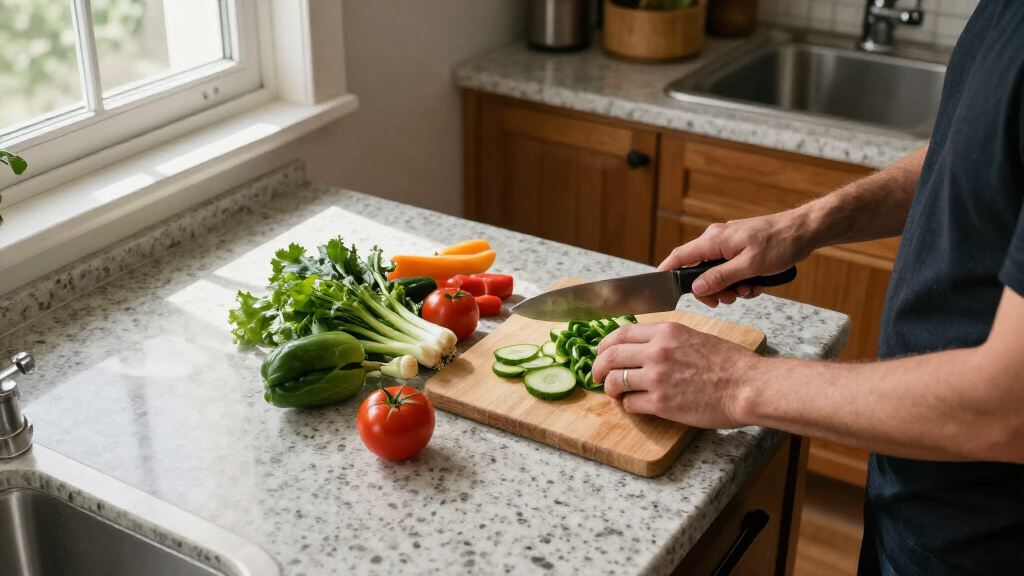
The health concern involves crystalline silica, a main ingredient in conventional engineered quartz. Cutting slabs can release fine dust into the air. Good Housekeeping reports that exposure can cause particles to lodge in the lungs, form scar tissue and lead to silicosis, a chronic, incurable lung disease. Wet cutting and adequate ventilation are among the safety practices that can reduce exposure during fabrication.
The report stresses that the concern is tied to the manufacturing, fabrication and installation process, not ordinary use of a finished countertop in a home. It says there are no silica-dust safety concerns once quartz countertops are installed. The report does not provide details of the California proposal’s text, vote schedule or proposed implementation date.
Good Housekeeping says it evaluated Neolith’s silica-free surface, reviewing independent tests of its formulation and checking third-party safety and environmental certifications, including Greenguard and International Organization for Standardization certifications. Its experts found that the product resisted stains, heat and scratches. The publication also reports that Caesarstone’s ICON, introduced in 2025, performed well for stain, scratch and heat resistance in its tests.
Risks During Countertop Fabrication
A production restriction could affect countertop manufacturers, fabricators and people planning remodels, as well as the materials available to them. The distinction between workplace exposure and household use matters: the hazard described in the report arises when silica-containing material is cut and dust becomes airborne, rather than from an intact surface in a kitchen.
The reported test results may help consumers compare options if the proposal advances, but they do not determine the policy outcome or establish that every product marketed as an alternative has the same performance. Buyers still need to check a product’s composition, certifications, care requirements and suitability for their project. Workers’ exposure controls remain a separate safety issue.
Products Worth Considering

KitchenAid 5.5-Qt Bowl-Lift Stand Mixer, Porcelain White (KSM55SXXX)

KitchenAid 8-Cup Grain and Rice Cooker with Integrated Scale, Porcelain White

Le Creuset Signature Enameled Cast Iron Round Dutch Oven, 5.5 qt, Deep Teal
As an affiliate, we earn on qualifying purchases.
Silica-Free Products and Other Materials
Engineered quartz has become a widely used countertop choice, which Good Housekeeping attributes to its design range, durability and relatively easy maintenance. The California proposal described in the report focuses on production, prompted by the potential for silica dust exposure during fabrication. It is not described as a ban on installed countertops or on every countertop material.
Among the reported alternatives, Neolith’s silica-free surface received a Good Housekeeping Home Reno Award in 2025, while Caesarstone’s ICON later received a 2026 Good Housekeeping Kitchen Award. The report also points to porcelain, including Caesarstone Porcelain, which it says resisted tough stains in testing and can be used outdoors because of its resistance to ultraviolet light and temperature extremes.
Natural stones such as granite, marble and quartzite are other options. Good Housekeeping gives a price range of $50 to $130 per square foot for natural stone, describing costs as comparable to premium quartz. The materials differ in care: the report says natural stone, particularly porous marble, requires more attention to maintenance. Quartzite is a natural metamorphic rock, despite the similarity of its name to engineered quartz.
Proposal Details Still Pending
The report says California’s proposal still needs a vote, but it does not identify the bill or provide the relevant legislative timetable. It is therefore unclear when a decision may come, what products or stages of production a final measure would cover, or whether it would include exceptions or a transition period.
The lab findings are also limited to the products and tests described in the report. No full test protocols, comparative scores or results for every available brand are supplied in the source material. The report does not establish that the state has endorsed any specific silica-free product, nor does it provide details of how a potential ban would be enforced.
A Vote Will Set the Timeline
The immediate policy milestone is a vote on the California proposal. Until that occurs and the measure’s terms are clear, the report presents the ban as a possibility rather than an enacted restriction. Readers considering a remodel can compare silica-free surfaces, porcelain and natural stone, while asking suppliers about material composition and documentation.
Any decision should also account for installation practices and worker protections. Good Housekeeping identifies wet cutting and adequate ventilation as safety measures during fabrication; product choice alone does not answer questions about dust control. Further details on the proposal, including its scope and effective date, remain necessary to determine its effects on the market.
Key Questions
Has California banned quartz countertops?
No. The source report says the proposal still needs a vote before it can take effect. It describes a possible production ban, not a current ban on installed countertops.
Why is quartz countertop production a concern?
Conventional engineered quartz contains crystalline silica. Cutting and fabricating slabs can release airborne dust, and the report says inhaling that dust can lead to silicosis, a chronic and incurable lung disease.
Are installed quartz countertops a silica-dust hazard at home?
Good Housekeeping says there are no silica-dust safety concerns once the countertop is installed. The risk described in its report is associated with dust generated during fabrication and installation work.
Which silica-free countertop options did the report test?
Good Housekeeping reports testing Neolith’s silica-free surface and Caesarstone’s ICON. Its lab reported resistance to stains, heat and scratches, though the article does not provide full test scores or methods.
What other countertop materials are mentioned?
The report names porcelain, granite, marble and quartzite. It describes porcelain as stain-resistant in its tests and says natural stone can offer distinctive patterns but may require more care, particularly marble.
Source: goodhousekeeping.com