Air fryers with multiple presets promise quick cooking with fewer manual adjustments, but preset count alone does not tell you which model will suit your kitchen. The key decision is whether one basket is enough or whether cooking two foods independently is worth the larger appliance and higher price. A single-basket air fryer is usually the more compact, straightforward choice for snacks, sides, and smaller households. A dual-zone air fryer makes more sense when you regularly prepare a main and a side at the same time, or need different temperatures and timings. Presets can simplify either design, but they do not replace checking food, adjusting for portion size, or choosing the right capacity.

Get kitchen gear delivered free with Prime
- Fast, free delivery on millions of items
- Prime Video, Amazon Music and more included
- Member-only deals all year

Chefman Multifunctional Digital Air Fryer with Rotisserie and Dehydrator, 10-Quart
- ✔ Capacity: 10 quarts
- ✔ Presets: 17
- ✔ Cooking functions: Air fry, bake, dehydrate, roast and rotisserie
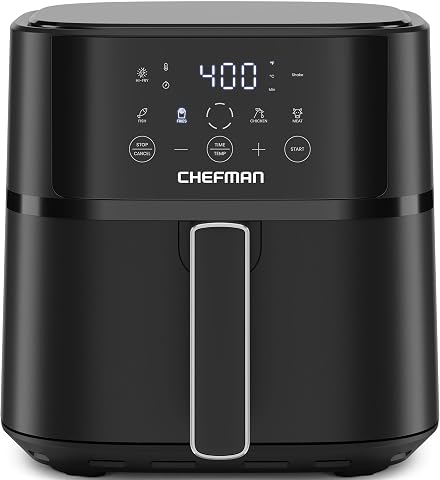
Chefman TurboFry Touch 6-Quart Air Fryer with Hi-Fry Technology
- ✔ Capacity: 6 quarts
- ✔ Presets: 4
- ✔ Power: 1700 watts

4L Glass Air Fryer with Preset Cooking Modes
- ✔ Capacity: 4 liters (135.27 oz)
- ✔ Presets: Preset modes; number not specified
- ✔ Power and voltage: 900 watts; 110 volts
At a Glance
| Criteria | Single-basket air fryer with multiple presets | Dual-zone air fryer with multiple presets | Winner |
|---|---|---|---|
| Cooking flexibility | One cooking zone; cook one batch or food type at a time | Two zones can use different settings for separate foods | B |
| Capacity and meal size | Usually a single basket; capacity varies by model | Two baskets or compartments; combined capacity varies by model | Depends |
| Preset usefulness | Preset programs simplify common foods, but exact programs vary | Presets may be available per zone, but controls differ by model | Depends |
| Cooking coordination | One timer and temperature setting at a time | Some models coordinate zones to finish together | B |
| Counter space and storage | Generally smaller and easier to store | Larger footprint and more involved storage | A |
| Controls and learning curve | Usually simpler to set up and operate | More settings to learn, especially when coordinating zones | A |
| Price and value | Typically costs less; strong value for one-basket needs | Usually costs more; value depends on using both zones | Depends |
Chefman Multifunctional Digital Air Fryer with Rotisserie and Dehydrator, 10-Quart
For buyers who want presets to cover more than air frying, this 10-quart Chefman is the most capable match in the lineup. Its 17 preset options sit alongside air frying, baking, dehydrating, roasting and rotisserie cooking, so one countertop appliance can cover jobs that the TurboFry’s four presets and more conventional basket format do not. The generous capacity also gives its extra functions more room to serve a household or a larger batch.Its viewing window and interior lights make it easier to check progress without opening the door, a practical advantage over the TurboFry, which has no window. Three airflow racks, a rotisserie spit and a drip tray add flexibility, and dishwasher-safe parts help with cleanup. Those extras also mean a larger appliance with more components to store and wash. At 12 by 12 by 15 inches and 14.2 pounds, it asks for a meaningful stretch of counter space; its 48-inch cable is another detail to account for when choosing a spot.We put it first because it combines the broadest stated preset count with the widest cooking range. It makes the most sense when we will use that range regularly. If we mainly want to air fry quick meals, the six-quart TurboFry is a simpler, smaller-capacity alternative; for a compact unit with a clear view of food, the glass model has a more focused appeal.
Pros:
- 17 preset options support a broad set of cooking tasks.
- Air frying, baking, dehydrating, roasting and rotisserie functions extend its use beyond the other two picks.
- Viewing window and interior lights help us monitor food during cooking.
- Three airflow racks, rotisserie accessories and dishwasher-safe parts add flexibility and ease cleanup.
Cons:
- The 10-quart body takes more counter space than the 4-liter glass model or the TurboFry.
- Multiple racks and rotisserie accessories require storage and cleanup; the 48-inch cable may limit placement.
Best for: Households seeking one appliance for air frying and several additional cooking methods, with room for larger batches.
Not ideal for: Buyers with limited counter space or anyone who mainly wants a basic basket fryer for small, routine portions.
Bottom line: Choose this model when preset variety and multiple cooking methods matter more than a compact countertop footprint.
“Choose this model when preset variety and multiple cooking methods matter more than a compact countertop footprint.”
Chefman TurboFry Touch 6-Quart Air Fryer with Hi-Fry Technology
The TurboFry Touch suits cooks who want a useful preset shortcut without turning an air fryer into a multi-function oven. It has four presets, digital touch controls and a six-quart capacity described as suitable for serving three to five people. That is a more practical middle ground for regular family portions than the 4-liter glass model, while its narrower design is easier to fit than the 10-quart Chefman.Its defining extra is Hi-Fry up to 450°F, intended to add crispness during the final two minutes of cooking. That gives it a finishing tool rather than the broad cooking-mode range of the 17-preset model. The distinction matters: if we want rotisserie or dehydration, this is not the substitute. If we want a conventional basket with a few quick settings and an extra-high-heat finish, it is the more direct choice.The nonstick basket and rack are dishwasher safe, and an audible shake alert and automatic shutoff support routine use. We do give up a viewing window, so checking food means opening the basket. The Hi-Fry feature is also limited to the last two minutes, rather than serving as a full-cycle high-temperature mode. Its four presets make it the least preset-rich recommendation, but its capacity and simpler purpose can make that a sensible trade for everyday cooking.
Pros:
- Six-quart capacity is described as suitable for three to five people.
- Four presets and digital controls make common cooking tasks more direct.
- Hi-Fry provides a 450°F crisping finish during the last two minutes.
- Dishwasher-safe basket and rack, shake alert and automatic shutoff support convenient use.
Cons:
- Four presets provide less cooking-mode variety than the 10-quart Chefman’s 17.
- No viewing window, unlike the glass air fryer and multifunctional Chefman.
- The 450°F Hi-Fry setting is limited to the final two minutes of cooking.
Best for: Small to medium households that want a familiar basket-style fryer, a few quick presets and room for family-sized servings.
Not ideal for: Anyone seeking the widest preset selection, rotisserie or dehydrating functions, or a window for checking food without opening the basket.
Bottom line: Pick the TurboFry for everyday basket-style cooking when useful capacity matters more than a long preset list.
“Pick the TurboFry for everyday basket-style cooking when useful capacity matters more than a long preset list.”
4L Glass Air Fryer with Preset Cooking Modes
The glass air fryer earns its place by making food visible while it cooks, not by matching the preset count or capacity of the two Chefman models. Its 4-liter chamber is the smallest stated capacity here, but its 11.42-inch height and width give it a compact profile for kitchens where counter space is tight. A touchscreen, preset modes and adjustable timer and temperature settings offer some one-touch convenience while leaving room for manual adjustment.Compared with the TurboFry’s six-quart basket, the glass unit is a better fit for smaller portions and cooks who value keeping an eye on browning. Its 24-hour delay start can help schedule a cooking start, and the basket-removal safety feature pauses cooking when the basket is taken out. But the description does not state how many preset modes it has, so we cannot place it ahead of the TurboFry on preset breadth. It also has a temperature floor of 140°F, which limits its suitability for tasks that need lower heat.At 900 watts, it has lower stated power than either 1700-watt Chefman. We should not infer cooking speed from wattage alone, but it is a meaningful specification to compare when assessing the appliance. This pick makes the most sense when visibility and a modest footprint rank above capacity and extensive cooking functions. For larger batches or known preset variety, the six-quart or 10-quart Chefman is a clearer fit.
Pros:
- Glass chamber lets us see food as it cooks.
- Compact dimensions suit kitchens with less available counter space.
- Preset modes, touchscreen controls and adjustable temperature and timer offer operating flexibility.
- 24-hour delay start and basket-removal pause add scheduling and convenience features.
Cons:
- Four-liter capacity is smaller than both Chefman models and may limit batch size.
- The number of preset modes is not specified, making its preset breadth hard to compare directly.
- Temperature starts at 140°F, and stated power is 900 watts.
Best for: One or two cooks who want a compact air fryer with a transparent cooking chamber and adjustable controls.
Not ideal for: Larger households, cooks who need a stated high preset count, or anyone whose recipes require temperatures below 140°F.
Bottom line: Choose the glass model for visibility and a compact fit when smaller batches matter more than maximum preset variety.
“Choose the glass model for visibility and a compact fit when smaller batches matter more than maximum preset variety.”
As an Amazon Associate we earn from qualifying purchases.
Key Differences
The meaningful difference is how many foods you can cook independently. With a single-basket model, you set one temperature and timer for the basket. That suits a batch of chips, vegetables, or chicken pieces, and it keeps operation straightforward. A dual-zone model separates the cooking spaces, so one food can cook at a different temperature or duration from another. If the model has a synchronization feature, it can coordinate finish times. That can make a full meal easier to serve together, though it does not guarantee that both foods will need identical attention or come out perfectly timed.
Preset programs are useful starting points, not a reliable basis for choosing by count. Two models may use different names, temperatures, or timings for the same food, and a preset may not match your portion size or preferred crispness. The number and behavior of programs are model-specific, particularly on dual-zone machines where a program may apply to one basket or both. For most shoppers, basket layout, usable capacity, and controls matter more than a long preset list. Pay extra for a second zone when you will use it often; otherwise, the additional capacity and settings may take up space without improving everyday cooking.
Detailed Comparison
Cooking flexibility (Dual-zone air fryer with multiple presets wins — moderate)
The single-basket option handles one cooking setup at a time. The dual-zone option can run separate temperatures and timings in its two zones, so it wins by a moderate margin for meals with foods that cook differently. That flexibility helps with a main and a side, but matters little when you usually cook one food per batch.
Capacity and meal size (moderate difference)
There is no automatic winner: basket dimensions and stated capacity vary by model, and a combined dual-zone capacity does not tell you how much fits in each basket. A single large basket may suit bulky foods better, while two smaller baskets divide foods conveniently. Compare usable space against the portions you actually cook.
Preset usefulness (minor difference)
Both types can offer programs for common foods, and neither wins based on preset count alone. This is a minor distinction unless a particular model has programs you will use and lets you adjust them easily. Treat presets as suggested starting settings; check the food and adapt time or temperature as needed.
Cooking coordination (Dual-zone air fryer with multiple presets wins — moderate)
A single basket has one cooking schedule, which is easy to follow but cannot handle different foods independently. A dual-zone model wins by a moderate margin when its controls can coordinate two different schedules or finish times. Check the exact model’s functions: two zones do not necessarily mean automatic synchronization.
Counter space and storage (Single-basket air fryer with multiple presets wins — moderate)
The single-basket design generally takes up less room and is easier to put away, so it wins by a moderate margin in compact kitchens. Dual-zone machines need space for the appliance and access to both cooking areas. Check dimensions and clearance, since designs vary and a larger model may be awkward even if it replaces two cooking batches.
Controls and learning curve (Single-basket air fryer with multiple presets wins — minor)
A single basket usually means fewer choices and a simpler routine, giving it a minor advantage for cooks who want to select a program and start. Dual-zone controls can require more setup because each side may have its own settings and functions. If the second zone solves a regular meal-planning problem, that extra setup may be worthwhile.
Price and value (moderate difference)
A single-basket model typically costs less and is better value for cooks who need one zone. Dual-zone models cost more, but can justify that premium if both spaces are used regularly to prepare separate foods. For occasional use, the extra expense may buy capacity and controls that sit idle; compare prices and features for the specific models.
Single-basket air fryer with multiple presets: Pros and Cons
Pros:
- Typically more compact and easier to store
- One basket and a simpler control routine
- Usually costs less than a comparable dual-zone model
Cons:
- Only one cooking setup at a time
- Separate foods may need separate batches
- A preset cannot tailor one basket to two different foods
Dual-zone air fryer with multiple presets: Pros and Cons
Pros:
- Separate zones can cook foods at different settings
- Can make a main and side in parallel
- Some models coordinate cooking so foods finish together
Cons:
- Usually takes up more counter space
- Often costs more
- More controls and functions to learn; features vary by model
Who Should Choose What
Choose Single-basket air fryer with multiple presets if:
- You usually cook one food or batch at a time.
- Your counter or storage space is limited.
- You want a lower-cost appliance with straightforward preset controls.
Choose Dual-zone air fryer with multiple presets if:
- You regularly cook a main and side that need different temperatures or timings.
- You want to prepare two foods at once and will use both zones often.
- The specific model offers useful coordination features for your meal routine.
Skip both if: Skip both if you rarely use countertop appliances, need capacity beyond the models you are considering, or expect presets to eliminate checking and adjusting food as it cooks.
Value for Money
Pay more for a dual-zone air fryer when separate cooking spaces will save time in your regular routine. Cooking two foods at once can be useful for a household that often serves a main and a side together. The premium is harder to justify if you mostly make single batches, have limited counter space, or will leave one zone unused. In those cases, a well-sized single-basket model is likely the better value. Compare actual basket dimensions, controls, and included functions rather than paying extra for a larger preset count.
Final Verdict
Choose a single-basket air fryer if your usual job is cooking one batch at a time and you value a smaller, simpler, lower-cost appliance. Choose a dual-zone model if you often prepare two foods with different cooking needs and will use both zones enough to justify its footprint and price. The biggest deciding factor is your meal pattern, not how many presets appear on the control panel. For most people who want a basic air fryer with helpful programs, a single basket is the sensible starting point; households that routinely cook separate foods together should pay more for dual zones.
Frequently Asked Questions
Are more presets always better in an air fryer?
No. Programs vary between models, and a preset may not match your portion size or preferred texture. Choose programs you will actually use, and favor controls that let you adjust time or temperature.
Can a dual-zone air fryer cook two foods at different temperatures?
Many dual-zone models let each zone use separate settings, but check the model specifications. Controls, presets, and whether the zones can finish together vary.
Is a dual-zone air fryer worth the extra cost?
It can be if you regularly cook two foods at once and use both zones. If you usually make one batch, a single-basket model generally offers better value and takes up less space.
Which style is better for a small kitchen?
A single-basket air fryer is generally easier to fit and store. Compare the appliance dimensions and required clearance before buying, because size varies across both types.