To convert oven recipes for an air fryer, reduce the temperature by about 25-30°F since the appliance cooks faster and more intensely. Cut cooking times by around 20-25%, and check for doneness early using visual cues and a thermometer. Prep ingredients evenly for crisp results, and use appropriate cookware like perforated baskets. By adjusting temperature, time, and prep, you’ll get perfect crispy dishes quickly. For more helpful tips, keep exploring!
Key Takeaways
- Reduce oven temperature by 25°F to 30°F to account for faster cooking in the air fryer.
- Decrease cooking time by approximately 20-25% and check food early to prevent overcooking.
- Use evenly sized, smaller pieces and prepped ingredients for better hot air circulation and crispiness.
- Monitor food visually and with a thermometer to ensure proper doneness and prevent overcooking.
- Utilize appropriate accessories like perforated pans or racks for even heat distribution and optimal results.

ALJ 3PCS Air Fryer Oven Mesh Rack for COSORI 10QT Air Fryer Toaster Oven, Premium Dehydrator Rack Shelf Grid Grill Pan Crisper Cooking Plate Tray Insert Grate for COSORI 13QT Oven, Dishwasher Safe
Air Fryer Oven Shelf for COSORI Air Fryer Oven: Our air fryer oven mesh rack is fit for...
As an affiliate, we earn on qualifying purchases.
Understanding the Differences Between Oven and Air Fryer Cooking
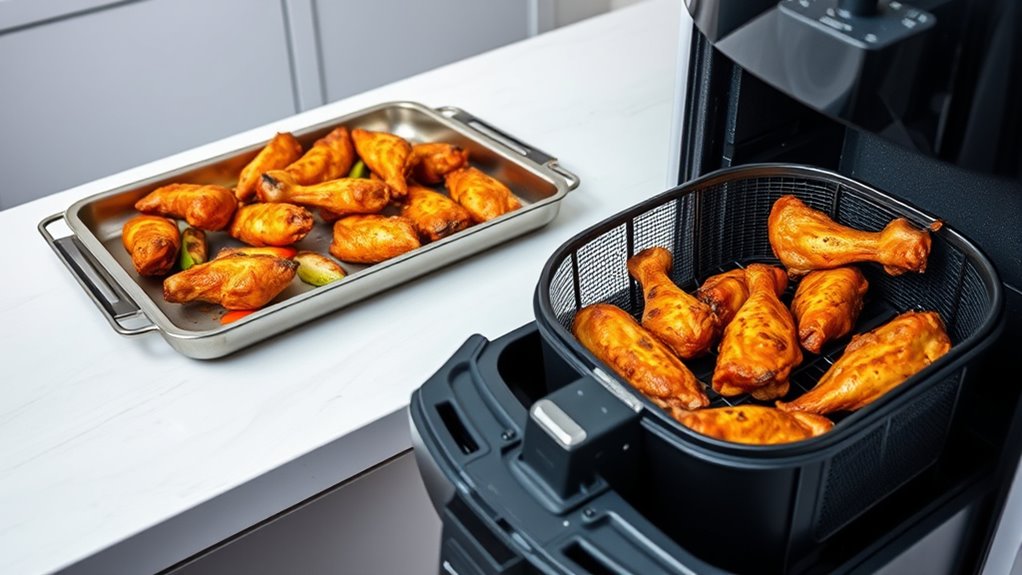
While both ovens and air fryers cook food using hot air, they operate quite differently. Ovens typically cook via even heat distribution, allowing for gradual baking and roasting, which influences baking techniques. Air fryers, however, use rapid air circulation to create a crisp exterior quickly, similar to frying but with less oil. This difference affects how ingredients respond; for example, you might need to adjust ingredient substitutions, like reducing liquids or fats, to prevent sogginess in the air fryer. Understanding these distinctions helps you adapt recipes accurately. With baking techniques, knowing when to shift from slow, even heat to quick, high-intensity air circulation ensures your dishes turn out perfect. Recognizing the energy-efficient nature of air fryers can help you make more sustainable cooking choices. Additionally, knowing how to utilize proper preheating can significantly impact the outcome of your air-fried dishes. Being aware of these unique cooking principles allows you to better modify your favorite oven recipes for the air fryer. For instance, adjusting cooking times and temperatures based on the heat transfer methods helps achieve optimal results. Moreover, considering the size and capacity of your air fryer can influence how you scale recipes for consistent results.

Cosori 9-in-1 TurboBlaze Air Fryer 6 Qt, Smart Control, 90°–450°F, Shake Reminders, Precise Heating for Even Results, Air Fry, Roast, Bake, Broil, Dry, Frozen, Proof, Reheat, Keep Warm, 120V, Cream
𝘼𝙞𝙧 𝙁𝙧𝙮𝙚𝙧 𝙐𝙥𝙜𝙧𝙖𝙙𝙚: Innovative TurboBlaze Technology delivers a powerful 3600 rpm fan speed and temperatures up to 450℉,...
As an affiliate, we earn on qualifying purchases.
Adjusting Temperature Settings for Air Fryer Recipes
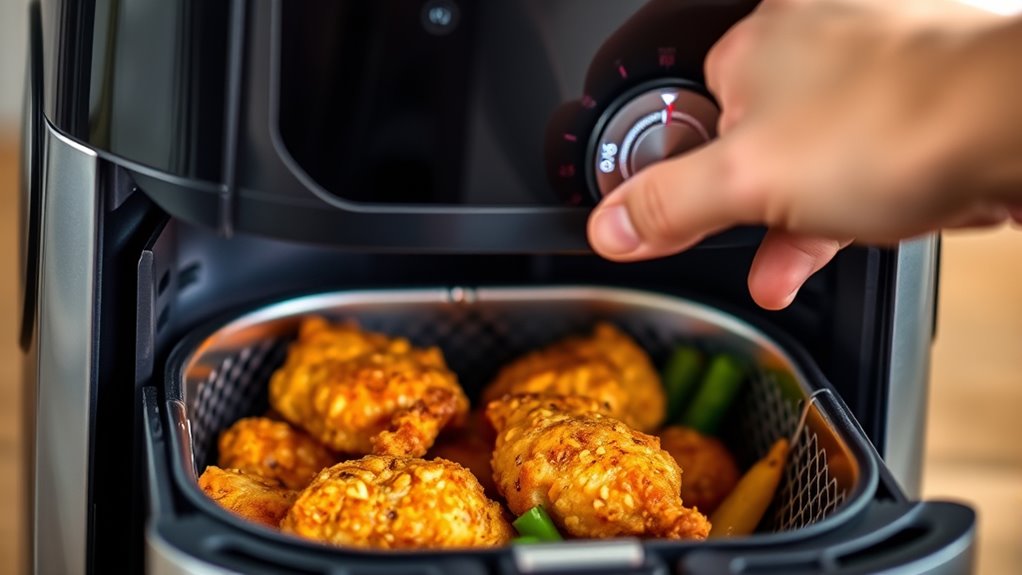
When adjusting recipes for your air fryer, you should lower the cooking temperature slightly to prevent overcooking. Keep a close eye on your food and check for doneness earlier than you would in a traditional oven. This approach helps make sure your dishes turn out perfectly crispy without burning. Additionally, understanding the cooking times and temperatures for different recipes can improve your results and help you adapt more effectively. Being aware of Free Floating concepts can also help you optimize your air fryer use and achieve better culinary outcomes. To further enhance your experience, familiarize yourself with ventilation considerations, which can impact the efficiency and safety of your appliance. Proper air circulation inside the fryer can also contribute to more even cooking and better results, especially when you understand the airflow dynamics within your unit.
Lower Cooking Temperatures
Lowering the temperature when adapting oven recipes for your air fryer is crucial to prevent overcooking and guarantee even results. Air fryers cook faster due to their circulation technology, making it essential to reduce the temperature slightly—about 25°F to 30°F. This adjustment accounts for baking differences and helps avoid burning or dryness. Additionally, ingredient substitutions, like reducing liquids, can influence cooking times and temperatures. Keep in mind that thicker or denser foods may need a slight temperature tweak to ensure they cook through without overbrowning. Embracing artistic expression in your cooking can also inspire creative adjustments and flavor combinations to enhance your dishes. Understanding cooking techniques can further improve your air fryer results and help you adapt various recipes more effectively. Consulting reliable cooking resources can provide helpful tips for specific foods and techniques to optimize your air frying experience. Recognizing cooking time adjustments is essential for achieving perfect results when modifying recipes for your air fryer, and being aware of feature Buddies can help you troubleshoot issues like uneven cooking or overheating.
Monitor for Doneness
To guarantee your air fryer recipes turn out perfectly, it’s important to monitor doneness closely as you adjust the temperature. Since air fryers cook faster and more intensely than ovens, cooking times can vary. Keep a close eye on your food, especially during the first attempt, to prevent overcooking. Use a food thermometer or check for visual cues to determine doneness, adjusting temperature settings if needed. If your food isn’t cooked through after the expected cooking time, increase the temperature slightly or extend the cooking time in small increments. Regularly checking doneness allows you to fine-tune your temperature adjustments, ensuring your dishes come out crispy and perfectly cooked without guesswork. Understanding cooking techniques can also help you optimize your air frying process for different recipes.

Cosori Air Fryer Liners, 100 PCS Square Disposable Paper Liners, Non-Stick Silicone Oil Coating, Little to No Cleaning, 7.9" Unbleached Food Grade, Resistant to 465°F, Thickened Not Easy to Break
WARNING!: Do NOT place the paper liner in the basket during preheating! Always ensure that there is enough...
As an affiliate, we earn on qualifying purchases.
Modifying Cooking Times for Faster Results
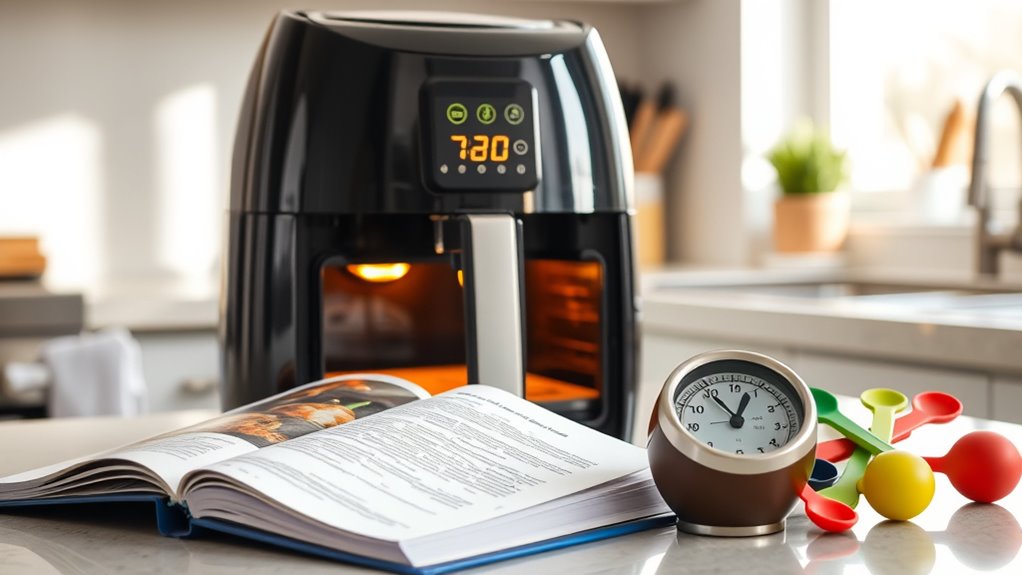
If you’re looking to speed up your oven recipes, adjusting cooking times can be an effective strategy. When converting to an air fryer, you’ll often find that food cooks faster due to the rapid circulation of hot air. To optimize, consider these tips:
- Reduce the original baking time by about 20-25%, but check for doneness early to avoid overcooking.
- Use different baking techniques, like flipping or shaking, to ensure even cooking and quick results.
- Make flavor adjustments, such as adding herbs or spices later in the process, to prevent over-baking and preserve taste.
- Understanding the field‑of‑view and how air fryers distribute heat can help you better gauge cooking times and achieve consistent results.
- Familiarizing yourself with airflow patterns within your specific model can further refine your timing adjustments for optimal results.
- Recognizing the importance of cookware placement can also influence how evenly your food cooks and may affect necessary time adjustments.
- Additionally, observing how your particular air fryer’s heat distribution varies can help you make more precise timing modifications for different recipes.
- Incorporating knowledge of traditional Indigenous wellness practices can inspire natural and mindful approaches to cooking and food preparation, enhancing overall wellness.
Keep an eye on your food’s progress, as shorter cooking times may require slight tweaks based on the recipe and your specific air fryer model.
Air Fryer Paper Liners, 125Pcs Air Fryer Disposable Liners, Non-Stick and Oil Proof for Easy Cleanup, 8” Square for 5-8 qt Basket by Baker's Signature
HEALTHY MATERIALS - Our air fryer paper liners are crafted from raw wood with a silicone coating. They...
As an affiliate, we earn on qualifying purchases.
Preparing Your Ingredients for the Air Fryer

Before placing your ingredients in the air fryer, it’s important to prepare them properly to guarantee even cooking and the best results. Proper ingredient prep includes washing, peeling, or trimming as needed. Additionally, portion sizing matters; aim for uniform pieces to ensure consistent cooking. Smaller, evenly sized pieces allow hot air to circulate better, achieving crispiness without overcooking. To visualize, consider this:
| Ingredient Type | Preparation Tip |
|---|---|
| Vegetables | Cut into even-sized chunks |
| Meat | Trim excess fat |
| Frozen Items | Thaw slightly for even cook |
Choosing the Right Cookware and Accessories

Choosing the right cookware and accessories can make a significant difference in your air frying results. Using suitable items guarantees even cooking, affects cooking times, and helps with recipe modifications. Opt for shallow, perforated pans or baskets to promote air circulation and crispiness. Avoid overcrowding, which can lengthen cooking times and compromise texture. Consider silicone mats or oven-safe racks for versatility. When selecting cookware, ensure it fits your air fryer’s size and allows for proper airflow. Accessories like tongs and heat-resistant gloves can improve safety and handling. Remember, the right tools help you adapt recipes more easily, reducing guesswork and ensuring consistent results. Additionally, proper cookware selection can enhance your overall air frying experience by optimizing heat distribution and ensuring safety. Using appropriate materials can also prevent damage to your air fryer and extend its lifespan. Being mindful of air circulation can further improve cooking efficiency and texture. Proper airflow management is essential for achieving the best results and preventing uneven cooking. By choosing wisely, you’ll streamline your cooking process and achieve delicious, evenly cooked meals every time.
Monitoring and Testing for Perfect Doneness
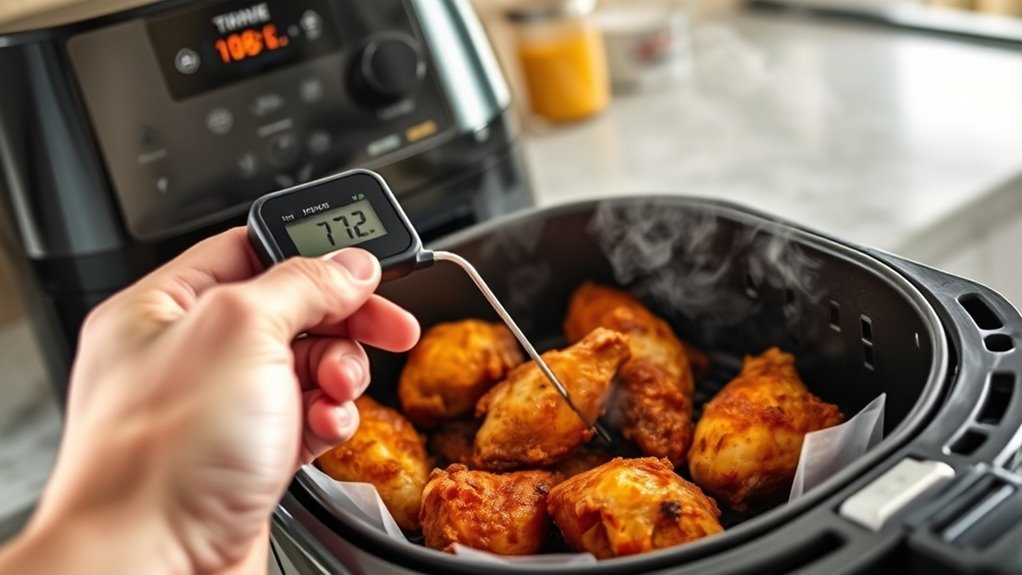
To guarantee your dish is perfectly cooked, you should use a food thermometer to check the internal temperature. Keep an eye out for visual cues like color and texture to confirm doneness. Combining these methods gives you the best chance for consistently great results.
Subheading 1: Use a Food Thermometer
Using a food thermometer is one of the most reliable ways to guarantee your oven recipes turn out perfectly cooked. It helps ensure food safety and prevents under- or overcooking, especially when trying different recipe variations in the air fryer. By checking the internal temperature, you can confidently adjust cooking times for different ingredients. Keep these tips in mind:
- Insert the thermometer into the thickest part of the food for accuracy.
- Refer to safe temperature guidelines for meats and other ingredients.
- Use it to monitor doneness, especially when experimenting with new recipes or modifications.
This simple step minimizes guesswork, improves food safety, and guarantees consistent results every time you cook.
Subheading 2: Observe Visual Cues
Monitoring visual cues is an essential part of achieving perfect doneness in oven recipes. As you adapt recipes for your air fryer, keep a close eye on color, texture, and bubbling. These cues help you avoid overcooking or undercooking, ensuring oven safety and ideal results. Use your senses to check for golden-brown crusts or bubbling edges, indicating doneness. Also, consider air fryer accessories like racks or skewers to promote even cooking and better visual monitoring. Here’s a quick guide:
| Visual Cue | What to Look For |
|---|---|
| Golden-brown color | Perfect crust or topping |
| Bubbling edges | Food is cooked through |
| Dry surface | Ready for serving |
| Shrinking or shrinking | Indicates doneness |
| Even color distribution | Uniform cooking |
Stay attentive; your eyes are your best tool for safe, delicious results.
Tips for Recipe Adaptation and Experimentation

Adapting recipes for the oven often requires a bit of experimentation to get the best results. You may need to tweak ingredient substitutions or adjust seasoning to maintain the recipe flavor in your air fryer. Don’t be afraid to try different approaches to see what works best. Here are some tips to guide your experimentation:
- Start with small ingredient substitutions to preserve overall taste.
- Adjust seasonings gradually, tasting as you go for the right flavor balance.
- Keep notes of each variation so you can refine your process over time.
Common Mistakes to Avoid When Converting Recipes
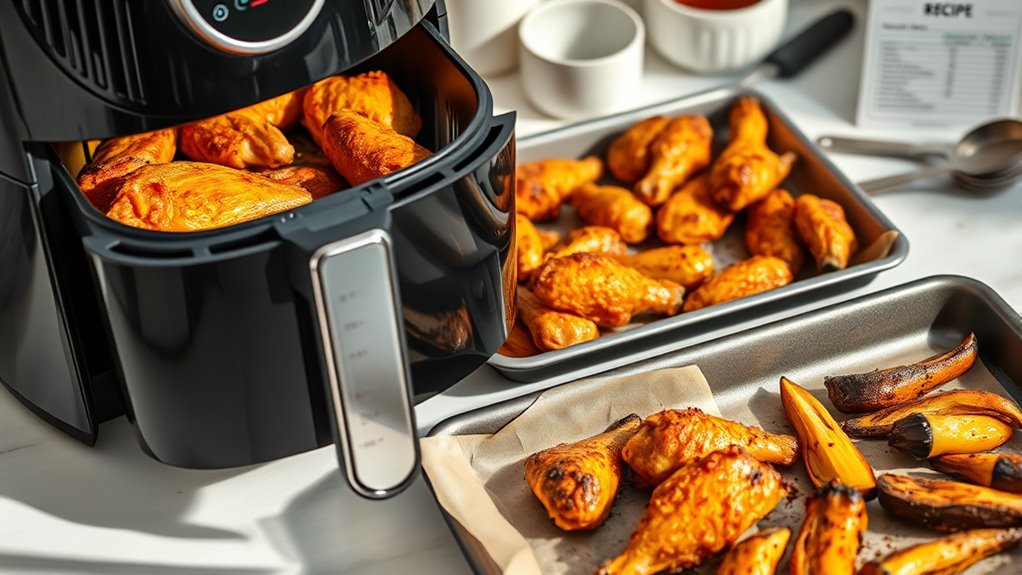
Have you ever converted a recipe only to find the results less than satisfying? One common mistake is neglecting proper seasoning techniques. Over or under-seasoning can throw off the flavor balance, so adjust spices gradually and taste as you go. Another mistake is making ingredient substitutions without considering their impact on cooking time and texture. For example, swapping ingredients might require different air fryer settings or timing. Also, avoid simply reducing oven temperature and time without testing, as air fryers cook differently. Rushing these adjustments can lead to uneven cooking or burnt edges. By paying attention to seasoning techniques and carefully selecting ingredient substitutions, you’ll improve your chances of delicious, perfectly cooked air fryer recipes.
Cleaning and Maintaining Your Air Fryer for Optimal Performance

Keeping your air fryer clean is essential for maintaining its performance and extending its lifespan. Regular cleaning prevents residue buildup and guarantees even cooking. To keep it in top shape, follow these cleaning tips:
- Remove and wash air fryer accessories after each use, using warm soapy water.
- Wipe down the interior with a damp cloth, avoiding abrasive cleaners that can damage non-stick surfaces.
- Check and clean the heating element regularly to prevent grease buildup.
Keeping the air fryer’s basket and tray clean not only improves food taste but also helps prevent smoke during cooking. Proper maintenance of accessories ensures they last longer and perform better. Taking a few minutes to clean your air fryer after each use will keep it functioning at its best and extend its lifespan.
Frequently Asked Questions
Can I Use Oven Recipes With Frozen Ingredients in an Air Fryer?
Yes, you can use oven recipes with frozen ingredients in your air fryer. Just keep in mind frozen ingredient compatibility, as some items may need extra cooking time or adjustments to prevent uneven cooking. Use recipe adaptation tips like shaking or flipping food halfway through and increasing the cooking time slightly. Always monitor your food closely to make sure it cooks evenly and reaches the desired crispiness.
How Do I Adjust Recipes With Breading or Batter for the Air Fryer?
You can adapt recipes with breading or batter by ensuring your breading techniques create a sturdy, even crust that sticks well in the air fryer. Adjust batter consistency to be slightly thicker to prevent dripping, and spray or lightly oil the coated items for crispiness. Avoid overly thick batters, which may not cook evenly. With proper breading techniques, your air-fried dishes will turn out crispy and delicious every time.
Are There Specific Ingredients That Don’T Work Well in an Air Fryer?
Certain ingredients, like delicate herbs or wet batters, may not work well in an air fryer due to ingredient compatibility issues. You might notice flavor alterations or uneven cooking with items that are overly moist or thin. To guarantee success, stick to ingredients that can handle the rapid air circulation. Adjust recipes accordingly, and always monitor to prevent overcooking or burning, especially with sensitive or incompatible ingredients.
How Do Altitude Changes Affect Air Fryer Cooking Adjustments?
When dealing with altitude changes, you need to keep an eye on pressure effects that can throw off your air fryer cooking. You might need an altitude adjustment, like shortening cooking times or tweaking temperature settings, because higher elevations often cause foods to cook faster or differently. Don’t let it ruffle your feathers—just experiment a bit, and you’ll master your air fryer at any altitude.
Can I Convert Multi-Layer Oven Recipes for the Air Fryer?
Yes, you can convert multi-layer oven recipes for the air fryer, but you’ll need to adapt for layered baking and multi-tier cooking. Use small, separate baskets or racks to fit multiple layers, ensuring proper air circulation. Adjust cooking times since air fryers cook faster. Keep an eye on each layer to prevent overcooking, and consider reducing the temperature slightly to achieve even results across all layers.
Conclusion
Now that you know the secrets to converting oven recipes for your air fryer, you’re ready to uncover a world of faster, crunchier, and more delicious dishes. But don’t stop here—there’s always more to discover as you experiment and perfect your technique. Are you prepared to elevate your cooking game and surprise yourself with new flavors? The journey has just begun, and your air fryer is the key to endless culinary adventures.