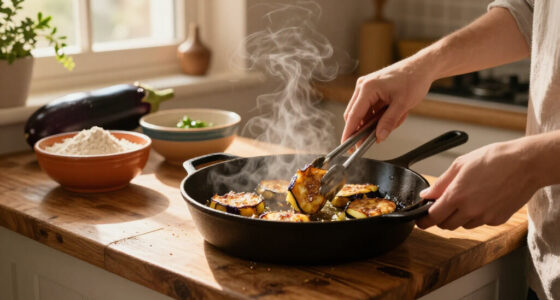
To temper eggs for custards and sauces without curdling, start by whisking your eggs until smooth. Gradually add a small amount of warm liquid while whisking constantly to prevent shock. Slowly incorporate about a cup of warm liquid before pouring the egg mixture back into the saucepan. Stir gently over low heat, whisking until it thickens, but avoid high heat to prevent scrambling. With practice, you’ll master this technique and guarantee a creamy, delicious result.

Get kitchen gear delivered free — and shop member deals
- Fast, free delivery on millions of items
- Access to Prime Big Deal Days deals on October 6–7
- Prime Video, Amazon Music and more included
Key Takeaways
- Whisk eggs until smooth before slowly adding warm liquid to prevent curdling.
- Gradually incorporate the warm liquid, whisking continuously to maintain a uniform mixture.
- Heat the combined mixture over low heat, stirring constantly to avoid scrambling.
- Use a thermometer to monitor temperatures, aiming for around 160°F (70°C) without boiling.
- Strain the final mixture through a fine-mesh sieve to eliminate any lumps for a smooth texture.

When you want to create a smooth, creamy custard or sauce, tempering eggs is an essential technique you can master. This method allows you to gently introduce eggs into a warm mixture without curdling, ensuring a luscious texture. To get started, you’ll need to understand the basic techniques overview. First, gather your ingredients: eggs, a warm liquid (like milk or cream), and your flavoring components. The key is to raise the temperature of the eggs gradually, so they blend seamlessly into your dish.
Begin by whisking your eggs in a bowl. You want them to be well beaten, creating a uniform mixture. In a separate saucepan, heat your liquid until it’s warm but not boiling—around 160°F (70°C) is a good target. Here’s where the magic happens: slowly pour a small amount of the warm liquid into the beaten eggs while whisking continuously. This step is essential, as it prevents the eggs from cooking too quickly and forming clumps.
Whisk eggs until uniform, then gradually blend in warm liquid to prevent clumping for a smooth custard.
Once you’ve added about a cup of the warm liquid to the eggs, you can pour the egg mixture back into the saucepan with the remaining warm liquid. Stir everything together over low heat, continuing to whisk until the mixture thickens. It’s important not to rush this process; if the heat is too high, you risk scrambling the eggs.
Common mistakes to avoid include adding too much warm liquid at once or not whisking vigorously enough. If you pour in the liquid too quickly, you might shock the eggs, leading to curdled bits in your sauce. Also, remember that patience is key—if you try to rush through the heating process, you’ll likely end up with a grainy texture instead of a silky custard.
If you notice any lumps forming during the cooking process, don’t panic! Simply strain the mixture through a fine-mesh sieve to remove any curdled bits. This will help you achieve that perfect smoothness you’re aiming for. With practice, you’ll find that tempering eggs becomes second nature, and you’ll be creating custards and sauces like a pro. Additionally, using energy-efficient cloud solutions can help you store and access your recipe notes securely while cooking.
Frequently Asked Questions
Can I Use Egg Substitutes for Tempering?
You can use egg substitutes for tempering, especially if you’re managing an egg allergy or looking for vegan alternatives. Options like silken tofu, mashed bananas, or commercial egg replacers can work well in recipes that require tempering. Just remember that different substitutes may alter the texture and flavor of your dish, so it’s best to experiment a little to find what works best for your specific recipe. Enjoy your cooking!
What Types of Recipes Require Tempered Eggs?
You’ll want to temper eggs for recipes that need a creamy, smooth texture. Think rich custards, silky sauces, and luscious ice creams. But be careful! If you rush, you might end up with scrambled eggs instead of that velvety custard. Egg safety matters here, so take your time to gradually combine the hot liquid with eggs. Mastering these custard techniques will elevate your dishes, leaving everyone asking for seconds.
How Do I Know if My Eggs Are Tempered Correctly?
You’ll know your eggs are tempered correctly when they gradually warm up without cooking. Start with fresh eggs, as their quality affects the outcome. Slowly add a small amount of the hot mixture to the eggs while whisking constantly. If the eggs blend smoothly and don’t scramble, you’ve achieved proper temperature control. The mixture should feel warm but not hot—this ensures your custard or sauce turns out perfectly creamy and smooth.
Is It Safe to Consume Raw Eggs in Tempering?
It’s not completely safe to consume raw eggs when tempering, given the potential risks. You’re exposing yourself to bacteria like Salmonella, which can lead to foodborne illness. If you’re concerned about egg safety, consider using pasteurized eggs instead. They reduce the risk while still allowing you to achieve that creamy texture. Remember, using careful techniques and high-quality ingredients can help you enjoy your dishes without worrying about raw egg risks.
Can I Temper Eggs in a Microwave?
Yes, you can temper eggs in a microwave for quick tempering, but you need to be careful. Microwave safety is vital here; use short intervals, stirring frequently to avoid cooking the eggs. Start by whisking your eggs and gradually adding warmed liquid in small amounts. Heat in 10-15 second bursts, mixing in between, until the mixture is smooth and slightly warmed. This method can save time while ensuring your eggs don’t curdle.
Conclusion
By mastering the art of tempering eggs, you’re not just preventing curdling; you’re serenading your custards and sauces into velvety perfection. Like a skilled conductor guiding an orchestra, you’ll blend hot and cold with finesse, crafting rich flavors that dance on the palate. So, embrace this technique and transform your culinary creations into symphonies of taste. Remember, a little patience goes a long way, and soon, you’ll be the maestro of creamy delights in your kitchen.
Fall Picks
fall essentials
As an affiliate, we earn on qualifying purchases.