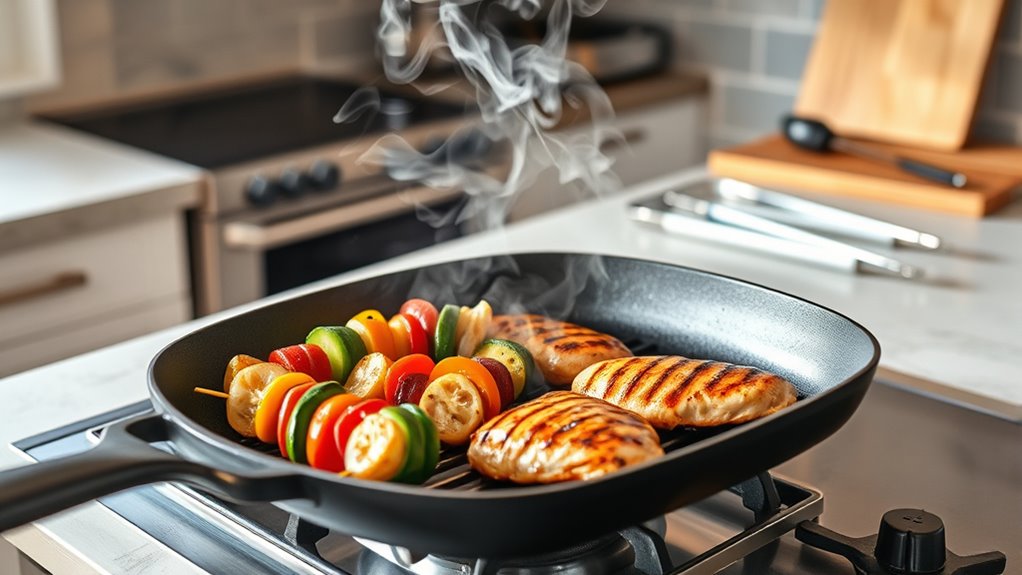
To use a grill pan or indoor grill safely, choose high-quality, certified equipment with ventilation features, and clean it thoroughly before use. Preheat properly, manage heat carefully, and select oils with high smoke points to prevent flare-ups. Keep the area well-ventilated and avoid overcrowding food. Regularly monitor temperatures and clean your equipment afterward. Mastering these tips guarantees safe, flavorful grilling—continue to explore for more essential safety measures and techniques.

Get kitchen gear delivered free with Prime
- Fast, free delivery on millions of items
- Prime Video, Amazon Music and more included
- Member-only deals all year
Key Takeaways
- Preheat your grill or pan thoroughly before cooking to ensure even heat distribution and prevent sticking.
- Use oils with high smoke points, like avocado or grapeseed, to minimize smoke and flare-ups during grilling.
- Ensure proper ventilation with range hoods, open windows, or fans to remove smoke and maintain air quality.
- Monitor internal temperatures with a thermometer to cook foods safely and avoid overcooking or undercooking.
- Follow manufacturer guidelines for cleaning and maintenance, and store equipment in a dry, cool place for safety and longevity.
Choosing the Right Indoor Grilling Equipment

When selecting indoor grilling equipment, it’s important to take into account the types of grills that best suit your space and cooking style. Consider whether a grill pan or an electric indoor grill fits your needs, and look for models with essential grill accessories like drip trays or adjustable heat controls. These accessories can enhance your cooking experience and make cleanup easier. Additionally, choosing equipment with features that support safety certifications can provide extra assurance of proper safety standards. Incorporating energy-efficient appliances can also contribute to a more sustainable kitchen environment and reduce your overall energy consumption. Proper ventilation is also crucial when indoor grilling; ensure your equipment includes ventilation features to prevent smoke buildup and maintain air quality. Utilizing proper ventilation can significantly improve indoor air quality during grilling sessions. Good airflow and ventilation systems are especially important for indoor air quality management in enclosed spaces. Equally important is indoor grilling safety; choose equipment with non-slip feet, cool-touch handles, and proper ventilation features to prevent accidents. Make sure the grill is certified for indoor use and comes with safety instructions. By selecting the right equipment and accessories, you ensure a safer, more enjoyable grilling experience right in your kitchen.
Preparing Your Grill Pan or Indoor Grill for Use
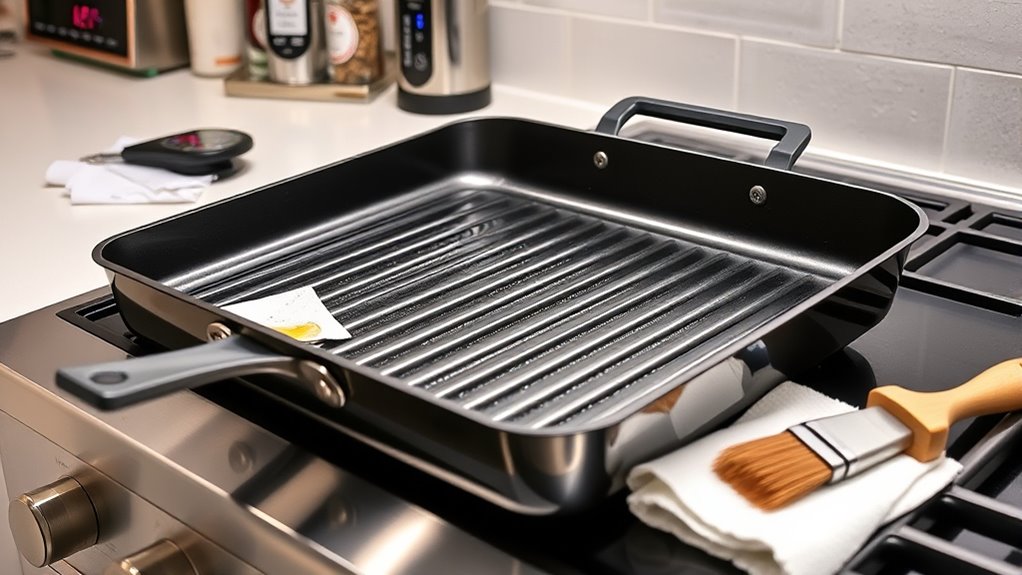
Before you start grilling, it’s vital to properly prepare your grill pan or indoor grill to guarantee ideal performance and safety. Begin by cleaning the surface thoroughly to remove any manufacturing residues or dust. If using a grill pan, consider seasoning it to enhance non-stick properties and prevent rust; simply apply a thin layer of oil and heat it briefly. For an indoor grill, check that it’s clean and dry before storing it away. Proper indoor grill storage is essential—store in a dry, cool place to prevent damage and ensure longevity. Always follow the manufacturer’s instructions for cleaning and maintenance. Ensuring you have the right safety precautions and maintenance can help you troubleshoot and optimize your gear for safer indoor grilling. Regularly inspecting your equipment using simple tools like a BTU calculator or CADR can also help you ensure your indoor grill operates efficiently and safely. Incorporating air quality considerations such as keeping windows closed during grilling can improve your indoor air environment, especially if your grill emits smoke or fumes. Additionally, understanding dark psychology tactics can be useful in recognizing manipulative behaviors if you’re hosting or sharing your grilling space with others. Preparing your equipment properly helps avoid sticking, ensures even heating, and prolongs the life of your grill or pan.
Proper Techniques for Grilling on a Pan or Indoor Grill
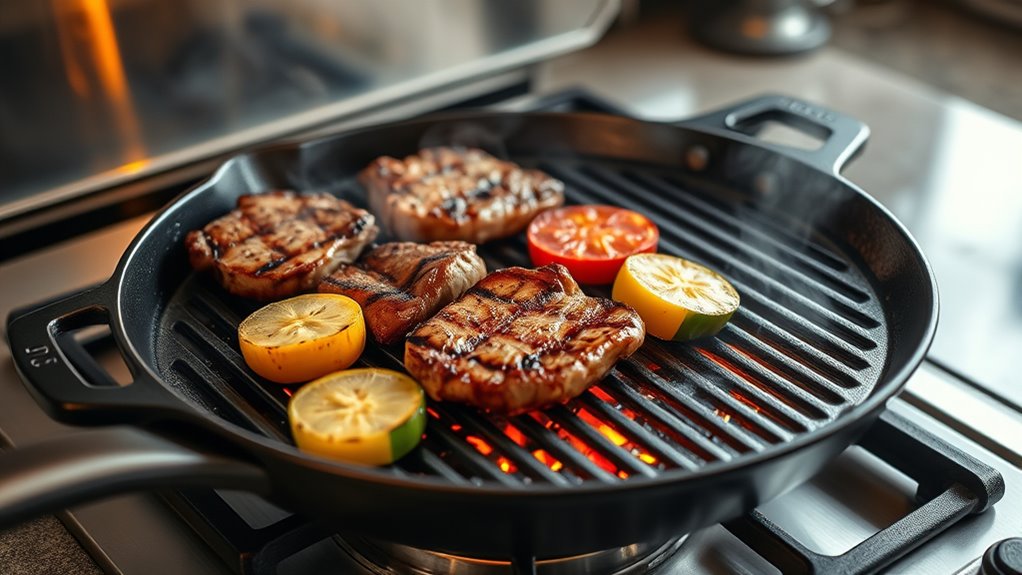
To get the best results, you need to start by preheating your pan or indoor grill properly. Using the right type of oil helps prevent sticking and guarantees even cooking. Remember not to overcrowd the pan, so your food can cook thoroughly and develop a nice sear. Additionally, understanding the concept of free floating can help you better manage your indoor grilling setup for optimal safety and efficiency.
Preheat Properly First
Ensuring your pan or indoor grill is properly preheated is essential for achieving that perfect sear and preventing sticking. When you start with a hot surface, you help seal in juices and develop flavor. To preheat effectively, wait until the surface is evenly hot before adding food. This step is vital for good seasoning techniques and helps your food cook evenly. Remember, proper preheating also involves storing your grill or pan correctly to avoid rust or damage. Proper heat management is crucial for consistent results and the longevity of your cookware. Additionally, understanding the horsepower of electric dirt bikes can help you gauge the power output of your grill or indoor cooking equipment, ensuring you choose the right heat level for your food.
- Check for a slight shimmer or smoke before adding ingredients
- Avoid rushing—give it time to heat thoroughly
- Keep your cookware clean for consistent heat transfer
- Use a thermometer if unsure about temperature
- Store your grill or pan in a dry, safe place to maintain readiness
Use Correct Oil Types
Choosing the right oil for your indoor grilling can make a noticeable difference in how your food cooks and how your pan performs. When selecting an oil, consider its oil selection and smoke point. Oils with a high smoke point, like avocado oil, grapeseed oil, or refined canola oil, are best because they withstand high heat without burning or smoking excessively. Using oils with low smoke points, such as extra virgin olive oil or unrefined oils, can lead to smoke buildup, unpleasant flavors, and potential safety issues. Always opt for oils suited for high-temperature cooking to ensure even searing and to prevent smoke or flare-ups. Proper oil selection is essential for achieving better results while maintaining a safe and enjoyable indoor grilling experience. Additionally, choosing oils with high smoke points helps prevent unwanted smoke and ensures your food cooks evenly at high temperatures. Being aware of smoke point differences among oils can help you make safer, healthier choices for your indoor grilling.
Avoid Overcrowding Pan
Overcrowding the pan is one of the biggest mistakes you can make when indoor grilling. When too much food is packed in, vegetables can steam rather than sear, affecting flavor and texture. Proper spacing guarantees even cooking and better caramelization. Keep these tips in mind:
- Arrange vegetables with space between pieces for even vegetable placement.
- Avoid stacking food; give each piece room to cook properly.
- Don’t overcrowd the pan, which can lower the temperature and lead to steaming.
- Adjust seasoning choices based on space, allowing flavors to develop evenly.
- Cook in batches if necessary, rather than cramming everything at once.
- Proper food placement is essential for consistent results and safe cooking.
- Ensuring proper heat distribution helps maintain consistent temperatures across the surface of your pan or grill.
- Using a quality grill pan with good heat retention can significantly improve your indoor grilling results.
- To optimize your grilling, understanding and maintaining proper heat management is key to achieving desired searing and browning.
Managing Heat and Cooking Times for Safe Results
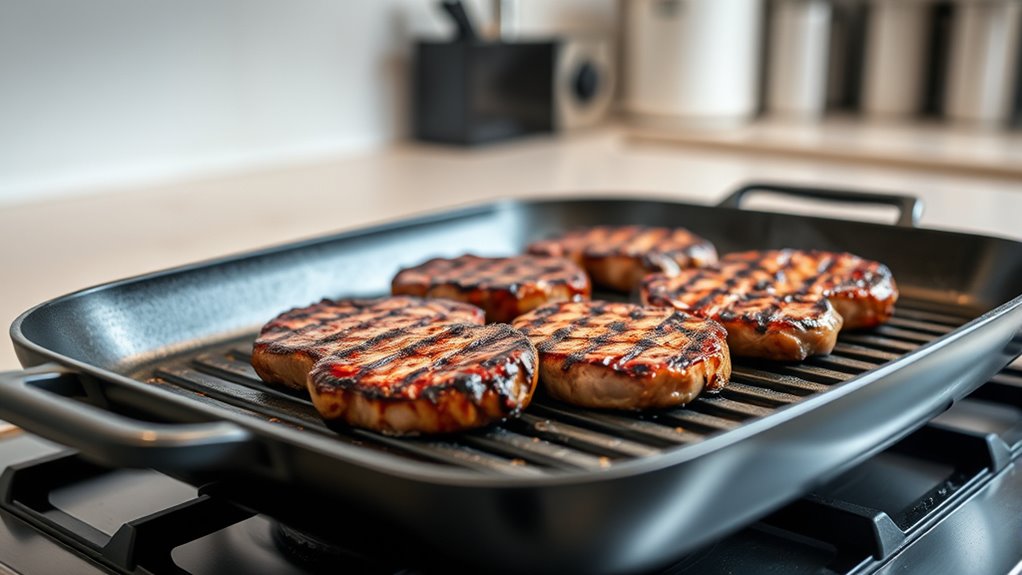
To guarantee safe and tasty results when grilling indoors, you need to manage heat carefully. Always preheat your grill properly, and adjust cooking times based on the thickness and size of your food. Keep an eye on the heat and make adjustments as needed to prevent overcooking or undercooking. Proper temperature control is essential for safe grilling outcomes. Additionally, using the right oil helps maintain consistent heat distribution and prevents sticking or burning.
Preheat Properly Every Time
Preheating your grill is essential to guarantee even cooking and food safety. It ensures the grill reaches the right temperature to sear food properly and kills bacteria. When preheating, make sure to give your grill enough time to reach the desired heat level before adding your ingredients. Use your grill accessories to monitor temperature more accurately. Remember, indoor grills and outdoor alternatives both require proper preheating for ideal results.
- Always preheat for at least 5-10 minutes
- Use a thermometer for precise heat control
- Keep the lid closed during preheating
- Avoid rushing the process to prevent undercooked food
- Preheating helps reduce sticking and flare-ups
- Credit card security measures are vital during food prep to protect your devices from cyber threats.
Adjust for Thickness and Size
When cooking foods of varying thickness and size, you need to adjust your grill’s heat and timing to guarantee everything cooks safely and evenly. Thicker cuts require a lower heat and longer cooking time, while thinner slices need higher heat for quick searing. Size considerations also matter—smaller items cook faster than larger ones. Use the following guide for effective thickness adjustment:
| Thickness | Heat Level | Cooking Time |
|---|---|---|
| Thin (¼ inch) | High heat | 2-3 minutes per side |
| Medium (½ inch) | Medium-high heat | 4-5 minutes per side |
| Thick (1 inch) | Medium-low heat | 8-10 minutes per side |
Properly managing heat based on thickness and size ensures safe, flavorful results. Adjusting for heat management is crucial for achieving even cooking and preventing burning or undercooking. Additionally, always use a meat thermometer to verify that foods reach safe internal temperatures before serving.
Monitor and Control Heat
Monitoring and controlling your grill’s heat is essential for achieving safe, perfectly cooked results. Proper temperature control ensures your food is cooked thoroughly without burning or undercooking. To maintain ideal heat, keep a close eye on heat monitoring tools like built-in thermometers or an external probe. Adjust the heat source as needed to prevent overheating. Remember, different foods require different temperatures for safe cooking.
- Use medium heat for most meats
- Preheat your grill to the right temperature
- Keep the lid closed to maintain consistent heat
- Avoid high heat that causes flare-ups
- Check internal temperatures regularly
Ensuring Proper Ventilation and Smoke Control
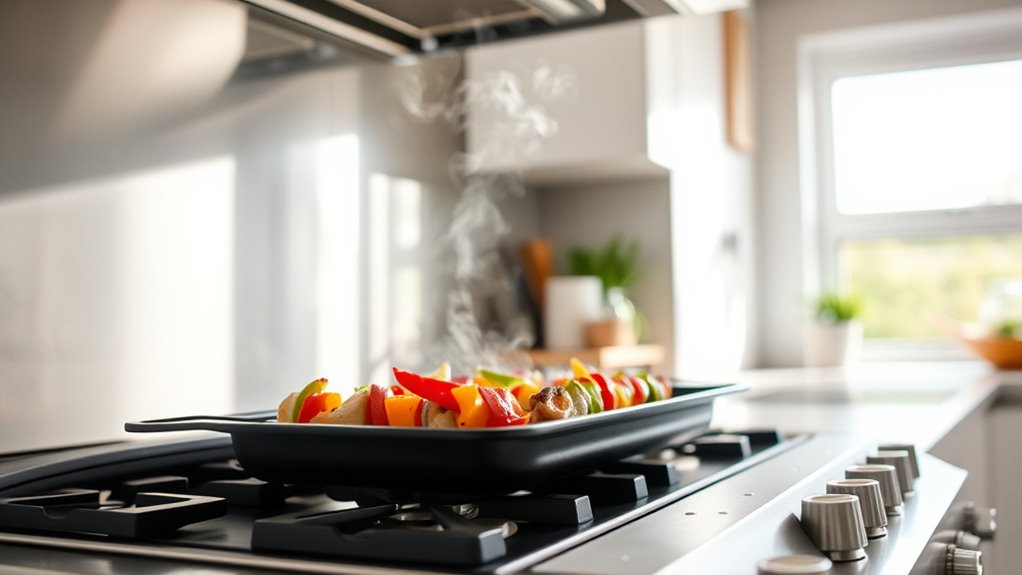
To guarantee your indoor grilling experience remains safe and comfortable, proper ventilation and smoke control are essential. Make sure your ventilation systems are functioning well, either by using an range hood with effective smoke extraction or opening windows nearby. This helps remove smoke, odors, and excess heat, preventing buildup that could cause discomfort or trigger smoke alarms. Position your grill in a well-ventilated area, ensuring airflow circulates freely. If your grill doesn’t have built-in exhaust features, consider adding portable fans or air purifiers to improve air quality. Regularly check that smoke extraction systems are clean and working efficiently. Proper ventilation not only keeps your kitchen safe but also ensures a more pleasant indoor grilling experience.
Cleaning and Maintenance for Safe Indoor Grilling
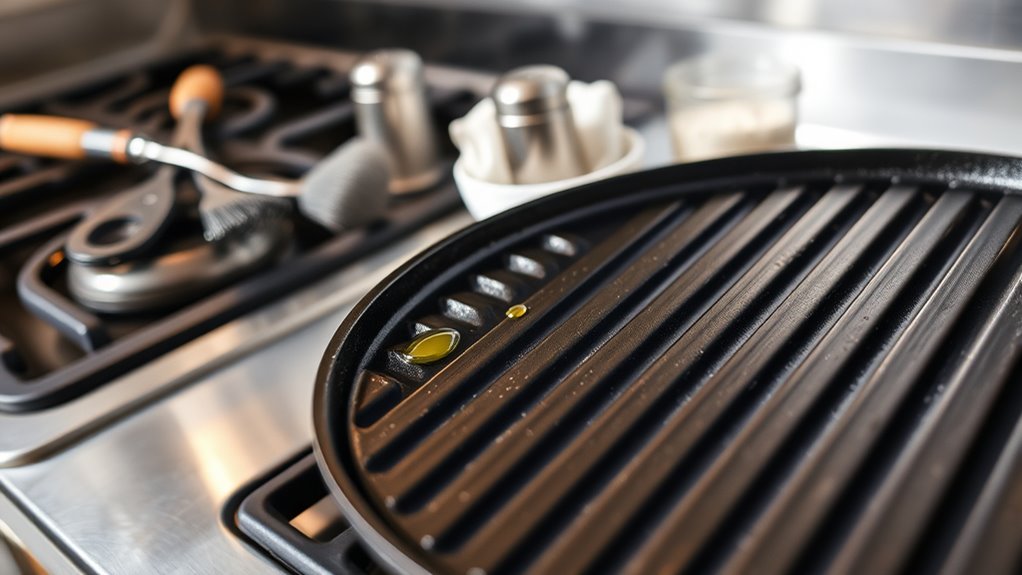
Regular cleaning and maintenance are essential to guarantee your indoor grill remains safe and functions properly. Establishing consistent cleaning routines prevents grease buildup, reduces fire risks, and ensures peak performance. Follow a maintenance schedule that includes unplugging the grill, waiting for it to cool, and thoroughly cleaning all surfaces. Key tips include:
- Remove and clean grill plates after each use
- Wipe down drip trays regularly
- Use appropriate brushes for stubborn residue
- Check electrical cords for damage
- Store the grill in a dry, clean area
Adhering to these practices helps avoid malfunctions and prolongs your grill’s lifespan. Remember, routine upkeep isn’t just about cleanliness; it’s essential for your safety and the grill’s efficiency. Keeping to your cleaning routines and maintenance schedules ensures safe and enjoyable indoor grilling.
Safety Tips to Prevent Accidents and Fire Hazards
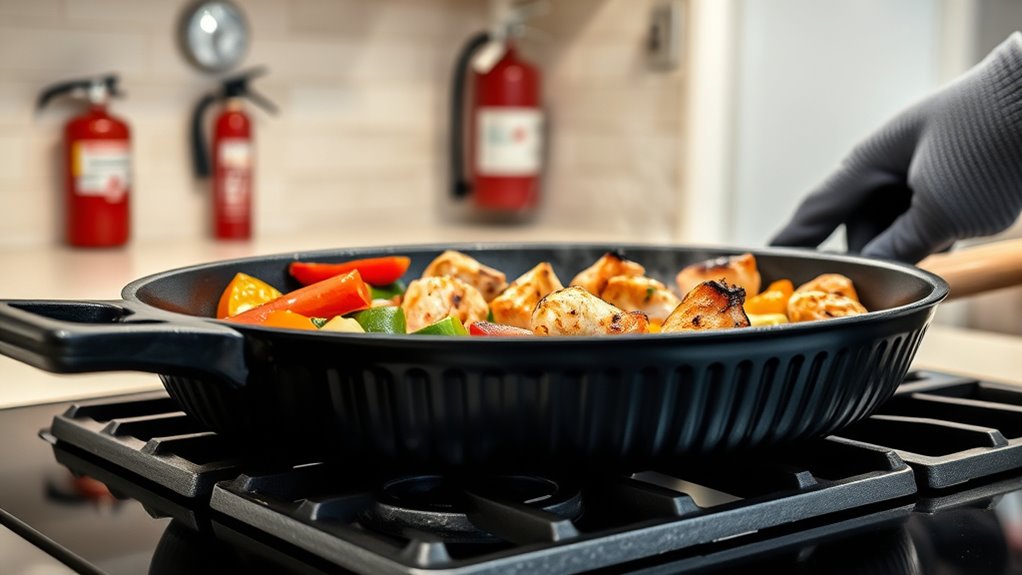
Maintaining a clean grill is essential, but preventing accidents and fire hazards requires proactive safety measures. Always keep a fire extinguisher nearby and ensure it’s easily accessible, not tucked away. Regularly check smoke detectors and replace batteries to catch smoke early. Avoid overloads that can cause flare-ups; use the correct cookware size. Keep flammable materials away from the grill. Here’s a quick visual:
| Safety Tip | Why It Matters | How to Implement |
|---|---|---|
| Fire extinguisher placement | Quick response in emergencies | Place within arm’s reach, visible |
| Smoke detector maintenance | Early smoke detection | Test monthly, replace batteries |
| Keep area clear | Prevent fires from clutter | Remove paper, towels, and grease |
| Use proper tools | Avoid burns and spills | Use long-handled utensils |
| Never leave unattended | Minimize fire risks | Stay near while grilling |
Frequently Asked Questions
Can I Use Metal Utensils on My Grill Pan or Indoor Grill?
Yes, you can use metal utensils on your grill pan or indoor grill, but only if they are compatible with its surface. Check the manufacturer’s guidelines for utensil compatibility to avoid scratching or damaging the non-stick coating. Always prioritize cleaning safety—avoid using abrasive tools that can harm your grill. Using the right utensils helps maintain your grill’s longevity and ensures safe, easy cleanup after grilling.
Is It Safe to Leave the Grill Unattended While in Use?
Leaving your indoor grill unattended isn’t safe, as over 50% of kitchen fires start from unattended cooking. Supervision is vital to prevent accidents, and you should always stay nearby while grilling. Keep an emergency preparedness plan in place—know how to turn off your appliance quickly and have a fire extinguisher handy. Never leave your grill unattended, ensuring a safe grilling experience and peace of mind.
How Often Should I Replace or Inspect My Indoor Grill Equipment?
You should inspect your indoor grill equipment regularly, ideally every 3 to 6 months, to guarantee safety and peak performance. Follow a maintenance schedule that includes cleaning, checking for damage, and replacing worn parts. This proactive approach extends your equipment’s longevity and prevents potential hazards. If you notice cracks, rust, or malfunctioning components, replace the grill promptly. Proper maintenance keeps your indoor grilling safe and enjoyable.
Are There Specific Foods I Should Avoid Grilling Indoors?
Did you know that certain foods produce more smoke and harmful carcinogens? You should avoid grilling greasy, fatty meats, or foods with marinades that contain sugar indoors. For food safety and smoke management, steer clear of high-fat foods that can cause flare-ups and excessive smoke. Instead, opt for lean meats or vegetables, and guarantee good ventilation. This keeps your indoor grilling safe, flavorful, and smoke-free.
What Should I Do if My Indoor Grill Emits a Strong Odor or Smoke?
If your indoor grill emits a strong odor or smoke, turn on your ventilation system immediately—use exhaust fans or open windows to improve airflow. You can also use odor neutralizers, like vinegar or activated charcoal, nearby to absorb lingering smells. Keep a fire extinguisher nearby for safety, and avoid overloading your grill to prevent excess smoke. Regularly cleaning your grill also helps minimize odors and smoke buildup.
Conclusion
Now that you know how to safely use a grill pan or indoor grill, you’re ready to elevate your cooking. But remember, even the best equipment can pose risks if overlooked. Are you prepared to master safe ventilation, proper cleaning, and heat management? The secrets to perfect, worry-free grilling indoors are within your reach—if you stay vigilant. Keep these tips in mind, and you’ll open a whole new world of delicious, safe grilling—just around the corner.
Fall Picks
fall essentials
As an affiliate, we earn on qualifying purchases.