If you don’t have a thermometer, you can still check if your meat is done cooking. Use the poke test: soft means rare, while firm means well-done. Slice into thicker cuts to inspect color and juices; clear juices indicate doneness, while cloudy or pink means it’s undercooked. Remember to let your meat rest for ideal texture and flavor. Mastering these tactile indicators will improve your cooking skills, and there’s more to learn to refine your technique.

Get kitchen gear delivered free — and shop member deals
- Fast, free delivery on millions of items
- Access to Prime Big Deal Days deals on October 6–7
- Prime Video, Amazon Music and more included
Key Takeaways
- Use the poke test: Press the meat to assess firmness; soft means rare, firm indicates well-done.
- Cut into thicker cuts to check internal color; clear juices mean proper doneness, pink suggests undercooking.
- Familiarize yourself with meat texture: slight yield indicates medium rare, while a firm feel suggests overcooking.
- Compare the feel of meat to the fleshy part of your palm for a quick doneness gauge.
- Always let meat rest after cooking; this redistributes juices and enhances tenderness and flavor.
How can you be sure that your meat is cooked to perfection? It’s a question many home cooks ask, especially when they don’t have a thermometer handy. Understanding the right cooking techniques can help you gauge whether your meat is done without relying solely on temperature. By focusing on the meat texture and how it responds to your touch, you can confidently serve a delicious meal.
Learn to gauge meat doneness through texture and touch, ensuring a perfectly cooked meal without a thermometer.
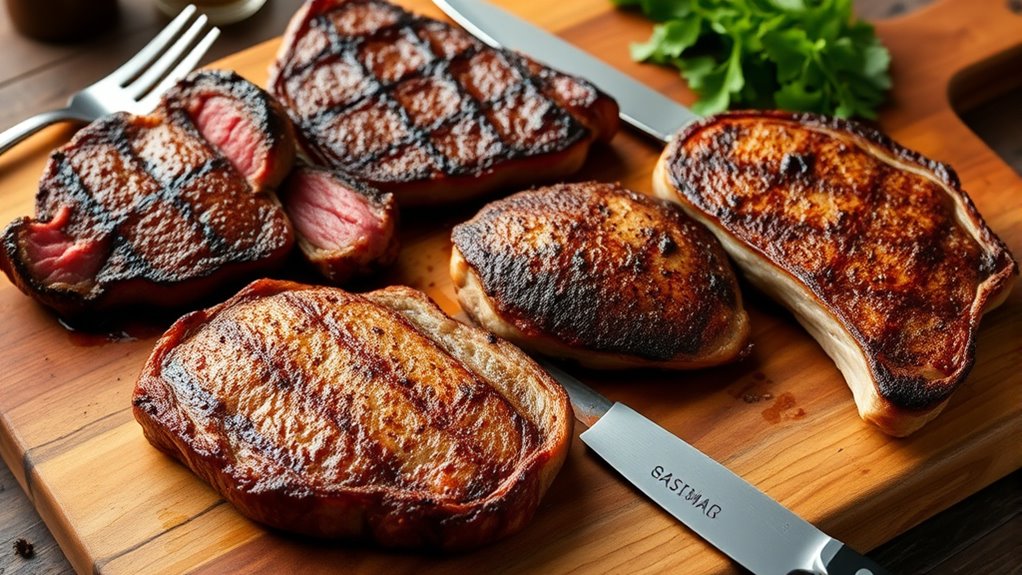
First, consider the cut of meat you’re working with. Different types have unique textures and cooking times. For instance, a tender cut like steak will feel different when it’s rare compared to a tougher cut like brisket. When you press down on the meat, it should yield slightly if it’s medium rare. If it springs back quickly, it’s likely not cooked enough. Conversely, if it feels overly firm, it may be overcooked. Practicing this method will help you become more attuned to the textures of various meats over time.
Another handy technique is the “poke test.” This method involves using your finger to press the meat and assess its doneness. Rare meat will feel soft and squishy, medium will have a bit more resistance, and well-done will feel quite firm. To get a better sense of the differences, you can compare the feel of the meat to the fleshy part of your palm under your thumb. When your thumb and index finger touch, you’ll get a similar texture to rare meat. Middle finger to thumb gives you medium, and ring finger to thumb mimics well-done.
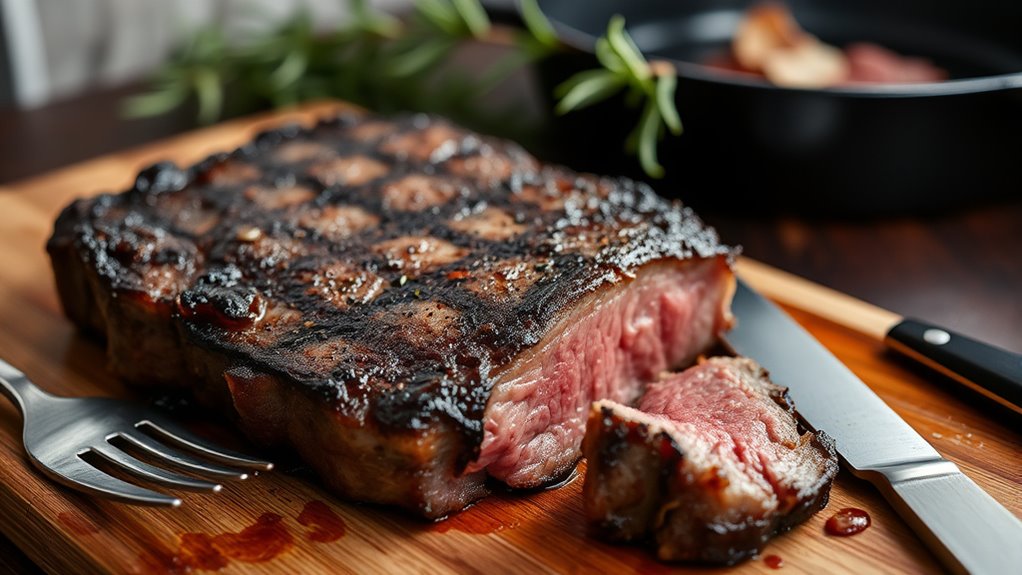
You can also cut into the meat to check its color, especially for thicker cuts. When slicing through, look for clear juices and a uniform color. For poultry, the meat should be white all the way through, with no pink remaining. Ground meats should no longer be pink and should have an even color throughout.
Lastly, don’t forget to let your meat rest after cooking. This allows juices to redistribute, improving its texture. While resting, the meat will continue to cook slightly, so removing it from heat a little earlier can result in a perfectly cooked piece.
Frequently Asked Questions
Can I Use Color to Determine Meat Doneness?
Yes, you can use meat color as a guide to determine doneness, but it’s not foolproof. For instance, beef should turn brown for medium rare, while chicken should be white or golden. However, relying solely on visual cues can be misleading since some meats may still be undercooked despite their appearance. Always consider the thickness and type of meat, and use a combination of color and other methods for the best results.
What Are the Risks of Undercooked Meat?
Undercooked meat poses significant food safety risks. You might not realize it, but consuming meat that isn’t cooked properly can lead to harmful bacterial growth. This can result in foodborne illnesses like salmonella or E. coli, causing symptoms like nausea and diarrhea. You want to avoid these issues, so always guarantee your meat reaches the appropriate internal temperature. It’s better to be safe than sorry when it comes to your health!
How Does Resting Time Affect Meat Doneness?
Resting time critically affects meat doneness by allowing residual heat to continue cooking the meat, enhancing its tenderness. When you let the meat rest, the juices redistribute, making each bite more flavorful. If you slice into it too soon, those juices escape, leading to drier meat. So, always give your cooked meat a chance to rest for a few minutes before serving; it’ll ensure a much more tender and juicy result!
Can I Rely on Cooking Time Alone for Doneness?
You can’t rely solely on cooking time for doneness. Different cooking methods and factors like meat texture can considerably affect how long it takes for meat to cook through. Thicker cuts may need more time than thinner ones, while a high-heat method can create a seared exterior that misleads you about doneness. Instead, use visual cues and touch to gauge the meat’s readiness, ensuring you achieve the perfect texture every time.
How Can I Tell if Meat Is Overcooked?
You can tell if meat’s overcooked by checking its texture and flavor changes. If the meat feels tough and dry instead of tender and juicy, it’s likely overdone. When you taste it, look for a loss of rich flavors—overcooked meat often tastes bland or rubbery. Pay attention to the color, too; if it’s excessively gray or charred, you’ve probably crossed the line into overcooked territory. Trust your senses to guide you!
Conclusion
So, the next time you find yourself cooking without a thermometer, remember these simple methods to gauge doneness. Whether it’s the juiciness of the meat or the color of the juices, trust your instincts and experience. After all, who doesn’t want to serve up a perfectly cooked meal? With practice, you’ll become a pro at knowing when your meat is just right, leaving your guests raving and your dinner table inviting. Happy cooking!
Fall Picks
fall essentials
As an affiliate, we earn on qualifying purchases.