At high altitudes, you’ll notice baked goods rise faster due to quick gas expansion, but they may collapse or be drier if you don’t modify ingredients. Reduce leavening agents, increase liquids, and slightly raise oven temperatures to keep textures balanced. Longer baking times help prevent undercooking. Making these tweaks ensures your dishes turn out better, and exploring more tips will give you confidence in mastering high-elevation cooking adventures.
Key Takeaways
- Lower air pressure causes liquids to boil at lower temperatures, requiring longer cooking times and moisture adjustments.
- Gases from leavening expand more quickly, so reducing baking soda or powder prevents over-rising and collapsing.
- Oven temperatures may need slight increases, and baking times should be extended to compensate for moisture loss.
- Adjusting ingredient ratios—like increasing flour and liquids—helps maintain proper batter and dough structure.
- Using altitude-specific recipes and equipment calibration ensures consistent, high-quality baked goods at high elevations.
Understanding the Science of High-Altitude Baking and Cooking

When you cook or bake at high altitude, the lower air pressure causes liquids to boil at lower temperatures, which can affect how your food turns out. Altitude effects influence baking chemistry because the reduced pressure alters how ingredients interact. For example, leavening gases expand more quickly, causing baked goods to rise faster and potentially fall flat if not adjusted. Additionally, the decreased boiling point can lead to longer cooking times for liquids and affect moisture levels in baked items. Understanding these science principles helps you modify recipes to achieve better results. Recognizing how altitude impacts baking chemistry allows you to anticipate changes and make necessary adjustments, ensuring your dishes turn out as intended despite the challenging conditions of high elevation. baking chemistry plays a crucial role in understanding these effects and developing effective adjustments. Being aware of ingredient interactions in high-altitude environments helps optimize recipe outcomes. For instance, adjusting ingredient quantities can compensate for moisture loss and pressure differences during baking. Moreover, understanding the properties of leavening agents at high altitude helps prevent common issues like over-rising or collapsing baked goods. Additionally, temperature control is essential, as oven temperatures may need to be increased slightly to compensate for the rapid evaporation of moisture.
How Elevation Changes Affect Your Baking Ingredients

As elevation increases, your baking ingredients respond differently due to the changing atmospheric conditions. You’ll notice altered ingredient interactions, which can impact batter consistency and texture. High altitude reduces air pressure, causing quicker evaporation of liquids and affecting flavor development. This means your recipes may need adjustments to balance moisture and enhance taste. To help evoke emotion and highlight these changes, consider this table:
| Ingredient Interaction | Effect at High Altitude | Flavor Development Impact |
|---|---|---|
| Flour & Liquids | Thinner batter, less gluten formation | Less depth in flavors |
| Leavening Agents | Faster rise, potential over-expansion | Less complex flavors |
| Sugars | Increased evaporation, drier texture | Dulling sweetness nuances |
| Fats & Liquids | Separation risk, dryness | Flat taste profile |
| Spices & Extracts | Concentration changes | Altered flavor intensity |
Additionally, understanding atmospheric conditions helps in adjusting recipes effectively for high-altitude baking. Recognizing humidity and temperature variations can further improve your baking results at different elevations.
Adjusting Leavening Agents for Better Rise at High Altitudes

Adjusting leavening agents is essential for achieving a good rise in baked goods at high altitudes, where decreased air pressure causes gases to expand more quickly. To optimize leavening adjustments, reduce the amount of baking powder or baking soda slightly—about 1/8 to 1/4 teaspoon per teaspoon called for. This prevents over-expansion and collapse of your baked goods. For rise enhancement, consider adding an extra egg or increasing the liquid slightly to compensate for faster gas expansion. These leavening adjustments help maintain proper structure and volume, ensuring your baked goods rise evenly and stay tender. Additionally, understanding baking science can help you adapt your baking techniques more effectively at high elevations. By fine-tuning your leavening agents, you can achieve reliable results and enjoy perfectly risen treats even at high elevations.
Modifying Flour and Liquids for Optimal Dough and Batter Consistency
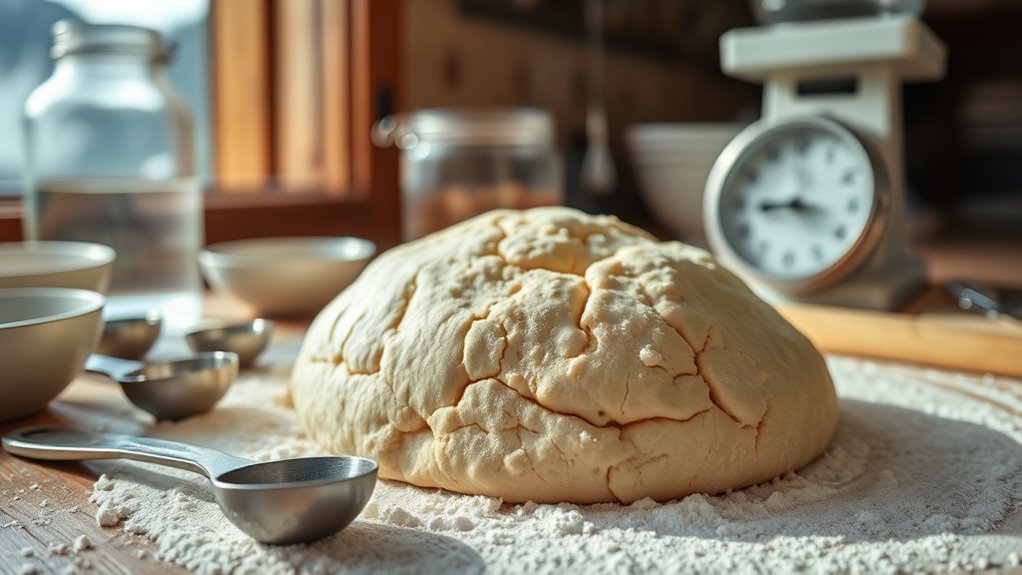
To get your dough and batter just right at high altitude, you need to adjust flour ratios and balance liquid content carefully. Too much flour can make your baked goods dense, while too little can cause them to spread or not set properly. Using thickeners sparingly can help maintain the right consistency without compromising texture.
Adjust Flour Ratios
Have you ever noticed how your dough or batter reacts differently at high altitudes? You might need to adjust your flour ratios to achieve the right dough consistency. At higher elevations, the air is drier, and evaporation happens faster, which can make your batter too thin or your dough too sticky. To counter this, try increasing the amount of flour slightly—about 1 to 2 tablespoons per cup—to improve structure and elasticity. This helps the dough hold together better and prevents over-spreading or collapsing. Keep in mind, the goal is to maintain a balanced dough consistency that supports proper rising and texture. Small adjustments to your flour ratios can make a significant difference in how your baked goods turn out at high elevations. Additionally, altitude effects can influence how gases expand during baking, so making these adjustments is essential for optimal results.
Balance Liquid Content
Wondering how to keep your dough or batter from becoming too sticky or too dry at high altitudes? Adjusting your liquid measurement is key. At higher elevations, the air is drier, so hydration levels in your dough or batter may need tweaking. Too much liquid makes your mixture overly sticky, while too little can cause it to be dry and crumbly. Start by reducing the liquid slightly—about 1 to 2 tablespoons per cup of flour—and test the consistency. You want the dough or batter to hold together without being overly wet. Keep an eye on how it feels, and make small adjustments as needed. Balancing liquid content ensures your baked goods will have the right texture and structure, even at higher elevations. Recognizing altitude effects on baking is essential for perfect results. Additionally, understanding air moisture levels can help you fine-tune your recipes for consistent outcomes. Being aware of moisture fluctuations in your environment allows for even more precise adjustments to achieve the desired texture and baking success.
Use Thickeners Wisely
Adjusting the types and amounts of thickeners like flour and other dry ingredients helps you achieve the perfect dough or batter consistency at high altitudes. Because thickening agents influence how your mixture holds together, you may need to increase or modify these ingredients to compensate for rapid evaporation and lower atmospheric pressure. Incorporate proper recipe modifications by adding a bit more flour or using alternative thickening agents to stabilize your batter. Be cautious not to over-thicken, which can lead to dense baked goods. Experiment gradually, adjusting the quantity of your thickening agents until your dough or batter reaches the desired consistency. Understanding atmospheric pressure is essential for making precise adjustments at high elevations. This careful approach ensures your baked items turn out light, tender, and well-structured, even at high elevations.
Temperature and Time Adjustments for Cooking at Altitude
When cooking at higher altitudes, you need to modify your temperatures and cooking times to get the best results. Raising the oven temperature slightly can help compensate for faster evaporation, while shortening baking durations prevents overcooking. Using recipes designed for altitude ensures your dishes turn out just right without guesswork. Additionally, employing aviator-inspired kitchen tools can add a touch of style while cooking at high elevations. Being aware of water quality can also influence how your baked goods rise and set, as mineral content in water can affect yeast activity and dough consistency.
Adjust Cooking Temperatures
At higher altitudes, the lower atmospheric pressure causes water to boil at a lower temperature, which means you need to increase your cooking temperatures to compensate. Proper oven calibration becomes essential to guarantee your oven heats accurately, preventing undercooking. When adjusting temperatures, consider selecting cookware that distributes heat evenly, like heavy-duty pots and pans. Additionally, you might need to raise your cooking temperatures by about 5-15°F to ensure thorough cooking. Keep in mind that rapid heat loss can occur, so preheating your oven thoroughly helps. Using a reliable oven thermometer helps verify your oven’s calibration, making temperature adjustments more precise. These steps help counteract altitude’s effects, ensuring your dishes are cooked safely and correctly. Incorporating temperature regulation techniques can also help optimize cooking times and temperatures based on specific recipes and cookware. To further improve results, understanding pressure cooking adjustments can be beneficial when preparing certain foods at high elevations. Moreover, adjusting recipe timing is often necessary to achieve desired results at high altitude. Being aware of altitude-specific cooking strategies can also enhance overall success in your culinary endeavors.
Modify Baking Durations
Because atmospheric pressure decreases at higher altitudes, baking times often need to be shortened to prevent overbaking or burning. You should monitor your baked goods closely and reduce baking durations accordingly. At high elevations, standard recipes may overestimate cooking times, leading to dry or burnt items. Adjust your baking durations by cutting back on the recommended times, typically by about 5-8 minutes per 30 minutes of baking, depending on the recipe. Keep an eye on your baked goods’ color and texture as indicators for doneness. Remember, the goal is to avoid overcooking, so start checking earlier than usual. Incorporating altitude-specific adjustments can further enhance your baking success at high elevations. Additionally, understanding how elevation impacts pressure and temperature can help you make more precise modifications. Recognizing how atmospheric pressure affects boiling points allows for more accurate cooking adjustments. This simple adjustment helps you achieve perfectly baked items despite the challenges of high-altitude cooking.
Use Altitude-Appropriate Recipes
Adjusting recipes for high-altitude cooking involves more than just shortening baking times; it requires modifying both temperature and time to guarantee your dishes turn out correctly. Using altitude-appropriate recipes helps you account for these changes and ensures consistent results. To optimize your cooking, consider ingredient substitutions that improve texture and flavor. Elevation can affect how flavors develop, so incorporating flavor enhancements can make your dishes more satisfying. When adapting recipes, keep these tips in mind:
- Increase oven temperature slightly to compensate for rapid moisture loss
- Adjust ingredients like leavening agents for better rise
- Incorporate moisture-rich ingredients to prevent dryness
- Modify cooking times for thorough doneness
- Use flavor enhancements such as herbs and spices to boost taste and compensate for altitude effects
Following these guidelines helps you create delicious, well-balanced meals at high elevation.
Tips for Perfecting Bread and Cake Texture in Elevated Settings
Cooking bread and cake at high altitudes can be tricky because the lower air pressure affects how ingredients behave. To achieve the right texture, consider high altitude humidity, which can dry out baked goods, so adding a bit more moisture or using ingredients with better water retention helps. Incorporate altitude-specific ingredients, like extra liquids or stabilizers, to compensate for faster rising and evaporation. When adjusting recipes, slightly increase the amount of liquids and reduce leavening agents to prevent over-expansion and a dense crumb. Using a little less sugar can also help control moisture and structure. Keep an eye on baking times, as they may need slight adjustments. These tips help you maintain the desired tenderness and volume in your bread and cakes at high elevations.
Common Mistakes to Avoid When Baking at High Elevation

Baking at high elevation can be rewarding, but it’s easy to make mistakes that compromise your results. Common pitfalls include misjudging ingredient adjustments and relying on standard recipes without modifications. Avoid these errors to ensure success.
- Using the wrong recipe substitutions for altitude, which can lead to dense or dry baked goods
- Overmixing batter, causing excessive gluten development and tough textures
- Ignoring the need to increase liquid or decrease leavening agents
- Relying solely on recipe timing without adjusting for quicker rising times
- Not adjusting oven temperature, resulting in uneven baking or overbaking
Practical Strategies and Recipes for Success in High-Altitude Kitchens
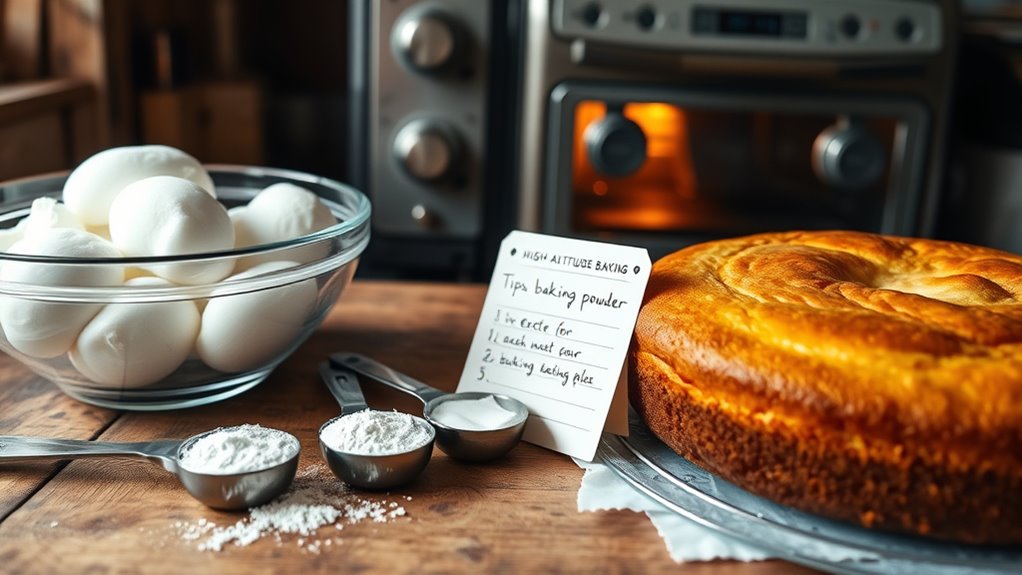
To succeed in high-altitude kitchens, it’s essential to adopt practical strategies and choose recipes tailored for elevated elevations. Adjustments like increasing liquids, reducing leavening agents, and modifying baking times help counteract altitude effects. Using recipes specifically designed for high altitude ensures better flavor enhancement and texture. Consider the following strategies:
| Strategy | Explanation |
|---|---|
| Adjust Leavening | Use less baking powder or baking soda to prevent over-rising |
| Modify Liquids | Increase liquids to compensate for faster evaporation |
| Shorten Baking Time | Reduce baking time to avoid dry or overcooked results |
Implementing these strategies makes your cooking more reliable and flavorful, overcoming altitude effects effectively.
Frequently Asked Questions
How Does Altitude Affect Moisture Evaporation During Baking?
At high altitudes, the evaporation rate of moisture during baking increases, leading to faster moisture loss in your baked goods. You’ll notice your cakes and bread drying out quicker because the thinner air accelerates evaporation. To combat this, you should adjust recipes by adding extra liquid or reducing baking time. This helps maintain moisture, ensuring your baked items stay tender and moist despite the increased evaporation rate.
Are There Specific Ingredients That Perform Better at High Elevations?
At high elevations, certain ingredients like acids (lemon juice, vinegar) perform better by enhancing flavor and balancing dryness caused by rapid moisture loss. Using additional leavening agents like baking soda or powder can improve ingredient performance, helping baked goods rise properly. These adjustments not only improve texture but also boost flavor, ensuring your baked treats turn out delicious and well-structured despite the challenges of high-altitude baking.
Can You Use Standard Recipes Without Modifications at High Altitude?
You should avoid using standard recipes without modifications at high altitude. The air pressure changes, so you need recipe adjustments like reducing leavening agents and increasing liquids. Ingredient substitutions can also help, such as using more stable flours or adding a bit of extra liquid. These tweaks guarantee your baked goods rise properly and don’t collapse, giving you better results in high-altitude baking.
How Do I Troubleshoot Sunken Cakes or Dense Bread?
To troubleshoot sunken cakes or dense bread, first check for cake doming, which indicates overmixing or too much leavening. If your bread sinks, it might be overproofed, causing the structure to collapse. Adjust your leavening agents, avoid overmixing, and monitor proofing times carefully. Also, confirm your oven temperature is accurate; this helps prevent overbaking or underbaking, key factors in achieving a light, fluffy texture.
What Tools Help Measure Altitude Effects Accurately in Recipes?
You can use a barometric pressure gauge to measure altitude effects accurately, as it helps monitor air pressure changes that impact recipes. Additionally, a hygrometer with high accuracy guarantees proper humidity levels, which are vital at high elevations. By keeping an eye on barometric pressure and hygrometer readings, you can adjust your baking techniques precisely, ensuring consistent results despite altitude variations.
Conclusion
Now that you know how altitude influences your baking and cooking, are you ready to unleash your highest potential in the kitchen? With these tips and adjustments, you’ll transform challenges into delicious successes. But don’t stop here—there’s always more to discover about perfecting your recipes at elevation. So, stay curious, experiment boldly, and watch your baked goods reach new heights you never thought possible. The best results are just an altitude away.