A digital fridge thermometer helps you check whether your refrigerator or freezer is holding a suitable temperature, but the best choice depends on how closely you want to monitor it. My best overall pick is the GoveeLife WiFi Refrigerator Thermometer Sensor with Alarm for app-based monitoring, while the Waterproof Refrigerator Thermometer 4 Pack stands out for covering several storage areas and the TekAerxi Large LCD Display keeps the readout simple. The main tradeoffs are remote alerts versus an at-a-glance display, and multi-sensor coverage versus a single, easy-to-place unit. I compare all 15 options by their monitoring approach, usability, and practical fit. Read on for the full breakdown and a guide to choosing the setup that suits your kitchen.

Get kitchen gear delivered free with Prime
- Fast, free delivery on millions of items
- Prime Video, Amazon Music and more included
- Member-only deals all year
Complete the kit


Key Takeaways
Connected monitoring sets the GoveeLife and WiFi sensor models apart: app alerts can help when you are away, while basic LCD models keep temperature checks local and simple.
Multipacks favor broad coverage over feature depth: the four-unit AEVETE and Waterproof Refrigerator Thermometer sets can cover more compartments, while single-display designs may be easier to read at a glance.
A remote probe changes placement options: HATUSOKU and detachable-probe models can measure a location without putting the main display in that spot, but add setup and probe-placement decisions.
Logging and alerts solve different problems: the Frigga M2 focuses on recording temperature and humidity history; alarm-equipped models are better suited to drawing attention to a current excursion.
Display-first models suit quick checks: large-LCD and backlit options emphasize visibility, while WiFi models offer more oversight but depend on a connected setup and compatible app features.
| Waterproof Refrigerator Thermometer – Digital Fridge/Freezer Temperature Monitor, Max/Min Record, Large LCD, Magnetic Back (4 Pack) |  | Best Multi-Unit Pack | Display: 2.56-inch LCD | Temperature range: -4°F to 122°F | Accuracy: ±2°F | VIEW ON AMAZON | See Our Full Breakdown |
| HATUSOKU Digital Thermometer with Waterproof External Sensor |  | Best for Probe Placement | Model: HSK-2207-27 | Sensor cord: 59 inches | Temperature range: -40°F to 158°F | VIEW ON AMAZON | See Our Full Breakdown |
| Frigga M2 Reusable Temperature and Humidity Data Logger (2-Pack) |  | Best for Temperature Records | Pack quantity: 2 | Temperature range: -22°F to 158°F (-30°C to 70°C) | Temperature accuracy: ±0.5°C from -20°C to 40°C; ±1°C outside that range | VIEW ON AMAZON | See Our Full Breakdown |
| WiFi Freezer Thermometer with App Alarm, 2 Wireless Sensors Fridge Monitor |  | Best for Remote Alerts | Connectivity: 2.4 GHz Wi-Fi | Included sensors: 2 IP65 waterproof sensors | Maximum sensor support: Up to 9 sensors | VIEW ON AMAZON | See Our Full Breakdown |
| Digital Refrigerator & Freezer Thermometer with Extra Sensor and High/Low Temperature Alarm (Black, Model ZZ10) |  | Best for Audible Threshold Alarms | Model: ZZ10 | Display: Digital LCD | Temperature range: -40°C to +120°C | VIEW ON AMAZON | See Our Full Breakdown |
| TekAerxi Digital Refrigerator and Freezer Thermometer with Large LCD Display |  | Best for Flexible Placement | Brand: TekAerxi | Model: TA28 | Temperature range: -58°F to 158°F (-50°C to 70°C) | VIEW ON AMAZON | See Our Full Breakdown |
| Digital Refrigerator Thermometer, 2-Pack, White |  | Best Value for Two Storage Zones | Quantity: 2 thermometers | Temperature range: -4°F to 122°F (-20°C to 50°C) | Accuracy: ±1°C | VIEW ON AMAZON | See Our Full Breakdown |
| Digital Refrigerator Thermometer and Indoor Hygrometer with Detachable Temperature Probe |  | Best for Probe-Based Monitoring | Brand and model: VLEJEARI ZZ20 | Display: Digital | Power: 1 AAA battery; included | VIEW ON AMAZON | See Our Full Breakdown |
| VOULOIR Waterproof Digital Refrigerator Thermometer (2 Pack) |  | Best for At-a-Glance Min/Max Readings | Brand and model: VOULOIR Voul-TM | Quantity: 2 thermometers | Display size: 2.56 inches | VIEW ON AMAZON | See Our Full Breakdown |
| GoveeLife WiFi Refrigerator Thermometer Sensor with Alarm, 2-Pack & Gateway | 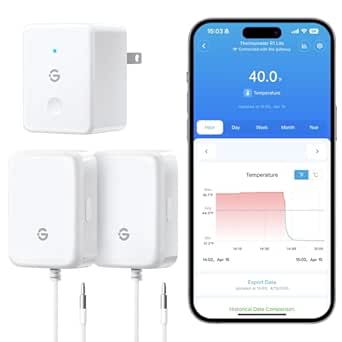 | Best for Remote Alerts | Brand and model: GoveeLife H5111 | Included sensors: 2 sensors and gateway | Temperature range: -40°F to 158°F (-40°C to 70°C) | VIEW ON AMAZON | See Our Full Breakdown |
| RIY Digital Refrigerator Thermometer with Large LCD Display | 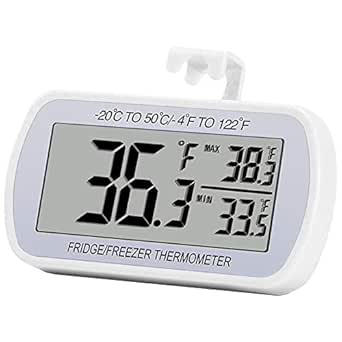 | Best Simple Single-Unit Pick | Temperature range: -4°F to 122°F | Accuracy: ±2°F | Display: LCD | VIEW ON AMAZON | See Our Full Breakdown |
| AEVETE 4-Pack Waterproof Digital Refrigerator and Freezer Thermometers |  | Best for Multi-Appliance Coverage | Quantity: 4 thermometers | Temperature range: -4°F to 122°F (-20°C to 50°C) | Temperature units: Fahrenheit and Celsius | VIEW ON AMAZON | See Our Full Breakdown |
| TempPro TempAir Refrigerator Thermometer, 2 Pack, Backlit LCD |  | Best for Low-Light Readability | Quantity: 2 thermometers | Temperature range: -4°F to 122°F | Accuracy: ±1.8°F | VIEW ON AMAZON | See Our Full Breakdown |
| Bomivoi Wireless Fridge and Freezer Thermometer with Alarm |  | Best for Remote Alerts | Remote range: Up to 328 feet | Temperature accuracy: ±2°F | Humidity accuracy: ±5% | VIEW ON AMAZON | See Our Full Breakdown |
| AEVETE Refrigerator Thermometer Digital Fridge Freezer Thermometer 2 Pack |  | Best Compact Two-Pack | Quantity: 2 thermometers | Temperature range: -4°F to 122°F (-20°C to 50°C) | Accuracy: ±2°F | VIEW ON AMAZON | See Our Full Breakdown |
| digital fridge thermometer | Temperature range | Display | Accuracy |
|---|---|---|---|
| Waterproof Refrigerator Thermo | -4°F to 122°F | 2.56-inch LCD | ±2°F |
| HATUSOKU Digital Thermometer w | -40°F to 158°F | Digital LCD | ±1°C |
| Frigga M2 Reusable Temperature | -22°F to 158°F (-30°C to 70°C) | — | — |
| WiFi Freezer Thermometer with | -4°F to 140°F (-20°C to 60°C) | — | — |
| Digital Refrigerator & Freezer | -40°C to +120°C | Digital LCD | — |
| TekAerxi Digital Refrigerator | -58°F to 158°F (-50°C to 70°C) | Digital LCD | — |
| Digital Refrigerator Thermomet | -4°F to 122°F (-20°C to 50°C) | Large LCD | ±1°C |
| Digital Refrigerator Thermomet | — | Digital | — |
| VOULOIR Waterproof Digital Ref | -4°F to 122°F | — | ±2°F |
| GoveeLife WiFi Refrigerator Th | -40°F to 158°F (-40°C to 70°C) | — | ±0.9°F / ±0.5°C |
| RIY Digital Refrigerator Therm | -4°F to 122°F | LCD | ±2°F |
| AEVETE 4-Pack Waterproof Digit | -4°F to 122°F (-20°C to 50°C) | LCD | — |
| TempPro TempAir Refrigerator T | -4°F to 122°F | Backlit digital LCD | ±1.8°F |
| Bomivoi Wireless Fridge and Fr | — | — | — |
| AEVETE Refrigerator Thermomete | -4°F to 122°F (-20°C to 50°C) | — | ±2°F |
More Details on Our Top Picks
Waterproof Refrigerator Thermometer – Digital Fridge/Freezer Temperature Monitor, Max/Min Record, Large LCD, Magnetic Back (4 Pack)
For checking several appliances at a glance, this four-pack offers a simpler route than the HATUSOKU external-sensor thermometer, which uses a corded probe to reach a specific spot. Each unit shows current, maximum, and minimum readings together on a 2.56-inch LCD, so I can compare recent temperature swings without cycling through a display. The magnetic back, stand, and hook give more placement options than a magnet-only setup, while IPX3 protection suits damp fridge and freezer interiors. The main limitation is its stated range: it starts at -4°F, so it cannot track colder freezer conditions. The product data also lists both CR2032 and LR44 batteries, leaving the replacement type unclear. I’d pick this for broad household coverage, not detailed remote monitoring or logged records.
Pros:- Four units make it practical to monitor multiple appliances at once.
- Displays current, maximum, and minimum temperatures simultaneously.
- IPX3 protection and several mounting options suit different fridge layouts.
- Selectable °C and °F units and a range that covers typical refrigerator temperatures.
Cons:- The -4°F lower limit is too warm for monitoring colder freezer conditions.
- Battery information conflicts between CR2032 and LR44 in the product data.
- No external probe, app alerts, or downloadable temperature history.
Best for: Households or small food businesses that want a separate at-a-glance temperature monitor in several fridges and freezers.
Not ideal for: Buyers who need readings below -4°F, phone alerts, or certainty about replacement battery type.
- Display:2.56-inch LCD
- Temperature range:-4°F to 122°F
- Accuracy:±2°F
- Resolution:0.2°F
- Temperature units:Selectable °C/°F
- Mounting:Magnetic back, stand, or hook
- Water protection:IPX3
- Pack quantity:4
- Battery listed:CR2032 or LR44; product data is inconsistent
Our verdict“Choose this four-pack for straightforward monitoring across several appliances, but skip it if you need colder freezer readings or remote alerts.”
HATUSOKU Digital Thermometer with Waterproof External Sensor
The HATUSOKU is the pick for buyers who want the display outside the cold space while a waterproof sensor on a 59-inch cord sits inside it. That arrangement is more useful for checking a specific location than the four self-contained monitors in the Waterproof Refrigerator Thermometer 4 Pack, which need to be placed where their screens remain visible. Its wide -40°F to 158°F range also reaches colder conditions than that pack’s -4°F floor. The large LCD shows current and max/min readings, and a magnet or suction cup can hold the body nearby. There is a tradeoff: only the probe is waterproof, not the thermometer body, so placement matters around moisture. Its ±1°C accuracy is also less precise than the Frigga M2 logger’s stated accuracy in its common temperature range. I’d choose it for accessible remote readings, not long-term data records.
Pros:- A 59-inch external sensor can reach into a fridge while the display stays outside.
- Waterproof probe suits damp environments and aquarium monitoring.
- The -40°F to 158°F range covers colder conditions than the four-pack monitor.
- Maximum/minimum display and magnet or suction-cup mounting add practical flexibility.
Cons:- The thermometer body is not water resistant and must be kept dry.
- ±1°C accuracy is less precise than the Frigga M2’s stated accuracy in its common range.
- Not suitable for seawater and does not provide app alerts or exported logs.
Best for: People who want to read a fridge or freezer temperature without opening the door, or who need a probe for an aquarium or other remote location.
Not ideal for: Buyers who need the whole device to tolerate water, need seawater monitoring, or want downloadable temperature logs.
- Model:HSK-2207-27
- Sensor cord:59 inches
- Temperature range:-40°F to 158°F
- Accuracy:±1°C
- Display:Digital LCD
- Mounting:Magnet and suction cup
- Power:1 included AAA battery
- Body dimensions:3.0 × 2.8 × 1.1 inches
Our verdict“Choose the HATUSOKU when a long, waterproof probe and an externally readable display matter more than data logging.”
Frigga M2 Reusable Temperature and Humidity Data Logger (2-Pack)
Unlike a basic fridge thermometer that only gives a live reading, the Frigga M2 is built to preserve a record: each logger stores up to 28,800 readings and exports reports as PDF or CSV through USB. That makes it a stronger fit for documenting temperature patterns than the VLEJEARI ZZ10, whose audible alarm is more useful for an immediate excursion than later review. The two-device pack also adds humidity monitoring, which a standard fridge-only display may not provide. Its stated ±0.5°C accuracy applies from -20°C to 40°C; outside that band, accuracy is ±1°C. This is not the quickest glance-and-go choice: records must be retrieved over USB, and the CR2430 battery may be less convenient to replace than common cells. I’d choose it for traceable monitoring, not for someone who mainly wants a simple screen or a loud alarm.
Pros:- Stores up to 28,800 readings for reviewing temperature history.
- USB export provides PDF and CSV reports.
- Monitors humidity as well as temperature.
- Two loggers allow monitoring separate locations or appliances.
Cons:- No stated audible alarm or phone alert for immediate temperature changes.
- Accuracy drops to ±1°C outside the -20°C to 40°C band.
- Uses a CR2430 battery that may be less readily available than common battery types.
Best for: Small food businesses, researchers, or careful household users who need stored temperature and humidity history for later review.
Not ideal for: Buyers who want instant audible warnings, phone notifications, or the simplest possible live-reading display.
- Pack quantity:2
- Temperature range:-22°F to 158°F (-30°C to 70°C)
- Temperature accuracy:±0.5°C from -20°C to 40°C; ±1°C outside that range
- Humidity range:5% to 95% RH
- Humidity accuracy:±3% from 20% to 80% RH
- Memory:Up to 28,800 readings
- Data connection:USB; PDF and CSV export
- Battery:1 included CR2430 per logger
Our verdict“Pick the Frigga M2 pair when downloadable records matter more than instant alarms or a basic always-visible readout.”
WiFi Freezer Thermometer with App Alarm, 2 Wireless Sensors Fridge Monitor
This Wi-Fi model suits people who may not be near the fridge when a temperature shifts. Its app sends real-time alerts based on set temperature or humidity limits, giving it a clear advantage over the VLEJEARI ZZ10, which relies on an audible alarm at the device. Two IP65 sensors come in the package, and the system can support up to nine, so one setup can cover several appliances or locations; the stated wireless range reaches 492 feet. History graphs and CSV export make it more informative than a simple display, though the records are capped at one year. Setup depends on 2.4 GHz Wi-Fi, not dual-band compatibility, and the -4°F lower limit rules it out for colder freezer monitoring. I’d choose it for remote oversight, provided the network and temperature range fit the installation.
Pros:- Phone alerts notify users when temperature or humidity crosses set limits.
- Includes two IP65 sensors and supports up to nine sensors.
- App history graphs and CSV export provide more context than max/min-only displays.
- Stated wireless range of up to 492 feet supports monitoring at a distance.
Cons:- Requires a 2.4 GHz Wi-Fi network and is not dual-band compatible.
- The -4°F lower limit excludes colder freezer conditions.
- Battery replacement is needed after a stated life of up to two years.
Best for: People who need phone alerts and temperature history for a fridge or freezer located away from their usual work area.
Not ideal for: Users with only 5 GHz Wi-Fi, buyers monitoring temperatures below -4°F, or anyone who prefers a no-network thermometer.
- Connectivity:2.4 GHz Wi-Fi
- Included sensors:2 IP65 waterproof sensors
- Maximum sensor support:Up to 9 sensors
- Temperature range:-4°F to 140°F (-20°C to 60°C)
- Temperature accuracy:±1.8°F
- Humidity range:0% to 99% RH
- Wireless range:Up to 492 feet (150 m)
- App features:iOS/Android alerts, history graphs, and up to one year of CSV export
- Battery life:Up to 2 years with freeze-resistant AAA batteries
Our verdict“Choose this model for connected monitoring and off-site alerts, but only if its Wi-Fi requirement and -4°F floor suit your setup.”
Digital Refrigerator & Freezer Thermometer with Extra Sensor and High/Low Temperature Alarm (Black, Model ZZ10)
The VLEJEARI ZZ10 combines a remote probe with customizable high- and low-temperature alarms, making it a practical choice for someone who wants a local warning rather than app-based monitoring. Its -40°C lower limit also reaches colder conditions than the Wi-Fi model’s -20°C minimum, while the 1.5-meter sensor cable lets the display sit outside the fridge as the sensor reads inside. Compared with the HATUSOKU, it adds configurable alarms and claims 0.1°C precision, but the product data does not state a separate accuracy tolerance, so that precision should not be read as a guarantee of measurement accuracy. The audible alert lasts 60 seconds, and setup may take patience; the LCD can also be hard to read in low light. I’d favor it for a freezer-side warning, not remote phone alerts or a polished data history.
Pros:- Separate 1.5-meter sensor supports monitoring inside an appliance while the display stays accessible.
- Customizable high- and low-temperature limits trigger a 60-second audible alert.
- The stated -40°C lower limit reaches colder conditions than the Wi-Fi model.
- Includes a magnetic base and wall hook for placement options.
Cons:- Alarm setup may be confusing for first-time users.
- LCD may be difficult to read in low light.
- The listed 0.1°C precision does not specify a measurement accuracy tolerance.
Best for: People who want a probe inside the fridge or freezer and a configurable audible warning when readings move outside chosen limits.
Not ideal for: Buyers who need phone notifications, downloadable temperature records, or a display that is easy to read in dim conditions.
- Model:ZZ10
- Display:Digital LCD
- Temperature range:-40°C to +120°C
- Displayed precision:0.1°C
- Sensor length:1.5 meters
- Alarm:Customizable high/low limits; 60-second audible alert
- Mounting:Magnetic base and wall hook
- Battery:1 included AAA; approximately 6-month battery life
Our verdict“Choose the ZZ10 for a local alarm and remote probe in colder freezers, but skip it if you need app alerts or logged records.”
TekAerxi Digital Refrigerator and Freezer Thermometer with Large LCD Display
The TekAerxi is a straightforward pick when you want one thermometer to move between a fridge, freezer, and cooler. Its -58°F to 158°F range extends well below the ranges listed for the two-pack options from VOULOIR and Digital Refrigerator Thermometer, making it more adaptable for very cold storage. A large LCD and magnetic, hook, or stand placement also make it easier to position for a readable view, rather than relying on a single mounting style. The tradeoff is that the supplied details do not list min/max memory or an alarm, so it reports a temperature without the tracking and remote alerts offered by the GoveeLife WiFi kit. Its body is also not waterproof; avoid locations where it could be soaked, and remove the battery before long-term storage.
Pros:- Broad -58°F to 158°F measurement range suits both cold storage and warmer environments.
- Magnet, hanging hook, and fold-out stand allow placement to suit different appliances.
- Large LCD with bold digits is designed for quick at-a-glance checks.
- Batteries and mounting accessories are included, and the product lists a two-year warranty.
Cons:- Not waterproof, so it should not be soaked or placed where water exposure is likely.
- No max/min recording or temperature alarm is listed.
- The battery should be removed if the unit will sit unused for an extended period.
Best for: People who move a thermometer among a household fridge, deep freezer, and cooler and want multiple placement options.
Not ideal for: Buyers who need temperature history, app alerts, or a waterproof device for a wet or washdown-prone area.
- Brand:TekAerxi
- Model:TA28
- Temperature range:-58°F to 158°F (-50°C to 70°C)
- Display:Digital LCD
- Mounting:Magnet, hook, or fold-out stand
- Power:AG10/C battery; included
- Response time:2 seconds
- Material:ABS
- Warranty:2 years
Our verdict“Choose the TekAerxi if you want broad temperature coverage and flexible mounting more than logging, alerts, or waterproof protection.”
Digital Refrigerator Thermometer, 2-Pack, White
This two-pack suits households that want a separate readout for the refrigerator and freezer without adding an app or gateway. Each unit shows temperature on a large LCD and records maximum and minimum readings, so you can spot whether conditions strayed beyond the current reading. Compared with the VOULOIR two-pack, its stated ±1°C accuracy is tighter than VOULOIR’s ±2°F specification, while both offer magnetic placement and stands. The range, however, stops at -4°F on the cold end, which is less suited to very cold freezers than the TekAerxi. An IPX3 rating adds protection against light water spray, not submersion, and the listed three-button operation may feel less direct than a display with simpler controls. There are no remote alerts, so checks remain manual.
Pros:- Two thermometers make it practical to monitor separate appliances at the same time.
- Maximum and minimum recording provides context beyond the live temperature.
- Magnetic backs and stands support different placements.
- IPX3 protection helps with light splashes in typical fridge or freezer use.
Cons:- The -4°F lower limit is narrower than the TekAerxi’s range and may not suit colder freezer conditions.
- ±1°C accuracy is a stated limitation for buyers who need finer precision.
- No app, email, or audible temperature alerts are listed.
Best for: Households that want one local thermometer in the fridge and another in the freezer, with max/min tracking on both.
Not ideal for: People with very cold freezers, anyone who needs remote alerts, or buyers seeking a waterproof unit that can be submerged.
- Quantity:2 thermometers
- Temperature range:-4°F to 122°F (-20°C to 50°C)
- Accuracy:±1°C
- Resolution:0.1°C
- Display:Large LCD
- Placement:Magnetic back and stand
- Recording:Maximum and minimum temperatures
- Water resistance:IPX3
Our verdict“Pick this set for two-appliance coverage and local min/max tracking, but choose a wider-range or connected model for colder storage or remote warnings.”
Digital Refrigerator Thermometer and Indoor Hygrometer with Detachable Temperature Probe
The VLEJEARI ZZ20 separates the display from the measurement point with a 1.5 m detachable waterproof probe. That makes it a better fit than the all-in-one TekAerxi when you need the sensor inside a fridge, freezer, or reptile enclosure while the screen stays outside for easier viewing. It also tracks 24-hour and all-time highs and lows, and the main unit measures ambient temperature and humidity. The key boundary is that humidity comes from the display unit, not the probe; the probe measures temperature only. Compared with the GoveeLife kit, this model offers no listed Wi-Fi alerts or remote monitoring, and its connectivity information is unclear: USB is listed, but the device is described as battery powered. Buyers should verify how they intend to power and connect it before relying on those functions.
Pros:- Detachable waterproof probe can measure temperature inside a cold or damp environment.
- The 1.5 m probe allows the display to sit apart from the measurement point.
- Records 24-hour and all-time high and low readings.
- Main unit measures ambient temperature and humidity as well as temperature through the probe.
Cons:- The probe measures temperature only, not humidity.
- USB connectivity is listed even though the product is described as battery powered, leaving connection details unclear.
- No Wi-Fi, app, or remote alarm capability is specified.
Best for: People who need a wired probe inside a cold appliance or enclosure while keeping the display outside, plus ambient humidity readings.
Not ideal for: Buyers seeking straightforward wireless app alerts, humidity measurement at the probe tip, or clearly specified connectivity.
- Brand and model:VLEJEARI ZZ20
- Display:Digital
- Power:1 AAA battery; included
- Probe length:1.5 m
- Probe measurement:Temperature only; probe described as waterproof
- Additional measurements:Ambient temperature and humidity
- Memory:24-hour and all-time high/low readings
- Connectivity:Wired USB listed; power described as battery
- Upper temperature range:120°C
Our verdict“Choose the ZZ20 when an external probe and local temperature history matter more than wireless alerts or humidity sensing at the probe.”
VOULOIR Waterproof Digital Refrigerator Thermometer (2 Pack)
VOULOIR’s strongest distinction is the 2.56-inch screen, which shows current, maximum, and minimum temperatures at the same time. That layout makes a quick door-open check more informative than a basic live-reading display, and the two-pack can cover both fridge and freezer. Against the similarly positioned Digital Refrigerator Thermometer 2-Pack, VOULOIR offers a stated 0.2°F resolution and a faster 0.5-second response time, while the other set lists ±1°C accuracy. Its stated ±2°F accuracy is still a limit for buyers who need tighter readings, and its -4°F lower bound is less flexible than the TekAerxi for very cold storage. The max/min record also resets when the unit reboots, so it is less dependable for uninterrupted history than a model with persistent logging.
Pros:- Large 2.56-inch LCD displays current, maximum, and minimum temperatures simultaneously.
- Two units support monitoring a fridge and freezer at once.
- Magnetic back, hook, and stand provide flexible placement.
- IPX3 rating offers protection against light water spray.
Cons:- Maximum and minimum records reset when the device reboots.
- Stated accuracy is ±2°F, which is looser than the other listed two-pack’s ±1°C specification.
- The -4°F minimum is less suitable for very cold freezer conditions than the TekAerxi.
Best for: People who want two fridge/freezer readouts and prefer current, max, and min temperatures visible together without changing screens.
Not ideal for: Buyers who need tighter stated accuracy, persistent history through a reboot, or readings below -4°F.
- Brand and model:VOULOIR Voul-TM
- Quantity:2 thermometers
- Display size:2.56 inches
- Temperature range:-4°F to 122°F
- Accuracy:±2°F
- Resolution:0.2°F
- Power:1 CR2032 lithium battery per device; included
- Mounting:Stand, hook, or magnetic back
- Water resistance:IPX3
Our verdict“Choose VOULOIR for an easy-to-scan two-unit setup with simultaneous min/max display, not for precise or reboot-proof temperature history.”
GoveeLife WiFi Refrigerator Thermometer Sensor with Alarm, 2-Pack & Gateway
The GoveeLife kit is the clear choice here for people who cannot rely on checking a display in person. Its two sensors send app and email notifications, while an 80 dB buzzer can warn nearby users; that is a more active safety setup than the local-only TekAerxi or either standalone two-pack. A stated ±0.9°F accuracy, 2-second response, and -40°F to 158°F range also give it broad coverage for refrigerator and freezer monitoring. The gateway can support up to ten sensors within a listed 230 ft range, which helps extend monitoring beyond the included pair. Those benefits bring setup dependencies: it requires 2.4 GHz Wi-Fi, batteries need replacement, and battery life is not specified. Choose another option if you want a simple, screen-only thermometer without network or gateway requirements.
Pros:- App notifications, email alerts, and an 80 dB buzzer provide several ways to catch temperature changes.
- ±0.9°F stated accuracy and a 2-second response support close, timely monitoring.
- The -40°F to 158°F range covers colder conditions than the two standalone two-packs.
- Gateway supports up to ten sensors within a listed 230 ft range.
Cons:- Wi-Fi setup requires a 2.4 GHz network.
- Battery life is not specified, and the four included AAA batteries will need eventual replacement.
- The connected system requires a gateway, unlike the simpler standalone TekAerxi and VOULOIR units.
Best for: People who need to know about unsafe fridge or freezer temperatures while away, or who plan to add sensors across multiple storage areas.
Not ideal for: Buyers without a 2.4 GHz Wi-Fi network, those who want a standalone display-only device, or users who do not want ongoing battery upkeep.
- Brand and model:GoveeLife H5111
- Included sensors:2 sensors and gateway
- Temperature range:-40°F to 158°F (-40°C to 70°C)
- Accuracy:±0.9°F / ±0.5°C
- Response time:2 seconds
- Connectivity:2.4 GHz Wi-Fi and Bluetooth
- Gateway range:Up to 230 ft (70 m)
- Sensor capacity:Up to 10 sensors
- Power:4 AAA batteries; included
Our verdict“Pick GoveeLife if remote warnings and expandable monitoring are worth the Wi-Fi and gateway setup; choose a standalone thermometer for simpler checks.”
RIY Digital Refrigerator Thermometer with Large LCD Display
The RIY is a straightforward choice for someone who wants one readable thermometer without a remote sensor or alarm system. Its large LCD and maximum/minimum records make it easier to spot temperature swings than a basic current-reading display, while the magnet, hook, and stand let me choose a visible spot inside different appliances. Compared with the AEVETE 4-Pack, RIY is a better fit when I only need one monitor rather than coverage across several compartments. The tradeoff is its stated ±2°F accuracy, which is less precise than the TempPro TempAir’s ±1.8°F specification, and there is no remote alert if the temperature drifts while I’m away. Its battery listing also gives conflicting types, so I would check the unit before buying replacements.
Pros:- Large LCD digits are easy to check at a glance
- Maximum and minimum records reveal temperature changes between checks
- Magnet, hook, and stand support several placement styles
- Can monitor refrigerators, freezers, and rooms
Cons:- Specified accuracy is ±2°F
- The listing gives inconsistent battery types
- No remote monitoring or temperature alarm is described
Best for: Buyers who need one easy-to-read monitor for a refrigerator, freezer, or room and value flexible placement over remote alerts
Not ideal for: Households monitoring several appliances at once or anyone who wants tighter stated accuracy or an alarm for temperature excursions
- Temperature range:-4°F to 122°F
- Accuracy:±2°F
- Display:LCD
- Records:Maximum and minimum temperatures
- Water resistance:IPX3
- Placement:Hook, magnet, and stand
- Material:ABS
- Length:3.15 inches
Our verdict“Choose RIY for a single appliance when clear readings and flexible mounting matter more than alerts or higher stated precision.”
AEVETE 4-Pack Waterproof Digital Refrigerator and Freezer Thermometers
For a kitchen with several refrigerators, freezers, or cold-storage compartments, the four-unit pack is the main reason to choose this AEVETE set. Each thermometer offers Fahrenheit/Celsius switching, max/min tracking, and a magnetic back, stand, or hook, so I can place units where readings are easy to see. Unlike the single-unit RIY, this set makes it practical to monitor multiple locations without moving one device around. The listed 0.5-second response time also gives a quick reading, though it does not add remote alerts or logging. The tradeoffs are indoor-only positioning and conflicting battery information: the listing specifies an included LR44 but also mentions CR2032. Buyers who need only one monitor may find the four-unit format unnecessary.
Pros:- Four units allow simultaneous monitoring in separate appliances
- Switchable Fahrenheit and Celsius readings
- Maximum and minimum tracking helps reveal temperature swings
- Magnet, stand, and hook offer flexible placement
Cons:- Battery type information conflicts within the listing
- Designed for indoor use
- Does not provide remote temperature alerts
Best for: Families, meal-prep households, and small kitchens with multiple refrigerators or freezers to monitor at once
Not ideal for: Buyers who need only one thermometer, outdoor monitoring, or remote alerts when temperatures move outside a set range
- Quantity:4 thermometers
- Temperature range:-4°F to 122°F (-20°C to 50°C)
- Temperature units:Fahrenheit and Celsius
- Display:LCD
- Water resistance:IPX3
- Response time:0.5 seconds
- Placement:Magnetic back, stand, or hanging hook
- Battery information:One LR44 battery per unit listed as included; listing also mentions CR2032
Our verdict“Pick this set when you need to check several indoor cold-storage spaces at once; choose RIY instead for a single-appliance setup.”
TempPro TempAir Refrigerator Thermometer, 2 Pack, Backlit LCD
The TempPro TempAir earns its place for buyers who check a refrigerator or cooler in dim surroundings: its backlit LCD is easier to read without relying on room light. The two-pack adds useful coverage, while 24-hour max/min recording captures a recent temperature range rather than just the current reading. Compared with the four-unit AEVETE set, TempPro supplies fewer monitors but specifies ±1.8°F accuracy and an IPX6 rating, making it the stronger fit for damp or more exposed settings. It can also be mounted by magnet, stand, or hook. The tradeoff is that the backlight does not replace a remote alarm, and the units need batteries; for a basic indoor setup, the simpler RIY may be enough.
Pros:- Backlit LCD improves readability in low light
- Two thermometers can monitor separate locations
- 24-hour maximum and minimum recording
- IPX6 rating and ±1.8°F stated accuracy
Cons:- Requires battery replacement
- No remote high/low alarm is specified
- Provides two units rather than the four included with AEVETE’s multi-pack
Best for: People monitoring a refrigerator, freezer, or cooler in a dim area who want two units and a backlit display
Not ideal for: Buyers who need four-way appliance coverage or remote alarms rather than local readings and records
- Quantity:2 thermometers
- Temperature range:-4°F to 122°F
- Accuracy:±1.8°F
- Display:Backlit digital LCD
- Recording:24-hour maximum and minimum
- Water resistance:IPX6
- Placement:Stand, magnetic attachment, or hook
- Batteries:Two lithium metal batteries included
Our verdict“Choose TempPro when low-light readability and stronger stated water resistance matter more than a larger multipack or remote alerts.”
Bomivoi Wireless Fridge and Freezer Thermometer with Alarm
The Bomivoi is the clear choice here for someone who wants to check conditions without opening the refrigerator: its wireless sensor reaches up to 328 feet and the monitor supports customizable high- and low-temperature alarms. That makes it more useful for catching a problem promptly than the local-reading RIY or either AEVETE set. It also reports humidity as well as temperature, switches between Celsius and Fahrenheit, and can run on USB or two AAA batteries. Its sensor range extends to -40°F, giving it more freezer headroom than the other products in this batch. The tradeoffs are a stated ±2°F temperature accuracy, batteries that are not included, and a backlight that shuts off after eight seconds on battery power. I would choose it for alerts, not for a simple glance-only setup.
Pros:- Wireless transmission range listed up to 328 feet
- Customizable high- and low-temperature alarms with visual and audible alerts
- USB or battery power offers flexible placement
- Displays temperature and humidity in Fahrenheit or Celsius
Cons:- Two AAA batteries are not included
- Backlight turns off after eight seconds when running on battery power
- Temperature accuracy is specified as ±2°F
Best for: People who want to monitor a refrigerator or freezer remotely and receive audible or visual alerts when readings exceed set limits
Not ideal for: Buyers seeking a compact, self-contained thermometer with no setup, or those who do not want to supply batteries or use USB power
- Remote range:Up to 328 feet
- Temperature accuracy:±2°F
- Humidity accuracy:±5%
- Indoor temperature range:14.2°F to 140°F
- Sensor temperature range:-40°F to 140°F
- Power:USB or two AAA batteries (not included)
- Mounting:Magnetic, wall hook, or stand
- Weight:7.4 ounces
Our verdict“Choose Bomivoi if remote monitoring and customizable alerts matter more than a simple, inexpensive-to-set-up local display.”
AEVETE Refrigerator Thermometer Digital Fridge Freezer Thermometer 2 Pack
This AEVETE two-pack suits buyers who want simple temperature checks in two appliances without paying for a remote monitor or a more feature-heavy display. The large LCD, magnet, stand, and hook make each unit easy to position, and the IPX3 water resistance is suited to damp fridge and freezer interiors. Compared with the four-unit AEVETE set, this pack is the more restrained choice for a refrigerator-and-freezer pair; unlike TempPro, it does not offer a backlight or a stated 24-hour recording window. Its ±2°F accuracy is adequate for routine monitoring, but the lack of an audible alarm means I have to look at the display to notice a temperature problem. The included CR2032 batteries are convenient, though the single-button reset may frustrate frequent adjustments.
Pros:- Two units cover a typical refrigerator-and-freezer setup
- Large LCD display is easy to read
- Magnetic back, stand, and hook provide flexible placement
- IPX3 resistance suits damp appliance interiors
Cons:- No audible alarm for out-of-range temperatures
- ±2°F stated accuracy is less precise than TempPro’s specification
- Single-button reset may be inconvenient for frequent adjustments
Best for: Households that want one basic thermometer in the refrigerator and another in the freezer, with no need for remote alerts
Not ideal for: Buyers who need alarms, backlit readings, or enough units to cover several appliances at once
- Quantity:2 thermometers
- Temperature range:-4°F to 122°F (-20°C to 50°C)
- Accuracy:±2°F
- Display size:2.3 x 1 inches
- Battery:CR2032 included
- Water resistance:IPX3
- Placement:Magnetic back, stand, and hook
Our verdict“Pick this AEVETE pack for straightforward two-appliance monitoring, but choose TempPro for backlighting or Bomivoi for remote alerts.”

How We Picked
I ranked these digital fridge thermometers by how well their stated features serve everyday refrigerator and freezer monitoring. I weighed measurement coverage, sensor count, probe design, display legibility, alarms, connectivity, logging, and practical placement. A feature mattered most when it could change a buyer’s routine: an alarm can flag a temperature excursion, a second sensor can cover another compartment, and a readable display can make routine checks quicker.
The order reflects the balance of monitoring capability and ease of use, not a claim that one design fits every kitchen. Connected models rank well for remote oversight, while straightforward LCD and multipack units remain strong choices for local checks or wider coverage. I also account for tradeoffs: extra sensors and app features can add setup demands, and compact or display-led options may not provide the same history or remote notification tools. Product names and listed features guide these comparisons; buyers should confirm compatibility and included components before purchase.
Factors to Consider When Choosing Digital Fridge Thermometer
Before choosing a model, decide what problem you want the thermometer to solve. Quick checks, coverage across multiple compartments, and alerts when nobody is home call for different designs. These factors can help narrow the field without paying for features that will not change how you use it.
Choose Between Local Readings and Remote Alerts
A thermometer with a clear LCD is often enough if you open the fridge regularly and want to check conditions on the spot. WiFi or wireless alarm models add value when you need to know about a temperature change while away, but their alerts depend on setup, connectivity, and how notifications are configured. Do not assume that the word “wireless” means the unit will send phone alerts; check whether a gateway, app, or hub is part of the listed package. A sound alarm can be more useful than a phone notification in a busy home, while remote alerts matter more for a second property or a stocked freezer. Think about who will respond when an alert arrives. Paying for connected features makes sense only if you plan to keep the system online and act on its warnings.
Match Sensor Count to Your Storage Layout
One sensor may be enough for a compact refrigerator, but a separate freezer, chest freezer, or multiple fridges can call for additional monitoring points. Multipacks reduce the need to move a single thermometer from place to place, though each unit still needs a readable location and periodic checks. Compare the number of sensors with the number of zones you intend to monitor rather than buying by pack size alone. A two-sensor kit may suit a fridge-and-freezer pair, while a four-pack may be more practical for several appliances or compartments. Check whether each sensor communicates with one display or whether each has its own readout. More sensors improve coverage, but only if you can identify which reading belongs to which storage area.
Decide Whether a Probe Helps or Gets in the Way
An external or detachable probe can let the display sit outside a compartment while the sensing tip measures inside, which may help when the readout is awkward to view. Probe placement also gives you more choices, but the cable can be inconvenient around drawers, doors, or shelves. A self-contained thermometer is simpler to position and has fewer parts to arrange. Avoid trapping a probe wire in a door seal if that could interfere with closing the appliance. Check the product details for probe length, attachment method, and whether the probe is intended for the location you have in mind. Choose a probe model for a clear placement benefit, not simply because it sounds more advanced.
Prioritize the Readout You Can Actually See
A large display helps when the thermometer sits behind food or is viewed from across a room; backlighting can help in a dim kitchen or freezer area. A small unit may be easier to fit on a crowded shelf, but tiny digits can make routine checks less convenient. Magnetic backs are useful on suitable metal surfaces, yet not every refrigerator door or liner offers a dependable magnetic mounting spot. Decide where the unit will live before choosing based on display size or mounting style. Also check whether the unit’s screen shows the readings you need at the same time or requires button presses to switch views. A display that is easy to read and reach can matter more day to day than a long list of secondary features.
Understand Alarms, Min/Max Records, and Data Logging
These functions answer different questions. A high- or low-temperature alarm calls attention to a reading outside a chosen range, while a min/max record shows the extremes captured since its last reset. A data logger can preserve a history that helps reveal repeated fluctuations, but a record is useful only if you know how to access and interpret it. Check whether alarm thresholds can be adjusted and whether alerts come from the device, an app, or both. Min/max memory may be adequate for occasional checks, whereas a logger is more appropriate when you need a longer record. Do not treat any one feature as a substitute for reading the current temperature and checking that the sensor is placed correctly.
Check Durability and Care Before Choosing a Multipack
Waterproof labeling can be helpful in a damp environment or when cleaning matters, but it does not automatically mean a thermometer can be immersed or cleaned with any method. Read the manufacturer’s care instructions and keep openings, probes, and battery compartments protected as directed. Multipacks can make it easier to monitor several locations, yet they also mean more batteries, more devices to label, and more readings to check. A two-pack may be a better fit than a four-pack if you only monitor a fridge and freezer. Consider whether you can replace batteries or reset records without removing a unit from a hard-to-reach spot. The right balance is enough coverage for your appliances without creating extra upkeep you will ignore.
Frequently Asked Questions
Should I choose a WiFi fridge thermometer or a basic digital display?
Choose WiFi if you want notifications or readings when you are away and can maintain the required app and network setup. A basic display is a better fit when you mainly check the appliance in person and prefer fewer connected components. Before buying a connected model, confirm whether it includes the needed gateway and whether its alert features match your phone and home network. If you are unsure you will use remote monitoring, a clear LCD with an alarm or min/max record may cover your needs with less setup. The deciding factor is whether you need to know about a change away from home, not whether connectivity sounds appealing.
Do I need two sensors to monitor a refrigerator and freezer?
Two sensors are useful when you want simultaneous readings from separate appliances or distinct storage zones. A single sensor can be moved between locations, but it cannot show both conditions at once and may miss a change while it is elsewhere. Check whether a multi-sensor kit displays readings together and makes it clear which sensor is in which appliance. If your refrigerator has a freezer compartment and you only need a periodic check, one device may be enough. Separate fridge and freezer units are more practical when both areas need ongoing attention.
Is a probe model better than a thermometer that sits inside the fridge?
Neither design is automatically more accurate for every use; the probe’s main advantage is placement flexibility. It can keep a display outside the compartment while sensing inside, but the cable needs a route that does not interfere with a door or seal. An all-in-one unit is simpler to place and avoids a cable, which can suit routine checks. Compare the probe length and mounting details with your actual appliance layout before choosing. If you have a clear shelf location and can read the screen easily, a probe may add complexity without much benefit.
Are min/max readings enough, or should I buy a data logger?
Min/max records can show the highest and lowest readings since the last reset, making them useful for a quick check on temperature swings. They do not necessarily show when a change happened or how long it lasted. A data logger is a stronger fit if you need a more detailed history, such as when checking recurring fluctuations over time. Consider how you will access and use that history before choosing a logger; unused records do not improve day-to-day monitoring. For many homes, a simple display and a clear alarm are easier to act on.
What should I check before relying on a fridge thermometer’s alarm?
Check whether the alarm is audible, app-based, or both, and whether its temperature thresholds can be set to suit your use. For app alerts, verify the required gateway, connectivity, and notification permissions rather than assuming the sensor alone can reach your phone. Place the sensor where it can measure the area you mean to monitor, and avoid letting food block the display or interfere with a probe. Test the alert setup according to the product instructions after installation. An alarm is a prompt to check the appliance and its contents, not a replacement for inspecting the reading or resolving the cause.
Conclusion
For most buyers who want remote monitoring and app alerts, I would start with the GoveeLife WiFi Refrigerator Thermometer Sensor with Alarm, 2-Pack & Gateway as the best overall choice in this lineup. For best value through broad coverage, the Waterproof Refrigerator Thermometer 4 Pack is a practical pick when several storage areas need readings. The best premium-style option is the WiFi Freezer Thermometer with App Alarm and Two Wireless Sensors for shoppers prioritizing connected monitoring, while the TekAerxi Large LCD Display is my best choice for beginners who want a straightforward local readout. For specific needs, pick the Frigga M2 for temperature and humidity logging, or a probe model such as HATUSOKU when placement flexibility matters. Choose based on the number of zones you need to monitor and whether you will use alerts or records; those needs separate the strongest options more than extra features alone.