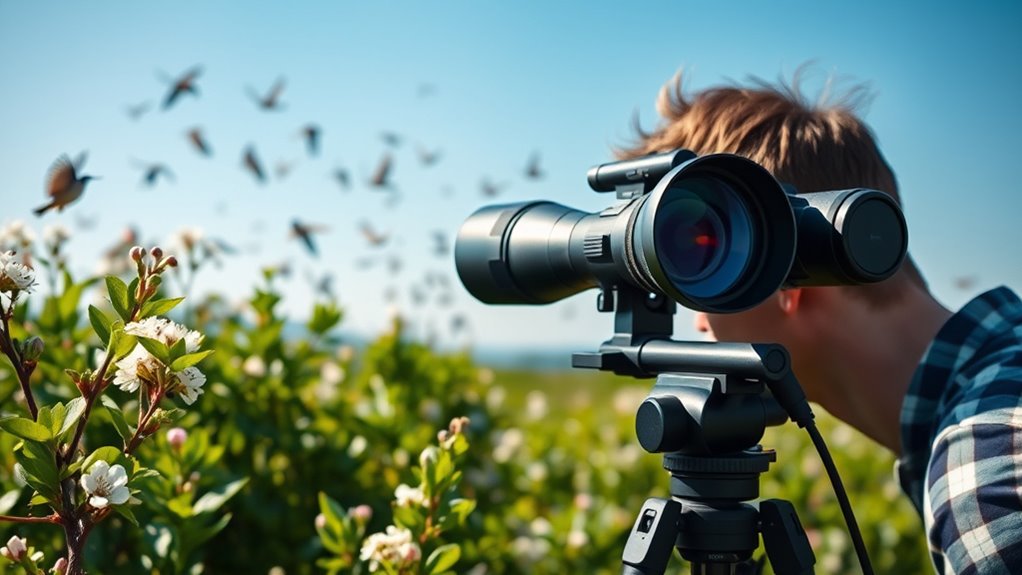

For most birders, I’d start with the Vortex Diamondback HD 20–60×85: its large objective lens and familiar zoom range suit long sessions and distant birds. The Vortex Razor HD 27–60×85 is the premium choice for shoppers prioritizing optical performance, while the Vortex Crossfire HD 12–36×50 stands out when lighter carry matters more than maximum reach. Choosing among spotting scopes for birding means balancing image brightness, usable magnification, weight, tripod stability, and cost. The bundled accessories on several Gosky, SVBONY, and other scopes can make starting easier, but they do not replace sound optics or a steady support. Read on for the full breakdown and a guide to matching a scope to your birding habits.

Get kitchen gear delivered free with Prime
- Fast, free delivery on millions of items
- Prime Video, Amazon Music and more included
- Member-only deals all year
Complete the kit


Key Takeaways
The Diamondback HD 20–60×85 earns the overall position by combining an 85 mm objective with a practical zoom range, a more balanced birding setup than the accessory-heavy entry-level alternatives.
The Razor HD 27–60×85 is the premium pick, but its higher magnification floor and larger format make it less flexible for close subjects and casual carry than the smaller Crossfire HD 12–36×50.
The Crossfire HD 12–36×50 trades reach and low-light capacity for easier transport; its lower magnification ceiling is a real limit for distant shorebirds or waterfowl.
Several lower-cost options advertise 25–75x zoom, but maximum magnification alone does not establish how sharp or steady a bird will look. Tripod quality, air conditions, and image clarity matter just as much.
Accessory bundles differ in usefulness: a phone adapter can help with casual documentation, while a small desktop tripod may not support comfortable viewing or a stable image during extended field sessions.
| Vortex Diamondback HD Angled Spotting Scope, 20–60×85 |  | Best Overall for Long Birding Sessions | Magnification: 20–60x | Objective lens diameter: 85 mm | Field of view: 108 feet | VIEW ON AMAZON | See Our Full Breakdown |
| SVBONY SV28 25–75×70 Spotting Scope with Tripod and Phone Adapter |  | Best Starter Kit | Magnification: 25–75x | Objective lens diameter: 70 mm | Field of view: 65 feet | VIEW ON AMAZON | See Our Full Breakdown |
| WOZEL 25–75×80 Spotting Scope with Tripod |  | Best Accessory-Rich 80 mm Pick | Magnification: 25x–75x | Objective lens diameter: 80 mm | Prism: BAK4 | VIEW ON AMAZON | See Our Full Breakdown |
| Celestron Ultima 80 Angled Spotting Scope, 20–60x Zoom |  | Best for Digiscoping | Objective lens diameter: 80 mm | Magnification: 20–60x | Viewing angle: 45° | VIEW ON AMAZON | See Our Full Breakdown |
| Vortex Crossfire HD Angled Spotting Scope, 20–60×80 |  | Best Lighter Vortex Option | Model: CF-80A | Objective lens diameter: 80 mm | Magnification: 20–60x | VIEW ON AMAZON | See Our Full Breakdown |
| Vortex Crossfire HD Angled Spotting Scope, 12–36×50 |  | Best Compact Pick | Magnification: 12–36x | Objective lens diameter: 50 mm | Focus: Helical | VIEW ON AMAZON | See Our Full Breakdown |
| SVBONY SV28 Angled Spotting Scope, 25–75×70 |  | Best Accessory Bundle | Magnification: 25–75x | Objective lens diameter: 70 mm | Eyepiece: Zoom | VIEW ON AMAZON | See Our Full Breakdown |
| Gosky 25–75×80 Spotting Scope with Desktop Tripod |  | Best for Bright, Long-Range Viewing | Magnification: 25–75x | Objective lens diameter: 80 mm | Prism: BAK4 | VIEW ON AMAZON | See Our Full Breakdown |
| FalconPro Elite 25–75×85 Spotting Scope with Phone Adapter and Remote Shutter |  | Best for Phone Digiscoping | Magnification: 25–75x | Objective lens diameter: 85 mm | Prism: BAK4 | VIEW ON AMAZON | See Our Full Breakdown |
| Sogries 20–60×80 HD Spotting Scope with Dual Focus, Phone Adapter, and Tripod |  | Best for Fine-Focus Control | Magnification: 20–60x | Objective lens diameter: 80 mm | Field of view: 86.4–48.2 ft at 1,000 yards | VIEW ON AMAZON | See Our Full Breakdown |
| WOSPORTS 25–75×85 Spotting Scope with Tripod |  | Best for High-Magnification Reach | Magnification: 25–75x | Objective lens diameter: 85 mm | Prism: BAK4 Porro | VIEW ON AMAZON | See Our Full Breakdown |
| Gosky 20–60×80 Spotting Scope with Tripod |  | Best for Lightweight, Packable Birding | Magnification: 20–60x | Objective lens diameter: 80 mm | Prism: BAK4 Porro prism | VIEW ON AMAZON | See Our Full Breakdown |
| Vortex Razor HD Angled Spotting Scope, 27–60×85 |  | Best Premium Optics | Magnification: 27–60x | Objective lens diameter: 85 mm | Lens: Triplet apochromatic with high-density extra-low dispersion glass | VIEW ON AMAZON | See Our Full Breakdown |
| Gosky 20-60×85 Spotting Scope with Full-Size Tripod |  | Best Complete Tripod Kit | Magnification: 20–60x | Objective lens diameter: 85 mm | Prism: BAK4 | VIEW ON AMAZON | See Our Full Breakdown |
| spotting scopes for birding | Magnification | Objective lens diameter | Weather protection | Weight |
|---|---|---|---|---|
| Vortex Diamondback HD Angled S | 20–60x | 85 mm | Waterproof and fogproof | 3.8 pounds |
| SVBONY SV28 25–75×70 Spotting | 25–75x | 70 mm | Listed as waterproof | 2383 g |
| WOZEL 25–75×80 Spotting Scope | 25x–75x | 80 mm | Waterproof and fogproof | — |
| Celestron Ultima 80 Angled Spo | 20–60x | 80 mm | Waterproof and fogproof; nitrogen-purged | 3.6 lb |
| Vortex Crossfire HD Angled Spo | 20–60x | 80 mm | — | 3.3 pounds |
| Vortex Crossfire HD Angled Spo | 12–36x | 50 mm | Waterproof and fogproof | 1.9 pounds |
| SVBONY SV28 Angled Spotting Sc | 25–75x | 70 mm | Waterproof | 910 g |
| Gosky 25–75×80 Spotting Scope | 25–75x | 80 mm | Waterproof and fogproof; nitrogen-filled and O-ring-sealed | 4.5 pounds |
| FalconPro Elite 25–75×85 Spott | 25–75x | 85 mm | Waterproof, nitrogen-purged, O-ring-sealed, fogproof | — |
| Sogries 20–60×80 HD Spotting S | 20–60x | 80 mm | Nitrogen-purged; waterproof and fogproof | 1.18 kg |
| WOSPORTS 25–75×85 Spotting Sco | 25–75x | 85 mm | Waterproof and fog-proof | — |
| Gosky 20–60×80 Spotting Scope | 20–60x | 80 mm | Nitrogen-filled, waterproof, and fog-proof | 2.4 lb |
| Vortex Razor HD Angled Spottin | 27–60x | 85 mm | O-ring sealed and argon-purged; waterproof and fog-proof | 4.1 lb |
| Gosky 20-60×85 Spotting Scope | 20–60x | 85 mm | — | 6.2 lb |
More Details on Our Top Picks
Vortex Diamondback HD Angled Spotting Scope, 20–60×85
The Diamondback HD earns my overall pick for birders who prioritize a bright, detailed view at long range. Its 85 mm objective lens gathers more light than the 80 mm Vortex Crossfire HD and Celestron Ultima 80, which can help when birds are shaded or the day is overcast. The 20–60x range suits scanning and closer identification without giving up the option to zoom in, while the helical focus wheel supports both quick acquisition and finer adjustments. Arca-Swiss and 1/4-20 compatibility also makes it easier to pair with different tripod heads. The tradeoff is portability: at 3.8 pounds, it is heavier than the Crossfire HD, and like the other full-size scopes here it needs a stable mount for a steady high-power view.
Pros:- 85 mm objective lens offers more light-gathering area than the 80 mm Crossfire HD and Ultima 80
- HD optics are designed to reduce chromatic aberration and maintain sharpness across the image
- Helical focus supports both rapid focusing and fine adjustments
- Arca-Swiss and 1/4-20 compatibility gives flexibility with tripod heads
Cons:- At 3.8 pounds, it is the heaviest of the two Vortex models in this batch
- Requires a tripod or another stable support for useful high-magnification viewing
- The 20–60x zoom range does not reach the 75x maximum offered by the SVBONY SV28 and WOZEL
Best for: Birders who regularly watch distant or shaded subjects and already carry a sturdy tripod.
Not ideal for: Hikers who count every pound or anyone seeking a scope to use comfortably without a stable mount.
- Magnification:20–60x
- Objective lens diameter:85 mm
- Field of view:108 feet
- Weight:3.8 pounds
- Optical-tube length:16 inches
- Mount compatibility:Arca-Swiss and 1/4-20 threads
- Weather protection:Waterproof and fogproof
- Warranty:Transferable lifetime VIP warranty
Our verdict“Choose the Diamondback HD if birding image detail and a larger objective matter more to you than keeping your kit light.”
SVBONY SV28 25–75×70 Spotting Scope with Tripod and Phone Adapter
The SVBONY SV28 is the most straightforward entry point here for a birder who wants the basic kit in one box. Its 25–75x zoom reaches higher magnification than the 20–60x Vortex and Celestron scopes, and the included tabletop tripod and phone adapter make it easier to start observing or try basic digiscoping without sourcing every accessory separately. That package is more accessible than the Vortex Crossfire HD, which lists tripod compatibility but does not include a tripod in the supplied details. The tradeoff is the 70 mm objective lens: it has less light-gathering area than the 80 mm WOZEL or 85 mm Diamondback HD, a relevant drawback in dim conditions. Its 65-foot field of view and manual focus also call for patience when locating and tracking active birds.
Pros:- 25–75x magnification offers more maximum reach than the 20–60x models in this batch
- Includes an aluminum alloy tabletop tripod and phone adapter
- Fold-down eyecup supports viewing comfort
- Standard threaded interface allows use with other compatible tripods
Cons:- The 70 mm objective is smaller than the WOZEL’s 80 mm and Diamondback HD’s 85 mm lenses
- Listed weight of 2383 g makes it a substantial carry for a starter scope
- Manual focus and a 65-foot field of view may make fast-moving birds harder to follow
Best for: New birders who want a high-zoom scope with a tabletop tripod and phone adapter included for casual outings.
Not ideal for: Birders who often observe in low light, need a wide view for tracking moving birds, or want a lightweight carry kit.
- Magnification:25–75x
- Objective lens diameter:70 mm
- Field of view:65 feet
- Focus type:Manual
- Weight:2383 g
- Tripod:Aluminum alloy tabletop tripod included
- Phone adapter compatibility:Phone widths 62–105 mm
- Weather protection:Listed as waterproof
Our verdict“Pick the SV28 if you want an all-in-one starter setup and value the included accessories more than low-light performance.”
WOZEL 25–75×80 Spotting Scope with Tripod
The WOZEL combines an 80 mm objective with a 25–75x range, making it a more light-gathering alternative to the 70 mm SVBONY SV28 while offering the same higher zoom ceiling. Fully multi-coated optics and a BAK4 prism are listed alongside waterproof and fogproof construction, and the supplied tripod, phone adapter, carrying case, and lens accessories mean fewer add-ons are needed for a birding outing. This is a practical fit for someone who wants a ready-to-carry package rather than the more established accessory-free setup of the Vortex Diamondback HD. The compromises are manual focusing and the bulk associated with an 80 mm objective. The provided details do not state a weight or tripod type, so buyers cannot judge its carrying burden as precisely as they can with the Vortex models.
Pros:- 80 mm fully multi-coated objective and BAK4 prism are specified for the optical system
- 25–75x zoom gives more maximum magnification than the Diamondback HD and Celestron Ultima 80
- Waterproof and fogproof housing suits outdoor observation
- Includes a tripod, phone adapter, carrying case, and lens accessories
Cons:- Manual focus requires the observer to make all adjustments
- The 80 mm objective makes this less compact than smaller-aperture options such as the SVBONY SV28
- Weight and tripod type are not specified in the supplied product data
Best for: Birders who want an 80 mm scope with a broad zoom range and a supplied set of carrying and digiscoping accessories.
Not ideal for: Traveling birders who need a compact, weight-specified setup or observers who prefer a focus system that does not require manual adjustment.
- Magnification:25x–75x
- Objective lens diameter:80 mm
- Prism:BAK4
- Lens coating:Fully multi-coated
- Field of view:83 ft
- Focus type:Manual
- Weather protection:Waterproof and fogproof
- Included accessories:Tripod, phone adapter, carrying case, lens covers, cleaning cloth
Our verdict“Choose the WOZEL if you want a higher-zoom 80 mm scope with accessories supplied and can accept manual focus and less certain portability.”
Celestron Ultima 80 Angled Spotting Scope, 20–60x Zoom
The Celestron Ultima 80 stands out for birders who want a clear route into digiscoping: it includes a T-adapter, along with a carrying case, tripod mounting plate, and eyepiece pouch. Its 80 mm objective and multi-coated optics place it closer to the WOZEL in aperture than the 70 mm SVBONY SV28, but its 20–60x zoom tops out below both 25–75x alternatives. That lower ceiling can be a sensible fit for general observation, though it offers less reach when birds are far away. The angled 45-degree viewing design can make shared tripod viewing more comfortable, but it is a preference rather than a universal advantage. At 3.6 pounds, it is slightly lighter than the Diamondback HD, yet remains a full-size scope; digiscoping also requires a compatible camera and T-ring.
Pros:- Included T-adapter provides a starting point for digiscoping
- 80 mm objective offers more aperture than the SVBONY SV28’s 70 mm lens
- Waterproof, fogproof, nitrogen-purged housing is suited to outdoor use
- Carrying case and tripod mounting plate are included
Cons:- 20–60x range has a lower maximum than the 25–75x SVBONY SV28 and WOZEL
- At 3.6 pounds, it is still a substantial scope to carry
- Digiscoping requires a compatible camera and T-ring beyond the included adapter
Best for: Birders who plan to photograph or record views through a scope and want a T-adapter included.
Not ideal for: Observers seeking the highest magnification in this group or a digiscoping setup that works without additional camera fittings.
- Objective lens diameter:80 mm
- Magnification:20–60x
- Viewing angle:45°
- Optics:Multi-coated
- Focal length:480 mm
- Weight:3.6 lb
- Weather protection:Waterproof and fogproof; nitrogen-purged
- Included accessories:Carrying case, tripod mounting plate, T-adapter, eyepiece pouch, lens cloth
Our verdict“Choose the Ultima 80 if the included digiscoping adapter matters more to you than reaching 75x magnification.”
Vortex Crossfire HD Angled Spotting Scope, 20–60×80
The Crossfire HD is the better Vortex fit for birders who want an angled, weather-sealed scope but would rather carry less than the Diamondback HD. At 3.3 pounds, it is half a pound lighter, while retaining an 80 mm objective, 20–60x magnification, a helical focus, and an Arca-Swiss-compatible foot. Its HD optics and fully multi-coated lenses are described as supporting clear views and low-light performance, though the Diamondback HD’s 85 mm objective gives it an aperture advantage for dimmer viewing. Compared with the Celestron Ultima 80, the Crossfire also lists a helical focus rather than manual focus, a useful distinction for making quicker adjustments. It still needs a stable tripod at high magnification, and the angled design may not suit observers who prefer a straight viewing line.
Pros:- At 3.3 pounds, it is lighter than the 3.8-pound Diamondback HD
- HD optics and fully multi-coated lenses are designed for clear views and improved low-light performance
- Helical focus supports quick and fine focus adjustments
- Waterproof and fogproof build with an Arca-Swiss-compatible foot
Cons:- Its 80 mm objective is smaller than the Diamondback HD’s 85 mm lens
- Angled viewing may not match every birder’s preferred posture or setup
- A stable tripod is still needed for steady viewing at higher magnification
Best for: Birders who want a weather-ready Vortex scope with a helical focus and a lighter carry than the Diamondback HD.
Not ideal for: Birders who prioritize maximum aperture for low-light viewing or who prefer straight-through viewing over an angled eyepiece.
- Model:CF-80A
- Objective lens diameter:80 mm
- Magnification:20–60x
- Focus:Helical
- Tripod compatibility:Arca-Swiss compatible
- Weight:3.3 pounds
- Weather resistance:Waterproof and fogproof
- Warranty:Unlimited, unconditional lifetime warranty
Our verdict“Pick the Crossfire HD if you want Vortex’s angled, helical-focus format in a lighter package and can forgo the Diamondback’s larger objective.”
Vortex Crossfire HD Angled Spotting Scope, 12–36×50
The 12–36x zoom and 1.9-pound body make this the easiest option in this group to carry for casual birding walks. Its 50 mm objective gathers less light than the SVBONY SV28’s 70 mm lens or the larger Gosky 25–75×80, so it gives up some reach and dim-light flexibility. In return, the lower magnification range is better suited to finding and following nearby birds without constantly managing high power. HD, fully multi-coated optics, a helical focus, and an Arca-Swiss-compatible foot add practical appeal for a lightweight setup. Waterproof, fogproof construction and an unconditional lifetime warranty are strong benefits, but the listed specs do not confirm a built-in sunshade for this 50 mm model. I’d choose it for portability, not distant, dawn-and-dusk viewing.
Pros:- At 1.9 pounds, it is lighter to carry than the larger-aperture models in this group.
- 12–36x range supports a wide view for locating nearby birds before modest magnification increases.
- HD optics and fully multi-coated lenses support clear views and light transmission.
- Arca-Swiss-compatible foot, waterproofing, fogproofing, and unconditional lifetime warranty.
Cons:- 50 mm objective gathers less light than the 70–85 mm alternatives.
- 36x maximum magnification limits long-distance detail compared with the 60x and 75x scopes.
- A built-in sunshade is specified only for the 65 mm and 80 mm models.
Best for: Birders who want a lightweight scope for day hikes, nearby wetlands, and quick tripod-based viewing.
Not ideal for: Birders who regularly identify distant birds or watch in dim light; its 50 mm objective and 36x ceiling offer less light gathering and reach than the larger scopes here.
- Magnification:12–36x
- Objective lens diameter:50 mm
- Focus:Helical
- Mount compatibility:Arca-Swiss
- Weight:1.9 pounds
- Weather protection:Waterproof and fogproof
- Enclosure material:Aluminum
- Warranty:Unlimited, unconditional lifetime warranty
Our verdict“Choose this Vortex if low carry weight matters more than high magnification or dim-light performance.”
SVBONY SV28 Angled Spotting Scope, 25–75×70
The SVBONY SV28 is the ready-to-go choice for birders who want a high-zoom scope with basic accessories already included. Its 25–75x range reaches farther on paper than the Vortex Crossfire HD 12–36×50, while the 70 mm objective offers more light-gathering area than that compact Vortex. The kit includes a phone adapter, carrying case, and portable desktop tripod, which suits stationary viewing or a car-based birding stop. The tradeoff is that 75x magnification can make a bird harder to keep centered and may show more image shake, especially on a small tripod. At 910 g, it also weighs more than the Crossfire, and its manual focus and 60-day warranty are less reassuring than the Vortex’s helical focus and lifetime coverage. I’d treat this as a bundled, high-zoom starter rather than a refined field optic.
Pros:- 25–75x zoom provides more stated magnification than the Vortex Crossfire HD 12–36×50.
- 70 mm objective gathers more light than the Crossfire’s 50 mm objective.
- Includes phone adapter, desktop tripod, carrying case, covers, and cleaning cloth.
- Waterproof body and non-slip finish suit outdoor use.
Cons:- 910 g is a noticeable carry load compared with the compact Vortex Crossfire.
- Manual focus requires user adjustment and may feel less convenient during quick bird movements.
- The 60-day warranty is much shorter than the Crossfire’s lifetime warranty.
Best for: New birders and casual observers who want a high-magnification scope, phone adapter, and starter tripod in one kit.
Not ideal for: Hikers prioritizing low weight or birders who need refined focusing and long-term warranty coverage.
- Magnification:25–75x
- Objective lens diameter:70 mm
- Eyepiece:Zoom
- Focal length:380 mm
- Field of view:64 feet
- Focus type:Manual
- Weight:910 g
- Weather protection:Waterproof
- Included accessories:Phone adapter, desktop tripod, carrying case, lens and eyepiece covers, cleaning cloth
Our verdict“Pick the SVBONY SV28 if a broad zoom range and included accessories matter more than light weight or extended warranty coverage.”
Gosky 25–75×80 Spotting Scope with Desktop Tripod
Among the high-zoom choices here, the Gosky pairs a 25–75x range with an 80 mm objective, giving birders more aperture than the SVBONY SV28’s 70 mm lens. That larger front lens can help when light fades, though it does not guarantee a bright view at the highest magnification. Its BAK4 prism, multi-coated optics, nitrogen-filled sealed body, and retractable sunshade make a capable feature set for outdoor observation. The kit also supplies a phone holder, tabletop tripod, and carrying case. The catch is weight: at 4.5 pounds, it is far less appealing for walking than the 1.9-pound Vortex Crossfire HD 12–36×50. Manual focus and a tabletop tripod also favor a settled viewing spot over rapidly changing positions. I’d shortlist it for stationary birding where aperture matters more than pack weight.
Pros:- 80 mm objective offers more light-gathering area than the SVBONY SV28’s 70 mm lens.
- 25–75x zoom supports close scanning and higher-power views of distant birds.
- BAK4 prism, multi-coated optics, and retractable sunshade are useful optical features.
- Nitrogen-filled, O-ring-sealed construction is waterproof and fogproof; accessories include a phone holder and case.
Cons:- At 4.5 pounds, it is much heavier to carry than the Vortex Crossfire HD 12–36×50.
- Manual focus and high magnification can make tracking moving birds less convenient.
- The included tabletop tripod is less suited to standing-height field observation than a full-size tripod.
Best for: Birders who usually observe from a fixed location and want an 80 mm objective with a broad zoom range and bundled accessories.
Not ideal for: Hikers who carry their optics for long distances, or birders who need quick refocusing while tracking active birds.
- Magnification:25–75x
- Objective lens diameter:80 mm
- Prism:BAK4
- Optics coating:Multi-coated
- Focus type:Manual
- Field of view:98 feet
- Weight:4.5 pounds
- Weather protection:Waterproof and fogproof; nitrogen-filled and O-ring-sealed
- Included accessories:Tabletop tripod, phone holder, carrying case, pouch, covers, cleaning cloth
Our verdict“Choose the Gosky for stationary birding when its 80 mm aperture matters more than portability.”
FalconPro Elite 25–75×85 Spotting Scope with Phone Adapter and Remote Shutter
The FalconPro Elite is the most aperture-forward option in this group, combining an 85 mm objective with a 25–75x zoom and BAK4 prism. For birders aiming to record distant sightings, its phone adapter and remote shutter make hands-off capture easier than the Gosky 25–75×80, which includes a phone holder but does not list a remote shutter. A heavy-duty tripod is also part of the package, a practical match for a scope intended for high magnification. The main tradeoff is the limited product detail: weight is not provided, and the listed dimensions do not establish how manageable it will be in a field bag. Its dual-speed manual focus offers finer adjustment than a single-speed control, but it still requires hands-on focusing. I’d favor it for tripod-based digiscoping, not a lightweight birding kit.
Pros:- 85 mm objective is the largest listed aperture among these five products.
- 25–75x magnification and BAK4 prism suit long-range observation.
- Heavy-duty tripod, smartphone adapter, and remote shutter support phone-based image capture.
- Nitrogen-purged, O-ring-sealed construction is waterproof and fogproof.
Cons:- Weight is not provided, making it difficult to judge for carrying on birding walks.
- Manual focusing still requires adjustment while tracking birds.
- The high 75x ceiling can make stable framing more demanding than lower-power viewing.
Best for: Birders who want to capture phone images or video through a high-aperture scope and expect to observe from a stable tripod.
Not ideal for: Walkers seeking a known lightweight setup, or buyers who want detailed published weight and handling information before choosing.
- Magnification:25–75x
- Objective lens diameter:85 mm
- Prism:BAK4
- Focus type:Manual, dual-speed
- Weather protection:Waterproof, nitrogen-purged, O-ring-sealed, fogproof
- Included accessories:Heavy-duty tripod, phone adapter, remote shutter
- Dimensions:4 × 16 × 6 inches
- Compatible devices:Smartphone
Our verdict“Choose the FalconPro Elite if phone digiscoping and maximum listed aperture outweigh uncertainty about carry weight.”
Sogries 20–60×80 HD Spotting Scope with Dual Focus, Phone Adapter, and Tripod
The Sogries stands apart from the 25–75x models with a more birding-friendly 20–60x range and dual focusing knobs. Starting at 20x gives a wider view for locating a bird, while the two-knob focus system is intended to help refine sharpness after the subject is found. Its 80 mm objective, BAK4 glass, and full broadband multi-coating make it a stronger low-light proposition than the 70 mm SVBONY SV28, though both still require a tripod for steady high-power viewing. Nitrogen purging supports waterproof and fogproof use, and the package includes a rotating tripod, phone adapter, and case. At 1.18 kg, it is not a featherweight carry, and the stated field of view narrows as magnification rises. I’d choose it for controlled focusing and flexible observation, rather than maximum zoom.
Pros:- 20–60x range starts lower than the 25–75x scopes, aiding bird location before zooming in.
- Dual focusing knobs offer separate adjustment for quicker initial focus and finer sharpness control.
- 80 mm objective, BAK4 glass, and full broadband multi-coating support light gathering.
- Nitrogen-purged body and included rotating tripod, phone adapter, and carrying case.
Cons:- 1.18 kg scope weight adds a meaningful load compared with the 1.9-pound Vortex Crossfire HD 12–36×50.
- 60x maximum magnification is lower than the SVBONY, Gosky, and FalconPro models’ 75x.
- Field of view narrows from 86.4 to 48.2 feet at 1,000 yards as magnification increases.
Best for: Birders who want a broad scanning view, more controlled manual focusing, and an 80 mm objective for varied daylight conditions.
Not ideal for: Birders whose priority is the highest available magnification or the lightest possible scope for long hikes.
- Magnification:20–60x
- Objective lens diameter:80 mm
- Field of view:86.4–48.2 ft at 1,000 yards
- Prism glass:BAK4
- Coating:Full broadband multi-coating (FBMC)
- Viewing angle:45°
- Focus:Dual focus
- Weight:1.18 kg
- Weather protection:Nitrogen-purged; waterproof and fogproof
Our verdict“Pick the Sogries if you value controlled focusing and a useful low-to-high zoom range more than 75x reach.”
WOSPORTS 25–75×85 Spotting Scope with Tripod
The WOSPORTS pairs an 85 mm objective with a 25–75x zoom, giving birders room to magnify distant subjects beyond the 60x ceiling of the Gosky 20–60×80. That extra reach can help inspect birds across open water or broad fields, though the narrower view at high magnification makes finding and following moving birds harder. Its BAK4 prism and fully multi-coated optics are promising for light transmission, while waterproof, fog-proof construction suits changing outdoor conditions. The included swivel tripod and phone adapter make this a ready-to-use kit, but the listing provides no weight, so I can’t judge its carrying burden against the 4.1-pound Vortex Razor HD. I’d choose it for stationary, long-distance viewing rather than frequent hikes or fast-moving woodland birds.
Pros:- 25–75x zoom offers more maximum magnification than the Gosky 20–60×80.
- 85 mm objective and BAK4 Porro prism support detailed viewing.
- Waterproof and fog-proof body is suited to outdoor use.
- Includes a 360° swivel tripod, smartphone adapter, and carry bag.
Cons:- High magnification narrows the field of view, making moving birds harder to locate and follow.
- No weight information is provided, leaving portability difficult to judge.
- Manual focus requires adjustment at the scope.
Best for: Birders who watch distant, relatively stationary birds from a car, hide, or fixed observation point and want magnification above 60x.
Not ideal for: Hikers and birders tracking quick-moving birds, since the weight is unspecified and the field of view narrows from 102 to 52.5 feet at 1,000 yards across its zoom range.
- Magnification:25–75x
- Objective lens diameter:85 mm
- Prism:BAK4 Porro
- Lens coating:Fully multi-coated
- Field of view:102–52.5 ft at 1,000 yards
- Focus:Manual
- Weather protection:Waterproof and fog-proof
- Included accessories:Tripod, smartphone adapter, carry bag, cleaning cloth, user manual, and lens covers
Our verdict“Choose the WOSPORTS if you prioritize extra zoom for distant birds and can accept a narrower high-power view and uncertain carry weight.”
Gosky 20–60×80 Spotting Scope with Tripod
At a listed 2.4 pounds, this Gosky is the easiest option in this group to assess as a carry-friendly scope; it is far lighter than the 6.2-pound Gosky 20–60×85 with its full-size tripod. The 20–60x range starts at a useful 20x, which gives birders a broader, easier-to-acquire view before zooming in on a perched bird. Its 80 mm multi-coated objective and BAK4 prism offer a smaller aperture than the 85 mm models, so it gives up some light-gathering potential in dim conditions. Nitrogen filling, waterproofing, fog-proofing, and rubber armor suit field use. The included tripod is tabletop-sized, however, so unlike the full-size Gosky it needs a bench, vehicle, or other support for comfortable standing-height viewing.
Pros:- Listed weight of 2.4 pounds is lower than the other products in this batch with stated weights.
- 20x minimum magnification helps with locating birds before zooming in.
- Nitrogen-filled, waterproof and fog-proof body with rubber armor.
- Includes a smartphone adapter, carrying case, and lens accessories.
Cons:- Tabletop tripod does not provide standing-height support.
- 80 mm objective is smaller than the 85 mm lenses on the WOSPORTS and Gosky 20–60×85.
- Field-of-view figures vary in the listing.
Best for: Birders who want a comparatively light 20–60x scope for day trips and usually have a bench, vehicle, or solid surface for the included tabletop tripod.
Not ideal for: Birders who need a freestanding, full-height tripod or regularly watch birds in low light, where the 80 mm objective is smaller than the 85 mm alternatives.
- Magnification:20–60x
- Objective lens diameter:80 mm
- Prism:BAK4 Porro prism
- Lens coating:Fully multi-coated
- Field of view:82.9–48 ft at 1,000 yards (listing figures vary)
- Weight:2.4 lb
- Weather protection:Nitrogen-filled, waterproof, and fog-proof
- Included accessories:Tabletop tripod, smartphone adapter, carrying case, bag, lens and eyepiece covers, and cleaning cloth
Our verdict“Pick this Gosky for a lighter carry and a useful low-power starting view, but skip it if you need a full-size tripod in the kit.”
Vortex Razor HD Angled Spotting Scope, 27–60×85
The Vortex Razor HD is the optical-quality pick in this batch: its 85 mm triplet apochromatic lens and extra-low dispersion glass are designed to keep fine detail and bird colors more faithful than the simpler optical descriptions on the WOSPORTS and Gosky scopes. The 27–60x range favors controlled viewing over maximum zoom; compared with the WOSPORTS 25–75×85, it gives up 15x at the top end but avoids making extreme magnification the main attraction. A helical focus, built-in sunshade, and Arca-Swiss compatibility suit birders building a stable, deliberate setup. The tradeoff is clear: at 4.1 pounds, it is not a casual carry, and a tripod is required. Its transferable lifetime VIP warranty adds long-term support, but does not make this the right choice for a lightweight daypack.
Pros:- Triplet apochromatic lens with extra-low dispersion glass is designed for sharp, color-accurate views.
- XR Plus coatings support light transmission.
- Built-in sunshade and rotating locking collar add practical field flexibility.
- Arca-Swiss compatibility and transferable lifetime VIP warranty.
Cons:- At 4.1 pounds, it is heavier than the Gosky 20–60×80’s listed 2.4 pounds.
- A tripod is required for stable viewing and is not listed among the included items.
- Maximum 60x magnification is lower than the WOSPORTS 25–75×85.
Best for: Dedicated birders who prioritize color fidelity and fine detail from a stable tripod setup, especially for prolonged observation at a fixed site.
Not ideal for: Birders who hike long distances with their scope or want a complete viewing kit, since it weighs 4.1 pounds and requires a tripod.
- Magnification:27–60x
- Objective lens diameter:85 mm
- Lens:Triplet apochromatic with high-density extra-low dispersion glass
- Coatings:XR Plus anti-reflective; Armortek lens protection
- Focus:Manual helical focus
- Weight:4.1 lb
- Weather protection:O-ring sealed and argon-purged; waterproof and fog-proof
- Mount compatibility:Arca-Swiss tripod heads
- Warranty:Transferable lifetime VIP warranty
Our verdict“Choose the Razor HD if optical refinement and long-term support matter more than low carry weight or maximum zoom.”
Gosky 20-60×85 Spotting Scope with Full-Size Tripod
This Gosky is the kit-oriented choice: its full-size tripod adjusts from 13.3 to 63 inches, a practical advantage over the tabletop tripod bundled with the Gosky 20–60×80. That height range lets birders set up at more locations without finding a table or separate support. The 20–60x zoom and 85 mm BAK4 optics with FMC coating make it a straightforward fit for general bird and wildlife viewing, while the phone adapter supports casual documentation. It does not reach the 75x ceiling of the WOSPORTS, and its listed 6.2-pound weight makes the whole setup a poor match for long walks. The product data also specifies manual focus, so tracking or refocusing on active birds takes hands-on adjustment rather than a quick automated correction.
Pros:- Full-size tripod adjusts from 13.3 to 63 inches, unlike the tabletop tripod bundled with the Gosky 20–60×80.
- 85 mm objective is larger than the 80 mm lens on that Gosky tabletop kit.
- 20–60x zoom suits general viewing, from locating birds to inspecting details.
- Phone adapter, carrying bag, and cleaning kit are included.
Cons:- Listed weight of 6.2 pounds makes it cumbersome for extended walks.
- Maximum 60x magnification is lower than the WOSPORTS 25–75×85.
- Manual focus requires direct adjustment while viewing.
Best for: Beginning or car-based birders who want a full-height tripod and basic accessories included for stationary viewing.
Not ideal for: Birders who cover long distances on foot or want maximum zoom, since the listed setup weighs 6.2 pounds and tops out at 60x.
- Magnification:20–60x
- Objective lens diameter:85 mm
- Prism:BAK4
- Lens coating:FMC
- Field of view:101–48 ft at 1,000 yards
- Focus:Manual
- Tripod height:13.3–63 in
- Weight:6.2 lb
- Included accessories:Full-size tripod, phone adapter, carrying bag, and cleaning kit
Our verdict“Choose this Gosky if a full-height tripod and included field accessories matter more than portability or high-end zoom.”

How We Picked
I ranked these scopes around birding tasks: locating a bird quickly, resolving useful feather and field-mark details, and keeping the view comfortable during extended observation. I weighed objective-lens size and magnification range against portability, focusing usability, included support, and the likelihood that a birder would need to replace bundled accessories. I also separated genuinely different use cases: full-size scopes for distant subjects, compact models for mobile outings, and premium optics for buyers who prioritize image quality.
The ranking favors a balanced setup over the largest advertised zoom range or the longest accessory list. That puts the Diamondback HD first as a strong all-around fit, the Razor HD in the premium role, and the Crossfire HD 12–36×50 in the compact role. Models with similar headline specifications are distinguished by configuration and intended use, while bundled tripods and phone adapters count as conveniences rather than proof of optical performance. Since specifications alone cannot establish real-world image quality across every condition, I avoid treating magnification claims as a substitute for clarity, stability, or practical handling.
Factors to Consider When Choosing Spotting Scopes For Birding
Choosing a birding scope is less about chasing the biggest number and more about how you watch birds. I’d start with your usual viewing distance and walking habits, then check whether the complete setup will stay steady and comfortable where you bird. These broader tradeoffs help narrow the field before you focus on individual models.
Choose magnification for a usable view, not a headline number
High zoom can help reveal detail on a distant bird, but it also magnifies hand movement, tripod vibration, heat shimmer, and atmospheric haze. That means a scope advertised at 75x may be most useful well below its maximum, especially on warm days or over long distances. For general birding, a scope that starts around 20x gives you room to find a subject and follow movement before increasing power. A higher starting point can make nearby birds or fast-moving subjects harder to frame. Think about the places you bird: woodland edges and close wetland viewing reward a wider, easier-to-acquire field more than maximum reach. If possible, prioritize a steady image at the magnification you will actually use.
Balance objective size against the weight you will carry
A larger objective lens gathers more light, which can help during dim mornings and evenings, but it usually adds bulk to both the scope and the support it needs. An 85 mm scope can make sense for stationary seawatching or a hide, while a 50 mm model is easier to bring on a long walk. Buyers often focus on the scope’s weight and forget the tripod, head, case, and other gear that complete the setup. Consider whether you mostly drive to viewing locations or carry everything on foot. If a heavier scope stays at home, its light-gathering advantage does not help you in the field. Match the aperture to your routine, not just to the toughest lighting you might encounter.
Treat the tripod as part of the optical system
A scope cannot show fine detail steadily if its tripod flexes or shifts whenever you touch the focus wheel. Small bundled tripods can be handy for a table, vehicle hood, or quick setup, but their height and stability may be awkward for standing observations. A suitable support should reach a comfortable viewing height and hold the scope without persistent shake. Check how the mounting plate and head work with the scope before buying a separate tripod; compatibility is not always obvious from a product listing. For walking birders, a lighter support may be worth a little lost rigidity, while fixed-location viewing favors sturdiness. Budget for the full system rather than judging the scope and tripod as unrelated purchases.
Pick an eyepiece angle that suits your viewing position
Angled eyepieces can be comfortable for long observations and make it easier for people of different heights to share one tripod. They can also take practice when locating a bird, since the eyepiece does not point in the same direction as the scope. Straight viewing can feel more intuitive for tracking birds near the horizon or for quick use from a car, though extended viewing may require a higher tripod position. Consider whether you will observe alone, share the scope, or look upward into trees. The best angle depends on your posture and regular viewing sites, not on a universal rule that one design is better. Try to picture the scope at your typical standing or seated height before deciding.
Decide whether phone accessories fit your birding goals
A phone adapter can record a distant bird or help share a view, but digiscoping adds setup steps and depends on alignment between the phone camera and eyepiece. Phone weight and movement can also affect stability, while small sensors may struggle in dim light or with a moving subject. If documentation is a priority, check whether the adapter fits your phone with its case on and whether it can be adjusted securely. For observation first, a comfortable eyepiece and simple focusing often matter more than a remote shutter or bundled adapter. Do not let a long accessory list distract from the quality of the tripod or scope you will use every outing. Choose add-ons that solve a regular problem rather than ones that merely sound useful.
Set expectations for weather protection and field care
Birding often means dew, drizzle, dust, and frequent packing, so protection and maintenance deserve a place in the decision. Check the manufacturer’s stated waterproofing and fogging protections instead of assuming that every scope can handle wet conditions. Lens caps and a padded case reduce the chance of scratches, while a clean microfiber cloth is safer than wiping grit across glass. Avoid leaving a scope in a hot car, where temperature changes can affect comfort and equipment condition. A more rugged model may be worth choosing if you bird in exposed coastal or wetland locations. For occasional fair-weather use, careful handling can matter more than extra protection you may rarely need.
Frequently Asked Questions
Is an 85 mm spotting scope worth carrying for birding?
An 85 mm objective can be useful when you often watch distant birds or head out during low-light periods, since the larger aperture can gather more light than a compact 50 mm design. The tradeoff is extra weight and a greater need for a stable tripod. If most of your birding involves walking trails or carrying gear for hours, a smaller scope may get used more often. For a stationary seawatch or regular viewing from a hide, the larger format can make more sense. Think about how often you will use its light-gathering advantage against how often you will carry it.
Will a 75x spotting scope show more bird detail than a 60x model?
Not automatically. Higher magnification enlarges the image, but it also makes vibration, atmospheric haze, and heat shimmer more obvious. A scope may deliver a clearer, steadier view at a lower setting than at its advertised maximum. For birding, finding and tracking the subject comfortably can be more useful than pushing magnification to its limit. A stable tripod and clear viewing conditions often contribute more to visible detail than the difference between 60x and 75x.
Should I buy a spotting scope with an included tripod or choose one separately?
An included tripod can help you get started, particularly for casual use or a first look at whether a scope suits your routine. Its compact size may limit height and stability, though, which can make long observations uncomfortable and blur detail at higher magnification. A separate tripod lets you choose support around your height, terrain, and carrying needs. Check the scope’s mounting connection and the included tripod’s working height before treating the bundle as a complete field setup. If you already own a steady compatible tripod, that may matter more than bundled accessories.
Is an angled scope a good choice for a first-time birder?
It can be, especially if you plan long sessions, share the scope with people of different heights, or often observe from a seated position. An angled eyepiece can take practice when aiming at a bird for the first time, so quick acquisition may feel less natural at first. A straight scope can be more intuitive for tracking subjects close to the horizon or observing from a vehicle. Neither layout improves image quality on its own. Choose based on your usual posture and viewing locations, and allow time to learn how to aim the scope.
When should I choose a compact scope over a full-size 80 or 85 mm model?
Choose a compact model when low carry weight will determine whether you bring the scope on a hike, travel day, or long walk between birding spots. A smaller objective may be less helpful in dim conditions and can limit how comfortably you view distant birds, so it is a tradeoff rather than a no-cost upgrade. Full-size 80 or 85 mm scopes suit fixed locations and users who value aperture more than portability. If your outings mix walking with stationary viewing, consider which situation happens most often. The scope that fits your regular routine is more useful than one selected only for occasional demanding conditions.
Conclusion
For the broadest mix of wetland, shoreline, and general birding, I’d choose the Vortex Diamondback HD 20–60×85 as best overall. The Vortex Crossfire HD 12–36×50 is my pick for value-conscious birders who put portability first, while the SVBONY SV28 25–75×70 with tripod and phone adapter is a straightforward beginner option for trying a bundled setup. If image performance is the priority and a full-size scope fits your outings, the Vortex Razor HD 27–60×85 is the premium choice. For a more accessory-focused setup, compare the Gosky 20–60×85 with full-size tripod with the other bundled Gosky and SVBONY models, checking support height and stability against your needs. My final choice would depend on whether you value balanced reach, easy carrying, premium optics, or included accessories most.