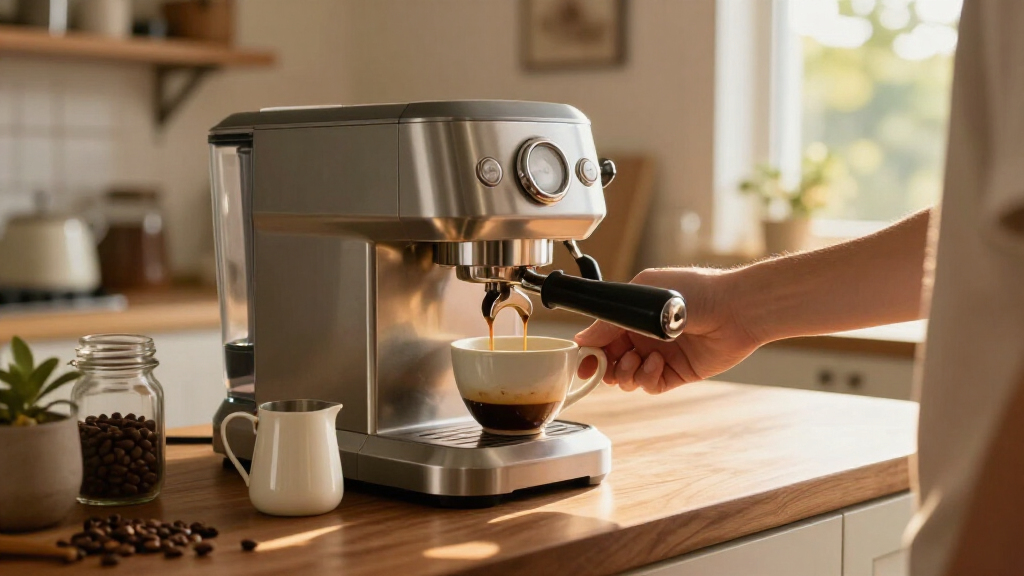
For most home espresso drinkers, I would start with the Breville Barista Express: its built-in grinder and manual controls offer a strong balance of convenience and room to learn. The Breville Bambino is a better fit when counter space and quick setup matter more, while the Ninja Luxe Café Premier stands out for households that want espresso alongside drip coffee and cold brew. The main tradeoff is between an all-in-one workflow and a simpler machine that asks you to supply a grinder or do more by hand. Milk steaming, daily cleanup, and how much control you want also separate these options. Read on for the full breakdown of the 15 machines and which type of home coffee routine each one suits.

Get kitchen gear delivered free — and shop member deals
- Fast, free delivery on millions of items
- Access to Prime Big Deal Days deals on October 6–7
- Prime Video, Amazon Music and more included
Complete the kit


Key Takeaways
- The built-in grinder separates the Barista Express from simpler machines: it reduces the number of separate purchases, though it takes more counter space and requires learning a more hands-on routine.
- The Bambino prioritizes a compact espresso workflow: it makes more sense for limited counter space than a larger all-in-one setup, but buyers need to plan for a separate grinder.
- The Ninja Luxe Café Premier is the broadest-use option in this lineup: its espresso, drip coffee, and cold brew formats suit mixed-preference households better than espresso-only machines.
- Entry-level steam machines trade control for simplicity: models such as the Mr. Coffee and IMUSA focus on straightforward brewing, while offering a different espresso workflow from pump-style machines.
- Several compact machines compete on footprint rather than a distinct workflow: compare wand access, cleaning needs, and grinder arrangements instead of treating a high pressure-bar figure as proof of better espresso.
| De’Longhi Linea Classic Espresso Machine with Adjustable Milk Frother |  | Best for Guided Customization | Pump pressure: 15 bar | Power: 1350 watts | Voltage: 120 volts | VIEW LATEST PRICE | See Our Full Breakdown |
| Mr. Coffee 4-Shot Steam Espresso Maker with Milk Frother and Stainless Steel Pitcher |  | Best for Brewing Several Servings | Brewing method: Steam brewing | Operation mode: Semi-automatic | Shot capacity: Up to 4 shots | VIEW LATEST PRICE | See Our Full Breakdown |
| Breville Bambino Espresso Machine, Brushed Stainless Steel (BES450BSS) |  | Best Compact Pick for Milk Drinks | Heating system: ThermoJet | Heat-up time: 3 seconds | Temperature features: PID control and low-pressure pre-infusion | VIEW LATEST PRICE | See Our Full Breakdown |
| Atatix Espresso Machine with Milk Frother, 20-Bar Pressure |  | Best for Manual Extraction Control | Operation mode: Semi-automatic | Pressure: 20 bar | Power: 1350 watts | VIEW LATEST PRICE | See Our Full Breakdown |
| CASABREWS 3700 Essential Stainless Steel Espresso Machine with Steam Wand |  | Best for a Simple Home or Office Setup | Operation mode: Semi-automatic | Pump pressure: 20 bar | Power: 1350 watts | VIEW LATEST PRICE | See Our Full Breakdown |
| Ninja Luxe Café Premier 3-in-1 Espresso, Drip Coffee, and Cold Brew Machine |  | Best for All-in-One Variety | Machine type: 3-in-1 espresso, drip coffee, and cold brew maker | Operation: Fully automatic | Grinder: Built-in conical burr grinder with 25 settings | VIEW LATEST PRICE | See Our Full Breakdown |
| Arecovas Espresso Machine with Touchscreen and Milk Frother |  | Best Compact Machine for Learning Espresso | Operation mode: Semi-automatic | Pressure: 20 bar | Power: 1300 watts | VIEW LATEST PRICE | See Our Full Breakdown |
| Aromaster 1400W Semi-Automatic Espresso Machine with Milk Frother |  | Best for Hot and Iced Coffee Flexibility | Model: AREM26 | Type: Semi-automatic espresso machine | Power: 1400W | VIEW LATEST PRICE | See Our Full Breakdown |
| Breville Barista Express Espresso Machine, Brushed Stainless Steel |  | Best for Hands-On Espresso Control | Model: BES870XL | Type: Manual espresso machine | Grinder: Integrated conical burr grinder | VIEW LATEST PRICE | See Our Full Breakdown |
| De’Longhi Stilosa Compact Manual Espresso Machine with Milk Frother |  | Best Compact Starter Machine | Model: EC260BK | Operation mode: Manual | Pump pressure: 15 bar | VIEW LATEST PRICE | See Our Full Breakdown |
| Breville Barista Express Espresso Machine, Black Truffle |  | Best Integrated Grinder for Hands-On Home Baristas | Operation: Semi-automatic | Grinder: Integrated precision conical burr grinder | Power: 1600 watts | VIEW LATEST PRICE | See Our Full Breakdown |
| IMUSA 4-Cup Electric Espresso and Cappuccino Maker |  | Best for Shared Carafe-Style Servings | Capacity: Up to 4 cups | Operation: Semi-automatic | Pressure: 5 bar | VIEW LATEST PRICE | See Our Full Breakdown |
| CASABREWS CM5418 Compact Espresso Machine with Milk Frothing Wand |  | Best Compact Portafilter Machine | Type: Semi-automatic espresso machine | Pump pressure: 20 bar | Power: 1350 watts | VIEW LATEST PRICE | See Our Full Breakdown |
| RIOSKY Compact Espresso Machine with Steam Wand |  | Best Feature-Packed Slim Machine | Machine type: Semi-automatic espresso machine | Power: 1400 watts | Pump pressure: 20 bar | VIEW LATEST PRICE | See Our Full Breakdown |
| Spacekey Espresso Machine with Grinder and Milk Frother |  | Best All-in-One Grinder Convenience | Type: Semi-automatic espresso machine | Grinder: Built-in conical burr grinder with 30 settings | Pump pressure: 20 bar | VIEW LATEST PRICE | See Our Full Breakdown |
| espresso machines for home | Power | Dimensions | Weight |
|---|---|---|---|
| De’Longhi Linea Classic Espres | 1350 watts | 11.22 × 13.98 × 15.94 inches | 9.3 pounds |
| Mr. Coffee 4-Shot Steam Espres | 1200 watts | 11.2 × 11.2 × 15 inches | — |
| Breville Bambino Espresso Mach | 1560 watts | 13.7 × 6.3 × 12 inches (D × W × H) | 10.9 pounds |
| Atatix Espresso Machine with M | 1350 watts | 12 × 5 × 11 inches | 7.5 pounds |
| CASABREWS 3700 Essential Stain | 1350 watts | — | — |
| Ninja Luxe Café Premier 3-in-1 | 1650 watts | 12.99 × 13.39 × 14.57 in (D × W × H) | — |
| Arecovas Espresso Machine with | 1300 watts | 12 × 5.2 × 11.9 in (D × W × H) | — |
| Aromaster 1400W Semi-Automatic | 1400W | 13 × 7 × 14 in (D × W × H) | — |
| Breville Barista Express Espre | 1600 watts | 13.8 × 12.5 × 15.9 in (D × W × H) | 22.1 lb |
| De’Longhi Stilosa Compact Manu | 1100 watts | 12.13 × 9.45 × 14.17 in | 8.6 lb |
| Breville Barista Express Espre | 1600 watts | 13.8 × 12.5 × 15.9 inches | 22.1 pounds |
| IMUSA 4-Cup Electric Espresso | 800 watts | 7.48 × 9.05 × 11.02 inches | 4.8 pounds |
| CASABREWS CM5418 Compact Espre | 1350 watts | — | — |
| RIOSKY Compact Espresso Machin | 1400 watts | 11.4 × 5.3 × 11.4 inches | 7.2 pounds |
| Spacekey Espresso Machine with | 1350 watts | 12 × 10 × 14 inches | 15 pounds |
More Details on Our Top Picks
De’Longhi Linea Classic Espresso Machine with Adjustable Milk Frother
The Linea Classic suits home espresso drinkers who want control over shot size without moving to a more involved setup. Its customizable single- and double-shot presets make repeat brewing straightforward, while the pressure gauge gives a visual cue during extraction. Compared with the Breville Bambino, it offers that gauge and a slightly larger footprint, while the Bambino heats faster and takes up less counter width.
The adjustable steam wand adds flexibility for dairy and alternative milks, and Thermoblock heating is designed to reach and hold brewing temperature quickly. The tradeoff is that this machine uses ground coffee, so grinding and dosing remain part of the routine. Its listed 120-volt operation also limits it to compatible outlets. I’d choose it over the Mr. Coffee 4-Shot for pump-based brewing and shot controls, not for making several servings at once.
Pros:- Customizable presets for single and double shots
- Pressure gauge provides a visible extraction reference
- Adjustable steam wand accommodates milk and alternatives
- Thermoblock heating supports fast, stable temperature control
Cons:- Requires separately prepared ground coffee
- Listed for 120-volt operation only
- Wider and deeper than the compact Breville Bambino
Best for: Home drinkers who want adjustable shot presets, a visible extraction gauge, and a steam wand in a compact stainless-steel machine.
Not ideal for: Buyers who want an integrated grinder, capsule convenience, or to brew several shots in one batch; it requires ground coffee and is designed for 120-volt power.
- Pump pressure:15 bar
- Power:1350 watts
- Voltage:120 volts
- Coffee input:Ground coffee
- Heating system:Thermoblock
- Dimensions:11.22 × 13.98 × 15.94 inches
- Weight:9.3 pounds
- Special features:Customizable shot presets, adjustable milk frother, pressure gauge, auto shut-off, removable tank
Our verdict“Choose the Linea Classic if shot presets and a pressure gauge matter more to you than the Bambino’s faster warm-up and narrower profile.”
Mr. Coffee 4-Shot Steam Espresso Maker with Milk Frother and Stainless Steel Pitcher
The Mr. Coffee 4-Shot Steam Espresso Maker is the lineup’s batch-oriented choice: it can prepare up to four shots at once, a practical fit when several people want espresso drinks together. Its included stainless steel frothing pitcher, marked water pitcher, and measuring scoop provide useful basics without requiring a separate milk vessel. Compared with the pump-based De’Longhi Linea Classic, this model emphasizes serving capacity and bundled accessories rather than adjustable shot presets or a pressure gauge.
The main compromise is its steam-brewing method, which differs from the pump-driven approach used by the Linea Classic and Breville Bambino. Buyers seeking more control over extraction may prefer those machines. The listed 240-volt voltage is also a meaningful compatibility check for a home kitchen; verify that your outlet and region match before buying. I’d pick this for shared rounds, but not for someone seeking a conventional pump-based espresso workflow.
Pros:- Brews up to four shots in one batch
- Includes a stainless steel frothing pitcher
- Marked water pitcher helps with measuring
- Integrated frothing wand supports milk-based drinks
Cons:- Uses steam brewing rather than a pump-based espresso process
- Listed voltage is 240 volts, so outlet compatibility needs checking
- Does not list customizable shot presets or a pressure gauge
Best for: Households or small offices that want to prepare up to four shots together and value an included pitcher and measuring tools.
Not ideal for: Buyers who want pump-based extraction, fine control over shot settings, or have not confirmed compatibility with the listed 240-volt power requirement.
- Brewing method:Steam brewing
- Operation mode:Semi-automatic
- Shot capacity:Up to 4 shots
- Power:1200 watts
- Voltage:240 volts
- Dimensions:11.2 × 11.2 × 15 inches
- Materials:Metal, plastic, stainless steel
- Included components:Frothing wand, water pitcher, measuring scoop
Our verdict“Pick this model for shared batches and included drink-making accessories, but choose the Linea Classic or Bambino for pump-based brewing.”
Breville Bambino Espresso Machine, Brushed Stainless Steel (BES450BSS)
For a small kitchen where quick starts matter, the Breville Bambino is the clearest fit in this group. Its three-second ThermoJet heat-up reduces the wait before brewing, and PID temperature control with low-pressure pre-infusion is designed to support more even extraction. The automatic steam wand creates adjustable microfoam with less manual technique than the wand on the Atatix, making the Bambino a more approachable pick for regular cappuccinos and lattes.
Its narrow 6.3-inch width is a real counter-space advantage over the broader De’Longhi Linea Classic. The tradeoff is a 47-ounce water capacity, which means more frequent refills than a larger-tank setup, and it still calls for ground coffee and hands-on preparation. Included accessories cover the essentials, but buyers who want a grinder built into the machine should look elsewhere. I’d rank it above the Atatix for compactness and automatic milk texturing, not manual extraction flexibility.
Pros:- ThermoJet system reaches extraction temperature in 3 seconds
- Narrow 6.3-inch profile fits tight counters
- Adjustable automatic steam wand makes microfoam
- Includes portafilter, filter baskets, milk jug, tamper, and cleaning tools
Cons:- 47-ounce tank can require frequent refills for multiple drinks
- Requires ground coffee and hands-on preparation
- Does not include an integrated grinder
Best for: Apartment dwellers and newer home baristas who want a narrow machine, rapid warm-up, and easier automatic milk texturing.
Not ideal for: People who brew many drinks between refills, want an integrated grinder, or prefer fully automated coffee preparation.
- Heating system:ThermoJet
- Heat-up time:3 seconds
- Temperature features:PID control and low-pressure pre-infusion
- Power:1560 watts
- Voltage:120 volts
- Water capacity:47 fluid ounces
- Dimensions:13.7 × 6.3 × 12 inches (D × W × H)
- Portafilter:54 mm
- Weight:10.9 pounds
Our verdict“Choose the Bambino if counter width and quick, relatively hands-off milk texturing matter more than a larger water tank or manual extraction options.”
Atatix Espresso Machine with Milk Frother, 20-Bar Pressure
The Atatix stands out for buyers who want to adjust extraction rather than rely only on preset shot lengths. It offers both automatic and manual extraction, with a manual cycle of up to 102 seconds and listed output ranges for single, double, and manual shots. That flexibility gives it a different role from the Breville Bambino, whose strength is rapid heating and automatic milk texturing rather than a described manual extraction mode.
A detachable tank and drip tray make routine cleanup easier, while the steam wand supports milk foam for espresso drinks. The tradeoff is a learning curve: manual settings may take experimentation, and the listed 20-bar system does not by itself tell a buyer how a particular coffee dose will extract. At 7.5 pounds, it is lighter than the Bambino, but its accessories are more basic. I’d choose it over the CASABREWS 3700 for its stated manual and automatic extraction options, not for a simpler setup.
Pros:- Offers automatic and manual extraction modes
- Lists separate timing and output ranges for shot modes
- Detachable water tank and drip tray simplify cleaning
- Steam wand supports milk drinks and microfoam
Cons:- Manual extraction settings may require experimentation
- Included accessories are limited to a portafilter, funnel, scoop/tamper, and manual
- Designed for 120-volt power
Best for: Curious home baristas who want to experiment with extraction time and output while keeping a detachable tank and tray for easier cleaning.
Not ideal for: Beginners seeking a quick, repeatable routine or buyers who prefer an automatic steam wand and a fuller accessory bundle.
- Operation mode:Semi-automatic
- Pressure:20 bar
- Power:1350 watts
- Voltage:120 volts
- Extraction temperature:90–96°C
- Preheat time:30 seconds
- Dimensions:12 × 5 × 11 inches
- Weight:7.5 pounds
- Extraction options:Automatic and manual; manual extraction up to 102 seconds
Our verdict“Choose the Atatix if manual extraction control is your priority; choose the Bambino for faster heat-up and easier automatic milk texturing.”
CASABREWS 3700 Essential Stainless Steel Espresso Machine with Steam Wand
The CASABREWS 3700 Essential is a straightforward semi-automatic choice for someone who wants espresso and steamed milk without prioritizing advanced controls. It includes one-cup and two-cup filters, a portafilter, and a tamper with spoon, so the core brewing accessories come in the box. Its removable 43.9-ounce water tank and drip tray make refilling and cleanup less awkward than on a setup with fixed parts.
Compared with the Atatix, it offers a simpler listed feature set: the Atatix specifies manual extraction alongside automatic modes, while the 3700 emphasizes basic controls and a steam wand. The Bambino is the stronger choice for fast warm-up and automatic microfoam; CASABREWS instead provides a larger stated tank than the Bambino’s 47-ounce capacity is not—its tank is slightly smaller—so frequent multi-drink users should compare refill needs carefully. A first-use cycle is required, and there is no pressure gauge to help monitor extraction.
Pros:- Includes one-cup and two-cup stainless steel filters
- Removable 43.9-ounce tank and drip tray ease refilling and cleaning
- Steam wand supports milk frothing and latte art
- Compact design is suited to home or office use
Cons:- Requires a first-use cycle before brewing
- Does not include a pressure gauge
- Requires ground coffee and hands-on preparation
Best for: Home or office users who want a basic semi-automatic machine with included filters and removable parts for routine cleanup.
Not ideal for: Buyers who want an extraction gauge, automatic milk texturing, or the Bambino’s specified rapid heat-up and milk controls.
- Operation mode:Semi-automatic
- Pump pressure:20 bar
- Power:1350 watts
- Voltage:120 volts
- Water tank capacity:43.9 ounces
- Coffee input:Ground coffee
- Controls:Buttons
- Included filters:One-cup and two-cup stainless steel filters
- Material:Stainless steel
Our verdict“Pick the CASABREWS 3700 for a simple, accessory-included setup, but choose the Atatix for manual extraction options or the Bambino for faster warm-up.”
Ninja Luxe Café Premier 3-in-1 Espresso, Drip Coffee, and Cold Brew Machine
The Ninja Luxe Café Premier suits households that want espresso alongside drip coffee and cold brew without keeping separate machines on the counter. Its built-in grinder and guided brewing steps handle grinding, dosing, and tamping, reducing the number of skills a new espresso maker needs to learn. Automatic frothing also makes milk drinks less hands-on than with the Breville Barista Express, which relies on manual espresso prep and steaming. The tradeoff is a larger, more involved appliance: its 3-in-1 range and many settings take time to learn, and its footprint may be excessive if espresso is your only daily drink. I’d choose it for drink variety and convenience, not for a compact or narrowly espresso-focused setup.
Pros:- Makes espresso, drip coffee, and cold brew in one appliance
- Built-in conical burr grinder offers 25 grind settings
- Guided brewing and automatic frothing reduce hands-on work
- Removable 70 oz reservoir supports multiple drinks between refills
Cons:- Larger countertop footprint than a dedicated compact espresso machine
- Multiple drink modes and settings may take time to learn
- Fully automatic preparation offers less hands-on control than the Breville Barista Express
Best for: Households with varied coffee habits that want espresso, drip coffee, and cold brew from one machine, plus guided preparation and automatic milk frothing.
Not ideal for: Espresso-only drinkers with limited counter space, or buyers who prefer a simpler machine with fewer settings to learn.
- Machine type:3-in-1 espresso, drip coffee, and cold brew maker
- Operation:Fully automatic
- Grinder:Built-in conical burr grinder with 25 settings
- Espresso styles:Double shot and quad shot
- Water reservoir:70 oz, removable
- Power:1650 watts
- Dimensions:12.99 × 13.39 × 14.57 in (D × W × H)
- Special features:Automatic milk frother, guided brewing, programmable timer, auto shut-off
Our verdict“Choose the Ninja if your household wants several coffee styles and guided convenience more than a small, espresso-only machine.”
Arecovas Espresso Machine with Touchscreen and Milk Frother
The Arecovas pairs a narrow body with useful brewing controls, making it a fit for someone who wants to learn espresso without giving up much counter width. Its PID temperature control and low-pressure pre-infusion are aimed at steadier brewing, while the real-time pressure gauge gives the user feedback during extraction. Unlike the Ninja Luxe Café Premier, it requires ground coffee and hands-on preparation, but that simpler espresso focus takes up less space and leaves more of the process in the buyer’s hands. The steam wand can froth milk for lattes, though it also adds a skill to learn. Skip it if you want an integrated grinder or automatic drinks; those conveniences are absent here.
Pros:- Compact 5.2-inch width fits narrower counter spaces
- PID temperature control and low-pressure pre-infusion support controlled brewing
- Pressure gauge and touchscreen provide visible operating feedback
- Steam wand can froth milk for lattes and cappuccinos
Cons:- Requires separately ground coffee because it has no built-in grinder
- Semi-automatic preparation requires user involvement
- Smaller 41 oz tank needs more frequent refilling than the Ninja Luxe Café Premier’s reservoir
Best for: Apartment dwellers and newer home baristas who want temperature controls, a pressure gauge, and a compact machine for practicing espresso with pre-ground coffee.
Not ideal for: Buyers seeking a built-in grinder, one-touch preparation, or a fully automated milk-drink routine.
- Operation mode:Semi-automatic
- Pressure:20 bar
- Power:1300 watts
- Water tank capacity:41 oz (1.2 L)
- Dimensions:12 × 5.2 × 11.9 in (D × W × H)
- Display:LED display and real-time pressure gauge
- Coffee input:7–9 g single shot; 13–15 g double shot
- Brewing features:PID temperature control, low-pressure pre-infusion, steam wand, cup warmer
Our verdict“Pick the Arecovas if you want a narrow, hands-on espresso machine with brewing feedback and already have a way to grind coffee.”
Aromaster 1400W Semi-Automatic Espresso Machine with Milk Frother
The Aromaster AREM26 is a practical pick for buyers who want to alternate between espresso-based drinks and hot or iced coffee while keeping preparation hands-on. Its dual-circuit system supports switching between hot and iced brewing, and PID temperature control and pre-infusion add more brewing control than the simpler De’Longhi Stilosa. A 360-degree steam wand provides a route to lattes and cappuccinos, while the removable tank and one-touch descaling function help with routine care. The tradeoff is that this is still semi-automatic: users must prepare the coffee and steam milk themselves. Its 37 fl oz tank is also smaller than the Ninja Luxe Café Premier’s, and it lacks that machine’s built-in grinder and automatic frothing.
Pros:- Dual-circuit system supports switching between hot and iced coffee
- PID temperature control and pre-infusion add brewing control
- 360-degree steam wand can froth milk for lattes and cappuccinos
- Removable tank and one-touch descaling simplify routine cleaning
Cons:- Semi-automatic brewing and milk steaming require hands-on preparation
- 37 fl oz water tank is smaller than the Ninja Luxe Café Premier’s 70 oz reservoir
- No built-in grinder, unlike the Breville Barista Express
Best for: Home coffee drinkers who want to switch between hot and iced drinks, make milk-based espresso drinks, and handle manual preparation.
Not ideal for: People who want automated grinding and frothing, or who prefer a larger water reservoir for frequent back-to-back drinks.
- Model:AREM26
- Type:Semi-automatic espresso machine
- Power:1400W
- Pump pressure:20 bar
- Water tank capacity:37 fl oz
- Dimensions:13 × 7 × 14 in (D × W × H)
- Brewing features:Dual-circuit brewing, pre-infusion, PID temperature control
- Included components:Single-cup filter, double-cup filter, coffee spoon, portafilter
Our verdict“Choose the Aromaster if hot-and-iced flexibility and manual milk steaming matter more than a built-in grinder or automatic preparation.”
Breville Barista Express Espresso Machine, Brushed Stainless Steel
The Breville Barista Express brings grinding and espresso preparation together for buyers who want to work with fresh beans rather than rely on pre-ground coffee. Its integrated conical burr grinder feeds grounds into the portafilter, while PID temperature control and low-pressure pre-infusion support a more controlled brewing routine. Compared with the fully automatic Ninja Luxe Café Premier, it gives the user more direct involvement but offers fewer drink styles and no automatic milk frothing. The steam wand can make microfoam for lattes, though it takes practice, and manual dosing and extraction add steps to each drink. Its 67 oz tank and half-pound hopper may also need regular replenishing in a busy household. I’d favor it for espresso-focused buyers who value control over speed.
Pros:- Integrated conical burr grinder delivers freshly ground coffee to the portafilter
- PID temperature control and low-pressure pre-infusion support controlled extraction
- Steam wand can produce microfoam for milk drinks and latte art
- Includes portafilter, baskets, tamper, milk jug, and cleaning tools
Cons:- Manual grinding, dosing, and extraction require time and practice
- Manual milk steaming is less convenient than the Ninja Luxe Café Premier’s automatic frothing
- Half-pound bean hopper and 67 oz water tank may need frequent refilling
Best for: Espresso enthusiasts who want an integrated grinder, hands-on control of preparation, and a steam wand for learning milk texturing.
Not ideal for: People who want one-touch drinks, automatic milk frothing, or a compact machine with minimal daily steps.
- Model:BES870XL
- Type:Manual espresso machine
- Grinder:Integrated conical burr grinder
- Bean hopper capacity:1/2 lb
- Water tank capacity:67 oz
- Power:1600 watts
- Dimensions:13.8 × 12.5 × 15.9 in (D × W × H)
- Weight:22.1 lb
- Exterior finish:Stainless steel
Our verdict“Choose the Barista Express if you want fresh grinding and direct control and are willing to put in the work to make each drink.”
De’Longhi Stilosa Compact Manual Espresso Machine with Milk Frother
The De’Longhi Stilosa is the straightforward choice for a buyer who wants a compact manual machine for single or double espresso without paying for an integrated grinder or extensive controls. Its 8.6-pound weight and two-level cup holder make it easier to fit into a small kitchen than the Breville Barista Express, which is larger and built around a grinder. That smaller, simpler setup comes with clear limits: coffee must be ground separately, and the manual steam wand requires attention and practice to froth milk. Compared with the more control-focused Arecovas, the Stilosa has fewer listed brewing aids, so it makes better sense for basic espresso and occasional milk drinks than for buyers seeking temperature feedback or pre-infusion. The compact format is the main reason to choose it.
Pros:- Compact, lightweight design suits smaller kitchens
- Makes single or double espresso
- Manual steam wand allows preparation of lattes and cappuccinos
- Includes a portafilter, two filters, and a measuring scoop/tamper
Cons:- Requires ground coffee and has no integrated grinder
- Manual brewing and milk steaming take practice and attention
- Offers fewer listed brewing controls than the Arecovas
Best for: First-time espresso makers with limited counter space who are comfortable using ground coffee and want the option to steam milk manually.
Not ideal for: Buyers seeking an integrated grinder, guided brewing, temperature controls, or quick automatic milk drinks.
- Model:EC260BK
- Operation mode:Manual
- Pump pressure:15 bar
- Power:1100 watts
- Water capacity:1000 ml
- Dimensions:12.13 × 9.45 × 14.17 in
- Weight:8.6 lb
- Coffee input:Ground coffee
- Milk frother:Manual steam wand
Our verdict“Pick the Stilosa for a compact, basic entry into manual espresso if you accept separate grinding and hands-on milk frothing.”
Breville Barista Express Espresso Machine, Black Truffle
The Barista Express is the strongest fit here for someone who wants to grind and pull shots on one machine, rather than buy a separate grinder. Its integrated conical burr grinder feeds beans straight into the portafilter, while PID temperature control and low-pressure pre-infusion give the home barista useful control over extraction. Compared with the Spacekey Espresso Machine with Grinder, it has a smaller bean hopper and water tank, but its 67-ounce tank is still generous for regular home use. The tradeoff is a learning curve: dialing in grind and dose takes practice, and milk texturing is manual. At 22.1 pounds, it is also a more substantial counter fixture than the lightweight CASABREWS CM5418.
Pros:- Integrated conical burr grinder sends fresh grounds directly into the portafilter
- PID temperature control and low-pressure pre-infusion support more controlled extraction
- Manual steam wand lets users texture milk for cappuccinos and latte art
- Includes portafilter, filter baskets, milk jug, tamper, and cleaning accessories
Cons:- Grind, dose, tamping, and milk-texturing skills take practice
- At 22.1 pounds, it is heavy to move or store between uses
- The 1-year limited warranty is relatively short for a machine intended as a long-term home setup
Best for: Home baristas who want an integrated grinder, hands-on shot control, and a manual steam wand for milk drinks.
Not ideal for: People who want push-button simplicity, a lightweight machine to move often, or minimal practice with grinding and milk texturing.
- Operation:Semi-automatic
- Grinder:Integrated precision conical burr grinder
- Power:1600 watts
- Water tank:67 fluid ounces
- Bean hopper:1/2 lb
- Dimensions:13.8 × 12.5 × 15.9 inches
- Weight:22.1 pounds
- Warranty:1-year limited
Our verdict“Choose the Barista Express if you want a substantial all-in-one setup that rewards hands-on espresso making, and skip it if you prefer a simpler workflow.”
IMUSA 4-Cup Electric Espresso and Cappuccino Maker
The IMUSA 4-Cup takes a different approach from the single- or double-shot machines in this group: it brews several servings into a glass carafe, which suits households that want to pour more than one cup without repeating the whole process. Its steam nozzle adds a way to froth milk, and the removable drip tray and permanent filter keep routine cleanup straightforward. That convenience comes with a clear compromise: its listed 5-bar pressure and carafe format make it a less espresso-focused choice than the CASABREWS CM5418, which is designed around individual shots and a portafilter. The plastic exterior also feels less substantial than the stainless-steel CASABREWS and RIOSKY machines. Choose it for simple shared servings, not for fine-tuning espresso extraction.
Pros:- Brews up to four servings into a glass carafe
- Steam nozzle can froth milk for cappuccinos and lattes
- Permanent filter and removable drip tray reduce disposable parts and simplify cleanup
- Cool-touch carafe handle supports safer pouring
Cons:- Listed 5-bar pressure is lower than the 20-bar pumps on the CASABREWS CM5418 and RIOSKY
- Carafe-style brewing offers less individual shot control than portafilter machines
- Plastic exterior is less substantial than the stainless-steel options in this lineup
Best for: Households or occasional hosts who want a compact machine that brews up to four carafe servings at once.
Not ideal for: Espresso drinkers who want to dial in individual shots, monitor extraction, or prioritize a stainless-steel build.
- Capacity:Up to 4 cups
- Operation:Semi-automatic
- Pressure:5 bar
- Power:800 watts
- Filter:Permanent
- Features:Milk frother and removable drip tray
- Dimensions:7.48 × 9.05 × 11.02 inches
- Weight:4.8 pounds
- Materials:Plastic exterior; glass carafe
Our verdict“Pick the IMUSA for straightforward multi-serving carafe brewing, not for a more controllable, shot-by-shot espresso routine.”
CASABREWS CM5418 Compact Espresso Machine with Milk Frothing Wand
The CASABREWS CM5418 is a sensible step up from carafe-style brewing for someone who wants individual espresso shots without dedicating much counter space. It includes one- and two-cup filters, a removable 34-ounce water tank, and a built-in pressure gauge that offers a visible cue while pulling a shot. Compared with the larger Breville Barista Express, it has no integrated grinder, so buyers need ground coffee or a separate grinder; in return, its compact stainless-steel design is easier to fit into a small kitchen or office. The steam wand supports milk drinks, but the workflow has a pause: the machine may need to cool after frothing before brewing. Users may also need to adjust grind, dose, or tamping if pressure is low.
Pros:- Compact brushed stainless-steel design suits limited counter space
- Includes one-cup and two-cup filters for different shot sizes
- Removable 34-ounce water tank is convenient to refill
- Built-in pressure gauge gives a visible extraction reference
Cons:- No built-in grinder, unlike the Breville Barista Express and Spacekey
- May need to cool down after milk steaming before brewing
- Low pressure can call for adjustments to grind, dose, or tamp
Best for: Apartment dwellers and office users who want a compact portafilter machine for single and double shots and are comfortable sourcing their own ground coffee.
Not ideal for: Buyers who want an integrated grinder, a seamless steam-to-brew workflow, or espresso with little adjustment.
- Type:Semi-automatic espresso machine
- Pump pressure:20 bar
- Power:1350 watts
- Water tank:34 oz, removable
- Milk frother:Steam wand
- Material and finish:Brushed stainless steel
- Included filters:One-cup and two-cup
- Included accessories:Portafilter, tamper with spoon, instruction manual
Our verdict“Choose the CM5418 for compact shot-by-shot brewing with a steam wand, provided you are willing to supply and dial in the coffee yourself.”
RIOSKY Compact Espresso Machine with Steam Wand
The RIOSKY packs an unusually broad set of functions into a slim footprint: it has PID and NTC temperature control, customizable shot volume, hot-water dispensing, and a cold brew function, alongside a rotating steam wand. Its 57.5-ounce removable tank is also larger than the CASABREWS CM5418’s 34-ounce tank, so frequent refills are less likely despite the RIOSKY’s narrow body. The touchscreen and 45-second preheat make it appealing to buyers who want a modern, quick-start routine, but this is still a ground-coffee machine with manual milk steaming—not an integrated grinder setup like the Spacekey or Barista Express. Its small, light body can suit tight counters, though it may feel less substantial in a larger, equipment-heavy home coffee station.
Pros:- 45-second preheat supports a quicker start to the brewing routine
- PID and NTC temperature control plus customizable shot volume offer useful brewing adjustments
- Combines a steam wand, hot-water dispensing, and cold brew function
- Large removable 57.5-ounce tank and built-in descaling function support easier upkeep
Cons:- Uses ground coffee and does not include a grinder, unlike the Spacekey and Barista Express
- Milk must be steamed manually
- At 7.2 pounds, its small, light body may feel less substantial than larger machines
Best for: Small-kitchen users who want fast preheating, programmable shot volume, and extra hot-water and cold-brew functions in one machine.
Not ideal for: Buyers who need a built-in grinder, automated milk preparation, or a heavier machine for a larger espresso setup.
- Machine type:Semi-automatic espresso machine
- Power:1400 watts
- Pump pressure:20 bar
- Temperature control:PID and NTC
- Preheat time:45 seconds
- Water tank:57.5 oz, removable
- Dimensions:11.4 × 5.3 × 11.4 inches
- Weight:7.2 pounds
- Functions:Espresso, cold brew, hot water, pre-infusion, cup warmer, built-in descaling
Our verdict“Pick the RIOSKY if you value a slim footprint and multiple drink functions over an integrated grinder or automated milk handling.”
Spacekey Espresso Machine with Grinder and Milk Frother
The Spacekey is the convenient all-in-one alternative for buyers who want fresh-ground coffee but do not need the Barista Express’s heavier, more hands-on setup. Its 30-setting conical burr grinder, PID temperature control, and LCD display bring grinding and brewing together, while the 61-ounce removable tank supports regular home use. It also has a steam wand and cold brew function, giving it a broader drink range than the CASABREWS CM5418, which lacks a grinder and cold brew mode. The tradeoff is that semi-automatic brewing still asks users to learn the process; the grinder does not make shot preparation fully automatic. And although the machine is described as compact, its 12 × 10 × 14-inch footprint still claims meaningful counter space.
Pros:- Built-in conical burr grinder offers 30 settings for adjusting grind size
- PID temperature control and LCD display support a more guided brewing setup
- Steam wand and cold brew function add options beyond espresso
- Removable 61-ounce water tank supports convenient refilling
Cons:- Semi-automatic operation still requires practice with preparation and extraction
- The 12 × 10 × 14-inch footprint takes meaningful counter space
- At 15 pounds, it is less convenient to move than the lightweight RIOSKY
Best for: Home coffee drinkers who want one machine with an adjustable burr grinder, espresso brewing, and a steam wand without assembling a separate grinder setup.
Not ideal for: People seeking a very small countertop machine, a fully automatic coffee routine, or the more explicitly hands-on control of the Barista Express.
- Type:Semi-automatic espresso machine
- Grinder:Built-in conical burr grinder with 30 settings
- Pump pressure:20 bar
- Power:1350 watts
- Temperature control:PID
- Water tank:61 oz (1.8 liters), removable
- Dimensions:12 × 10 × 14 inches
- Weight:15 pounds
- Display and functions:LCD display; espresso, Americano, cappuccino, latte, iced coffee
Our verdict“Choose the Spacekey if an adjustable built-in grinder and several drink options matter more than a tiny footprint or a fully automatic workflow.”

How We Picked
I compared these espresso machines for home by the decisions that shape everyday use: the brewing workflow, whether a grinder is included, milk-steaming options, footprint, versatility, and likely cleaning demands. I also separated pump-style machines from steam-driven and multi-function models, since they offer different levels of control and suit different expectations for espresso.
The ranking gives priority to useful capability without unnecessary complexity. Machines that combine a capable home workflow with meaningful flexibility rank ahead of options that mainly compete on a low-effort setup or compact form. A narrow specialty can still earn a strong place when it serves a clear buyer need, but each pick has a tradeoff: buyers should weigh extra control against space, separate equipment, and daily upkeep.
Factors to Consider When Choosing Espresso Machines For Home
Before choosing a machine, I would map the purchase to the coffee routine you actually want, not an imagined barista setup. These broader checks can help you avoid paying for features that add clutter or choosing a compact machine that cannot support your preferred workflow.
Decide How Much of the Espresso Workflow You Want to Own
An espresso setup can ask you to grind, dose, tamp, brew, and steam milk yourself, or combine some of those steps in one appliance. More hands-on control can be rewarding, but it also means more room for technique and grind adjustments to affect the cup. An integrated grinder cuts down on separate equipment, yet adds bulk and another component to maintain. Before choosing, count the steps you are willing to repeat on a rushed morning. A machine that fits that routine is often a better match than one with the most controls. If you already own a suitable grinder, paying for another may bring little benefit.
Treat the Grinder as Part of the Machine Decision
The grinder is not an optional detail if you want to use fresh whole beans for espresso; grind consistency and adjustment range affect how easily you can dial in a shot. A machine without a built-in grinder can be a sensible choice when you already own one or want to choose it separately. Buying a machine and grinder as separate pieces can also make upgrades easier, though it adds counter space and setup decisions. Avoid assuming that a bundled grinder automatically matches your coffee needs. Check whether the arrangement lets you adjust grind size and dose in a way that fits your workflow. If you prefer pre-ground coffee, confirm that the machine’s instructions and supplied accessories support it.
Match Milk Steaming to the Drinks You Make
A steam wand gives you more direct control over milk texture, but learning to steam consistently takes practice and adds cleanup after each drink. If you mainly drink straight espresso or americanos, a wand may be a feature you rarely use. For daily cappuccinos and lattes, think about wand reach, pitcher space, and whether the machine leaves room to work around the cup. Small machines can be awkward to use if a tall pitcher or mug does not fit comfortably beneath the group head or wand. Do not judge milk capability by the presence of a wand alone. The placement and ease of cleaning matter just as much to a repeated home routine.
Measure the Whole Setup, Not Just the Machine
Check the machine’s width and depth alongside the space needed for a grinder, tamper, knock box, beans, and cups. A compact espresso maker can still create a crowded station if its accessories have no home. Leave practical room to reach the water tank, remove the drip tray, and use the steam wand without shifting other appliances. If you are choosing a multi-function machine, account for its larger footprint against the equipment it could replace. Measure cabinet clearance too, especially if the water reservoir lifts out from the top. A few minutes with a tape measure can prevent a poor fit in a small kitchen.
Set Realistic Expectations for Espresso and Steam Machines
Machines sold under the espresso label do not all use the same brewing method, and a steam-driven model can produce a different result and workflow from a pump-driven machine. That does not make one automatically wrong for home use, but it does change what buyers should expect from extraction and control. Read the operating instructions and confirm the machine’s brewing method before comparing pressure claims. A large bar number on its own does not tell you whether a model will make better-tasting coffee. Consider whether you value quick, simple coffee more than the ability to adjust a shot. Matching expectations to the mechanism helps prevent disappointment.
Plan for Cleaning and Long-Term Upkeep
Every espresso setup needs regular attention, but the work varies with its grinder, milk system, and removable parts. Milk residue should be cleaned promptly, while drip trays, baskets, and water tanks need routine washing. Grinder-equipped machines add grounds to the maintenance routine, and a multi-function appliance may have several brewing areas to care for. Check which parts are removable and how the manufacturer recommends descaling before buying. A machine that is easy to clean is more likely to remain part of a daily routine. Choose based on the upkeep you will actually do, not only on the drinks you hope to make.
Frequently Asked Questions
Should I choose a machine with a built-in grinder or buy a separate grinder?
A built-in grinder can simplify a home setup by reducing the number of appliances and keeping the workflow together. It also makes the machine larger and ties the grinder choice to the espresso machine, so a later grinder upgrade may mean replacing or supplementing part of the setup. A separate grinder gives you more flexibility if you already own one or want to choose its features independently. Think about counter space, your current equipment, and whether you want fewer setup decisions. For a first espresso station, convenience may matter more than having each component chosen separately.
Can a compact espresso machine make sense if I drink milk-based coffee every day?
Yes, but compactness should not be the only factor in the decision. Regular milk drinks mean you will use the steam wand, pitcher, and space around the machine repeatedly, so access and cleanup affect daily comfort. Measure the area where the wand will sit and check whether your preferred cups fit under the group head. A smaller machine may be a good fit if its layout works with your routine; a cramped wand position can quickly become frustrating. Also set aside space for a pitcher and the cleaning supplies you will use after steaming.
Is a steam-driven espresso maker the right choice for a first home machine?
It can suit someone who values a straightforward brewing routine and is comfortable with a different style of coffee from a pump-style setup. The category label alone does not promise the same extraction method or degree of control across machines. If you want to adjust shots and build skills around espresso preparation, compare the machine’s brewing method and controls carefully before choosing. A steam model may still fit a casual routine where convenience matters more than dialing in each detail. Read the operating guidance so your expectations match how the machine works.
Does a high pressure-bar number mean one machine will make better espresso?
No single pressure figure gives a complete picture of cup quality or usability. Brewing method, grinder performance, coffee freshness, preparation, and the machine’s overall design all affect the result. A large advertised number should not outweigh practical questions such as whether the machine supports your preferred beans and workflow. Compare the type of machine and its controls rather than ranking models by pressure claims alone. If the product information does not make its brewing method clear, check the manufacturer’s documentation before deciding.
Should I choose an espresso-only machine or a multi-function coffee maker?
Choose based on how often the household wants coffee outside espresso drinks. A multi-function machine can reduce the need for separate appliances when people regularly want drip coffee or cold brew, but its broader role may mean a larger footprint and more features to manage. An espresso-focused machine keeps the setup centered on espresso and milk drinks, which may suit a household with a consistent preference. List the drinks each person actually makes during a typical week. If the extra formats would rarely be used, the simpler dedicated workflow may be a better fit.
Conclusion
For the strongest all-around home setup, I would choose the Breville Barista Express, especially if a built-in grinder and room to develop hands-on skills matter. For best value in a compact workflow, the Breville Bambino is a practical direction for buyers who already have, or are willing to buy, a grinder. Beginners who want fewer steps should compare approachable machines such as the De’Longhi Linea Classic and the compact De’Longhi Stilosa, keeping their different workflows and control levels in mind. For a premium, multi-drink household, the Ninja Luxe Café Premier stands apart by covering espresso, drip coffee, and cold brew. If your priority is a small footprint, consider the CASABREWS CM5418; if your priority is a straightforward steam-driven routine, compare the Mr. Coffee and IMUSA options. The right choice comes down to which tradeoff you prefer: more control, less equipment, broader drink options, or a simpler daily routine.
Fall Picks
fall essentials
As an affiliate, we earn on qualifying purchases.