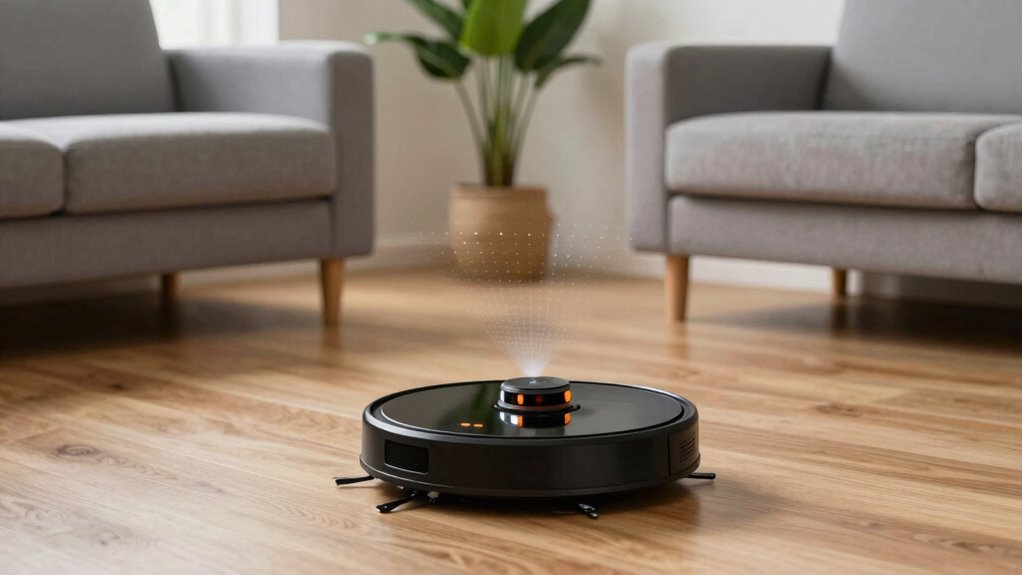
For most homes, I’d start with the Roborock Q10 S5+: its LiDAR navigation and self-emptying dock make it a strong balance of mapped cleaning and less frequent upkeep. The Roborock Qrevo S Pro stands out for buyers who want a more capable mop setup, while the ILIFE A30s offers a simpler route to LiDAR-guided cleaning. The main tradeoffs are whether you need a dock that handles more of the routine, how much mopping matters, and whether the model’s navigation and app features fit your floor plan. A LiDAR sensor can help a robot map and retrace routes, but it does not by itself guarantee obstacle avoidance or better cleaning on every surface. Read on for how all 15 options differ and which one best fits your priorities.

Get kitchen gear delivered free with Prime
- Fast, free delivery on millions of items
- Prime Video, Amazon Music and more included
- Member-only deals all year
Complete the kit


Key Takeaways
- LiDAR is a navigation feature, not a complete cleaning-system guarantee. Dock functions, mop design, obstacle handling, and app controls still separate these models.
- The Roborock Q10 S5+ is the strongest all-round starting point in this lineup for shoppers seeking mapped cleaning paired with a self-emptying dock.
- The Roborock Qrevo S Pro serves a different priority: buyers who value a more capable mop setup may prefer it over simpler vacuum-and-mop combinations.
- Self-emptying options are spread across several brands and tiers. Compare what the dock actually automates rather than treating every self-emptying base as equivalent.
- Several entries are close variants or repeated product families. Check the exact model and included dock before choosing, especially among the Roborock Q7 L5 and ILIFE A30s listings.
| iRobot Roomba 115X Combo Robot Vacuum and Mop with AutoEmpty Dock |  | Best for Low-Maintenance Small Homes | Suction power: 15,000 Pa | Coverage per charge: Up to 900 sq ft | Battery life: 173 minutes | VIEW ON AMAZON | See Our Full Breakdown |
| Roborock Q10 S5+ Robot Vacuum and Mop |  | Best for Carpet-Aware Mapping | Suction power: 10,000 Pa | Navigation: LiDAR with multi-level mapping | Obstacle avoidance: ReactiveTech structured light | VIEW ON AMAZON | See Our Full Breakdown |
| iRobot Roomba 115X Combo Robot Vacuum and Mop |  | Best for Straightforward LiDAR Cleaning | Suction power: 10,000 Pa | Coverage per charge: Up to 900 sq ft | Navigation: ClearView LiDAR | VIEW ON AMAZON | See Our Full Breakdown |
| Tikom L8000 Pro Robot Vacuum and Mop Combo |  | Best for Multi-Floor Homes | Suction: 6,000 Pa | Navigation: LiDAR | Map capacity: Up to 5 maps | VIEW ON AMAZON | See Our Full Breakdown |
| Roborock Qrevo S Pro Robot Vacuum and Mop |  | Best Premium LiDAR Mop System | Suction: 18,500 Pa | Navigation: LiDAR | Battery life: 180 minutes | VIEW ON AMAZON | See Our Full Breakdown |
| Shark AV2501S AI Ultra Robot Vacuum with Self-Empty Base |  | Best for Pet-Hair Households | Navigation: Matrix Clean with 360° LiDAR mapping | Runtime: Up to 120 minutes | Base capacity: Up to 30 days of dirt and debris | VIEW ON AMAZON | See Our Full Breakdown |
| Tikom L8000 Plus Robot Vacuum and Mop with Self-Emptying Base |  | Best for Multi-Floor Homes | Navigation: 360° LiDAR; saves up to 5 floor maps | Cleaning functions: Vacuuming, sweeping, and mopping | Maximum suction: 6,000 Pa | VIEW ON AMAZON | See Our Full Breakdown |
| Roborock Q7 L5 Robot Vacuum and Mop Combo, 8,000 Pa |  | Best for Hair-Prone Floors | Navigation: LiDAR with multi-floor mapping | Suction power: 8,000 Pa | Water tank: 270 ml | VIEW ON AMAZON | See Our Full Breakdown |
| Roborock Robot Vacuum and Mop with LiDAR and Self-Emptying Dock |  | Best for Strong Suction and Less Frequent Emptying | Navigation: PreciSense LiDAR | Suction power: 10,000 Pa | Dust bag: 2.7 L | VIEW ON AMAZON | See Our Full Breakdown |
| ILIFE A30s Robot Vacuum with LiDAR Navigation |  | Best Vacuum-Only Pick | Navigation: LDS LiDAR with SLAM | Maximum suction: 10,000 Pa | Dustbin capacity: 500 ml | VIEW ON AMAZON | See Our Full Breakdown |
| iRobot Roomba 105 Vac Robot Vacuum |  | Best for Straightforward LiDAR Mapping | Navigation: ClearView LiDAR | Cleaning system: 3-stage | Suction levels: 4 | VIEW ON AMAZON | See Our Full Breakdown |
| Roborock Q7 L5 Robot Vacuum and Mop Combo |  | Best LiDAR Vacuum-Mop Balance | Navigation: LiDAR | Suction power: 8,000 Pa | Water tank capacity: 270 ml | VIEW ON AMAZON | See Our Full Breakdown |
| ILIFE A30s Robot Vacuum with LiDAR Navigation, 10,000 Pa Suction, and App Control |  | Best for Strong Stated Suction | Navigation: LDS LiDAR with SLAM mapping | Maximum suction: 10,000 Pa | Runtime: Up to 150 minutes | VIEW ON AMAZON | See Our Full Breakdown |
| ROPVACNIC Robot S1 Vacuum and Mop Combo |  | Best for Low-Pile Carpet and Hard Floors | Suction power: 5,200 Pa | Battery life: 120 minutes | Surface recommendation: Hardwood floors and low-pile carpets | VIEW ON AMAZON | See Our Full Breakdown |
| Shark AI Ultra Robot Vacuum with 60-Day Self-Emptying Base, Black (AV2511AE) |  | Best for Reduced Dustbin Maintenance | Navigation: 360° LiDAR mapping with obstacle detection | Cleaning pattern: Grid pattern | Self-emptying capacity: Up to 60 days of debris | VIEW ON AMAZON | See Our Full Breakdown |
| robot vacuum lidar | Navigation | Battery life | Wi-Fi |
|---|---|---|---|
| iRobot Roomba 115X Combo Robot | LiDAR | 173 minutes | — |
| Roborock Q10 S5+ Robot Vacuum | LiDAR with multi-level mapping | 150 minutes | 2.4 GHz only |
| iRobot Roomba 115X Combo Robot | ClearView LiDAR | — | 2.4 GHz required for setup |
| Tikom L8000 Pro Robot Vacuum a | LiDAR | — | 2.4 GHz and 5 GHz |
| Roborock Qrevo S Pro Robot Vac | LiDAR | 180 minutes | — |
| Shark AV2501S AI Ultra Robot V | Matrix Clean with 360° LiDAR mapping | — | — |
| Tikom L8000 Plus Robot Vacuum | 360° LiDAR; saves up to 5 floor maps | — | 2.4 GHz and 5 GHz |
| Roborock Q7 L5 Robot Vacuum an | LiDAR with multi-floor mapping | 150 minutes | 2.4 GHz only |
| Roborock Robot Vacuum and Mop | PreciSense LiDAR | 150 minutes | 2.4 GHz |
| ILIFE A30s Robot Vacuum with L | LDS LiDAR with SLAM | 150 minutes | 2.4 GHz |
| iRobot Roomba 105 Vac Robot Va | ClearView LiDAR | — | — |
| Roborock Q7 L5 Robot Vacuum an | LiDAR | Up to 150 minutes | 2.4 GHz |
| ILIFE A30s Robot Vacuum with L | LDS LiDAR with SLAM mapping | — | 2.4 GHz |
| ROPVACNIC Robot S1 Vacuum and | — | 120 minutes | — |
| Shark AI Ultra Robot Vacuum wi | 360° LiDAR mapping with obstacle detection | 120 minutes | — |
More Details on Our Top Picks
iRobot Roomba 115X Combo Robot Vacuum and Mop with AutoEmpty Dock
The 115X Combo pairs LiDAR room mapping with an AutoEmpty dock, making it a strong fit for buyers who want less frequent bin emptying alongside vacuuming and mopping. Its sealed 2.5 L dock bag can hold debris for up to three months, and No Mop Zones help keep rugs dry. Compared with the standard Roomba 115X Combo, this version adds a self-emptying dock and raises listed suction from 10,000 Pa to 15,000 Pa, but the tradeoff is still a 900 sq ft coverage limit per charge. The Roborock Q10 S5+ offers multi-level mapping and a larger dust bag, while this Roomba emphasizes a long dock-emptying interval and pollen-trapping bag. I’d choose it for a compact layout, not a large or multi-floor home.
Pros:- LiDAR maps rooms and navigates in low light.
- Vacuums and mops in one pass, with No Mop Zones to protect rugs.
- Sealed 2.5 L AutoEmpty bag is rated for up to three months of debris storage.
- Listed suction is 15,000 Pa, higher than the standard Roomba 115X Combo.
Cons:- Coverage is limited to up to 900 sq ft per charge.
- Setup requires 2.4 GHz Wi-Fi.
- Filters and brushes need replacement every 3–6 months.
Best for: Residents of small to medium-sized homes who want LiDAR mapping, one-pass vacuuming and mopping, and fewer manual debris-bin emptyings.
Not ideal for: Owners of larger homes who need more than 900 sq ft of coverage per charge, or households that cannot set up on 2.4 GHz Wi-Fi.
- Suction power:15,000 Pa
- Coverage per charge:Up to 900 sq ft
- Battery life:173 minutes
- Navigation:LiDAR
- Dock bag capacity:2.5 L
- Cleaning modes:Vacuum and mop
- Mop pad:Washable microfiber
- Wi-Fi requirement:2.4 GHz for setup
Our verdict“Choose this docked Roomba for LiDAR-guided vacuum-and-mop cleaning and less frequent emptying in a smaller home.”
Roborock Q10 S5+ Robot Vacuum and Mop
The Q10 S5+ makes LiDAR more useful for mixed-floor homes by combining multi-level mapping with ReactiveTech structured-light obstacle avoidance. Its mop lifts 8 mm when carpet is detected, so buyers can schedule a combined clean without treating every rug as a no-go zone. The 2.7-liter self-emptying bag is rated for up to 70 days, shorter than the three-month interval listed for the docked Roomba 115X Combo, but the Roborock adds carpet-aware mopping and obstacle sensing. Its 10,000 Pa suction and anti-tangle brushes target routine pet hair and debris; suction claims should be read cautiously because the product information also notes an inconsistent maximum figure. I’d favor this over the standard Roomba 115X Combo for homes with multiple mapped floors, but it still needs 2.4 GHz Wi-Fi and periodic dock-bag changes.
Pros:- LiDAR supports multi-level mapping.
- ReactiveTech structured light adds obstacle avoidance.
- Mop lifts 8 mm over detected carpets.
- Self-emptying station has a 2.7-liter bag rated for up to 70 days.
Cons:- Wi-Fi support is limited to 2.4 GHz.
- Product information gives inconsistent maximum suction specifications.
- The stated 70-day bag interval is shorter than the dock interval listed for the Roomba 115X Combo with AutoEmpty Dock.
Best for: Households with rugs, hard floors, and multiple levels that want LiDAR maps, obstacle sensing, and automatic mop lifting over carpet.
Not ideal for: Buyers who need 5 GHz-only Wi-Fi or want the longest stated interval between dock-bag changes.
- Suction power:10,000 Pa
- Navigation:LiDAR with multi-level mapping
- Obstacle avoidance:ReactiveTech structured light
- Dust bag capacity:2.7 liters
- Battery life:150 minutes
- Mop lifting height:8 mm
- Mopping vibration rate:Up to 3,000 times per minute
- Wi-Fi:2.4 GHz only
Our verdict“Pick the Q10 S5+ if carpet-aware mop lifting and multi-level LiDAR mapping matter more than a longer stated dock-bag interval.”
iRobot Roomba 115X Combo Robot Vacuum and Mop
This standard Roomba 115X Combo keeps the central draw of the docked version—ClearView LiDAR mapping and vacuuming plus mopping in one pass—without adding an AutoEmpty station. It also offers adjustable passes, suction, and water levels, giving owners a way to tailor cleaning to rooms rather than relying on one fixed routine. The washable microfiber pad and No Mop Zones suit homes with a mix of hard flooring and rugs. Compared with the Roomba 115X Combo with AutoEmpty Dock, this model has lower listed suction at 10,000 Pa and requires manual bin emptying, but it avoids the larger dock. The Tikom L8000 Pro supports up to five maps, making it a better match for multi-floor households; this Roomba is the simpler choice for a smaller, more consistent layout. Its 900 sq ft coverage limit and 2.4 GHz setup requirement narrow the fit.
Pros:- ClearView LiDAR maps rooms and supports obstacle avoidance.
- Vacuuming and mopping can happen in one pass.
- Adjustable passes, suction, and water levels allow room-specific cleaning.
- Washable microfiber pad and No Mop Zones support mixed hard-floor and rug layouts.
Cons:- It lacks the AutoEmpty dock included with the other Roomba 115X Combo listed here.
- Coverage is designed for small to medium-sized homes, up to 900 sq ft per charge.
- Setup requires 2.4 GHz Wi-Fi, and filters and brushes need replacement every 3–6 months.
Best for: People in small to medium-sized homes who want LiDAR mapping and adjustable vacuum-and-mop routines without a self-emptying station.
Not ideal for: Buyers who want automatic debris emptying, need coverage beyond 900 sq ft per charge, or use only 5 GHz Wi-Fi.
- Suction power:10,000 Pa
- Coverage per charge:Up to 900 sq ft
- Navigation:ClearView LiDAR
- Cleaning modes:Vacuum and mop; spot clean; adjustable passes, suction, and water levels
- Mop pad:Washable microfiber
- Charging:Returns to dock to recharge
- Wi-Fi:2.4 GHz required for setup
Our verdict“Choose this Roomba for adjustable LiDAR-guided vacuuming and mopping in a compact home where manual bin emptying is acceptable.”
Tikom L8000 Pro Robot Vacuum and Mop Combo
For homes with several levels, the L8000 Pro’s standout LiDAR feature is storage for up to five maps. That gives it a practical advantage over the Roomba 115X Combo models, whose supplied specs focus on coverage per charge rather than multi-floor map capacity. The Tikom also offers sweep-only, mop-only, and combined modes, plus automatic suction increases on carpet, so its routine can better match different surfaces. With 6,000 Pa suction, a 450 ml dustbin, and a 300 ml water tank, it trades the stronger listed suction and self-emptying dock of the Roomba 115X Combo with AutoEmpty Dock for a more modest, manually maintained setup. It can resume cleaning after charging, but users will need to empty the bin and refill the tank regularly. Its low-noise figure applies only to low suction mode.
Pros:- LiDAR map storage supports up to five maps.
- Offers sweep-only, mop-only, and combined cleaning modes.
- Automatically increases suction on carpets and resumes after recharging.
- Supports both 2.4 GHz and 5 GHz Wi-Fi.
Cons:- The 450 ml dustbin and 300 ml water tank require regular manual emptying and refilling.
- Listed suction is 6,000 Pa, below the 10,000 Pa standard Roomba 115X Combo and 18,500 Pa Roborock Qrevo S Pro.
- The 45 dB noise figure applies to low suction mode, not necessarily stronger settings.
Best for: Owners of multi-story homes who want LiDAR maps for up to five floors and separate vacuuming, mopping, or combined routines.
Not ideal for: Buyers who prioritize strong listed suction, automatic dust disposal, or a mop-and-dock system that washes and dries its pads.
- Suction:6,000 Pa
- Navigation:LiDAR
- Map capacity:Up to 5 maps
- Water tank capacity:300 ml
- Dustbin capacity:450 ml
- Runtime:Up to 150 minutes
- Noise level:45 dB in low suction mode
- Wi-Fi:2.4 GHz and 5 GHz
Our verdict“Choose the L8000 Pro for multi-floor LiDAR map storage and flexible cleaning modes if you are comfortable maintaining its onboard bins and tank.”
Roborock Qrevo S Pro Robot Vacuum and Mop
The Qrevo S Pro is the lineup’s premium choice for buyers who want LiDAR mapping tied to a largely automated mop routine. Its 18,500 Pa suction and dual liftable spinning mops are paired with a multifunction dock that empties dust, washes and dries the pads, and supports self-refilling. That dock does more mop upkeep than the Roomba 115X Combo with AutoEmpty Dock, which handles debris but not the listed mop washing and drying. The tradeoff is a more feature-heavy setup with 2.4 GHz-only Wi-Fi and a 2.7 L dust bag; the product data also gives two different noise figures, 55 and 60 dB. Compared with the Tikom L8000 Pro, this Roborock adds automated dock care and substantially higher listed suction, but it is a less suitable pick for buyers seeking a simple, manually maintained robot.
Pros:- LiDAR navigation supports multi-floor mapping and scheduled cleaning.
- Listed suction is 18,500 Pa, the highest among these five products.
- Multifunction dock empties dust, washes and dries mops, and supports self-refilling.
- Dual spinning mops lift 10 mm, with carpet-specific settings and obstacle avoidance.
Cons:- Connectivity is limited to 2.4 GHz Wi-Fi.
- Noise is listed as both 55 dB and 60 dB.
- Its dock and automated mop features add complexity compared with the simpler Tikom L8000 Pro.
Best for: Busy households with mixed hard floors and carpets that want LiDAR mapping, strong listed suction, and automated mop washing and drying.
Not ideal for: Buyers who need 5 GHz Wi-Fi, prefer a basic vacuum-mop setup, or want a consistent published noise specification.
- Suction:18,500 Pa
- Navigation:LiDAR
- Battery life:180 minutes
- Dust bag capacity:2.7 L
- Mop lift:10 mm
- Mop self-cleaning temperature:167°F
- Mop drying:113°F warm air
- Connectivity:2.4 GHz Wi-Fi
- Noise level:55 dB or 60 dB, depending on listed product information
Our verdict“Pick the Qrevo S Pro if you want a LiDAR-mapped cleaner with substantial suction and dock-based mop care, and can accept 2.4 GHz-only connectivity.”
Shark AV2501S AI Ultra Robot Vacuum with Self-Empty Base
I’d choose the Shark AV2501S when organized LiDAR coverage and reduced bin handling matter more than a mop function. Its 360° LiDAR mapping guides Matrix Clean passes across carpets and hard floors, while the self-cleaning brushroll and HEPA filtration suit homes where hair and fine dust are regular cleanup tasks. The base is listed to hold up to 30 days of debris, a useful maintenance advantage over the ILIFE A30s, which has a 500 ml onboard dustbin and no self-emptying dock. The tradeoff is a shorter up-to-120-minute runtime than the 150-minute claims on the Tikom L8000 Plus and Roborock Q7 L5. I’d also note the listed robot dust capacity is only 0.09 liters, so the base does much of the work in limiting emptying.
Pros:- 360° LiDAR mapping supports orderly cleaning and obstacle avoidance
- Matrix Clean makes multiple passes over areas for more thorough coverage
- Self-emptying base is listed to hold up to 30 days of debris
- Self-cleaning brushroll and HEPA filtration suit homes with pet hair and dust
Cons:- Up-to-120-minute runtime is shorter than the 150-minute claims of several alternatives here
- Listed onboard dust capacity is 0.09 liters
- Does not include a mopping function
Best for: Pet owners who want LiDAR-guided, repeat-pass vacuuming with HEPA filtration and fewer manual bin emptyings.
Not ideal for: Buyers who want mopping, longer listed runtime, or a larger onboard dustbin for cleaning away from the dock.
- Navigation:Matrix Clean with 360° LiDAR mapping
- Runtime:Up to 120 minutes
- Base capacity:Up to 30 days of dirt and debris
- Filtration:HEPA
- Brushroll:Self-cleaning
- Surface recommendation:Carpets and hard floors
- Controls:App and voice control; compatible with Amazon Alexa and Google Home
- Battery:Lithium-ion
Our verdict“Choose the Shark AV2501S for LiDAR-organized vacuuming and pet-hair support if you value its self-empty base more than longer runtime or mopping.”
Tikom L8000 Plus Robot Vacuum and Mop with Self-Emptying Base
The Tikom L8000 Plus makes the most sense when a home has several levels or distinct rooms that benefit from saved maps and targeted cleaning. Its 360° LiDAR navigation stores up to five floor maps, and app controls add room selection, schedules, and no-go zones. That map flexibility is a clearer advantage over the Shark AV2501S, whose supplied details focus on Matrix Clean and a single mapped cleaning routine. The Tikom also vacuums and mops, then can recharge and resume if a job outlasts a charge. Its 3 L dustbag is advertised to hold up to 90 days of debris, though actual intervals depend on use. The main catch is mop management: remove the holder or mark carpet areas as no-go zones, and the 150-minute runtime applies to gentle suction mode, not necessarily stronger cleaning.
Pros:- 360° LiDAR saves up to five floor maps for multi-level homes
- App supports room-specific cleaning, schedules, and no-go zones
- Self-emptying 3 L dustbag is advertised to hold up to 90 days of debris
- Automatically recharges and resumes cleaning
Cons:- Mop holder must be removed or carpet zones excluded during mopping
- Advertised 150-minute runtime applies to gentle suction mode
- Three suction levels offer less adjustment detail than some buyers may want
Best for: Households with multiple floors that want saved LiDAR maps, room-level controls, and a dock that reduces dustbin maintenance.
Not ideal for: Buyers who want a mop that can be left attached around carpets, or who expect the full 150-minute runtime at stronger suction.
- Navigation:360° LiDAR; saves up to 5 floor maps
- Cleaning functions:Vacuuming, sweeping, and mopping
- Maximum suction:6,000 Pa
- Dustbag capacity:3 L
- Runtime:Up to 150 minutes in gentle suction mode
- Controls:App and voice control; supports scheduling and no-go zones
- Water flow:3 settings
- Wi-Fi:2.4 GHz and 5 GHz
- Filter:HEPA
Our verdict“Pick the Tikom L8000 Plus if multi-floor LiDAR mapping and vacuum-mop flexibility outweigh the extra work of managing its mop around carpets.”
Roborock Q7 L5 Robot Vacuum and Mop Combo, 8,000 Pa
I’d place the Roborock Q7 L5 on the shortlist for homes where hair pickup and combined vacuuming and mopping matter more than a self-emptying dock. It pairs LiDAR navigation and multi-floor mapping with dual anti-tangle brushes, which are intended to reduce hair wrap and the maintenance that comes with it. Its 8,000 Pa suction is a stated strength, though it sits below the 10,000 Pa figures listed for the Roborock self-emptying model and ILIFE A30s. Unlike those two, the Q7 L5’s supplied details do not include a self-emptying base, so the integrated dustbin and 270 ml water tank need more hands-on attention. It offers up to 150 minutes of battery life, but 2.4 GHz-only Wi-Fi may be a limitation in homes set up around 5 GHz networks.
Pros:- LiDAR navigation supports multi-floor mapping
- Dual anti-tangle brushes are designed to reduce hair wrap
- Vacuums and mops in the same cleaning routine
- Up to 150 minutes of listed battery life
Cons:- Supports only 2.4 GHz Wi-Fi
- Integrated dustbin and water-tank combo part requires more hands-on handling
- No self-emptying dock is listed
Best for: Owners of hair-prone homes who want LiDAR mapping, anti-tangle brushes, and routine mopping without needing a self-emptying dock.
Not ideal for: Buyers who prioritize a self-emptying base, stronger stated suction, or 5 GHz Wi-Fi compatibility.
- Navigation:LiDAR with multi-floor mapping
- Suction power:8,000 Pa
- Water tank:270 ml
- Battery life:150 minutes
- Brushes:Dual anti-tangle brushes
- Wi-Fi:2.4 GHz only
- Filter:Washable
- Noise level:60 dB
Our verdict“Choose the Q7 L5 for mapped vacuuming and mopping with anti-tangle brushes, but skip it if dock-based emptying is a priority.”
Roborock Robot Vacuum and Mop with LiDAR and Self-Emptying Dock
This Roborock pairs 10,000 Pa stated suction with PreciSense LiDAR and a self-emptying dock, making it the stronger fit for buyers who want mapped vacuuming without frequent bin chores. Its 2.7 L dust bag is advertised to support up to 7–9 weeks between emptying, a shorter stated interval than the Tikom L8000 Plus’s advertised 90 days, but still a useful reduction in routine maintenance. It also adds mopping with three water-flow settings and an anti-tangle brush design aimed at pet hair. Compared with the ILIFE A30s, it offers a dock and mop function, while the ILIFE lists the same maximum suction figure and a larger 500 ml onboard dustbin. The Roborock’s 65 dB noise level and 2.4 GHz-only Wi-Fi are meaningful tradeoffs.
Pros:- 10,000 Pa stated suction for vacuuming carpets and hard floors
- PreciSense LiDAR supports mapped cleaning paths
- Self-emptying dock has a 2.7 L dust bag
- Three water-flow settings and an anti-tangle brush design add cleaning flexibility
Cons:- Supports only 2.4 GHz Wi-Fi
- Listed noise level is 65 dB
- Advertised 7–9 week emptying interval may vary with use
Best for: Buyers who want strong stated suction, LiDAR-guided vacuum-mopping, and a self-emptying dock for regular cleaning.
Not ideal for: Noise-sensitive households or users whose home network depends on 5 GHz Wi-Fi.
- Navigation:PreciSense LiDAR
- Suction power:10,000 Pa
- Dust bag:2.7 L
- Advertised hands-free cleaning:Up to 7–9 weeks
- Battery life:150 minutes
- Water flow:3 settings
- Wi-Fi:2.4 GHz
- Noise level:65 dB
Our verdict“Choose this Roborock if you want LiDAR mapping, strong stated suction, mopping, and a self-emptying dock, and can accept 2.4 GHz Wi-Fi.”
ILIFE A30s Robot Vacuum with LiDAR Navigation
The ILIFE A30s is the clearest choice here for buyers who want LiDAR mapping without adding a mop system. LDS LiDAR with SLAM supports mapped navigation, room selection, and no-go zones through the app, while a remote and voice control provide alternatives to phone-based setup. Its listed 10,000 Pa suction and dual anti-tangle brushes put it alongside the Roborock self-emptying model on stated suction, and the ILIFE includes a 500 ml dustbin. Unlike that Roborock, however, it has no mop or self-emptying dock, so cleaning and emptying remain manual tasks. The 150-minute battery-life figure is useful for longer routines, but its 72 dB noise level is higher than the listed levels for the Tikom L8000 Plus and Roborock Q7 L5.
Pros:- LDS LiDAR with SLAM supports mapped navigation and no-go zones
- 10,000 Pa maximum suction is listed for hard floors and carpet
- Dual anti-tangle brushes are designed to collect pet hair
- App, remote, and voice controls provide several ways to schedule cleaning
Cons:- Vacuum-only model with no mopping support
- No self-emptying dock is listed, so the 500 ml dustbin needs manual emptying
- Listed noise level of 72 dB is higher than several alternatives here
Best for: Buyers who want mapped vacuum-only cleaning, strong stated suction, anti-tangle brushes, and direct control through an app or remote.
Not ideal for: Households that need mopping, dock-based emptying, or quieter cleaning than the listed 72 dB level.
- Navigation:LDS LiDAR with SLAM
- Maximum suction:10,000 Pa
- Dustbin capacity:500 ml
- Battery life:150 minutes
- Brushes:Dual anti-tangle brushes
- Controls:App, remote, and voice
- Wi-Fi:2.4 GHz
- Mopping:Not supported
- Noise level:72 dB
Our verdict“Pick the ILIFE A30s if you want a mapped vacuum-only robot with strong stated suction and do not need mopping or automatic bin emptying.”
iRobot Roomba 105 Vac Robot Vacuum
The Roomba 105 is a good fit for buyers who want LiDAR room mapping and targeted vacuuming without adding a mop system or self-emptying base. Its app supports room selection, schedules, and keep-out zones, while recharge-and-resume helps it finish larger cleaning jobs after a battery stop. Compared with the Roborock Q7 L5, it skips mopping and the listed suction figure, but offers a simpler vacuum-only setup with four suction levels and onboard buttons. A three-stage system is intended for both carpets and hard floors, though the supplied details do not quantify cleaning power. The 2.4 GHz Wi-Fi requirement may rule it out for homes set up only for 5 GHz, and the unusual listed “Car” filter type is worth verifying before purchase.
Pros:- LiDAR mapping supports room targeting and planned coverage.
- App controls include schedules and designated keep-out zones.
- Recharge-and-resume can help complete larger cleaning runs.
- Four suction levels and a three-stage system suit mixed floor types.
Cons:- Does not offer mopping or a self-emptying base.
- Requires a 2.4 GHz Wi-Fi network.
- The listed “Car” filter type is unclear for this product.
Best for: Buyers who want room-by-room LiDAR navigation, keep-out zones, and recharge-and-resume in a vacuum-only robot.
Not ideal for: Households seeking mopping, a self-emptying dock, or a clearly specified filter; the listed filter type is unusual for a robot vacuum.
- Navigation:ClearView LiDAR
- Cleaning system:3-stage
- Suction levels:4
- Surfaces:Carpet and hard floor
- Connectivity:2.4 GHz Wi-Fi
- Controls:App, onboard buttons, and voice control
- Special features:Anti-fall sensors, dirt detection sensor, Eco Mode, bagless
- Filter type:Listed as Car
Our verdict“Choose the Roomba 105 for mapped, vacuum-only cleaning with room controls, but pick the Roborock Q7 L5 if you also want mopping.”
Roborock Q7 L5 Robot Vacuum and Mop Combo
The Q7 L5 pairs LiDAR mapping with vacuuming and mopping, making it a stronger match than the Roomba 105 for homes that want one scheduled pass to handle both floor-care jobs. Its 8,000 Pa suction, automatic carpet boost, and dual anti-tangle brush design give it a more specified cleaning setup than the vacuum-only Roomba, while multi-floor maps and no-go zones help tailor routes across a home. The 270 ml water tank is the main compromise: buyers with broad hard-floor areas may need to refill it during frequent mopping. It also relies on 2.4 GHz Wi-Fi, and the supplied data does not list a self-emptying dock. I’d favor this over the ILIFE A30s when mopping matters; choose the ILIFE instead if you want higher stated suction and no water tank to manage.
Pros:- Combines vacuuming and mopping in a single cleaning system.
- 8,000 Pa suction and automatic carpet boost are specified.
- LiDAR supports multi-floor maps and no-go zones.
- Dual anti-tangle brushes are designed to reduce hair buildup.
Cons:- The 270 ml water tank may need frequent refills on larger hard-floor areas.
- Requires 2.4 GHz Wi-Fi.
- No self-emptying dock is specified.
Best for: Households with mixed hard floors and carpets that want LiDAR mapping, scheduled vacuuming, and light mopping in one robot.
Not ideal for: Buyers with large moppable floor areas who want a bigger water reservoir, or anyone seeking a self-emptying dock.
- Navigation:LiDAR
- Suction power:8,000 Pa
- Water tank capacity:270 ml
- Battery life:Up to 150 minutes
- Brush design:Dual anti-tangle
- Filter:Washable
- Noise level:60 dB
- Wi-Fi:2.4 GHz
- Surfaces:Carpet, laminate, tile, vinyl, wood, and marble
Our verdict“Choose the Q7 L5 if you want mapped vacuuming plus mopping; the Roomba 105 is the simpler alternative for vacuum-only cleaning.”
The A30s stands out for pairing LDS LiDAR with SLAM mapping and a stated maximum suction of 10,000 Pa, the highest suction figure among these five options. That makes it the more compelling vacuum-only pick for buyers prioritizing debris pickup and pet hair over floor-washing features. Dual anti-tangle brushes, a 500 ml dustbin, and recharge-and-resume add practical support for longer cleaning routines. Compared with the Roborock Q7 L5, it gives up mopping but lists more suction; compared with the Roomba 105, it adds a remote and a larger, specified dust capacity. The tradeoffs are clear: it cannot mop, is limited to 2.4 GHz Wi-Fi, and its listed 72 dB noise level may be unwelcome in sound-sensitive homes.
Pros:- 10,000 Pa maximum suction is the highest stated figure in this group.
- LDS LiDAR with SLAM mapping supports planned cleaning routes.
- Dual anti-tangle brushes are designed for pet hair.
- 500 ml dustbin and recharge-and-resume support longer cleaning routines.
Cons:- Vacuum-only; it does not mop.
- Wi-Fi support is limited to 2.4 GHz.
- Listed noise level is 72 dB.
Best for: Pet-owning households seeking a mapped vacuum with high stated suction, anti-tangle brushes, and a larger dustbin.
Not ideal for: Buyers who want mopping, quieter operation, or a robot that connects to 5 GHz-only Wi-Fi.
- Navigation:LDS LiDAR with SLAM mapping
- Maximum suction:10,000 Pa
- Runtime:Up to 150 minutes
- Brushes:Dual anti-tangle brushes
- Dust capacity:500 ml
- Controls:App, voice, and remote
- Wi-Fi:2.4 GHz
- Noise level:72 dB
- Mopping:No
Our verdict“Pick the A30s for a vacuum-only LiDAR robot with the strongest stated suction here, and choose the Q7 L5 if mopping is a priority.”
ROPVACNIC Robot S1 Vacuum and Mop Combo
The ROPVACNIC S1 is the combo option here for buyers whose routine includes hard floors and low-pile carpets, with adjustable water flow for adapting its mopping to different hard-floor needs. Its 5,200 Pa suction and three suction levels provide a defined range of vacuum settings, while app, remote, touchpad, and voice controls offer more ways to start and schedule cleaning than the app-and-voice-only Shark AI Ultra. The listed details, however, do not specify LiDAR navigation, so I would not choose it over the Roborock Q7 L5 when mapping and route planning are the main reasons for shopping this roundup. Its 120-minute battery life is also shorter than the Q7 L5’s listed 150 minutes. Carpet use is limited to low pile, and noise performance is not supplied.
Pros:- Combines vacuuming and mopping with four-stage water adjustment.
- Offers app, remote, touchpad, and voice controls.
- Tangle-free brush design is intended to collect pet hair.
- Automatic recharging supports routine cleaning schedules.
Cons:- LiDAR navigation is not specified in the supplied product details.
- Carpet suitability is limited to low-pile surfaces.
- Noise level and cleaning performance details are not specified.
Best for: Buyers with mostly hard floors and some low-pile carpet who want adjustable mopping and several control options.
Not ideal for: Shoppers who require clearly specified LiDAR mapping, have medium- or high-pile carpet, or want published noise performance.
- Suction power:5,200 Pa
- Battery life:120 minutes
- Surface recommendation:Hardwood floors and low-pile carpets
- Water adjustment:Four-stage
- Suction levels:3
- Controls:App, remote, touchpad, and voice
- Voice assistant compatibility:Amazon Echo and Google Home
- Filter:Multi-layer optimized high-efficiency filtration
Our verdict“Choose the S1 for adjustable mopping on hard floors and low-pile carpet, but favor the Roborock Q7 L5 if confirmed LiDAR mapping is essential.”
Shark AI Ultra Robot Vacuum with 60-Day Self-Emptying Base, Black (AV2511AE)
The Shark AI Ultra earns its place for pairing 360° LiDAR mapping and obstacle detection with a bagless base that holds up to 60 days of debris. That storage capacity is its clearest advantage over the Roborock Q7 L5 and ILIFE A30s, which list no self-emptying base; it can reduce how often owners need to handle the robot’s collected dust. Grid-pattern cleaning and app-based targeted jobs suit buyers who want more structured whole-home coverage, while Alexa and Google Assistant support offer familiar voice control. The product data has two meaningful uncertainties: runtime is listed as both 90 and 120 minutes, and although the description mentions mopping, the included items do not list a mop attachment. Compared with the Roomba 105, the Shark is the better fit for less frequent bin emptying, but its feature details need clarification.
Pros:- Bagless base holds up to 60 days of debris, reducing routine bin handling.
- 360° LiDAR mapping and obstacle detection support whole-home navigation.
- Grid-pattern cleaning supports structured coverage.
- App and voice controls support schedules and targeted cleaning.
Cons:- Supplied runtime figures conflict: 90 minutes and 120 minutes are both listed.
- Mopping is mentioned in the description, but no mop attachment appears in the included items.
- The specified battery life is shorter than the Q7 L5’s listed 150 minutes.
Best for: Busy households and pet owners who want LiDAR navigation with a large-capacity, bagless self-emptying base.
Not ideal for: Buyers who need a confirmed runtime or a clearly included mopping setup before choosing.
- Navigation:360° LiDAR mapping with obstacle detection
- Cleaning pattern:Grid pattern
- Self-emptying capacity:Up to 60 days of debris
- Battery life:120 minutes
- Runtime claim:Up to 90 minutes
- Dustbin capacity:0.27 gallons
- Control:App and voice control
- Compatible devices:Amazon Alexa and Google Assistant
- Included:Robot vacuum, XL self-empty base, side brush, and filter
Our verdict“Choose the Shark AI Ultra if reducing dustbin maintenance matters most, but confirm runtime and mopping details if either will shape your decision.”

How We Picked
I ranked these products around the questions that matter when LiDAR is the reason for shopping: how the robot maps and covers a home, how convenient its routine is, and whether its vacuuming and mopping features justify its complexity. I also weighed dock functions, app-based control, cleaning versatility, and the likely maintenance burden. LiDAR earns attention for structured mapping and repeatable routes, but I did not treat the sensor name alone as proof of superior obstacle avoidance or pickup.
The ordering favors models that pair navigation with useful day-to-day features and a clear role for a particular buyer. Options with self-emptying docks or more developed mop systems may suit people seeking less hands-on care, while simpler LiDAR models can make sense when straightforward mapped vacuuming matters more. Closely related listings remain distinct because bundles and stated specifications can differ; buyers should confirm the exact model and included equipment before purchase. Each pick also has a tradeoff, so the best choice depends on the home and cleaning routine rather than the feature list alone.
Factors to Consider When Choosing Robot Vacuum Lidar
I’d choose a LiDAR robot by starting with the home and the upkeep I’m willing to handle, then checking whether the model’s features solve those specific needs. These broader points help avoid paying for a dock or mop system that will go unused.
Match Mapping to Your Floor Plan
LiDAR mapping is most useful when a robot needs to clean a multiroom layout in an orderly route or return to specific areas through an app. A simple, open room may not benefit as much as a home with several rooms and repeatable cleaning zones. Check whether the app supports the map controls you will actually use, such as room selection or restricted areas, rather than assuming every LiDAR model offers the same tools. Rugs, dark flooring, mirrors, and clutter can still affect navigation or cleaning behavior, so a map is not a substitute for checking how the robot handles your surfaces. If your home changes often, consider how easily you can update or manage the map. Choose for the floor plan you have, not for mapping features that sound useful but will rarely be used.
Decide What a Self-Emptying Dock Must Do
A self-emptying base can reduce how often you handle the robot’s dustbin, but it does not mean the entire cleaning routine is hands-free. Dock designs vary, and a base that empties dust may still leave you responsible for the mop, water, filters, brushes, and bags. Before choosing, list which chores you want to reduce and check the product details against that list. A larger dock also needs floor space and a suitable location near power. If you vacuum frequently or want fewer dustbin interruptions, the added base may be useful; if you run short sessions in a small space, a simpler robot can be easier to live with. Avoid treating the phrase “self-emptying” as shorthand for a dock that washes or dries mop pads.
Choose a Mop Setup You Will Maintain
Robot vacuum-and-mop combos differ in how much work they take after a run, so compare the mop system rather than relying on a combo label. A basic mop attachment may suit occasional light floor wiping, while buyers expecting regular mopping should look closely at how the robot manages water and mop care. More elaborate setups can reduce manual steps, but they also add parts and maintenance. Think about the amount of hard flooring in your home and whether you will actually attach, clean, and refill the mop components. For mostly carpeted homes, vacuum performance and mapping may deserve more attention than a sophisticated mop. For mixed floors, confirm how the robot handles carpet during a mop run before relying on it to manage the changeover.
Do Not Confuse LiDAR with Obstacle Avoidance
LiDAR helps a robot understand room layout and plan routes, but that does not automatically mean it can identify every cable, toy, or pet mess in its path. Buyers often assume a mapped robot can safely clean around all everyday clutter; the sensor’s role and the model’s obstacle features are separate questions. If your floors are usually tidy, reliable mapping may matter more than extra object detection. If cords and small items are often left out, check the product’s stated obstacle-handling capabilities and plan to clear the floor when needed. A well-mapped route can still encounter a small object that was not part of its map. Set expectations around the robot’s specific sensors and features, not the general promise of smart navigation.
Compare Similar Names and Bundles Carefully
This roundup includes repeated product families and listings with different stated specifications, including Roborock Q7 L5 and ILIFE A30s variants. Similar names do not guarantee the same suction claim, accessories, dock, or package contents. Before deciding, verify the exact model identifier and read the included-components list; do not rely on a shortened title alone. This matters most when comparing a robot-only version with a bundle that adds a base or when a listing calls out a particular suction specification. Also check app compatibility and replacement-part availability for the exact model. A small specification difference is useful only if it changes a feature you care about.
Pay for Convenience You Will Use
The right upgrade is the one that removes a recurring chore, not the one with the longest feature list. A self-emptying dock can matter more to a busy household than an extra mop function, while a household with extensive hard flooring may value mop care more. Simpler options can be a better fit when you mainly want mapped vacuuming and are comfortable emptying the bin yourself. Think about where the dock will sit, how often the robot will run, and which maintenance tasks you are willing to do. If you cannot name a regular task an upgrade will save, the simpler model may be the smarter match. This approach keeps LiDAR’s practical mapping benefit at the center of the decision.
Frequently Asked Questions
Does LiDAR make a robot vacuum better at avoiding cables and small objects?
Not by itself. LiDAR is primarily useful for mapping rooms and planning routes, while obstacle recognition depends on the robot’s other sensors and software. A model can make orderly passes and still get caught on a cable or struggle with small objects. If your floors are often cluttered, check the specific model’s obstacle-handling claims and expect to pick up loose items when needed. For a tidy floor plan, mapping may be the more relevant benefit.
Should I choose a LiDAR model with a self-emptying dock?
Choose one if reducing dustbin emptying is a meaningful part of your routine, especially when the robot will run often. The dock still may not manage mop pads, water, filters, or other upkeep, so check exactly what its base does. It also takes more space than a robot alone and may require consumables. If you clean a small area or do not mind emptying the bin, a simpler setup may suit you better. The Q10 S5+ is a notable option here because it pairs LiDAR navigation with a self-emptying dock.
Is a vacuum-and-mop combo a good choice if most of my home is carpet?
It can be, but the mop may add little value if hard floors make up only a small part of your home. Put vacuuming, mapping, and carpet handling first, then check how the robot behaves when it encounters rugs during a mop run. A combo label does not tell you whether the mop is designed for frequent use or occasional wiping. If mopping is a low priority, a vacuum-focused model such as the Roomba 105 Vac may be a more straightforward fit. For mixed flooring, confirm the relevant mop and carpet controls before deciding.
How should I choose between the Roborock Q7 L5 and its similar listings?
Start with the exact model identifier and package contents, since this roundup includes Q7 L5 listings with different title details, including one that states an 8,000 Pa suction figure. A title alone may not establish whether the same accessories or dock are included. Compare the specification sheet and bundle list for the particular listing you plan to buy. Then decide whether the stated difference changes cleaning or maintenance in your home. If the details are unclear, do not assume two similar names mean identical equipment.
When is the Roborock Qrevo S Pro a better fit than the Q10 S5+?
The Qrevo S Pro makes more sense when a more developed mop setup is a leading priority and you expect to use it regularly. The Q10 S5+ is a strong all-round choice for buyers focused on mapped cleaning and a self-emptying dock. Compare the dock’s specific functions and the mop-care steps, rather than assuming both options automate the same chores. Your mix of hard flooring and carpet should guide the choice. If mopping is occasional, the Q10 S5+ may be the more practical starting point; if mop capability leads your priorities, look closely at the Qrevo S Pro’s package details.
Conclusion
For the broadest mix of mapped cleaning and reduced bin upkeep, I’d choose the Roborock Q10 S5+ as the best overall pick. The ILIFE A30s is my best value direction for shoppers who want LiDAR navigation in a simpler setup, while the Roborock Qrevo S Pro is the best premium fit for buyers who put more weight on mopping. For beginners, I’d favor a straightforward option such as the iRobot Roomba 105 Vac if vacuuming is the main task and a mop system is unnecessary. If you specifically want self-emptying from another brand, compare the Shark AV2501S and Shark AI Ultra AV2511AE by their exact base and package details; for a simpler mapped vacuum-and-mop combo, consider the Tikom L8000 Pro. Confirm the precise model and included equipment before choosing, especially among similarly named listings. My recommendation is to pay for the dock or mop features you expect to use, while treating LiDAR as a mapping advantage—not a promise that every cleaning chore will be automated.