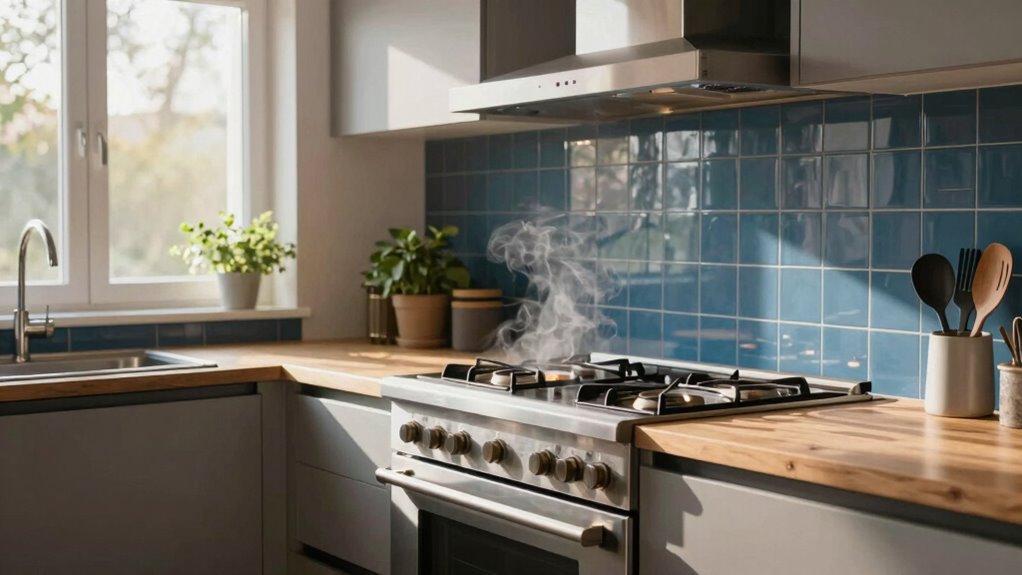

To handle appliance heat in open kitchen designs, you should install strong ventilation systems like range hoods that vent outside and use ceiling or wall fans for continuous airflow. Choose heat-resistant surfaces such as quartz or granite near cooking zones to prevent damage. Think about layout strategies that keep heat away from seating areas, and consider energy-efficient appliances to minimize heat output. For more tips on maintaining a comfortable, safe space, keep exploring your options.

Get kitchen gear delivered free — and shop member deals
- Fast, free delivery on millions of items
- Access to Prime Big Deal Days deals on October 6–7
- Prime Video, Amazon Music and more included
Key Takeaways
- Install high-capacity range hoods vented outside to effectively remove heat and humidity.
- Use heat-resistant surfaces like quartz or granite near appliances to withstand high temperatures.
- Design the layout to position heat-generating appliances away from seating and living areas.
- Incorporate ceiling or wall-mounted fans to promote continuous airflow and dissipate heat.
- Regularly assess and upgrade ventilation systems to ensure optimal heat management and safety.
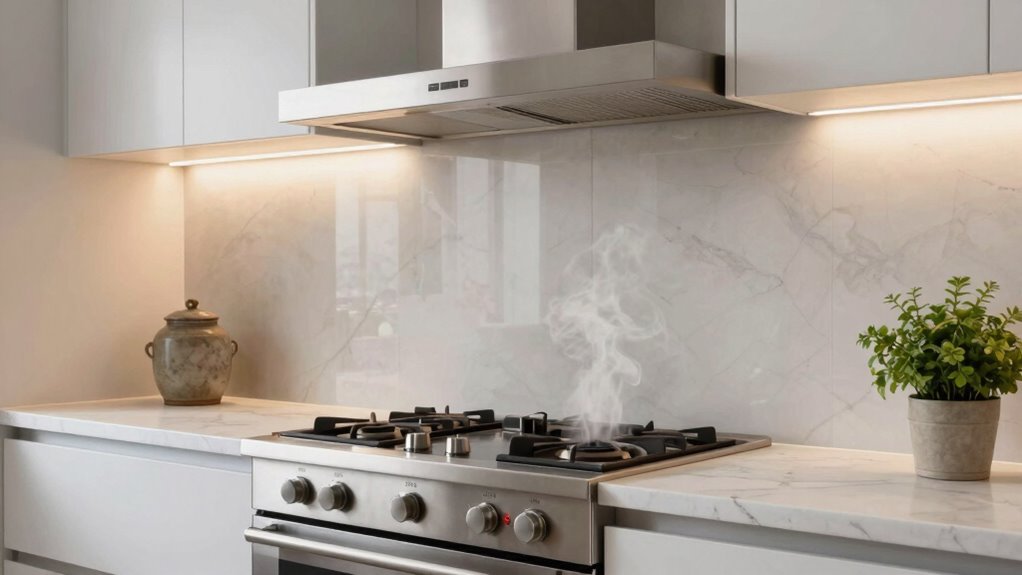
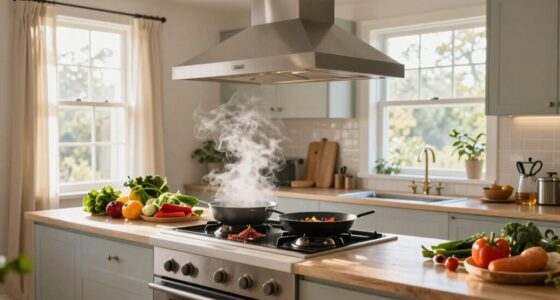
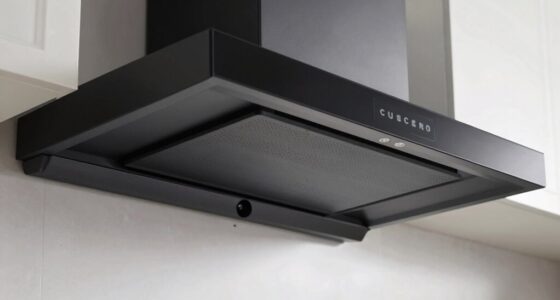
Open kitchen designs offer a seamless, social cooking experience, but they also present a challenge: managing the heat generated by appliances. When your kitchen flows openly into living spaces, heat buildup can become more noticeable and disruptive. To keep your space comfortable and functional, you need effective ventilation strategies that remove excess heat and improve airflow. Installing range hoods with powerful extraction capabilities is essential. Choose models that vent directly outside rather than recirculate air, as this considerably reduces heat and humidity. Additionally, consider incorporating ceiling or wall-mounted fans to promote continuous air circulation, preventing hot spots from forming around appliances.
Effective ventilation and fans keep open kitchens cool and comfortable during cooking.
Beyond ventilation, selecting heat resistant materials can make a big difference in handling appliance heat. Countertops, backsplashes, and surfaces near heat sources should be made from materials that withstand high temperatures without warping or discoloring. Quartz, granite, and certain ceramics are excellent choices because they resist heat and are easy to clean. Avoid materials like laminate or wood near cooking zones, as they can be damaged by heat and may emit fumes or degrade over time. Using heat resistant materials not only prolongs the lifespan of your surfaces but also helps maintain a clean and safe environment during intense cooking sessions. Incorporating proper ventilation and heat-resistant surfaces can significantly improve the comfort and safety of your open kitchen. Proper ventilation is especially important in preventing heat from accumulating, as it directly impacts how effectively the space remains cool and comfortable. Additionally, understanding urban greening techniques can help mitigate heat in outdoor or semi-outdoor kitchen areas by reducing overall ambient temperatures.
Designing your kitchen layout thoughtfully also plays a key role. Position appliances strategically, keeping heat-producing devices like ovens, stoves, and microwaves away from cooler areas or seating zones. Incorporate clear pathways for heat to escape, reducing the risk of heat buildup in specific spots. Installing partition walls or partial barriers can help contain heat within the cooking zone, preventing it from spreading too much into the open living space. These design elements work hand-in-hand with your ventilation strategies to keep the environment comfortable and safe for everyone. Regularly considering thermal management techniques ensures your kitchen remains a pleasant space during busy cooking sessions. Additionally, integrating energy-efficient appliances can further reduce heat output and improve overall efficiency in your kitchen.
As an affiliate, we earn on qualifying purchases.
Frequently Asked Questions
Can Appliance Heat Affect Nearby Furniture or Finishes?
Yes, appliance heat can affect nearby furniture or finishes. Excess heat from appliances may cause furniture damage, such as warping or cracking, and lead to finish discoloration over time. To prevent this, you should keep appliances well-ventilated and away from delicate surfaces. Using heat-resistant materials and protective barriers can also help minimize damage, ensuring your furniture and finishes stay looking their best despite the heat.
Are There Specific Appliances That Generate More Heat?
Some appliances generate more heat, especially ovens, stoves, and toasters, which can impact your open kitchen’s comfort and energy efficiency. To manage this, you should consider appliance placement carefully, positioning high-heat appliances away from furniture and finishes to prevent damage. Proper placement helps maintain energy efficiency by reducing cooling demands and keeps your space comfortable, ensuring heat doesn’t spread excessively throughout your open kitchen.
How Does Climate Impact Heat Management Strategies?
Think of your kitchen as a ship steering through changing seas—climate impacts your heat management strategies. In hot climates, you adapt by enhancing ventilation and choosing appliances with lower heat emissions, like solar-powered options. During colder seasons, you can rely on seasonal adjustments, such as using heat-resistant materials and strategic placement, to keep your open kitchen comfortable. Climate adaptation becomes your guiding star for effective appliance heat control year-round.
What Are the Safety Considerations for Open Kitchens?
In open kitchens, prioritize cooking safety by ensuring proper appliance placement to prevent accidents and heat exposure. Keep flammable materials away from heat sources, and install safety features like splash guards and smoke detectors. Maintain clear pathways to avoid tripping hazards, and educate everyone on safe cooking practices. These measures help reduce risks, protect your family, and create a secure, functional space where you can cook confidently.
How Often Should Ventilation Systems Be Maintained?
You should be checking your ventilation system’s filters and maintenance schedule at least every three to six months, or more often if you cook frequently or use high-heat appliances. Neglecting this can turn your open kitchen into a smoky, greasy mess faster than you’d believe. Regular maintenance keeps your ventilation filters working efficiently, reducing heat buildup and ensuring your space stays fresh, safe, and odor-free.
heat resistant kitchen countertops quartz
As an affiliate, we earn on qualifying purchases.
As an affiliate, we earn on qualifying purchases.
Conclusion
By thoughtfully managing appliance heat, you’re like a skilled conductor orchestrating a harmonious kitchen symphony. Ventilation acts as your trusty breeze, whisking away excess warmth and preventing chaos. Proper placement keeps the heat from becoming a fiery spotlight, while heat-resistant materials act as a cool shield. With these strategies, your open kitchen transforms into a balanced stage where culinary masterpieces unfold smoothly, and the warmth dances gracefully without overwhelming your space.
wall mounted ceiling fans for kitchen
As an affiliate, we earn on qualifying purchases.
As an affiliate, we earn on qualifying purchases.
As an affiliate, we earn on qualifying purchases.
Fall Picks
fall essentials
As an affiliate, we earn on qualifying purchases.