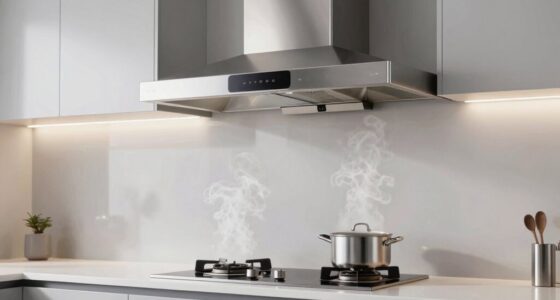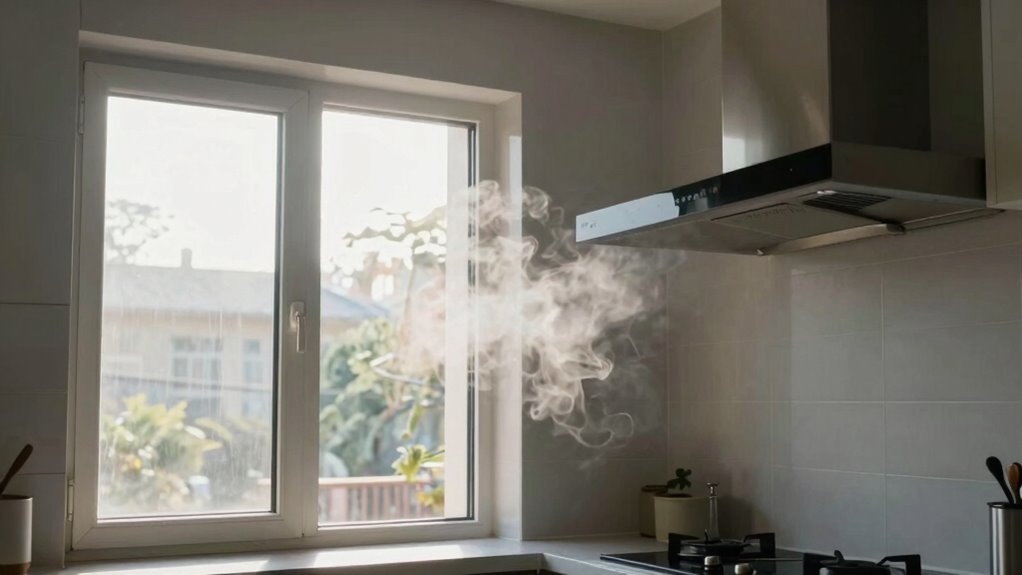

Open windows can be less effective than good kitchen venting because external factors affect airflow and pollutant removal. Nearby obstructions, outdoor pollution, and temperature differences can weaken or reverse airflow, limiting how quickly odors and smoke exit. Unlike dedicated kitchen vents, windows don’t control airflow direction or filter pollutants. If you want to understand how proper ventilation techniques and setup can improve air quality, keep exploring this topic further.

Get kitchen gear delivered free with Prime
- Fast, free delivery on millions of items
- Prime Video, Amazon Music and more included
- Member-only deals all year
Key Takeaways
- Outdoor pollution can enter through open windows, reducing indoor air quality, unlike targeted kitchen exhaust systems.
- Window airflow depends on external wind conditions and obstructions, which may limit effective pollutant removal.
- Natural ventilation via windows may be inconsistent or insufficient for rapidly removing odors and smoke.
- Pressure and temperature differences can hinder airflow through windows, making ventilation less reliable.
- Dedicated kitchen exhaust systems are designed to efficiently capture and remove indoor pollutants directly at the source.
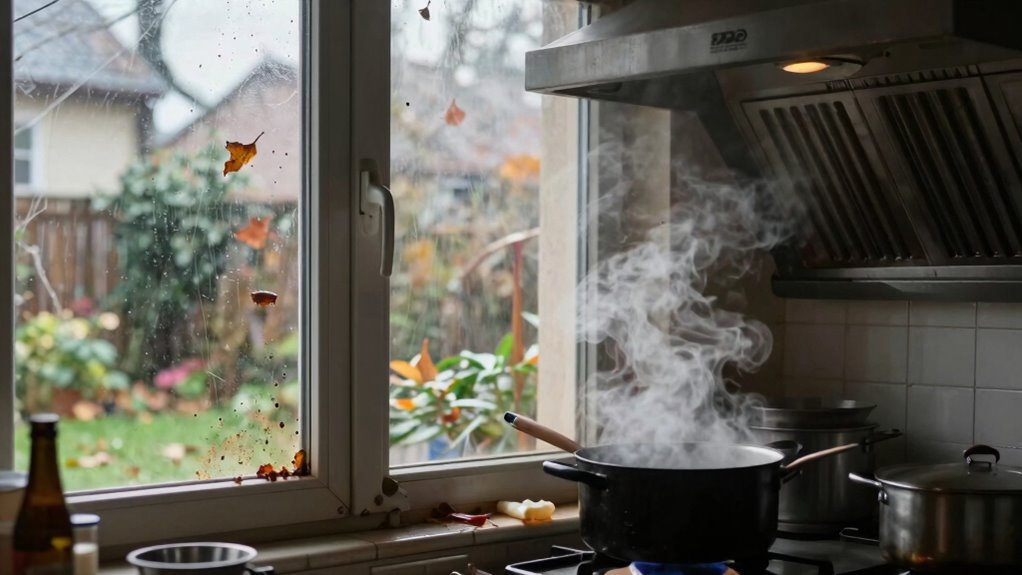
Have you ever wondered why opening a window during cooking doesn’t always eliminate lingering odors or smoke? It’s a common assumption that fresh air will clear out any unwanted smells or airborne particles, but in reality, the effectiveness depends on more than just opening the window. The key factors at play are airflow efficiency and outdoor pollution, both of which considerably influence how well odors and smoke are removed from your kitchen.
When you open a window, you’re relying on natural airflow to carry away the indoor pollutants. However, airflow efficiency isn’t guaranteed; it depends on several conditions. If the window is positioned poorly relative to prevailing outdoor winds, or if there are nearby obstructions like buildings or trees, the airflow might be weak or inconsistent. As a result, the stale, polluted air inside doesn’t get replaced quickly enough, leaving lingering smells and airborne particles behind. Additionally, temperature differences between indoors and outdoors can create a pressure imbalance, which may either reduce or reverse airflow, further limiting the exchange of indoor and outdoor air. Proper ventilation techniques can help optimize this process. It’s also important to consider the air exchange process, which impacts how effectively indoor air is refreshed through natural ventilation. Furthermore, without understanding these ventilation dynamics, you might unintentionally hinder the removal of indoor pollutants instead of aiding it.
Another critical factor often overlooked is outdoor pollution. Not all outdoor air is beneficial—many areas suffer from high levels of pollution, such as vehicle emissions, industrial pollutants, or pollen. When you open your window, you risk inviting these outdoor pollutants inside, which can worsen indoor air quality rather than improve it. If the outside environment is heavily polluted, opening the window might introduce new odors or irritants that linger longer than the original cooking smells. This exchange can be counterproductive, especially if your goal is to improve indoor air quality. Understanding outdoor air quality can help you better evaluate the benefits and drawbacks of opening windows versus using dedicated ventilation systems. Additionally, air exchange processes play a crucial role in determining whether opening windows will have a positive or negative effect.
As an affiliate, we earn on qualifying purchases.
Frequently Asked Questions
Can Open Windows Improve Indoor Air Quality Significantly?
Open windows can improve indoor air quality, but their effectiveness varies. If the outdoor air is clean, opening windows allows natural airflow, which helps clear indoor pollutants and refreshes the space. However, if outdoor pollutants like pollen, dust, or vehicle emissions are high, opening windows might bring in more contaminants. You should consider outdoor conditions before relying on open windows for ventilation, especially during pollution peaks.
Do Open Windows Prevent Cooking Odors Better Than Venting?
Open windows don’t prevent cooking odors better than proper venting because natural airflow can quickly disperse odors outdoors, but it also lets in outdoor pollutants. Venting systems are designed to directly target and remove cooking smells efficiently, reducing indoor air contamination. While opening windows offers some odor relief, it’s less controlled and less effective at preventing lingering smells compared to a dedicated venting system.
How Do Weather Conditions Affect Window Ventilation Efficiency?
Weather conditions are like the gatekeepers of outdoor airflow, directly influencing your window ventilation. When it’s windy, fresh air rushes in, carrying away cooking odors efficiently. But during still, humid days, the exchange of temperature slows, trapping smells inside. Rain or cold temperatures can also seal the deal, making windows less effective. So, weather acts as both the ally and enemy of your natural ventilation, shaping how well your open windows work.
Are Open Windows Energy-Efficient Compared to Mechanical Venting?
Open windows aren’t as energy-efficient as mechanical venting because they rely on natural ventilation, which can be unpredictable and affected by weather conditions. While opening windows may improve thermal comfort temporarily, they often lead to heat loss in winter or heat gain in summer. Mechanical venting systems provide consistent airflow, control indoor air quality, and help maintain a stable indoor temperature, making them a more efficient choice overall.
Can Open Windows Help Reduce Humidity in the Kitchen?
Did you know that opening windows can reduce humidity by up to 30%? Natural airflow helps vent moist air outside, lowering indoor humidity levels. However, be cautious, as external pollutants like pollen and car exhaust can enter, impacting your indoor air quality. While open windows may help temporarily, for consistent and effective humidity control, mechanical ventilation with proper filters is often a better choice.
As an affiliate, we earn on qualifying purchases.
Conclusion
Think of open windows like trying to catch a whisper in a storm—they just can’t keep up. I once left my kitchen window open during a busy dinner rush, only to find smoke lingering longer than I expected. A good kitchen vent acts like a skilled conductor, directing fumes out swiftly and efficiently. For safety and freshness, investing in proper ventilation beats relying on open windows every time—especially when you’re cooking up a storm.
As an affiliate, we earn on qualifying purchases.
As an affiliate, we earn on qualifying purchases.
Halloween Picks
halloween
As an affiliate, we earn on qualifying purchases.