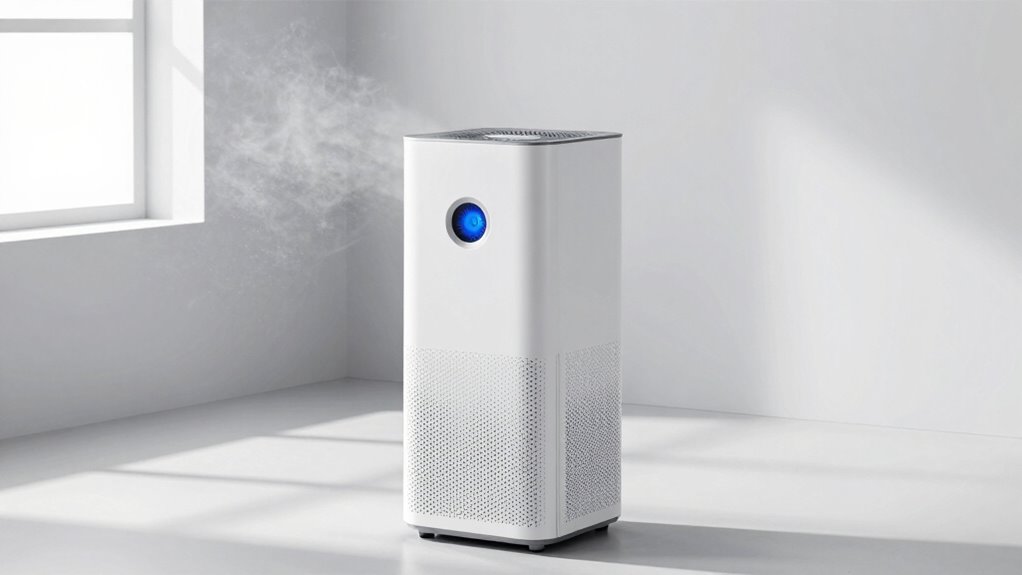
When evaluating medical-grade air purifier claims, understand that standards like HEPA certification guarantee devices trap at least 99.97% of particles as small as 0.3 microns, backed by rigorous testing. Look for independent verification and scientific evidence supporting health benefits beyond particle removal, such as gas or bacteria elimination. Be cautious of marketing hype that oversimplifies or overstates performance—genuine protection depends on compliance and real-world testing. Exploring further will help you make an informed choice.

Get kitchen gear delivered free — and shop member deals
- Fast, free delivery on millions of items
- Access to Prime Big Deal Days deals on October 6–7
- Prime Video, Amazon Music and more included
Key Takeaways
- Verify if the purifier meets recognized air purification standards like HEPA for proven performance.
- Check for independent certification and testing to confirm performance claims.
- Assess whether the device has undergone health impact analysis beyond just particle removal.
- Be cautious of marketing claims that emphasize peak performance without supporting evidence.
- Seek independent reviews and scientific data to ensure real-world effectiveness and safety.
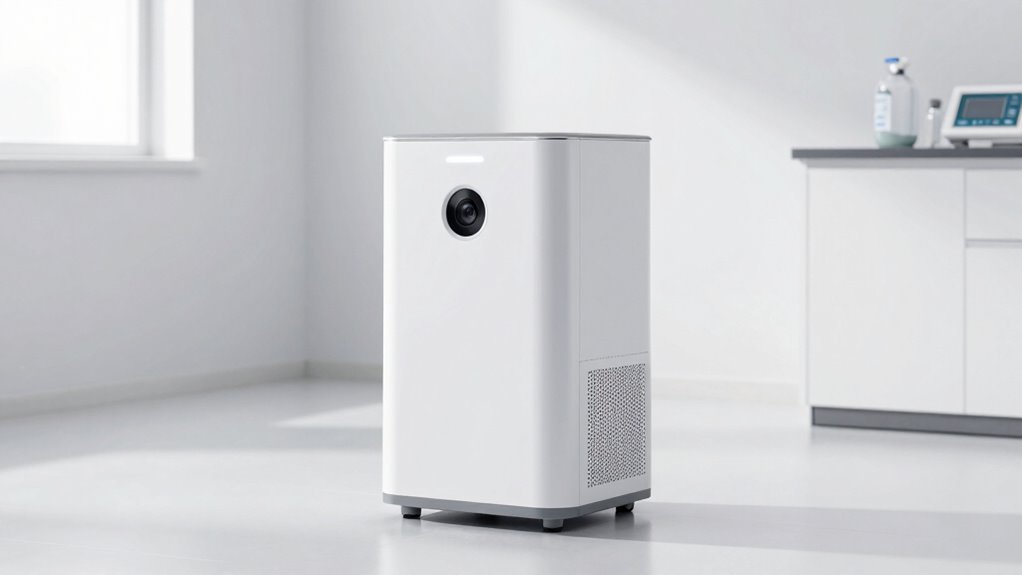
Medical-grade air purifiers are increasingly marketed with bold claims about their ability to remove airborne contaminants and improve indoor air quality. While these claims sound promising, it’s essential to understand what they really mean and whether they hold up under scrutiny. To do that, you need to consider air purification standards and the importance of a thorough health impact analysis. These factors help distinguish between marketing hype and devices that genuinely deliver on their promises.
Air purification standards serve as benchmarks for evaluating how effectively a purifier removes specific pollutants from the air. When evaluating a medical-grade air purifier, you should look for certifications such as HEPA (High Efficiency Particulate Air) standards, which indicate the device can trap at least 99.97% of airborne particles as small as 0.3 microns. These standards are established through rigorous testing and provide a baseline for measuring performance. However, not all claims are backed by such standards, so it’s vital to verify whether the device has been tested in accordance with recognized benchmarks. Without adherence to these standards, the claims about removing airborne contaminants become less credible.
Equally important is an in-depth health impact analysis, which evaluates the real-world effects of the air purifier on your health. An effective purifier doesn’t just trap particles; it also minimizes the presence of harmful gases, bacteria, and viruses. Look for detailed information from manufacturers about the device’s ability to improve indoor air quality based on scientific studies or third-party testing. A health impact analysis considers factors like airflow, filtration efficiency, and potential by-products such as ozone, which can sometimes be generated by air purifiers and pose health risks. This analysis helps you understand whether the purifier will genuinely improve your indoor environment or simply produce false assurances. Additionally, understanding the psychological impact of clean air can motivate consistent use and maintenance of air purification systems, ultimately enhancing health benefits.
Keep in mind that marketing claims often emphasize the highest possible performance levels, which may not reflect everyday use. Many devices perform well in controlled tests but may fall short in real-world conditions. Thus, you should seek independent reviews and scientific evidence to support any claims. By understanding the significance of air purification standards and conducting a health impact analysis, you become better equipped to distinguish between genuinely beneficial medical-grade air purifiers and those that overpromise without delivering real results.
As an affiliate, we earn on qualifying purchases.
Frequently Asked Questions
How Do Medical-Grade Air Purifiers Differ From Regular Air Purifiers?
Medical-grade air purifiers differ from regular ones mainly in their air purifier technology and certification standards. They use advanced filters like HEPA and UV sterilization, designed to remove bacteria, viruses, and harmful particles more effectively. These purifiers meet strict certification standards, ensuring they deliver medical-level air quality. Regular air purifiers often lack this rigorous testing and may not remove microscopic pathogens as efficiently, making medical-grade options better for sensitive environments.
Are All Claims of Medical-Grade Quality Independently Verified?
Not all claims of medical-grade quality are independently verified. You should look for certifications from reputable organizations to guarantee the air purifier truly enhances air quality and offers genuine health benefits. Independent testing confirms the device’s effectiveness against pollutants and pathogens, providing peace of mind. Always research thoroughly so you can trust that the claims are backed by reliable evidence, ultimately helping you achieve better health and cleaner air.
Can Medical-Grade Air Purifiers Eliminate All Airborne Pathogens?
Medical-grade air purifiers substantially reduce airborne viruses, but they can’t eliminate all pathogens completely. Their high filter efficiency captures most airborne viruses and particles, yet some tiny airborne pathogens might still slip through, especially if filters aren’t maintained properly. You should use them in conjunction with good ventilation and other hygiene practices for maximum protection. Remember, no air purifier guarantees 100% removal of all airborne pathogens.
What Certifications Should I Look for in a Medical-Grade Air Purifier?
You should look for certifications like HEPA, which confirms the purifier’s ability to capture indoor allergens and airborne pathogens effectively. Additionally, check for certifications from reputable organizations like UL or Energy Star that validate safety and efficiency. These certifications guarantee the air purification technology is reliable, providing cleaner indoor air and reducing allergens, making your space safer and healthier.
How Often Should Filters in Medical-Grade Air Purifiers Be Replaced?
Think of your filters as the heart of your air purifier—they need care to keep your environment safe. You should replace filters in medical-grade air purifiers every 6 to 12 months, depending on usage and filter type. Regularly check the filter lifespan and replacement frequency to guarantee peak performance. Neglecting this can cause the purifier to work harder, diminishing air quality and risking your health.
air purifier with independent certification
As an affiliate, we earn on qualifying purchases.
As an affiliate, we earn on qualifying purchases.
Conclusion
Understanding medical-grade air purifier claims helps you make informed choices for your health. Did you know that studies show these purifiers can reduce airborne viruses by up to 99.9%? That’s a powerful statistic that highlights their effectiveness in creating safer indoor environments. By knowing what to look for and what claims mean, you can confidently select a purifier that truly protects you and your loved ones, ensuring cleaner, healthier air every day.
air purifier for bacteria and gas removal
As an affiliate, we earn on qualifying purchases.
As an affiliate, we earn on qualifying purchases.
scientifically tested air purifier
As an affiliate, we earn on qualifying purchases.
As an affiliate, we earn on qualifying purchases.
Fall Picks
fall essentials
As an affiliate, we earn on qualifying purchases.