Humidifiers feel more helpful during spring allergy season because they boost indoor moisture, easing congestion and dry skin. They also help filter airborne allergens like pollen and pet dander, improving air quality. Proper humidity levels prevent mold growth and reduce dust mites, making the environment healthier. Regular maintenance is key to avoid mold or bacteria buildup. If you want to discover more about how to maximize these benefits, there’s much more to explore.

Get kitchen gear delivered free with Prime
- Fast, free delivery on millions of items
- Prime Video, Amazon Music and more included
- Member-only deals all year
Key Takeaways
- Spring allergy season often causes dry nasal passages, which humidifiers help soothe and alleviate discomfort.
- Increased airborne allergens in spring are better filtered and diluted by optimal humidity levels.
- Proper humidity prevents mold growth indoors, reducing additional allergy triggers during spring.
- Humidifiers improve overall air quality, making allergy symptoms more manageable in spring environments.
- Regular maintenance ensures humidifiers effectively combat seasonal dryness and allergen buildup.
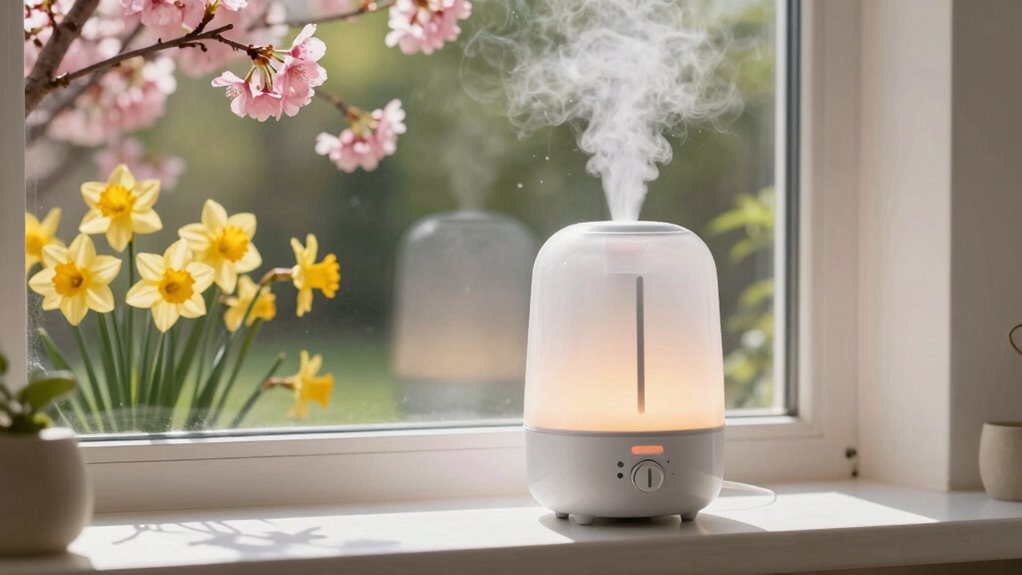
As spring arrives and allergy season kicks into full swing, many people turn to humidifiers to help ease their symptoms. You might wonder why something that adds moisture to the air could be so beneficial, especially when you hear about mold and humidity concerns. The truth is, when used correctly, a humidifier can do more than just boost moisture; it can improve air quality and reduce allergy triggers, making your environment more comfortable during this challenging season.
During spring, pollen levels skyrocket, and your home can become a battleground of allergens. While you might think increasing humidity could worsen mold growth, if you manage humidity levels carefully—keeping it between 40% and 50%—you can actually inhibit mold proliferation. Mold thrives in damp, stagnant environments, but maintaining proper humidity levels prevents excessive moisture buildup that encourages mold spores to grow. This balance not only keeps mold in check but also helps soothe irritated nasal passages and dry skin caused by low humidity. An appropriately set humidifier ensures you’re adding just enough moisture to ease congestion and dryness without creating a breeding ground for mold. Proper humidity control is essential for maximizing the benefits of your humidifier during allergy season.
Air purification is another *essential* benefit of humidifier use during allergy season. Many modern humidifiers come equipped with filters or UV features that help trap airborne allergens like pollen, pet dander, and dust mites. By filtering the air, these devices reduce the concentration of irritants you breathe in, providing relief from allergy symptoms. When combined with proper ventilation and regular cleaning, a humidifier can *substantially* improve your indoor air quality, making your living space less hostile to allergy triggers. Regular maintenance and cleaning of your humidifier are crucial to prevent the growth of mold and bacteria, which could otherwise negate its benefits. Incorporating air quality improvement techniques into your routine can further enhance the benefits of using a humidifier.
It’s important to note that not all humidifiers are created equal, and improper use can backfire. If you neglect regular cleaning, mold and bacteria can develop inside the device itself, spreading spores into your home’s air. This is why maintaining good hygiene with your humidifier and monitoring humidity levels are *imperative*. Using a hygrometer can help you stay within the *ideal* range, preventing excess moisture that could promote mold growth or dust mites. Proper humidifier maintenance is therefore key to ensuring it remains a safe and effective tool for allergy relief.
Ultimately, a humidifier’s ability to regulate humidity and support air purification makes it a *surprisingly* effective tool during spring allergies. When used mindfully, it can keep the air balanced, reduce airborne allergens, and soothe symptoms. Instead of just adding moisture blindly, you’re creating a healthier indoor environment—one that helps you breathe easier and enjoy the season despite the allergy season chaos outside.
humidifier with air filter for allergies
As an affiliate, we earn on qualifying purchases.
As an affiliate, we earn on qualifying purchases.
Frequently Asked Questions
Can Humidifiers Worsen Allergy Symptoms for Some People?
Yes, humidifiers can worsen allergy symptoms for some people if not maintained properly. Excess moisture creates a perfect environment for mold growth and dust mites, both of which trigger allergies. You might notice increased congestion, sneezing, or itchy eyes. To prevent this, clean your humidifier regularly, keep humidity levels in check, and consider using a HEPA filter. Proper maintenance helps reduce the risk of worsening allergy symptoms.
What Is the Ideal Humidity Level During Allergy Season?
Like Pandora’s box, the ideal humidity level during allergy season balances comfort and health. You should aim for 30-50%, which helps keep indoor plants thriving while preventing mold and dust mites. Pair your humidifier with air filtration to reduce allergens. Maintaining this range minimizes allergy symptoms, keeps your space comfortable, and supports your indoor ecosystem, ensuring you breathe easier without revealing hidden problems.
Do Humidifiers Help With Specific Allergy Triggers Like Pollen?
Humidifiers can help with specific allergy triggers like pollen by maintaining ideal humidity levels, but they don’t directly remove pollen. They do, however, reduce mold growth and dust mites, which thrive in dry environments. By keeping your indoor humidity around 40-50%, you can minimize mold and dust mites, easing allergy symptoms. Just be sure to clean your humidifier regularly to prevent mold and bacteria buildup.
How Often Should I Clean My Humidifier During Spring?
Think of your humidifier as a garden that needs regular tending. During spring, you should clean your humidifier every 1-3 days to prevent mold and bacteria buildup. Proper humidifier maintenance is essential for healthy air. Incorporate spring cleaning routines to keep it fresh, just like tending to delicate plants. This guarantees your humidifier continues to provide relief without introducing allergens or impurities into your home’s air.
Are There Types of Humidifiers Better Suited for Allergy Relief?
Yes, certain humidifiers are better suited for allergy relief. Look for models with allergen filtration and easy humidifier maintenance features. Ultrasonic humidifiers with HEPA filters can trap airborne allergens, reducing your symptoms. Regularly cleaning your humidifier prevents mold and bacteria buildup, ensuring cleaner mist. Choosing a device with these features helps you breathe easier during spring allergy season and maintains a healthier indoor environment.
adjustable humidifier for spring allergy relief
As an affiliate, we earn on qualifying purchases.
As an affiliate, we earn on qualifying purchases.
Conclusion
As you embrace spring, your humidifier becomes your secret weapon against allergy chaos. It’s like a gentle rainstorm inside your home, soothing your sinuses and turning allergy misery into a distant memory. By maintaining ideal humidity, you create a fortress that keeps airborne irritants at bay. Don’t underestimate its power—this small device can transform your allergy season from a nightmare into a breath of fresh air, making spring feel like a blossoming paradise instead of a sneeze-filled battlefield.
humidifier with UV sterilization
As an affiliate, we earn on qualifying purchases.
As an affiliate, we earn on qualifying purchases.
digital hygrometer for humidity control
As an affiliate, we earn on qualifying purchases.
As an affiliate, we earn on qualifying purchases.
Halloween Picks
halloween
As an affiliate, we earn on qualifying purchases.