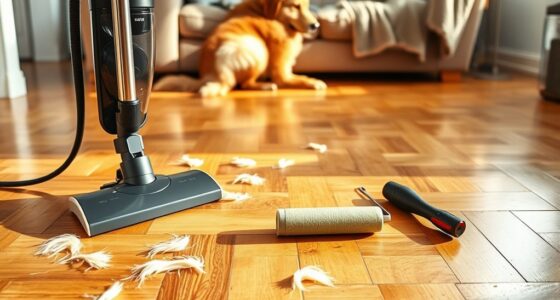
If you’re looking to reduce dust and pollen indoors, start by investing in HEPA filters for your vacuum and air system. Clean carpets, rugs, and furniture weekly, especially if you have pets, and wash your bedding in hot water weekly. Keep windows closed during high pollen seasons and consider using hard flooring for easier cleaning. By following these tips, you can substantially enhance your indoor air quality. There’s more effective advice waiting for you!

Get kitchen gear delivered free — and shop member deals
- Fast, free delivery on millions of items
- Access to Prime Big Deal Days deals on October 6–7
- Prime Video, Amazon Music and more included
Key Takeaways
- Invest in HEPA filters for air purifiers and vacuum cleaners to effectively capture dust and pollen particles.
- Vacuum carpets and upholstery weekly, and increase frequency if pets are present to reduce allergens.
- Wash bedding weekly in hot water and use dust-mite-proof covers on pillows and mattresses.
- Keep windows closed during high pollen seasons and rely on air conditioning to filter out allergens.
- Reduce clutter and regularly wipe surfaces with a damp cloth to prevent dust accumulation.
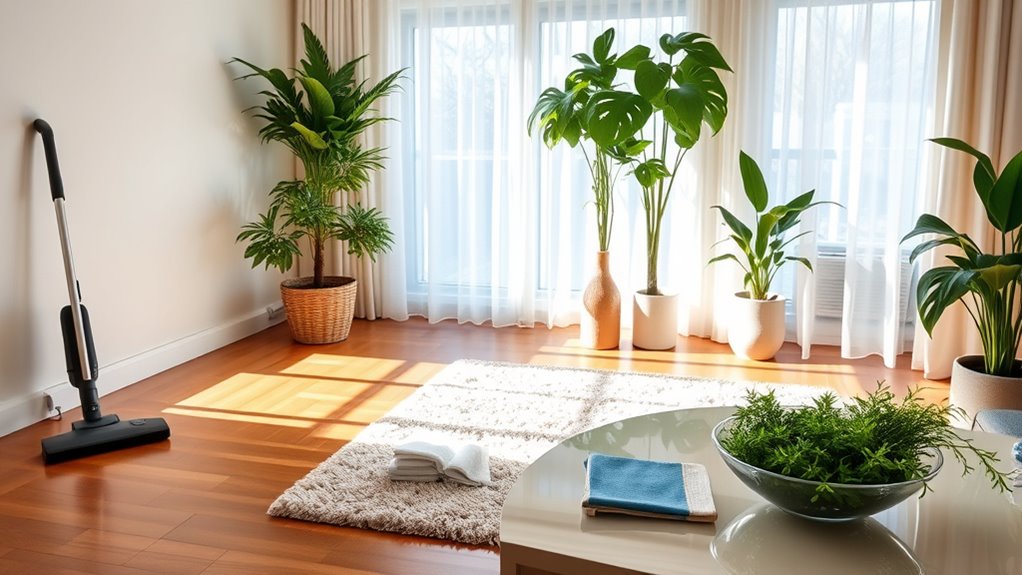
If you or someone in your household suffers from allergies, keeping your living space clean can feel like an uphill battle. Dust, pollen, and other allergens seem to find their way into every nook and cranny. To combat this, you’ll need to establish a solid cleaning routine that not only targets these irritants but also helps prevent them from returning. One effective way to start is by investing in HEPA filters for your home. These high-efficiency particulate air filters trap tiny particles, including dust mites and pollen, making your indoor air much clearer.
Using HEPA filters in your vacuum cleaner is a game changer. Regularly vacuuming carpets, rugs, and upholstery can notably reduce the amount of allergens in your space. Make sure to vacuum at least once a week, and don’t forget to clean under furniture and in corners where dust tends to accumulate. If you have pets, you might want to vacuum more frequently, as pet dander can worsen allergy symptoms. Additionally, consider using a vacuum with a sealed system to guarantee that any trapped allergens don’t escape back into the air.
Dust mite control is another critical aspect of maintaining a clean environment. These microscopic pests thrive in bedding and soft furnishings. Wash your bed linens and pillowcases weekly in hot water to eliminate dust mites. You might also want to invest in dust-mite-proof covers for your pillows and mattresses. These covers act as a barrier, preventing dust mites from making a home in your bedding.
When it comes to your living space, minimizing clutter can also help. The more items you have lying around, the more surfaces there are for dust to settle. Try to keep surfaces clear and regularly wipe them down with a damp cloth to trap dust rather than just moving it around. Opt for hardwood or tile flooring instead of carpets, as these surfaces are easier to clean and don’t harbor allergens as much.
Finally, consider keeping windows closed during high pollen seasons. Use air conditioning to maintain a comfortable temperature, and make sure to change the filters regularly. By implementing these strategies, you’ll create a cleaner, healthier living environment that can notably improve the quality of life for allergy sufferers in your household. With persistence and the right tools, you can take control of your indoor air quality and enjoy a breath of fresh air. Moreover, investing in smart appliances can help automate your cleaning routine, making it easier to manage allergens effectively.
As an affiliate, we earn on qualifying purchases.
Frequently Asked Questions
How Often Should I Wash My Bedding for Allergy Relief?
You should wash your bedding at least once a week to minimize allergen buildup. This frequency helps eliminate dust mites, pet dander, and pollen that can trigger allergic reactions. If you’re particularly sensitive, consider washing your pillowcases more often. Using hot water and hypoallergenic detergents can further enhance your efforts. Regularly cleaning your bedding not only improves your comfort but also promotes better health and quality sleep.
Can Air Purifiers Actually Help Reduce Indoor Allergens?
Absolutely, air purifiers can help reduce indoor allergens! You’ll find their effectiveness hinges on the allergen removal technology they use. When you run one, it captures dust, pollen, and pet dander, markedly improving your air quality. It’s like having a silent partner working to protect you from irritants. Just remember to choose a model suited for your space and maintain it well for best results. You’ll breathe easier and feel the difference!
What Types of Cleaning Products Should I Avoid?
You should avoid harsh chemical cleaners and products with synthetic fragrances. These can exacerbate allergy symptoms and irritate your respiratory system. Opt for natural, fragrance-free alternatives instead. Look for cleaners made from vinegar, baking soda, or essential oils that don’t contain harmful additives. Always read labels to guarantee you’re choosing safe options that won’t trigger your allergies while still keeping your home clean. Your health deserves better than conventional cleaning products!
How Can I Minimize Outdoor Pollen Entering My Home?
To minimize outdoor pollen entering your home, focus on ventilation strategies and outdoor entryways. Keep windows closed on high-pollen days, use air purifiers with HEPA filters, and install screens to block pollen. Clean entryways regularly by sweeping and using doormats to trap dirt. Consider changing clothes after spending time outside, and encourage family members to do the same. By implementing these strategies, you’ll create a more comfortable indoor environment for everyone.
Are There Specific Vacuum Cleaners Better for Allergy Sufferers?
Yes, specific vacuum cleaners are definitely better for allergy sufferers. Look for models with HEPA filters, as they trap tiny particles, reducing allergens in your home. Cordless models can also be a great choice, offering convenience without compromising suction power. When you choose a vacuum with these features, you’ll effectively minimize dust and pollen, making your living space healthier and more comfortable for you.
As an affiliate, we earn on qualifying purchases.
Conclusion
By embracing these cleaning tips, you’re not just tidying up; you’re crafting a sanctuary where fresh air dances freely and allergens take flight. Each sweep of the vacuum and every dusting cloth is a step toward a healthier home, where you can breathe deeply without worry. So, roll up your sleeves and reclaim your space from the clutches of dust and pollen. Your allergies will thank you, and your lungs will sing with relief in your newfound oasis.
As an affiliate, we earn on qualifying purchases.
As an affiliate, we earn on qualifying purchases.
Fall Picks
fall essentials
As an affiliate, we earn on qualifying purchases.