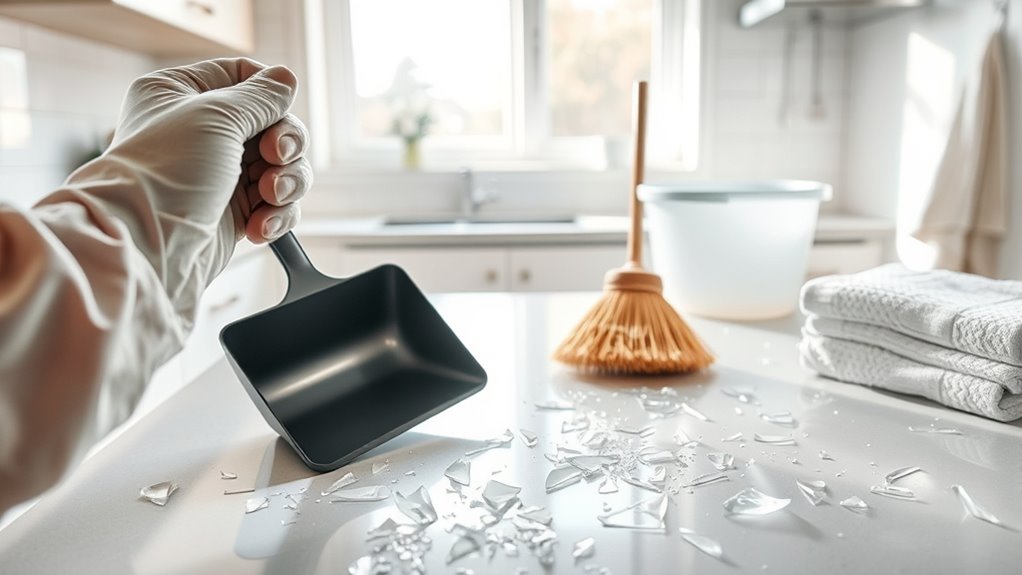

If you break glass in the kitchen, stay calm and first clear the area of people and pets. Wear gloves to protect your hands, then pick up large pieces carefully. Sweep up smaller shards with a broom and use a dustpan to collect them. Dispose of the glass in a sturdy, sealed container to avoid injury. After you’re done, clean the surface with a damp cloth. There are more safety tips and procedures you might find useful.
Key Takeaways
- Stay calm, ensure no people or pets are nearby, and gather supplies like gloves, broom, and dustpan before starting the cleanup.
- Wear gloves to protect your hands, and pick up larger glass pieces carefully.
- Sweep small shards in different directions, then use a dustpan to collect them thoroughly.
- Dispose of broken glass in a sturdy container, sealing it to prevent punctures and marking it if necessary.
- Clean the area with a damp cloth and mild cleaner, then wash your hands thoroughly after the cleanup.
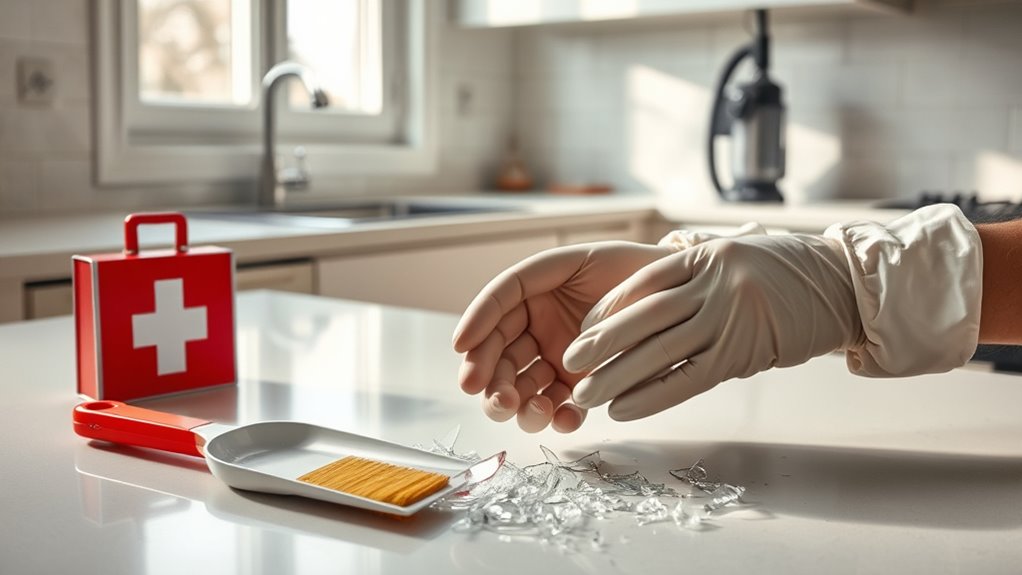
When you accidentally break a glass item, it’s essential to act quickly and safely to prevent injury. The first step is to stay calm and assess the situation. Make sure no one else is nearby, especially pets or small children, before you begin cleaning up. You don’t want anyone to step on a shard or cut themselves on the broken glass. Once you’re sure it’s safe to proceed, grab some essential supplies: a broom, dustpan, gloves, and a damp cloth or paper towels.
Act quickly and safely after breaking glass; ensure the area is clear of people and pets before cleaning up.
Put on your gloves before handling any broken glass. This protects your hands from cuts. Carefully pick up the larger pieces of glass with your hands, if you can do so safely. If any shards are too small to grab, sweep them up with a broom and use the dustpan to collect them. Be sure to sweep in different directions to catch all those tiny pieces. When you’ve collected everything, double-check the area for any missed shards. Once you’re satisfied, it’s time for proper glass disposal. Place the broken glass in a sturdy container, like a cardboard box or a plastic bag, and seal it to ensure it won’t puncture through. Don’t just toss it in the regular trash, as this could pose a risk to sanitation workers.
After you’ve dealt with the broken glass, it’s time to focus on any stains left behind. If the broken glass was part of a dish or cup that contained food or drink, you might find some spills on the floor or surface. Use a damp cloth to wipe up those stains carefully. If any sticky residue remains, apply a mild cleaning solution, and let it sit for a few minutes before wiping it away. This will help with stain removal.
Once everything is clean, dispose of your gloves properly. Wash your hands thoroughly, even if you wore gloves, to make sure you’ve removed all traces of contamination. Finally, take a moment to breathe and relax. Accidents like this can be stressful, but you’ve handled it safely and efficiently. With these steps, you’ve not only ensured your safety but also maintained a clean and tidy kitchen. Remember, being prepared for such mishaps can make a world of difference. Additionally, consider implementing safety precautions to minimize the risk of future accidents in your kitchen.

ROYAKI Chemical Resistant Latex Gloves,Cleaning Protective Safety Work Heavy Duty Rubber Gloves,12.6", 1 Pair Size Large
Rubber has the advantages of elasticity, wear resistance, cold resistance, and air leakage
As an affiliate, we earn on qualifying purchases.
As an affiliate, we earn on qualifying purchases.
Frequently Asked Questions
Can I Use a Vacuum Cleaner for Broken Glass Cleanup?
You shouldn’t use a vacuum cleaner for broken glass cleanup. Vacuum safety is essential, and most vacuums aren’t designed to handle sharp objects, which could damage the machine or create a hazard. Instead, opt for alternative cleaning methods like using a broom and dustpan. You can also dampen a paper towel to pick up small shards, ensuring you’ve cleared all the glass safely. Always prioritize safety when dealing with sharp materials!
What Should I Do if Glass Cuts My Skin?
If glass cuts your skin, immediately apply a first aid response. Rinse the wound gently with clean water to remove any debris. Apply pressure with a clean cloth to manage bleeding. If the bleeding continues, keep applying pressure and elevate the area if possible. Once the bleeding stops, clean the cut with antiseptic and cover it with a bandage. If the cut is deep or won’t stop bleeding, seek medical attention.
Is It Safe to Use Gloves While Cleaning Glass?
Absolutely, it’s safe to use gloves while cleaning glass! Think of gloves as your trusty sidekick in the battle against sharp edges. They provide essential protective gear, helping shield your hands from cuts while you implement effective cleaning techniques. Just make certain the gloves are thick enough to withstand any potential hazards. With the right approach, you’ll have a safer cleanup experience and keep your fingers intact. So go ahead, gear up and tackle that mess!
How Can I Prevent Glass Items From Breaking?
To prevent glass items from breaking, focus on safe storage methods. Always use reinforced containers to hold your glassware, as they provide extra protection. Store items in cabinets with padded shelves, and avoid overcrowding to minimize the risk of accidents. When handling glass, be mindful of your grip and movement. Using non-slip mats in cabinets can also help keep items secure and reduce the chances of them tipping over or breaking.
Are There Specific Types of Glass That Are More Dangerous?
Absolutely, certain types of glass can be downright treacherous! Thin glass, like that fragile wine goblet, shatters into a million sharp shards, posing serious glass safety risks. Tempered glass, while stronger, can explode unexpectedly if mishandled. You’ve got to be extra cautious with decorative glass items, too—they’re beautiful but often brittle. So, always handle glass with care and choose sturdier options when possible to keep your home safe and sound!

Hand Broom and Dustpan with Squeegee,Mini Dust Pan and Brush Set with a Scraper for Quick Cleanups,3-Piece Wall Mountable Cleaning Tools for Particles,Little Messes,Hair,Crumb
This small 3-piece cleaning set—a hand broom, dustpan with flexible lip and squeegee scraper—is your perfect solution for…
As an affiliate, we earn on qualifying purchases.
As an affiliate, we earn on qualifying purchases.
Conclusion
Cleaning up broken glass isn’t just about picking up shards; it’s about ensuring your safety and preventing accidents. Coincidentally, the same care you take in cleaning up also applies to keeping your kitchen a safe space for cooking and family gatherings. By following the right steps, you’ll not only protect yourself but also create a secure environment for everyone. So, whenever you face this task, remember that a little caution goes a long way!

Resurhang 6 Sets Cardboard Broken Glass Disposal Box Floor Model Laboratory Safe Trash Can for Glass Sharps Disposable Garbage Disposal Container Cartons Trash Bins (12" L X 12" W X 27" H)
Package Contents: you will receive 6 set broken glass disposal box set to meet your safe and effective…
As an affiliate, we earn on qualifying purchases.
As an affiliate, we earn on qualifying purchases.

USANOOKS Microfiber Cleaning Cloth Grey – 12 Pcs (12.5"x12.5") – High Performance – 1200 Washes, Ultra Absorbent Microfiber Towel Weave Grime & Liquid for Streak-Free Mirror Shine – Car Washing Cloth
10x GRIP-ROOT WEAVE – TRAP MORE, WORK LESS: Ultra-absorbent microfiber towels for car Grip Root weave works like…
As an affiliate, we earn on qualifying purchases.
As an affiliate, we earn on qualifying purchases.