TL;DR

Get kitchen gear delivered free with Prime
- Fast, free delivery on millions of items
- Prime Video, Amazon Music and more included
- Member-only deals all year
Many modern plastic food-storage containers are dishwasher-safe, but the label or manufacturer’s care instructions are the best guide. Noah Pinsonnault of the Good Housekeeping Institute advises placing approved plastics on the top rack, skipping heated dry and hand-washing older containers without care guidance.
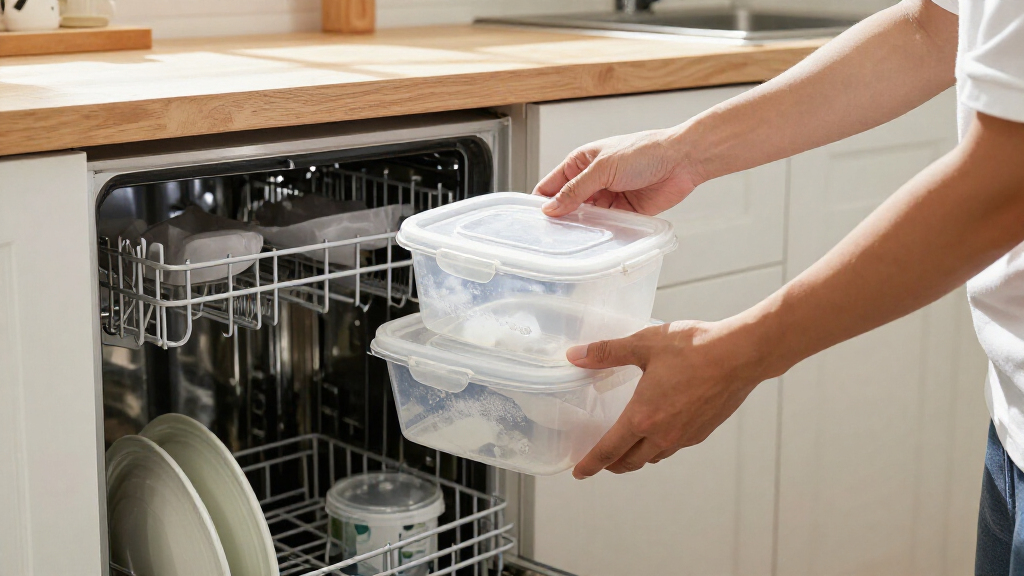
Many modern plastic food-storage containers can go in the dishwasher, but whether a particular Tupperware container is safe depends on its label and care instructions, according to Noah Pinsonnault, a reviews analyst in the Good Housekeeping Institute’s Home Care & Cleaning Lab. For containers marked dishwasher-safe, Pinsonnault recommends the top rack and avoiding heated dry to reduce the chance of warping.
Check the container’s bottom for a dishwasher-safe symbol or label, or consult the manufacturer’s care instructions. Pinsonnault cautions that the recycling number printed on a plastic container does not establish whether it can withstand a dishwasher cycle. The number identifies a plastic category; it is not a substitute for product-specific cleaning directions.
Dishwasher-safe and microwave-safe are also separate designations. A container’s approval for one use does not establish its suitability for the other, so consumers should look for the relevant label or check the manufacturer’s guidance for each appliance.
For approved plastic containers, Pinsonnault advises putting them on the top rack, where they are farther from the dishwasher’s heating element. He also recommends skipping heated drying, particularly for lightweight containers and lids. According to Pinsonnault, high heat can contribute to warping over time even in some plastics labeled dishwasher-safe. Food residue can collect around lid seals, so those areas need careful cleaning.
Can Tupperware go in the dishwasher? Check the care label first
Some plastic food containers are dishwasher-safe, but care instructions vary by product. Noah Pinsonnault of the Good Housekeeping Institute shares ways to reduce heat damage.
Check before washing
Use the dishwasher-safe marking or the manufacturer’s instructions for the specific container.
Check the container’s base or consult the manufacturer’s instructions.
For approved plastics, keep them farther from the heating element.
High heat can contribute to warping over time.
Labels answer different questions
A recycling code does not tell you whether a container is safe for an appliance.
| Mark or guidance | What it tells you |
|---|---|
| Dishwasher-safe label | Guidance for dishwasher use |
| Microwave-safe label | Guidance for microwave use |
| Recycling number | Plastic category, not dishwasher safety |
Older or unlabeled containers
Without care guidance, heat tolerance and material condition are harder to assess.
- Follow product-specific care instructions.
- Place approved plastics on the top rack and skip heated dry.
- Hand-wash older containers without care guidance.
- Age can make plastic more brittle or deteriorated.
Care for lids and lingering smells
A quick wash may miss food residue around lid seals.
- Clean around seals carefully.
- Wash thoroughly and air the container with its lid off.
- A baking soda and water solution may help absorb lingering odors.
How Dishwasher Heat Affects Plastic
A container may emerge from a wash cycle looking distorted even if it was designed for dishwasher use. The guidance identifies rack position and heated drying as practical factors that can affect exposure to heat, especially for lightweight pieces. Following the label alone is not the whole routine: placement and drying choices also matter.
Warping can make a lid or container harder to fit and use, while residue trapped around a gasket can remain after a quick wash. Checking the care instructions, keeping plastics on the top rack and cleaning seals directly are simple steps to help preserve reusable containers. The advice does not guarantee that a container will never change shape; it describes ways to reduce risks associated with dishwasher heat.
For readers deciding whether to keep using an older container, the key point is that age adds uncertainty. Without a label or manufacturer instructions, its material condition and heat tolerance are harder to assess. The recommended option in that case is hand-washing rather than testing it in the dishwasher.
Products Worth Considering

Cuisinart 14-Cup Food Processor, 720-Watt Motor, Stainless Steel, DFP-14BCNY

Traeger Woodridge Wood Pellet Grill and Smoker, 860 sq. in., WiFIRE

Le Creuset Enameled Cast Iron Round Bread Oven, 9.5-Inch, Cerise
As an affiliate, we earn on qualifying purchases.
Labels Matter More Than Recycling Codes
The guidance addresses a common source of confusion: the recycling code on a container’s base is sometimes treated as a guide to dishwasher use. Pinsonnault says it does not indicate dishwasher safety. The relevant information is the dishwasher-safe marking or the manufacturer’s cleaning directions.
That distinction also applies to microwave use. A container may have one appliance-related approval without the other, so users should not infer that a dishwasher-safe label makes an item microwave-safe, or the reverse. The guidance concerns plastic food-storage containers generally; it does not establish that every item sold under the Tupperware name has the same care requirements.
For older containers that have no readable label, Pinsonnault recommends hand-washing. He says plastic can become more brittle or deteriorate with age, making it difficult to know how an older piece will hold up in a dishwasher without the manufacturer’s guidance. This is a precaution based on uncertainty about the container’s condition, not a claim that all older containers will fail.
What Each Container Can Withstand
The guidance does not name specific Tupperware models or provide a list of plastics that are safe in every dishwasher. Care instructions can vary by product, and the advice does not specify a dishwasher temperature, cycle length or drying setting beyond recommending that users skip heated dry.
It is also unclear how much heat exposure will warp any one container, or how many wash cycles a particular item can withstand. Pinsonnault describes the risk as potential and notes that high heat can contribute to warping over time; that does not mean every dishwasher-safe container will warp. For containers without labels, the manufacturer’s guidance may be unavailable, particularly if the item is old.
The odor advice is similarly practical rather than a guarantee: washing thoroughly and airing a container with its lid off may help, and a baking soda and water solution may absorb lingering smells. No method is presented as certain to remove every odor.
Check Care Instructions Before Washing
Before loading a plastic container, check its base for a dishwasher-safe marking or look up the manufacturer’s care directions. If it is approved for dishwasher use, place it on the top rack, avoid heated dry and pay attention to food residue around lid seals. If the container is older and has no label or accessible instructions, hand-wash it instead.
For lingering food smells, wash the container thoroughly and leave it open to air. If the odor remains, a baking soda and water solution may help absorb it. The next step for consumers is product-specific: follow the instructions for the particular container rather than relying on its recycling code or assuming that all plastic food storage is alike.
Source: rss
Key Questions
Can Tupperware go in the dishwasher?
Some plastic food-storage containers can. Check the specific container for a dishwasher-safe symbol or label, or follow its manufacturer’s care instructions. The advice does not apply automatically to every Tupperware item.
Where should dishwasher-safe plastic containers go?
Place them on the top rack, away from the heating element. Noah Pinsonnault says the lower rack can expose plastics to more intense heat, which may cause warping or distortion.
Does the recycling number mean a container is dishwasher-safe?
No. Pinsonnault says the recycling number does not indicate dishwasher safety. Use the product’s care label or manufacturer’s instructions instead.
Can a dishwasher-safe container go in the microwave?
Not necessarily. Dishwasher-safe and microwave-safe are separate designations; check the container’s instructions for each use.
What should I do with an older container that has no label?
Pinsonnault recommends hand-washing it. Older plastic can become more brittle or deteriorate, and without manufacturer guidance its ability to withstand a dishwasher is difficult to know.
Source: goodhousekeeping.com