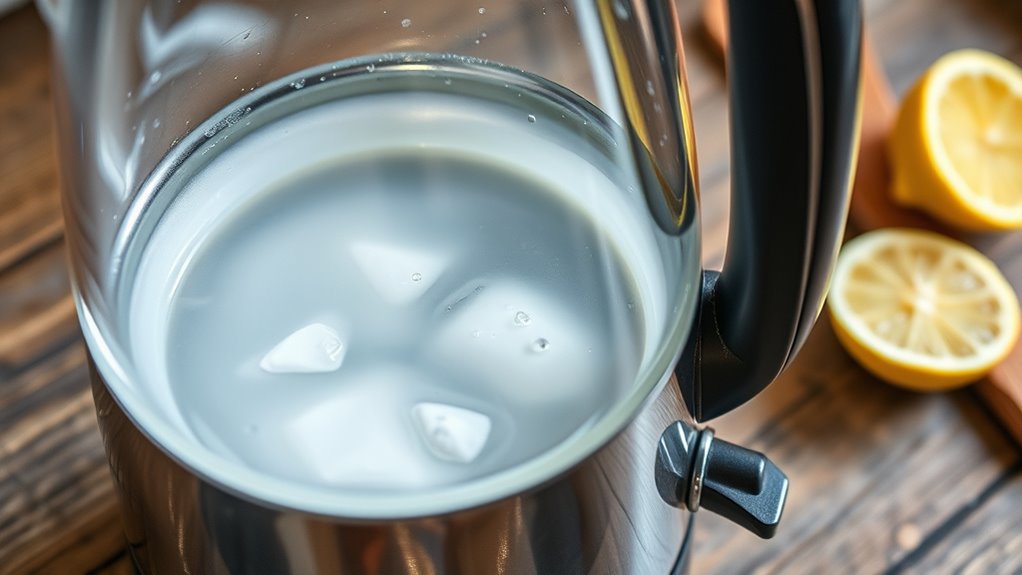

To descale your electric kettle, mix equal parts of cleaning vinegar or lemon juice with water. Pour this solution into the kettle and bring it to a boil. After boiling, let it sit for about 30 minutes to dissolve limescale. Then, pour out the mixture and rinse the kettle thoroughly with fresh water. Fill your kettle with clean water, boil again, and you’re all set! Stick around for more tips on maintaining your kettle’s efficiency.
Key Takeaways
- Prepare a descaling solution by mixing equal parts of vinegar or lemon juice and water in a measuring cup.
- Pour the descaling mixture into the kettle and ensure it covers limescale areas.
- Boil the solution in the kettle, then let it sit for 30 minutes to dissolve limescale deposits.
- Rinse the kettle thoroughly with fresh water to remove any residue from the descaling solution.
- Boil fresh water in the kettle afterward to flush out any lingering taste and ensure it’s ready for use.

If you’ve noticed that your electric kettle is taking longer to boil water or has a strange taste, it’s likely time to descale it. Limescale buildup can affect the performance and flavor of your hot beverages. Fortunately, descaling is a simple process that you can easily do at home using common household ingredients like cleaning vinegar or lemon juice.
To start, gather your materials. You’ll need either cleaning vinegar or lemon juice, water, and a measuring cup. If you choose cleaning vinegar, it’s usually more effective due to its higher acidity. If you prefer a natural option, lemon juice works well too. Both options will help dissolve the limescale buildup inside your kettle.
Begin by filling your kettle with equal parts of your chosen descaling solution and water. For example, if you use one cup of cleaning vinegar, mix it with one cup of water. If you’re using lemon juice, the same ratio applies. This mixture will help to break down the limescale effectively. Once you’ve combined the solution, pour it into the kettle.
Next, turn on the kettle and allow it to boil. As the solution heats up, it will start to dissolve the limescale. Once it reaches a boil, turn off the kettle and let the mixture sit for about 30 minutes. This resting period allows the acidity of the vinegar or lemon juice to work its magic, tackling any stubborn deposits.
After 30 minutes, pour out the descaling solution. You may notice some residue left behind, especially if the limescale buildup was significant. Rinse the kettle thoroughly with fresh water to remove any lingering taste from the vinegar or lemon juice. It’s important to ensure that all remnants of the descaling solution are gone; otherwise, you might end up with flavored water the next time you boil.
Finally, fill your kettle with fresh water and boil it once more. This step helps to flush out any remaining traces of the descaling solution. After this final boil, your kettle should be good as new, boiling water efficiently and without any unwanted flavors. Regularly descaling your electric kettle will extend its lifespan and maintain the quality of your beverages. Sustainable cloud solutions can also benefit from regular maintenance to optimize performance. Aim to do this every few months, depending on your water hardness. With just a bit of effort and the right ingredients, you can keep your kettle in top shape!

Kettle Descaler Tablets, 20 Pack Citric Acid Cleaner for Electric Kettles
- Effective Limescale Removal: Breaks down limescale with citric acid
- Easy to Use: Simple step-by-step cleaning instructions
- Enhances Appliance Efficiency: Restores performance and saves energy
As an affiliate, we earn on qualifying purchases.
As an affiliate, we earn on qualifying purchases.
Frequently Asked Questions
How Often Should I Descale My Electric Kettle?
You should descale your electric kettle every 1 to 3 months, depending on your water hardness. If you notice limescale buildup, it’s time to clean it. Regular maintenance helps extend your kettle’s lifespan and keeps brew quality high. Use frequency guidelines as a rule of thumb, but adjust based on your usage. Following these maintenance tips can make a big difference in performance and flavor, ensuring you enjoy every cup!
Can I Use Vinegar Instead of Descaling Solution?
You can absolutely use vinegar as a descaling solution! Think of it as nature’s secret weapon against limescale. This vinegar substitution is safe and effective, breaking down mineral buildup just like commercial descalers. Just mix equal parts of vinegar and water, let it sit for about 30 minutes, and then boil the mixture. Make certain you rinse thoroughly afterward, as you don’t want any lingering vinegar taste. Happy descaling!
What Types of Descaling Solutions Are Safe for Kettles?
You can use safe chemical descaling solutions specifically designed for kettles, which effectively remove limescale without damaging the appliance. Look for those labeled as kettle-safe. If you prefer natural alternatives, vinegar and citric acid work well too; they’re gentle yet effective. Just make sure to rinse thoroughly afterward to avoid any lingering taste. Always check your kettle’s manual for manufacturer recommendations on descaling solutions to guarantee you’re keeping it in great shape.
Will Descaling Damage My Kettle’s Heating Element?
Descaling won’t damage your kettle’s heating element if you use the right solutions and follow instructions. In fact, regular descaling can actually extend your kettle’s lifespan by preventing limescale buildup that affects performance. Just avoid harsh chemicals, as they can harm the components. Stick to vinegar or commercial descalers labeled as safe for kettles, and you’ll keep your kettle running smoothly without risking any damage to the heating element.
How Can I Prevent Limescale Buildup in My Kettle?
To prevent limescale buildup in your kettle, you should regularly use filtered water, as about 60% of households experience hard water issues. Proper kettle maintenance also involves emptying the kettle after each use and drying it thoroughly. Periodically running a vinegar solution through it can help keep limescale at bay. By incorporating these practices, you’ll enjoy cleaner water and extend the life of your kettle effortlessly.
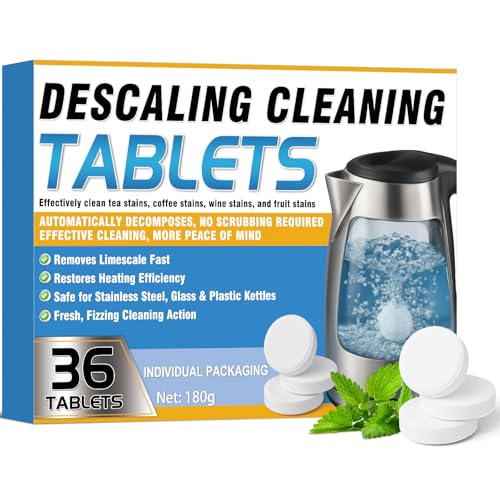
Erigathe Kettle Descaler Tablets – Powerful Limescale Remover for Coffee Maker, Electric Kettle – Natural Citric Acid Formula, Hard Water Remover Tablets (36)
- Powerful Descaling Action: Rapidly dissolves limescale and mineral buildup
- Universal Appliance Compatibility: Suitable for kettles, coffee makers, and more
- Restores Appliance Efficiency: Enhances performance and extends lifespan
As an affiliate, we earn on qualifying purchases.
As an affiliate, we earn on qualifying purchases.
Conclusion
Descaling your electric kettle isn’t just a chore; it’s a way to guarantee every cup of tea or coffee is pure bliss. By regularly removing limescale, you’re not only extending your kettle’s life but also enhancing the taste of your beverages. So, why not invest a little time in this simple task? After all, a clean kettle leads to a happier brew—because who wouldn’t want the perfect sip, free from the bitterness of buildup?
Erigathe Kettle Descaler Tablet 36 Packs, Powerful Limescale Remover for Coffee Maker, Electric Kettle, Natural Citric Acid Formula, Hard Water Remover Tablets
- Powerful Descaling Action: Rapidly dissolves limescale and mineral buildup
- Universal Appliance Compatibility: Suitable for kettles, coffee makers, and more
- Restores Efficiency & Extends Lifespan: Prevents damage and maintains appliance performance
As an affiliate, we earn on qualifying purchases.
As an affiliate, we earn on qualifying purchases.

JOYAONE Kettle Descaler Tablet, Kettle Cleaner Remove Hard Water & Mineral Buildup, Hardwater Stains, Citric Acid for Cleaning & Descaling Water Distillers, Boilers, Limescale Remover For Kettles
- Effective Limescale Removal: Uses natural citric acid to dissolve deposits
- Restores Appliance Performance: Helps kettles operate efficiently and last longer
- Easy to Use: Simple steps for cleaning and maintenance
As an affiliate, we earn on qualifying purchases.
As an affiliate, we earn on qualifying purchases.