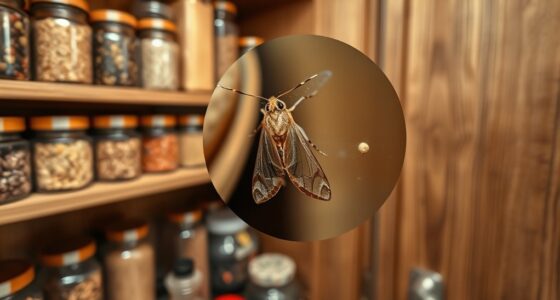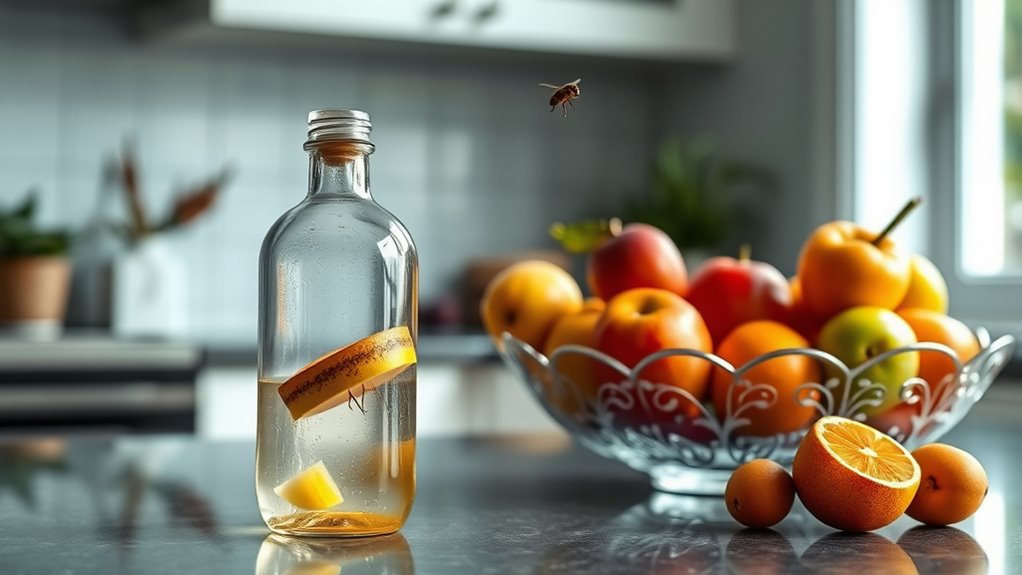

To get rid of fruit flies in your kitchen, start by cleaning regularly. Toss out overripe produce and wipe down surfaces with a vinegar and water solution. Set up traps using apple cider vinegar covered with plastic wrap and small holes. You can also mix dish soap with water to capture more flies. Keep your kitchen well-ventilated and dispose of food waste promptly. Discover more detailed strategies to effectively manage and prevent these pesky intruders.

Get kitchen gear delivered free — and shop member deals
- Fast, free delivery on millions of items
- Access to Prime Big Deal Days deals on October 6–7
- Prime Video, Amazon Music and more included
Key Takeaways
- Regularly check and dispose of overripe or decaying fruits to prevent attracting fruit flies.
- Clean kitchen surfaces with vinegar and water to eliminate crumbs and spills.
- Set up apple cider vinegar traps covered with plastic wrap to catch fruit flies effectively.
- Keep windows open and use fans to improve ventilation and deter fly activity.
- Store food waste in airtight containers and take out the trash regularly to minimize breeding grounds.
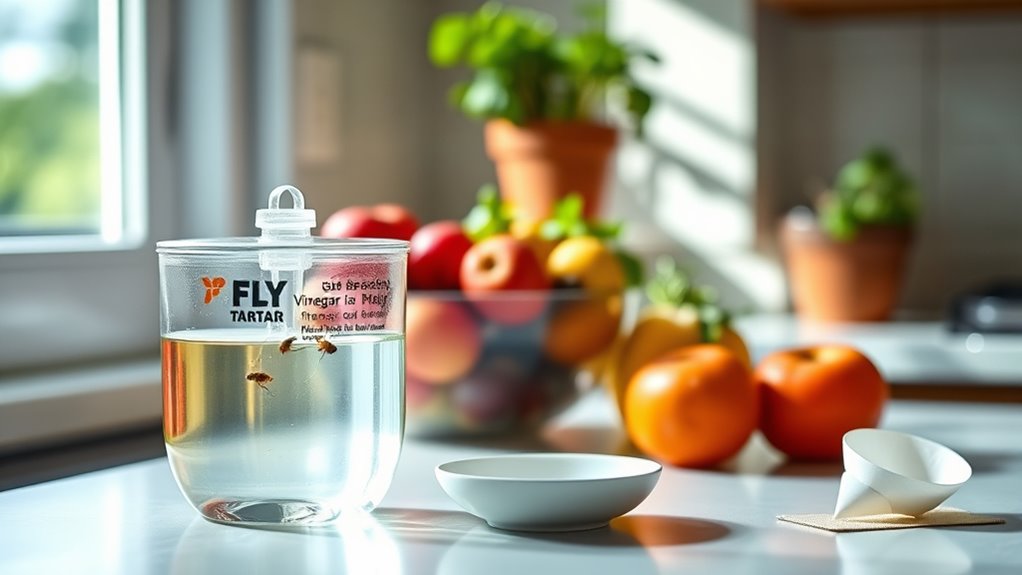
Have you ever wondered how those pesky fruit flies seem to invade your kitchen out of nowhere? You might be enjoying a peaceful evening when suddenly, a swarm of tiny insects buzzes around your fruit bowl. It’s frustrating, but don’t worry; you can tackle this problem with some effective strategies. By focusing on prevention and a few natural remedies, you’ll soon have your kitchen fly-free.
First things first, it’s essential to establish a solid cleaning routine. Fruit flies are attracted to overripe or decaying fruits, so make it a habit to check your produce regularly. If you spot any questionable items, toss them out! Clean your kitchen counters and dining areas often, as crumbs and spills can attract these little nuisances. Use a mixture of vinegar and water as a natural cleaner; not only will it disinfect surfaces, but the vinegar also works to deter flies.
Establishing a cleaning routine is key; regularly check for overripe fruits and keep surfaces crumb-free to deter fruit flies.
Now, let’s talk about natural remedies that can help you catch those unwanted guests. One popular trap involves using apple cider vinegar, which fruit flies can’t resist. Pour some apple cider vinegar into a bowl and cover it with plastic wrap, securing it with a rubber band. Poke a few small holes in the wrap, and the flies will be drawn in but won’t find their way out. This DIY trap is not only effective but also simple to set up.
You can also try using a mixture of dish soap and water. Combine a few drops of dish soap with water in a bowl and place it near the fruit flies’ favorite spots. The soap reduces the surface tension of the water, causing the flies to sink when they land. Place several of these bowls around your kitchen for the best results.
Another preventative measure is to keep your kitchen well-ventilated. Opening windows and using fans can help to deter flies, as they prefer still air. Additionally, ensure that any food waste is promptly disposed of. Use a tightly sealed garbage bin, and take out the trash regularly to eliminate any potential breeding grounds for fruit flies. Maintaining a solid cleaning routine will significantly contribute to keeping your kitchen free of these pests.
Frequently Asked Questions
What Attracts Fruit Flies to My Kitchen?
Fruit flies are drawn to common attractants like overripe fruits, vegetables, and sugary substances. They thrive in damp environments, so you might find them near household sources like spilt juice or dirty dishes. Even decaying items can be a magnet for these pests. To keep them at bay, it’s vital to regularly check your kitchen for any potential attractants and clean up spills promptly. Staying vigilant helps minimize their presence.
Can Fruit Flies Harm My Food?
Yes, fruit flies can harm your food, but not in the way some myths suggest. While they don’t directly contaminate your meals, their presence can indicate rotting or fermenting produce, which poses health risks. They can spread bacteria and contribute to food spoilage, making the food unsafe to eat. To keep your kitchen safe, it’s vital to address any fruit fly issues promptly and maintain proper food storage practices.
How Long Do Fruit Flies Live?
When it comes to fruit flies, you can’t judge a book by its cover. Their lifespan duration is surprisingly short, typically lasting around 8 to 15 days under ideal conditions. However, fly mortality can vary based on factors like temperature and food availability. So, if you’ve got a few buzzing around, remember they won’t stick around forever. Keep an eye on them, but don’t sweat it too much; they’re just passing through!
Are There Natural Predators of Fruit Flies?
Yes, there are natural predators of fruit flies. You can consider using biological control methods, which involve introducing predator species like certain wasps or mites that feed on fruit fly larvae. These beneficial insects help reduce the fruit fly population without harmful chemicals. By fostering a balanced ecosystem in your garden or home, you can effectively manage fruit flies while promoting a healthier environment. Just make sure to research compatible predator species for your needs!
Do Fruit Flies Reproduce Quickly?
Yes, fruit flies reproduce quickly. Their lifecycle can be as short as a week under ideal conditions. You’ll find that female fruit flies lay hundreds of eggs, often in ripe or fermenting fruit. This rapid breeding habit means that if you spot one, there could be many more soon. To control their population, you need to act fast and reduce their breeding grounds, or you’ll face an overwhelming infestation in no time.
Conclusion
By following these prevention tips and traps, you can reclaim your kitchen from the clutches of those pesky fruit flies. Remember, much like Odysseus steering through the treacherous seas, you’ve got the tools to steer clear of these tiny invaders. Stay vigilant, keep your space clean, and don’t let any overripe fruit become a siren’s call for them to return. With your newfound knowledge, you’ll ensure your kitchen remains a welcoming haven, not a fruit fly battleground.
Evergreen bestsellers Picks
bestsellers
As an affiliate, we earn on qualifying purchases.