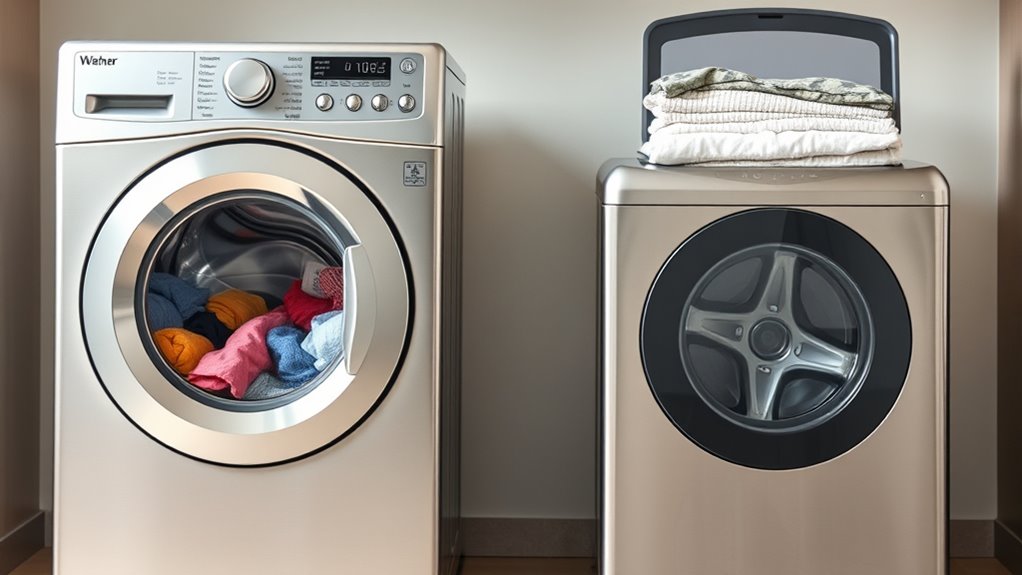

Front-load washers need regular cleaning of the door seals and gaskets to prevent mold, as moisture tends to gather there, and it’s recommended to run maintenance cycles with vinegar. Top-load machines are easier to access and maintain, with fewer mold issues, but require regular inspection of the agitator and drum. Both types benefit from proper detergent use and cycle maintenance to keep them running smoothly—continue exploring to learn more about their cleaning and upkeep.
Key Takeaways
- Front-load washers require regular drum cleaning with vinegar or specialized cleaner to prevent mold and mildew buildup.
- Top-load machines are easier to access for maintenance tasks like inspecting gaskets and filters.
- Front-load models need consistent gasket drying to avoid mold, while top-loads are less prone due to design.
- Both types benefit from periodic cleaning of water seals and filters to maintain efficiency and prevent leaks.
- Front-load washers generally demand more careful maintenance but offer easier access for thorough cleaning.
How Each Machine Type Cleans Clothes
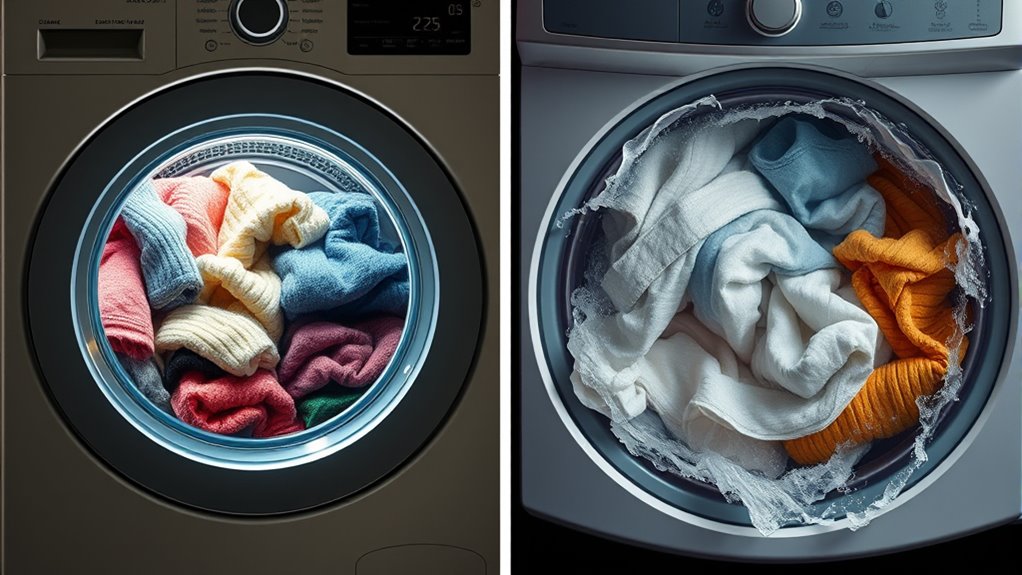
While both front-load and top-load washing machines effectively clean clothes, they do so through different mechanisms. Top-load machines typically use an agitator, which rotates to move clothes around in the washing drum, relying heavily on agitator design to guarantee thorough cleaning. The agitator’s shape and size influence how well it agitates clothes and distributes detergent. In contrast, front-load machines use a tumbling action, where the washing drum’s shape allows clothes to lift and fall repeatedly, mimicking hand washing. This design creates a gentle yet effective clean, with less agitation involved. The washing drum shape in front-load models promotes better water circulation and reduces wear on fabrics. Additionally, energy-efficient designs in modern machines contribute to lower water and power consumption, supporting sustainable laundry practices. These innovations often incorporate advanced drum technology that enhances cleaning efficiency while protecting fabrics. Furthermore, water circulation plays a crucial role in how effectively each machine type cleans, impacting overall performance. The wash cycle duration and intensity also vary between types, affecting cleaning results and time efficiency. Overall, these design differences result in distinct cleaning methods and impacts on fabric care. Proper maintenance of drum lubrication is essential to ensure the longevity and optimal functioning of each machine type.
Water and Energy Efficiency Comparison

When it comes to water and energy consumption, front-load washing machines generally outperform top-load models by using less resources. They require considerably less water per load, reducing water consumption without sacrificing cleaning performance. Additionally, front-load washers are more energy-efficient because they spin faster, extracting more water from clothes and decreasing drying time. This efficiency aligns with the principles of reliable backup power, ensuring consistent operation even during power outages. This results in notable energy savings over time. In contrast, top-load washers typically use more water and energy, especially during the fill and wash cycles. Innovative appliance design continues to improve efficiency standards, making front-load machines an increasingly popular choice. Many modern models incorporate water-saving features that further enhance their efficiency. Furthermore, advances in energy-efficient motors contribute to lower electricity use, providing additional savings. The incorporation of smart technology also allows users to monitor and optimize their washing cycles to maximize efficiency. If you’re looking to cut utility bills and minimize environmental impact, choosing a front-load machine offers clear advantages. Their efficient design helps you save water and energy while still delivering thorough cleaning, making them a smarter choice for eco-conscious households.
Load Capacity and Suitability for Different Laundry Types

Your laundry needs depend heavily on the capacity of your machine and the types of loads you typically wash. Larger loads or bulky items require more space, making capacity a key factor in choosing between front-load and top-load models. Consider how flexible the machine is for different laundry types to find the best fit for your routine. Additionally, understanding water efficiency and maintenance practices can help you better evaluate appliance features related to water efficiency and cycle options. Properly maintaining your washing machine can also prolong its lifespan and improve cleaning performance over time. Regularly inspecting water seals and filters can prevent leaks and ensure optimal operation, especially in water-sensitive environments. Incorporating eco-friendly water-saving features can further reduce utility costs and environmental impact.
Capacity Variations for Loads
Understanding the capacity of a washing machine is essential because it directly affects how much laundry you can handle in a single load. The washer drum size varies, impacting load size and overall efficiency. Larger capacities are ideal for families or bulky items, while smaller ones suit individuals or limited spaces. Keep in mind:
- Larger washer drums accommodate bigger or multiple loads at once.
- Load size influences cleaning effectiveness and cycle duration.
- Capacity differences determine if your machine can handle items like comforters or heavy-duty laundry. Selecting a machine with an appropriate load capacity can improve energy consumption and washing performance. Additionally, considering the top vs. front load designs can influence how easily you load and unload laundry, as well as maintenance requirements. Recognizing the energetic alignment of your appliances can further enhance their efficiency and lifespan. Properly matching your machine capacity to your laundry needs ensures optimal performance and longevity.
Choosing the right capacity ensures your washer can manage your typical laundry without overloading or underusing. Be mindful of the washer drum size when selecting a machine, as it directly impacts how much laundry you can wash per cycle and the suitability for different load types.
Ideal Laundry Types
Choosing the right load capacity isn’t just about size; it determines how well your washing machine handles different types of laundry. Smaller loads, like delicates or a few clothes, benefit from machines with gentle cycle options that prioritize fabric care. Larger loads, such as bedding or heavy-duty workwear, require a machine with a bigger capacity to avoid overloading, which can compromise cleaning effectiveness. Front-load washers often excel at handling delicate fabric types because they offer better control over wash cycles, reducing wear and tear. Top-load models, on the other hand, are suitable for bulkier laundry, providing quick access and efficient cleaning for heavy or bulky load types. Matching your laundry types with the right load capacity ensures proper fabric care and thorough cleaning. Additionally, understanding the piercing healing process can help prevent skin irritation if you have body piercings that need washing or cleaning during your laundry routine. Proper load management also contributes to the efficiency of the washing machine, helping to save energy and extend the appliance’s lifespan. Optimizing load size and cycle selection can also help prevent overloading, which reduces strain on the motor and prolongs the machine’s life. Selecting a machine with features like water efficiency can further optimize your laundry routine and reduce utility costs. Considering the market options available can help you find a machine that meets your specific laundry needs and budget.
Load Flexibility and Usage
Load capacity plays a crucial role in determining how effectively your washing machine handles different laundry loads. A larger washer drum offers greater load flexibility, letting you wash bulky items or bigger loads in one go. This feature is especially useful for families or those with heavy laundry needs. Top-load washers typically excel in load flexibility because you can add or remove items easily during a cycle. Front-load washers, however, often have a more efficient washer drum design that handles delicate and mixed loads smoothly. Additionally, understanding the vetted features for optimal performance can help you choose the best option for your needs.
Maintenance and Cleaning of the Drum and Gasket
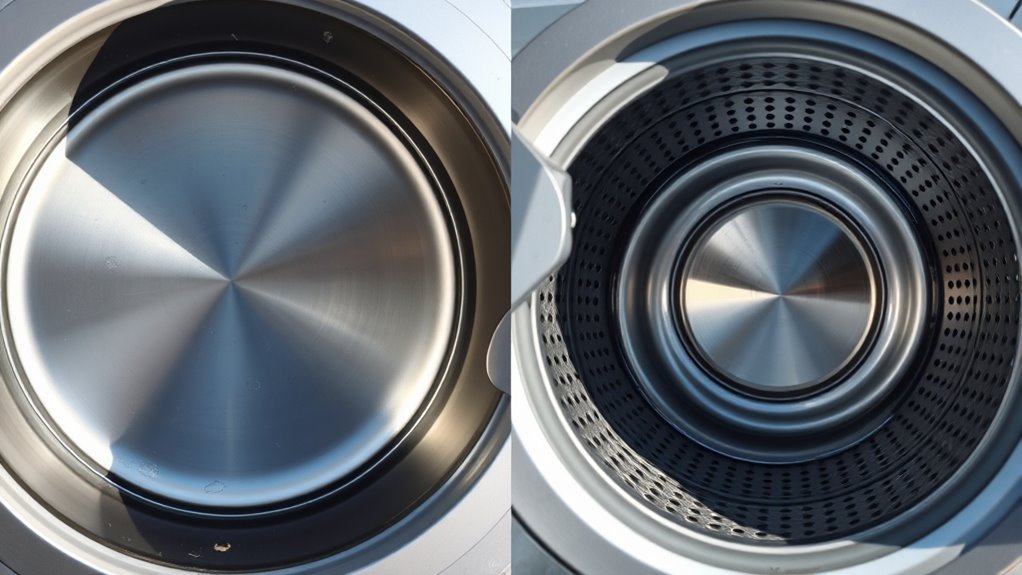
Regular maintenance and cleaning of the drum and gasket are essential to keep your washing machine running efficiently and prevent unpleasant odors. For drum cleaning, run an empty cycle with hot water and a cup of vinegar or specialized cleaner to remove buildup and residue. Pay special attention to the drum’s interior surface, ensuring no debris remains. Gasket maintenance is equally important; regularly wipe the rubber door seal with a damp cloth to remove detergent, lint, and dirt. Check for mold or mildew around the gasket, and clean it thoroughly with a mixture of water and mild detergent. Keep the gasket dry after each wash to prevent mold growth. Proper drum cleaning and gasket maintenance prolong your machine’s lifespan and ensure supreme cleaning performance.
Detergent Usage and Washing Cycle Options
Selecting the right detergent and cycle settings is crucial for ideal cleaning and machine performance. For front-load and top-load washers, choosing detergent with high detergent efficiency ensures your clothes get cleaned thoroughly without excess suds or residue. Cycle customization lets you tailor wash times, water levels, and agitation to suit your load, protecting delicate fabrics and optimizing cleaning power.
- Use HE detergents for front-load washers to prevent mold and soap buildup
- Opt for quick wash cycles for lightly soiled clothes to save time and energy
- Adjust water levels and cycle intensity based on fabric type and soil level
Common Repairs and Longevity Factors
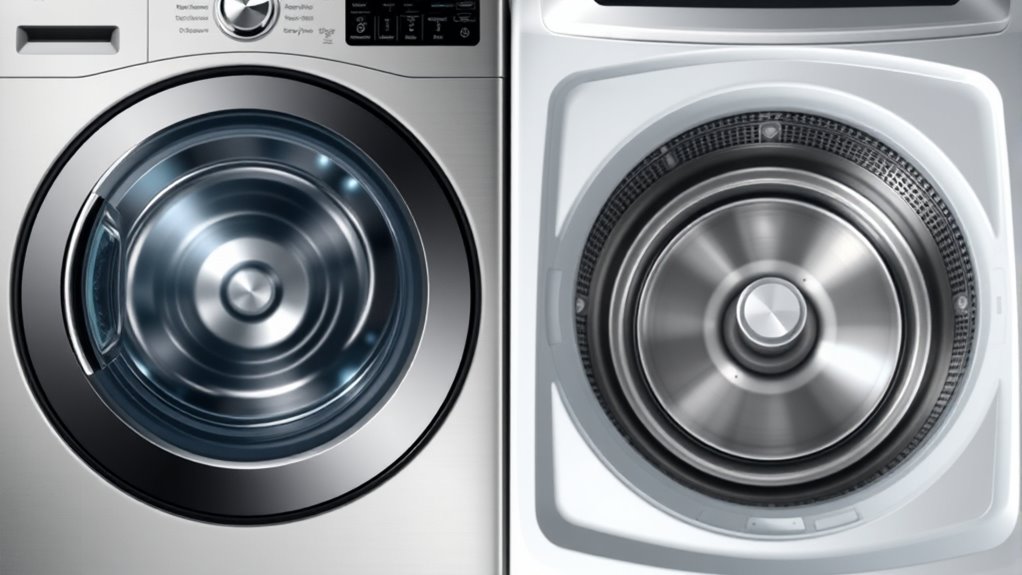
Proper maintenance and understanding common issues can considerably extend the life of your washing machine. One key factor is the drum material, which affects durability and repair needs. For example, stainless steel drums are more resistant to cracking and corrosion, reducing repair costs over time. In contrast, plastic drums may crack or warp, leading to more frequent repairs. Common repairs include replacing belts, pumps, or seals, and these can vary in cost depending on the machine’s model and drum material. Regularly inspecting and cleaning components can prevent breakdowns. Addressing issues early helps avoid costly repairs and prolongs your washer’s lifespan. Knowing what to expect and maintaining your machine properly guarantees you get the most out of your investment.
Ease of Use and Accessibility
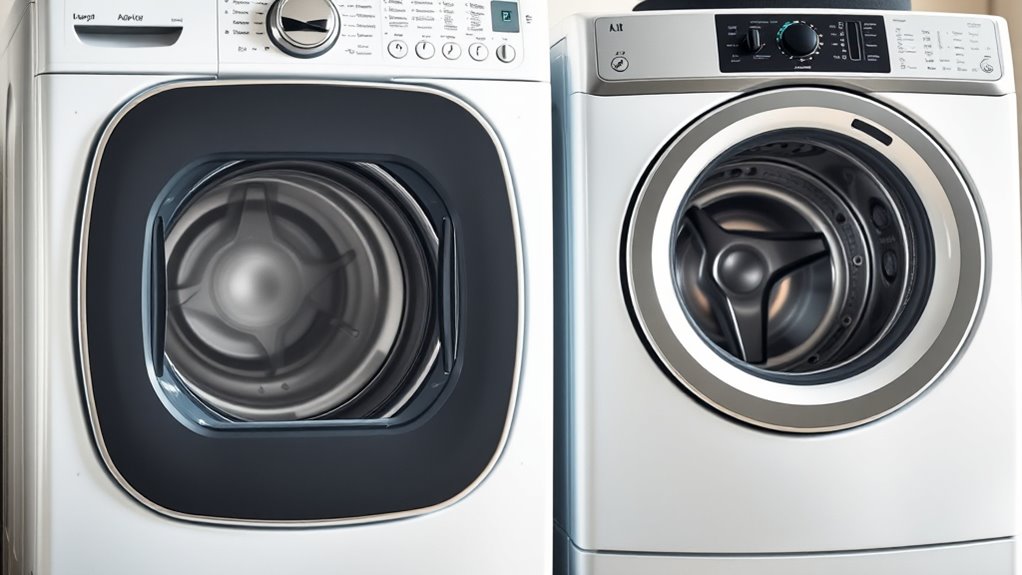
When selecting between front-load and top-load washers, ease of use and accessibility play a big role. You’ll want controls that are simple to see and reach, along with loading and unloading that feels comfortable. Pay attention to button and drawer placement to make sure the machine fits your height and mobility needs.
Accessibility of Controls
Access to the controls is a key factor in how easy a washing machine is to use, and it can vary considerably between front-load and top-load models. Front-load machines often feature digital controls that can be more complex but offer precise settings. Top-load models typically rely on manual operation with knobs and buttons, making them straightforward for quick adjustments. Your choice depends on your preferences for accessibility and ease of use. Consider these points:
- Digital controls in front-load machines allow for program customization but may be harder to navigate.
- Top-load machines offer simple, manual operation, ideal for users who prefer tactile controls.
- Accessibility issues may arise if controls are placed too high or too low, affecting ease of use.
Choosing a model that suits your physical needs and comfort is essential for suitable usability.
Loading and Unloading Ease
Loading and unloading clothes is often the most frequent and physically demanding task with a washing machine. With a top-load washer, you simply lift the lid and reach into the large washer drum, making it easy to load bulky items or heavy loads. Unloading is straightforward since you can see all your laundry at once. In contrast, front-load washers require you to bend down to access the washer drum, which might be uncomfortable if you have mobility issues. The detergent drawer on front-load machines is usually located at the top, making it easy to fill without opening the door. Overall, top-load washers tend to be more accessible for loading and unloading, while front-load models might require more effort, especially for those with limited mobility or back problems.
Button and Drawer Placement
Button and drawer placement considerably impacts the ease of operating a washing machine. Your comfort depends on thoughtful design choices like detergent drawer design and button placement ergonomics. A well-placed detergent drawer allows quick access, reducing spills and hassle. Similarly, intuitive button placement ensures you don’t have to bend or stretch awkwardly, making operation smoother.
- Look for a detergent drawer that’s easy to open and refill.
- Prioritize machines with clearly labeled, logically arranged buttons.
- Consider the height of controls to minimize strain during use.
Choosing a machine with ideal button and drawer placement can make laundry less stressful and more efficient. Pay attention to how accessible and user-friendly these components are, especially if you have mobility concerns or limited strength.
Handling of Special Fabrics and Stains
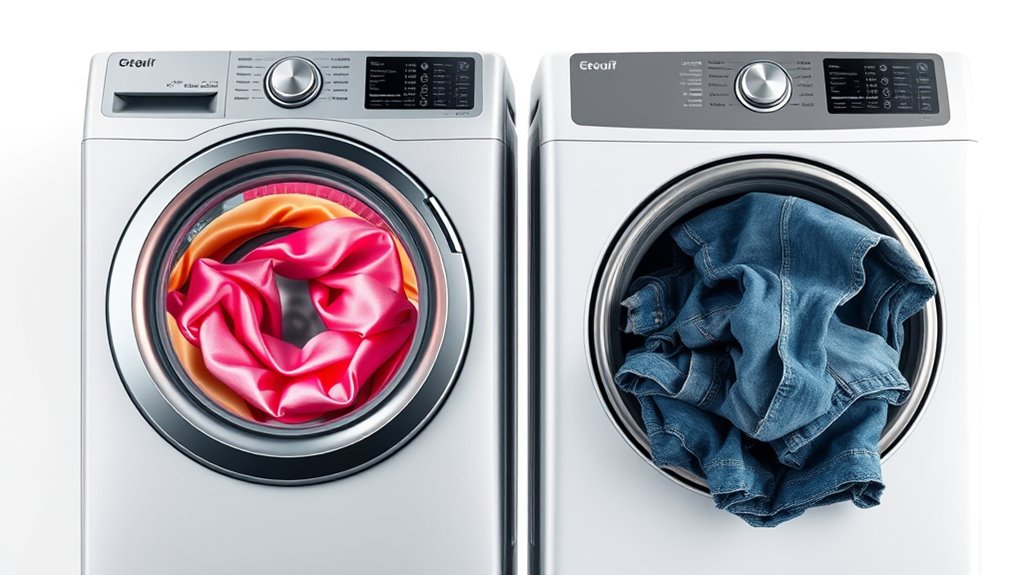
When it comes to cleaning delicate fabrics or stubborn stains, understanding how your washing machine handles these special cases is essential. Front-load machines often have gentle cycles for delicate fabrics and better stain removal techniques, thanks to their tumbling action. Top-load washers usually offer powerful agitator cycles that can handle tougher stains but might be rougher on delicate items. To protect sensitive fabrics, always use fabric softeners designed for delicate textiles and select appropriate cycles. For stubborn stains, pre-treat with stain removers before washing. Here’s a quick comparison:
| Feature | Front-Load | Top-Load | Best Use |
|---|---|---|---|
| Gentle cycle | Yes | Yes | Delicate fabrics |
| Stain removal effectiveness | Excellent with pre-treatment | Good with agitator | Heavy stains |
| Fabric softener distribution | Evenly dispersed | Less even | Softening delicate fabrics |
| Aggressiveness | Gentle | More aggressive | Tough stains |
| Risk of damage | Lower | Slightly higher | Delicate fabrics |
Potential for Mold and Mildew Growth
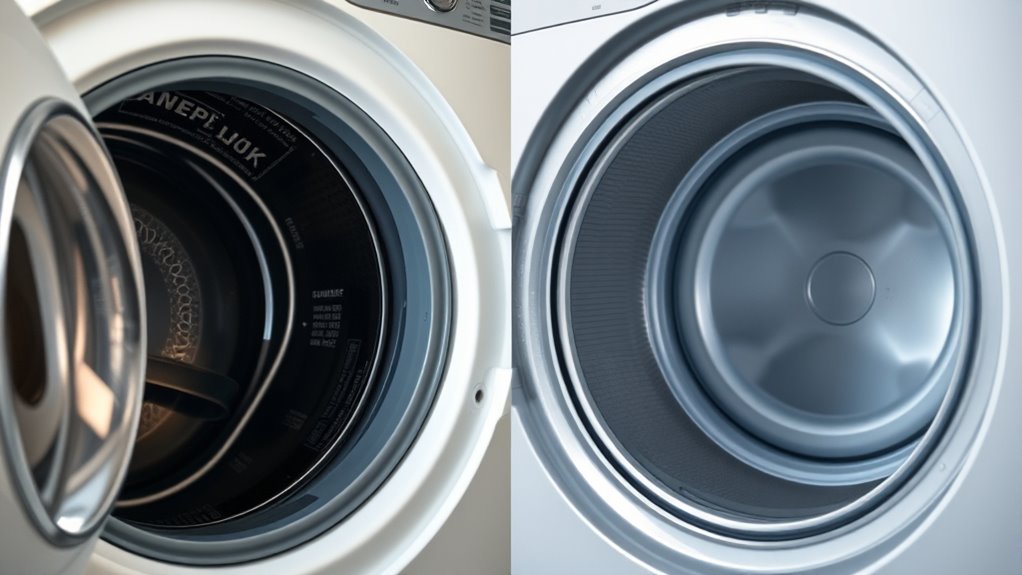
Although both front-load and top-load washing machines can develop mold and mildew if not properly maintained, front-load models are generally more susceptible due to their design. Their door seals and damp interiors create ideal environments for mold growth. To prevent mold and guarantee mildew control, you need to focus on mold prevention techniques.
- Keep the door slightly open after each wash to allow airflow.
- Regularly clean door seals and gaskets with vinegar or mildew remover.
- Use high-efficiency detergent sparingly to prevent residue buildup.
Cost Considerations and Long-term Savings
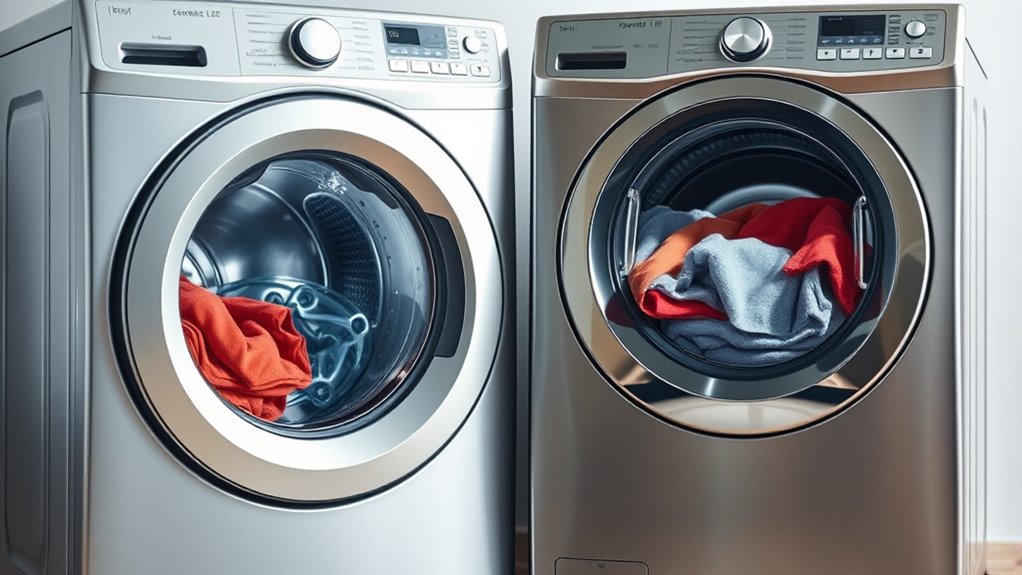
While front-load washing machines often have higher upfront costs, they can save you money over time through lower water and energy usage. These cost savings contribute to a better investment return, making them more economical in the long run. Although top-load washers typically cost less initially, they tend to use more water and electricity, increasing ongoing expenses. Over years of use, the efficiency of front-load models can offset their higher purchase price by reducing utility bills. Additionally, front-load machines generally last longer and require less maintenance, further boosting your investment return. When evaluating costs, consider both initial purchase price and long-term savings. Choosing a front-load washer might require a bigger initial investment but can pay off through reduced utility costs and durability.
Frequently Asked Questions
How Do Washing Machines Differ in Cycle Customization Options?
You’ll find that front-load washing machines often offer more advanced cycle customization options, allowing you to adjust wash cycle settings for different fabrics and stain levels. Top-loaders usually have simpler wash cycle options, but some models still let you tweak water levels and wash times. Overall, front-load machines give you greater control over cycle customization, helping you optimize cleaning performance based on your laundry needs.
Are Top-Load Washers Better for Heavy-Duty or Delicate Clothes?
You’ll find that top-load washers excel at heavy-duty loads, with 65% of users favoring them for bulky items, thanks to their faster cycle times. They’re better for heavy-duty fabric care, allowing vigorous agitation, but may be rougher on delicate clothes. For delicate fabrics, a front-load washer offers gentler handling, and their efficient detergent use guarantees thorough cleaning without damage. Choose based on your laundry needs and fabric types.
Which Type of Washer Has a Longer Lifespan?
You’ll find that front-load washers generally have a longer lifespan because of durability factors like their sturdy construction and gentler washing action. They often experience lower repair costs over time due to fewer mechanical parts that wear out. Top-load washers may be cheaper initially, but they tend to require repairs sooner. So, if longevity matters, a front-load washer is usually the smarter, more durable choice.
Can Front-Load Washers Handle Larger or Bulky Items Effectively?
Front-load washers can truly handle larger or bulky items with ease, making you feel like a laundry superhero. Their generous loading capacity means you can toss in bulky comforters, blankets, or oversized towels without a second thought. Unlike top-load machines, they’re designed to accommodate these big items effectively, ensuring thorough cleaning and gentle handling. So, yes, your front-loader is perfect for tackling those massive, bulky laundry loads effortlessly.
Do Different Models Have Noise Level Variations During Operation?
Yes, different models have varying noise levels during operation. You’ll notice some washers are quieter thanks to advanced vibration reduction features, making them ideal for homes where noise matters. When shopping, look for models with sound insulation or vibration control technology to minimize noise during cycles. This way, you get a cleaner wash without disturbing your daily activities or rest, especially if your laundry area is near living spaces.
Conclusion
Choosing between front-load and top-load washers is like selecting the right tool for a job—you’ll want one that fits your needs perfectly. Consider each machine’s cleaning power, efficiency, and maintenance needs to find your best match. Remember, the right washer can be the steady heartbeat of your laundry routine, making chores smoother and more efficient. Make an informed choice, and your clothes—and peace of mind—will thank you for it.