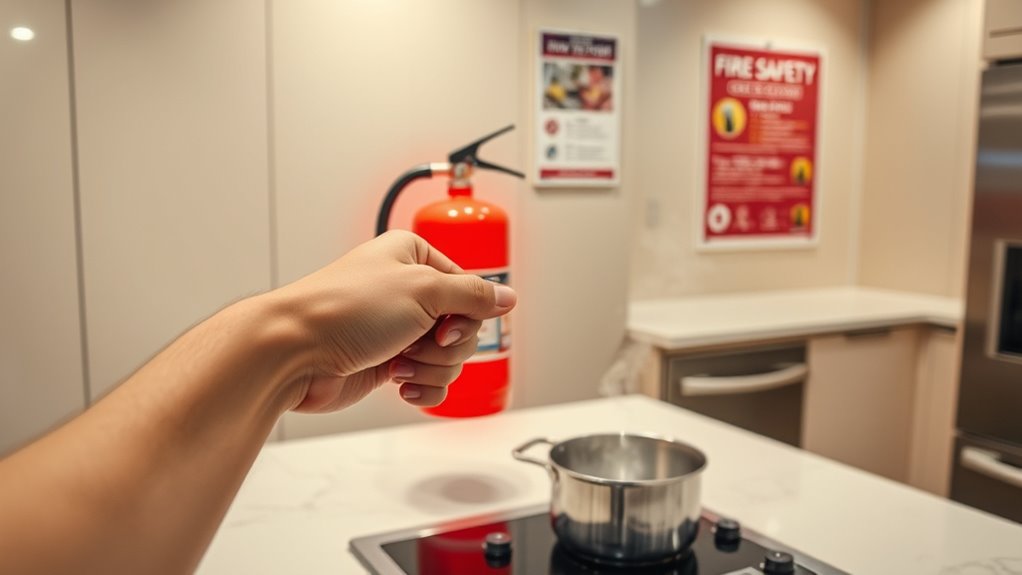

To enhance kitchen fire safety, stay close while cooking and monitor for smoke or shimmering oil. In case of a fire, remember the PASS technique: Pull the pin, Aim at the base, Squeeze the handle, and Sweep side to side. For grease fires, never use water—smother with a lid instead. Keep a fire extinguisher handy and make certain everyone knows how to use it. Discover more essential tips to keep your kitchen safe from fires.
Key Takeaways
- Always monitor cooking closely to prevent unattended food from igniting and causing a fire.
- Use the PASS technique: Pull the pin, Aim at the flames’ base, Squeeze the handle, and Sweep side to side.
- Never pour water on a grease fire; use a metal lid or baking sheet to smother it.
- Keep a fire extinguisher rated for kitchen use nearby and ensure all household members know how to use it.
- Regularly check smoke detectors in the kitchen and replace batteries as needed for safety.
Have you ever thought about how quickly a kitchen fire can start? One moment you’re preparing a delicious meal, and the next, a small flame can erupt, turning your cozy cooking space into a dangerous situation. Most kitchen fires occur due to grease buildup or food left unattended on the stove. That’s why preventing grease fires is vital for every kitchen. You can take several steps to minimize risks and keep your home safe.
Kitchen fires can ignite in an instant, often from unattended cooking or grease buildup. Stay vigilant to keep your space safe.
First, always keep an eye on what you’re cooking. It’s easy to get distracted by a phone call or a TV show, but a few moments of inattention can lead to disaster. If you notice smoke rising or the oil in the pan starting to shimmer, it’s time to turn down the heat or move the pan off the burner. Additionally, make a habit of cleaning up any grease spills right away. A buildup can ignite if exposed to high temperatures.
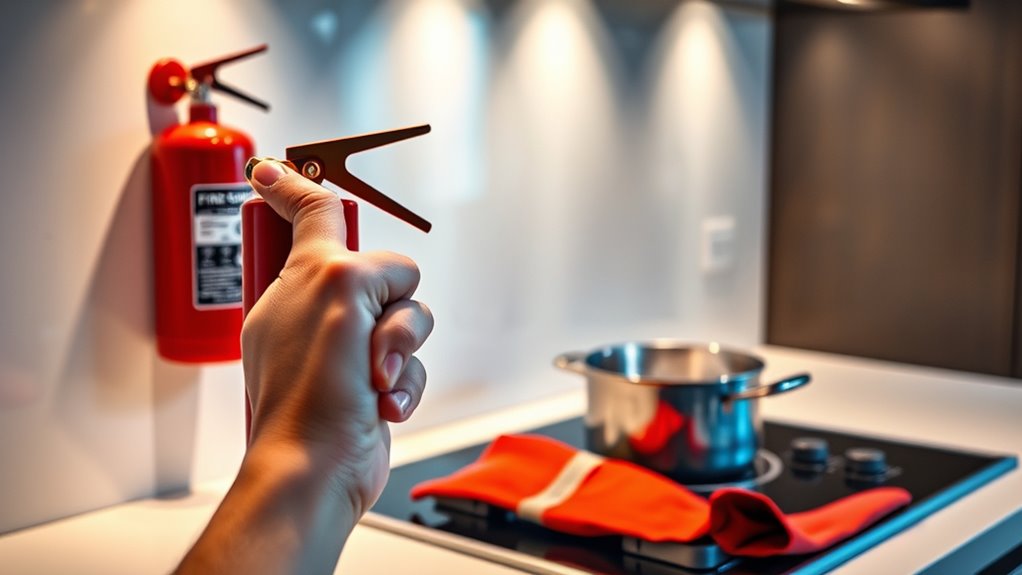
Knowing how to use a fire extinguisher can make a considerable difference if a fire does break out. Familiarize yourself with the PASS technique: Pull, Aim, Squeeze, and Sweep. Pull the pin at the top of the extinguisher, aim the nozzle at the base of the fire, squeeze the handle to release the agent, and sweep the nozzle side to side. It’s important to remember that you should never use water on a grease fire; it can cause the flames to spread. Instead, if a grease fire starts, try to smother it with a metal lid or a baking sheet. If the fire is too large, evacuate and call 911 immediately.
Another smart tip for preventing grease fires is to keep a proper fire extinguisher nearby. Make sure you have an extinguisher rated for kitchen use, and check it regularly to verify it’s in good condition. You should also educate everyone in your household on how to use it. Having a plan can save lives and property. Additionally, consider integrating smart-home solutions that can alert you to potential hazards in your kitchen.
In addition to these practical tips, installing a smoke detector in your kitchen can alert you to fires before they escalate. Test your smoke alarms monthly and replace batteries as needed. With a proactive approach—keeping your cooking area clean, knowing how to use a fire extinguisher, and staying alert—you can greatly reduce the risk of kitchen fires. Keeping your kitchen safe is an essential part of enjoying your time cooking and entertaining.
Frequently Asked Questions
What Types of Fires Can a Fire Extinguisher Put Out?
A fire extinguisher can put out different types of fires based on fire classification. Class A extinguishers handle ordinary combustibles like wood and paper, while Class B targets flammable liquids such as gasoline and oil. Class C extinguishers are for electrical fires, and Class K is designed for kitchen fires involving cooking oils and fats. Knowing the fire extinguisher types helps you choose the right one for the specific fire you’re facing.
How Often Should I Check My Fire Extinguisher?
You should check your fire extinguisher at least once a month. During your inspection, look for any signs of damage, and make sure the pressure gauge is in the green zone. Follow maintenance schedules recommended by the manufacturer for more thorough inspections. If you’ve used it or the gauge shows low pressure, get it serviced immediately. Keeping up with these inspection procedures guarantees your extinguisher’s ready when you need it most.
Can I Use Water to Extinguish a Grease Fire?
No, you shouldn’t use water to extinguish a grease fire. It can cause the flames to spread, making the situation worse. Instead, grab a fire extinguisher designed for grease fires, like a Class K or Class B type. Always prioritize water safety by keeping a fire extinguisher nearby and knowing how to use it. Remember, acting quickly can prevent a small fire from turning into a disaster. Stay safe!
What Should I Do After Using a Fire Extinguisher?
After using a fire extinguisher, imagine the lingering scent of smoke and the adrenaline still coursing through your veins. First, inspect the area for any hidden flames or embers. Then, check your extinguisher; it might need maintenance or refilling. Don’t forget to replace it in its designated spot, ensuring it’s ready for the next emergency. Regular post-use inspections keep you safe and prepared, so stay vigilant and maintain your equipment!
Are Fire Blankets Effective for Kitchen Fires?
Yes, fire blankets are effective for kitchen fires, especially for small flames or when a person’s clothing catches fire. Their effectiveness lies in smothering the fire by cutting off oxygen. However, for larger fires, it’s essential to prioritize safety and evacuate. Remember, while fire blankets aid in kitchen fire prevention, they shouldn’t replace other safety measures like knowing how to use a fire extinguisher and keeping your kitchen free of hazards.
Conclusion
In summary, staying safe in the kitchen is all about preparation and awareness. Remember, if a small grease fire starts, don’t panic—turn off the heat and cover the pan with a lid. For instance, imagine a family dinner where a pot of oil catches fire. By quickly using a fire extinguisher, they can prevent a disaster. Always keep your extinguisher accessible and practice using it, so you’re ready when it counts. Stay safe and cook smart!