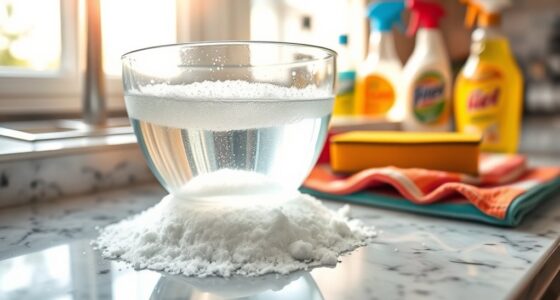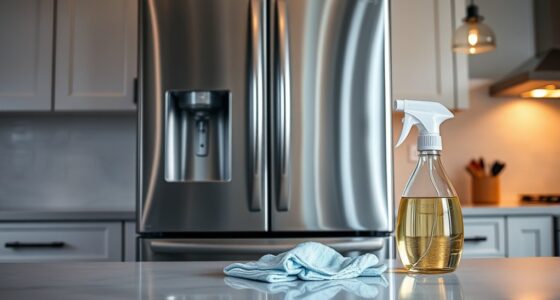
To properly sanitize your kitchen sponges and cutting boards, start by rinsing them with hot water to remove debris, then scrub with dish soap. Disinfect with natural solutions like white vinegar or lemon juice, letting them sit for a few minutes before rinsing thoroughly. For deep cleaning, soak items in a bleach solution for at least five minutes, then dry completely in a well-ventilated area. Keep your tools safe and clean by following these tips consistently.

Get kitchen gear delivered free — and shop member deals
- Fast, free delivery on millions of items
- Access to Prime Big Deal Days deals on October 6–7
- Prime Video, Amazon Music and more included
Key Takeaways
- Rinse sponges and cutting boards with hot water and dish soap, scrubbing all surfaces thoroughly.
- Soak sponges in white vinegar or squeeze lemon juice onto surfaces to naturally disinfect.
- Use a bleach solution (1 tablespoon per gallon of water) to sanitize by soaking for at least 5 minutes.
- Air dry items completely in a well-ventilated area to prevent mold and bacterial growth.
- Replace sponges every few weeks and opt for plastic cutting boards for easier sanitation.
Understanding the Risks of Unclean Sponges and Cutting Boards
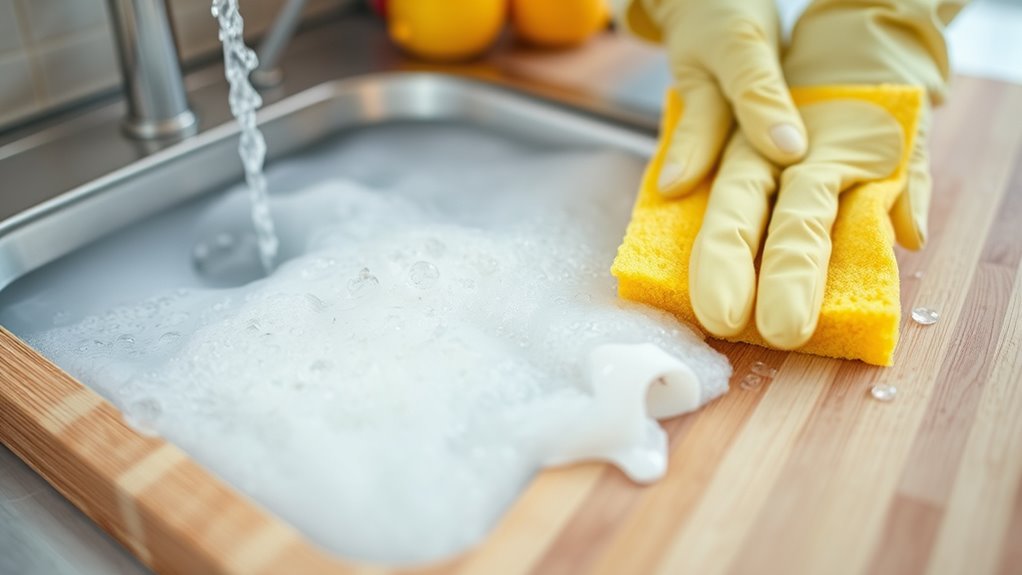
Because unclean sponges and cutting boards can harbor harmful bacteria, using them without proper sanitation poses serious health risks. These surfaces are prime sources of cross contamination hazards, which can transfer bacteria from raw meats or produce to other foods. Bacterial growth prevention becomes essential to keep your kitchen safe. When you neglect to clean your sponges and cutting boards, bacteria like Salmonella and E. coli multiply rapidly, increasing the chance of foodborne illnesses. Cross contamination hazards aren’t always visible, so assuming cleanliness is risky. Proper sanitation eliminates bacteria and halts their spread. Regular cleaning with effective methods significantly reduces bacterial load and kitchen hygiene. Incorporating proper cleaning techniques can further enhance your food safety practices. Understanding these risks emphasizes the importance of regular, thorough cleaning. Using appropriate sanitizing solutions helps ensure that bacteria are completely eradicated from your kitchen tools, providing an extra layer of protection. Additionally, proper drying methods can help prevent bacterial regrowth and moisture-related issues. By doing so, you minimize bacterial growth and protect yourself and your loved ones from potential health issues associated with unclean kitchen tools.
Basic Techniques for Daily Sanitizing
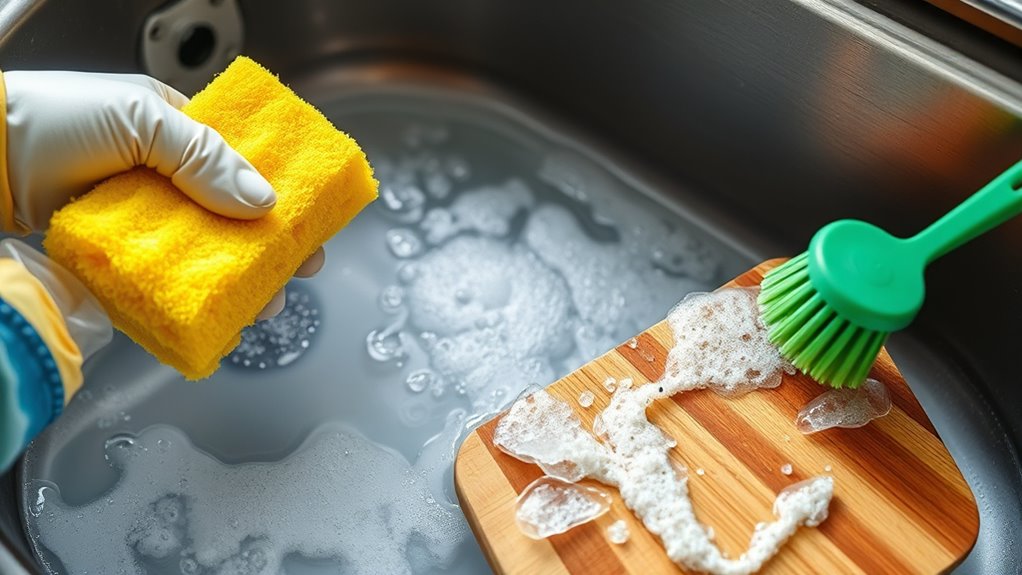
Each day, start by rinsing your sponges and cutting boards with hot water to remove surface debris. Follow up by washing them thoroughly with dish soap to break down grease and kill germs. These simple steps help keep your kitchen tools clean and safe for regular use. To further ensure sanitation, consider filter maintenance and replace or clean sponges regularly to prevent bacteria buildup. Additionally, using proper cleaning techniques can enhance the effectiveness of your sanitizing routine. Incorporating regular disinfection practices can also significantly reduce harmful bacteria on your kitchen surfaces. Furthermore, selecting natural cleaning agents can provide an eco-friendly alternative to chemical disinfectants.
Regular Hot Water Rinse
A simple yet effective way to keep your kitchen tools clean is by rinsing sponges and cutting boards with hot water after each use. Hot water helps remove food particles and reduces microbial buildup, lowering the risk of bacteria spreading. This daily rinse prevents dirt and germs from accumulating, which can contribute to cross contamination risks. Make sure to thoroughly soak and scrub the surface, especially in crevices and textured areas, to dislodge any hidden bacteria. Using hot water alone isn’t enough to sterilize, but it appreciably decreases microbial presence, making your tools safer to use. Incorporating proper kitchen sanitation techniques like this into your routine promotes a cleaner, healthier kitchen environment without the need for harsh chemicals. Additionally, employing proper cleaning tools such as brushes or scrub sponges can enhance the effectiveness of your daily sanitation efforts. Regularly replacing or sanitizing your sponges and cutting boards also helps maintain their hygienic condition, further reducing potential bacteria buildup. Incorporating effective sanitation practices can help prevent the transfer of germs and ensure a safer cooking space. To further improve sanitation, consider sanitizing with vinegar or bleach periodically to eliminate stubborn bacteria and mold.
Use of Dish Soap
After rinsing your sponges and cutting boards with hot water, adding a small amount of dish soap can further enhance cleanliness. Dish soap helps break down grease and bacteria, promoting sponge safety and reducing contamination risks. To use it effectively, scrub surfaces thoroughly with soap, paying attention to crevices. Here’s a quick guide:
| Step | Action | Tips |
|---|---|---|
| Apply soap | Use a small amount on sponge or board | Avoid excess; rinse well |
| Scrub thoroughly | Focus on all sides and edges | Use a brush for stubborn spots |
| Rinse well | Remove soap residue | Use hot water |
| Air dry | Let it dry completely | Prevents mold growth |
| Repeat daily | Incorporate into routine | Ensures ongoing sponge safety |
Using Hot Water and Soap Effectively
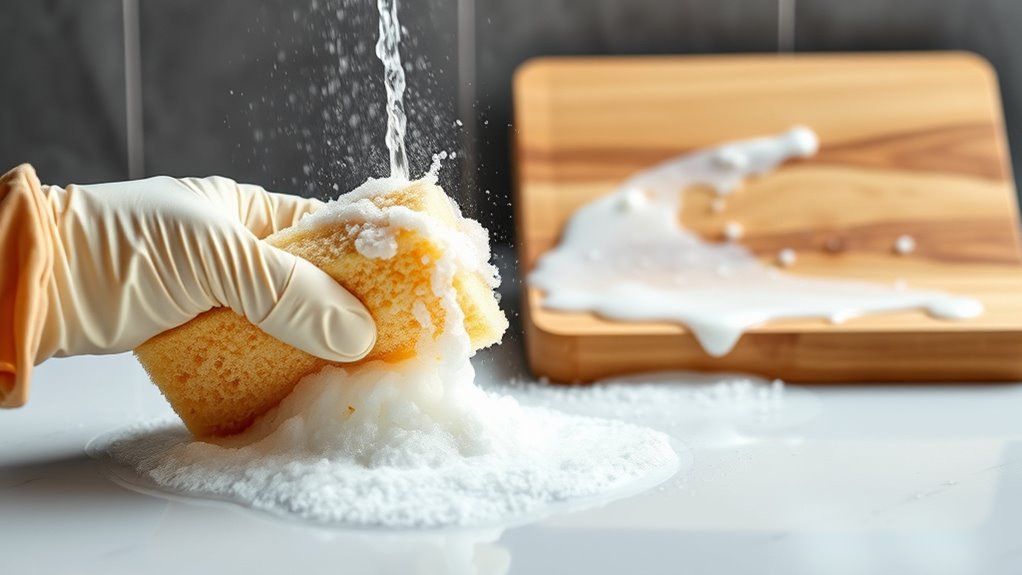
Make certain to use fresh, hot water each time you clean your sponge or cutting board. Apply enough soap to create a rich lather, then scrub thoroughly to remove germs and debris. Proper technique ensures your sanitizing efforts are effective and safe. Utilizing appropriate cleaning methods can further reduce the risk of cross-contamination and maintain a hygienic kitchen environment.
Use Fresh Water
Using fresh water is vital for effectively sanitizing your kitchen tools. Clean water helps remove loosened debris and guarantees that soap and sanitizer residues don’t linger. When rinsing your sponge or cutting board, pay attention to water quality; filtered or tap water free of contaminants is best. The sponge material also influences how thoroughly you can rinse out bacteria and soap. For instance, synthetic sponges tend to rinse more easily than natural ones, which may trap more particles. Always use plenty of fresh water to thoroughly wash away soap, food particles, and bacteria. Proper rinsing prevents cross-contamination and maintains your tools’ cleanliness. Remember, fresh water is a simple but vital step to guarantee your sanitizing efforts are effective. Additionally, using quality water sources ensures that no harmful contaminants are reintroduced during the rinsing process. Incorporating water purification methods can further enhance the safety of your rinsing process, especially in areas with questionable tap water quality. Regularly replacing your water supply or using filtered water can help maintain a contaminant-free environment in your kitchen. To further ensure the safety of your cleaning process, consider testing your water quality periodically with water testing kits.
Apply Sufficient Soap
Applying enough soap is essential for breaking down grease, food residues, and bacteria on your kitchen tools. Use a detergent compatible with your sponge or cutting board to guarantee effective cleaning without damaging the material. A generous amount of soap creates a thorough lather, which helps lift dirt and pathogens more efficiently. Remember, using too little soap can leave residues behind, reducing cleanliness and potentially shortening your sponge’s lifespan. Proper soap application improves sanitation and prolongs the usefulness of your cleaning tools. Always follow the manufacturer’s instructions for soap use, especially if you’re working with delicate or specialized surfaces. Additionally, understanding essential oils for respiratory health can help you recognize the importance of thorough cleaning to prevent plumbing issues. Regularly replacing sponges and cutting boards is also vital since bacterial buildup can occur even with proper cleaning. By applying sufficient soap and hot water, you set a solid foundation for sanitizing your sponges and cutting boards effectively.
Scrub Thoroughly
To make certain your sponge or cutting board is thoroughly cleaned, you need to scrub the surface effectively with hot water and soap. Use a brush or scrubber to target stubborn stains that may hide bacteria or residue. Apply enough pressure to loosen grime without damaging the surface. Scrubbing helps remove food particles and dirt that soap alone might miss. This step is essential for odor removal, especially if your sponge or board develops a musty smell. Focus on all areas, including crevices and textured surfaces, to ensure a deep clean. Proper scrubbing breaks down stubborn stains and reduces bacteria, making your sanitizing process more effective. Utilizing appropriate cleaning tools can improve the effectiveness of your scrubbing routine. Regularly inspect your utensils to identify any areas that require more thorough cleaning. Once done, rinse thoroughly with hot water before moving on to the next step.
Disinfecting With Vinegar or Lemon Juice
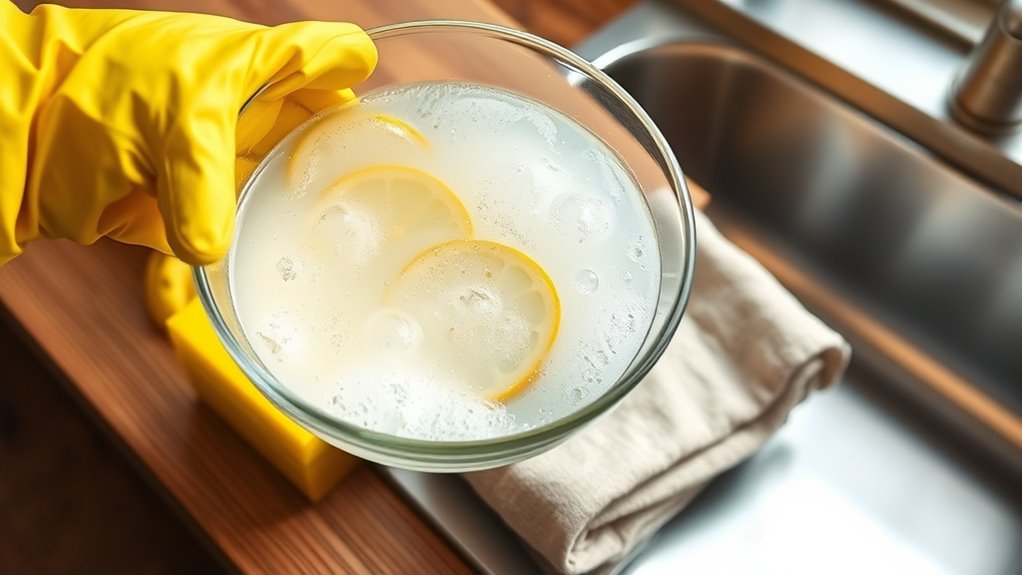
Vinegar and lemon juice are natural disinfectants that can effectively reduce bacteria on kitchen sponges and cutting boards. Using vinegar cleaning or lemon disinfecting is simple and eco-friendly. Here’s how to do it:
- Soak your sponge or cutting board in white vinegar for 5-10 minutes.
- For lemon disinfecting, squeeze fresh lemon juice over the surface or sponge.
- Let it sit for a few minutes to allow the acids to kill bacteria.
- Rinse thoroughly with hot water and dry completely.
This method leverages the natural antibacterial properties of vinegar and lemon juice, making your cleaning routine safer and more sustainable. Regular use helps keep germs at bay without harsh chemicals.
Deep Cleaning With Bleach Solutions
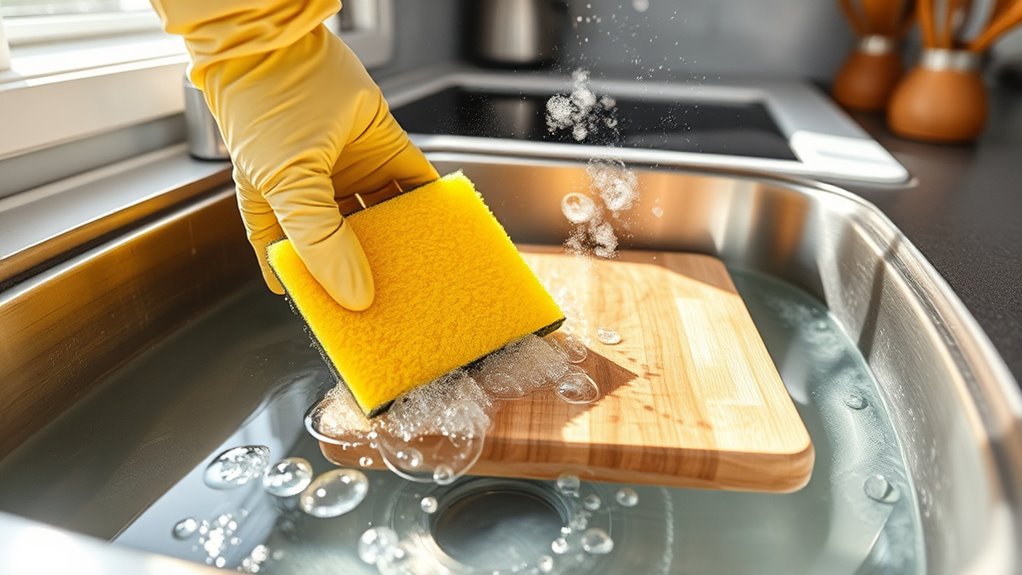
While natural disinfectants like vinegar and lemon juice are effective for regular maintenance, deep cleaning with a bleach solution delivers a stronger, more thorough sanitization. To do this safely, use a bleach concentration of about 1 tablespoon of unscented household bleach per gallon of water. Submerge your sponges or cutting boards fully, making certain they are saturated with the solution. Maintain contact for at least 5 minutes to effectively kill bacteria and viruses. Afterward, rinse thoroughly with clean water to remove any residual bleach. Proper contact time is vital; rushing this step can reduce effectiveness. This method ensures deep sanitation, especially after extensive use or when dealing with visible grime, helping you keep your kitchen tools safe and hygienic.
Proper Drying and Storage Practices
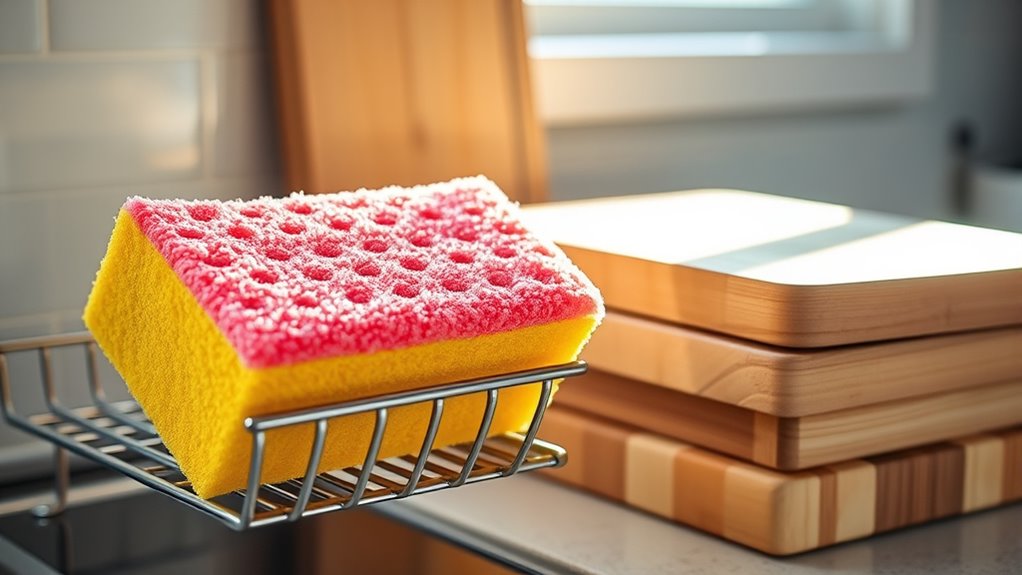
After cleaning your sponges and cutting boards, proper drying and storage are essential to prevent bacterial growth. To guarantee they stay sanitized, follow these steps:
Proper drying and storage prevent bacteria growth on cleaned sponges and cutting boards.
- Use air drying techniques by placing items in a well-ventilated area, ideally upright, to promote quick moisture evaporation.
- Avoid leaving sponges or boards in damp places; moisture encourages bacteria.
- Choose storage container options with good airflow, like open racks or ventilated bins, to keep items dry.
- Regularly inspect and replace sponges to prevent mold buildup. Proper air drying techniques and smart storage container choices help maintain cleanliness and extend the lifespan of your kitchen tools. Consistently dry and store your items correctly to keep bacteria at bay and ensure a hygienic kitchen environment.
Tips for Maintaining Long-Term Cleanliness
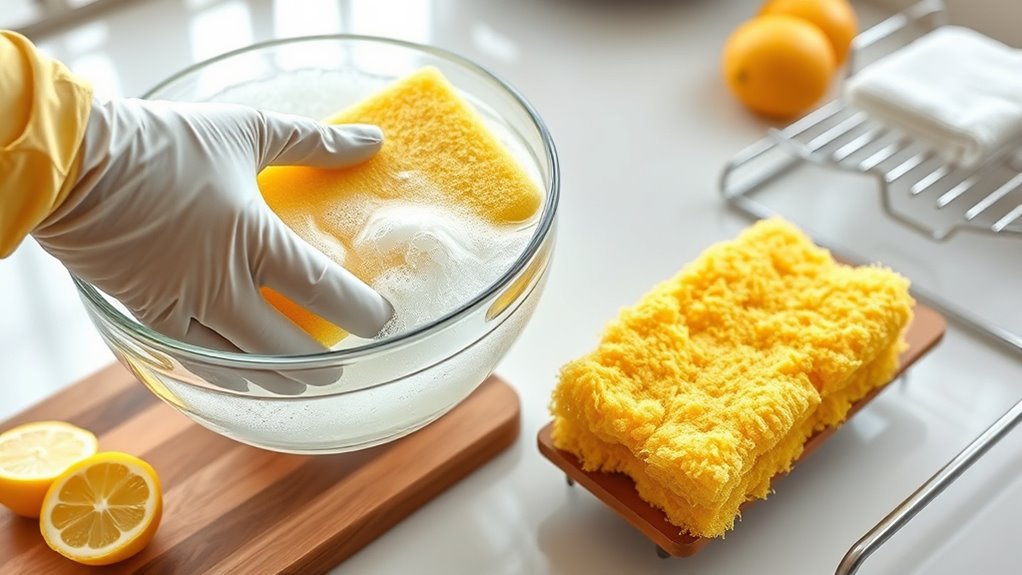
Maintaining long-term cleanliness in your kitchen requires consistent effort and good habits. To extend your sponge’s lifespan, replace it every few weeks and avoid using it on raw meat to prevent bacteria buildup. Regularly sanitize your sponges by microwaving them or soaking in a bleach solution. For cutting boards, choose the right material—plastic boards are easier to sanitize, while wood can harbor bacteria if not properly cared for. Clean your cutting boards thoroughly after each use, especially after chopping raw meat or produce. Use hot water and soap, and periodically disinfect with vinegar or diluted bleach. Proper drying and storage help prevent mold and bacteria growth. Staying vigilant with these practices keeps your kitchen safer and your tools in top shape longer.
Frequently Asked Questions
How Often Should I Replace My Kitchen Sponges?
You should replace your kitchen sponge every 1 to 2 weeks, depending on its sponge lifespan and usage. Regularly sanitize it, but note that even with proper cleaning, bacteria can build up over time. For cutting boards, follow a consistent replacement schedule, typically every 1 to 3 years, especially if they develop deep grooves or stains. Keeping both clean and replacing them regularly helps maintain a hygienic kitchen environment.
Can Antibacterial Sprays Replace Regular Cleaning Methods?
Did you know that bacteria can double every 20 minutes? Antibacterial sprays can help, but they shouldn’t replace regular cleaning methods. While these sprays boost cleaning effectiveness, they might not eliminate all germs, especially on porous surfaces like sponges and cutting boards. To guarantee safety, combine antibacterial sprays with thorough washing using soap and water. This combined approach offers a more extensive defense against harmful microbes in your kitchen.
Are There Eco-Friendly Disinfectants Suitable for Kitchen Tools?
Yes, there are eco-friendly disinfectants perfect for your kitchen tools. You can use natural disinfectants like vinegar, hydrogen peroxide, or essential oils such as tea tree or lemon, which are effective for cleaning without harmful chemicals. Incorporate eco-friendly cleaning practices by choosing these natural options, ensuring your kitchen remains safe and sustainable. Always follow proper application methods for best results, and enjoy a clean, healthy environment for your family.
How Do I Sanitize Wooden Cutting Boards Effectively?
To keep your wooden cutting board bacteria-free, don’t let it slide—regular cleaning is key. Use hot water and a brush to scrub the surface, then wipe it down with a mixture of vinegar and water to disinfect. For stubborn stains, sprinkle coarse salt and rub with lemon. Proper cutting board maintenance involves oiling it periodically to prevent cracks, ensuring it stays in top shape and bacteria stay out of sight.
What Are Signs My Sponge or Cutting Board Is No Longer Safe?
You’ll know your sponge or cutting board isn’t safe when it emits a persistent odor or shows discoloration. If your sponge smells sour or moldy despite cleaning, it’s time to replace it. Similarly, if your cutting board develops deep stains or uneven discoloration that won’t scrub away, bacteria may be hiding there. Trust your senses—discard items that seem compromised to prevent cross-contamination and guarantee food safety.
Conclusion
So, after all that effort, you might think your kitchen’s perfectly sanitized. But remember, even with all these steps, a tiny oversight can undo your work. It’s amusing how something as simple as a sponge or cutting board can hide germs that threaten your health. So, keep up the good work, but don’t get complacent—because sometimes, the biggest threat is the one you overlook every day. Clean thoroughly, and stay vigilant.
Fall Picks
fall essentials
As an affiliate, we earn on qualifying purchases.