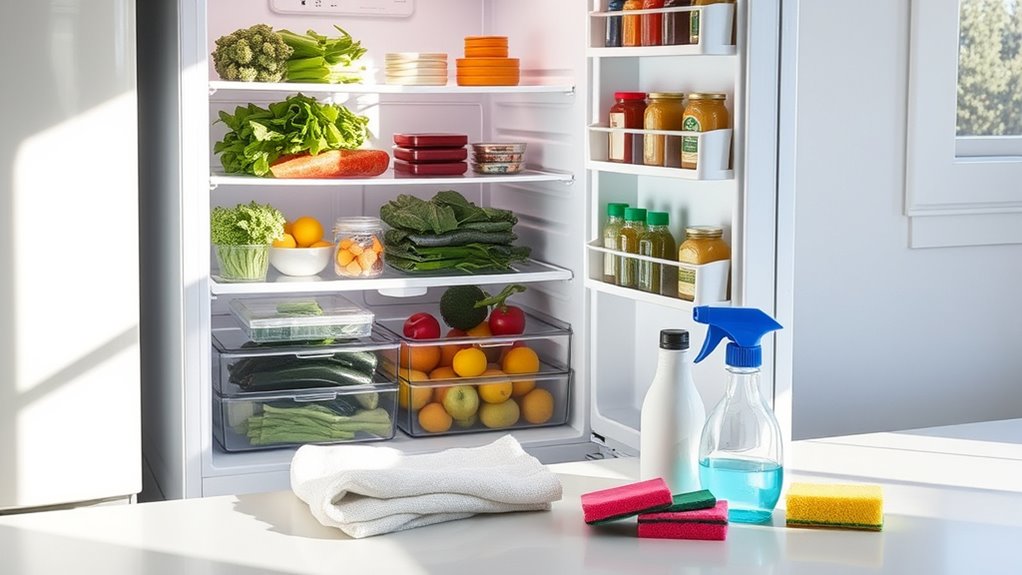

To keep your refrigerator clean and fresh, check for expired items weekly and discard perishables. Set aside time to inspect shelves for spills and wipe everything down with mild detergent. Monthly, empty the fridge and wash shelves with a vinegar solution, ensuring to clean exterior surfaces too. Don’t forget to refresh odor absorbers like baking soda. By following these tips regularly, you’ll maintain both hygiene and efficiency in your fridge. Discover more strategies to enhance your cleaning routine!

Get kitchen gear delivered free — and shop member deals
- Fast, free delivery on millions of items
- Access to Prime Big Deal Days deals on October 6–7
- Prime Video, Amazon Music and more included
Key Takeaways
- Regularly check for expired items and promptly discard perishables to maintain hygiene and maximize space.
- Thoroughly clean the fridge monthly by emptying it and washing shelves with warm water and vinegar.
- Use mild detergents for routine cleaning to remove spills and odors without damaging surfaces.
- Place odor absorbers like baking soda in the fridge and refresh them regularly to keep smells at bay.
- Maintain a clean exterior and follow manufacturer guidelines for cleaning water dispensers and ice makers.

Keeping your refrigerator clean is essential, not just for hygiene but also for maximizing its lifespan and efficiency. A clean fridge helps prevent food odors and keeps your food fresh. To maintain a clean refrigerator, you should develop a routine that includes weekly and monthly tasks.
Maintaining a clean refrigerator is vital for hygiene, efficiency, and prolonging its lifespan while keeping food fresh.
Start by checking for expired items each week. It’s easy for leftovers and other perishables to slip your mind. Set aside a few minutes to go through your fridge and toss anything that’s past its prime. Expired items not only take up valuable space but can also contribute to unpleasant smells. Once you’ve cleared out the old food, take a moment to check for any spills or stains. Wiping down shelves and bins with a mild detergent will help eliminate odors and keep your fridge looking fresh.
After you’ve tackled the weekly tasks, it’s time to focus on the monthly maintenance. Clear out the fridge completely and give it a thorough clean. Start by removing all the food and placing it on a clean surface. This not only allows you to see everything you have but also gives you the chance to check for expired items that may have gone unnoticed. Once the food is out, take the opportunity to wash the shelves and walls with a mixture of warm water and vinegar. This natural solution effectively removes any lingering food odors and keeps bacteria at bay.
Don’t forget to clean the refrigerator’s exterior, too. Wipe down the door handles and the top of the fridge, where dust and grime can accumulate. If your refrigerator has a water dispenser or ice maker, follow the manufacturer’s guidelines for cleaning those components to ensure they stay hygienic. Additionally, maintaining a clean fridge can improve energy efficiency and reduce the risk of standby generator failures during power outages.
Lastly, consider using odor absorbers like baking soda to keep your fridge smelling fresh. Placing an open box in the back can neutralize any lingering food odors. Regular maintenance will not only make your fridge more pleasant to use but will also prolong its life.
refrigerator odor absorber baking soda
As an affiliate, we earn on qualifying purchases.
As an affiliate, we earn on qualifying purchases.
Frequently Asked Questions
How Often Should I Replace My Refrigerator’s Water Filter?
You should replace your refrigerator’s water filter every six months for peak performance. This filter lifespan ensures that you’re getting clean, great-tasting water and ice. If you notice a decline in water flow or a change in taste, it might be time to change it sooner. Keep track of when you last replaced it, so you can maintain a routine and avoid any issues with your refrigerator’s water quality.
Can I Use Bleach to Clean My Refrigerator?
You might be tempted to grab that bleach bottle, but wait! Using bleach to clean your refrigerator isn’t safe. The fumes can mix with food odors and create harmful reactions. Instead, consider alternative cleaning methods like vinegar or baking soda. They’re effective, non-toxic, and safe for your food environment. So, next time you tackle that fridge, leave the bleach behind and opt for something healthier for both you and your home.
What Should I Do With Expired Food Items?
When you find expired food items, it’s best to dispose of them immediately. Check for any signs of mold; if you see it, avoid judgment and just toss the item in a sealed bag before throwing it away. Remember, expired food can harbor harmful bacteria, so don’t hesitate. Regularly checking your fridge helps you keep track of expiration dates, ensuring you maintain a healthier environment for your fresh foods.
How Can I Prevent Odors in My Refrigerator?
To prevent odors in your refrigerator, focus on odor control with proper storage tips. Keep food covered in airtight containers to minimize smells. Use baking soda or activated charcoal in an open container to absorb unwanted scents. Regularly check and discard any expired or spoiled items. Ultimately, clean spills immediately to avoid lingering odors. With these steps, you’ll maintain a fresh-smelling fridge and keep your food tasting its best!
Is It Safe to Unplug My Refrigerator for Cleaning?
Unplugging your refrigerator for cleaning is like hitting the pause button on a hectic day. It’s safe, but make sure to take precautions. If there’s been a recent power outage, check that the appliance is cool before unplugging. This prevents any spoilage while it’s off. When you’re ready to clean, remember to leave the door open to avoid musty odors and ensure your fridge is fresh and ready for use again!
refrigerator cleaning vinegar spray
As an affiliate, we earn on qualifying purchases.
As an affiliate, we earn on qualifying purchases.
Conclusion
Keeping your refrigerator clean is like tending a garden; a little effort each week nurtures a fresh, vibrant space. By regularly tossing expired items and wiping down shelves, you cultivate an inviting environment for your food. Monthly deep cleans are the sunshine that helps it flourish. So, roll up your sleeves and embrace the task—your fridge will not only sparkle, but it’ll also keep your ingredients fresh and your meals delicious. Happy cleaning!
As an affiliate, we earn on qualifying purchases.
automatic refrigerator deodorizer
As an affiliate, we earn on qualifying purchases.
As an affiliate, we earn on qualifying purchases.
Fall Picks
fall essentials
As an affiliate, we earn on qualifying purchases.