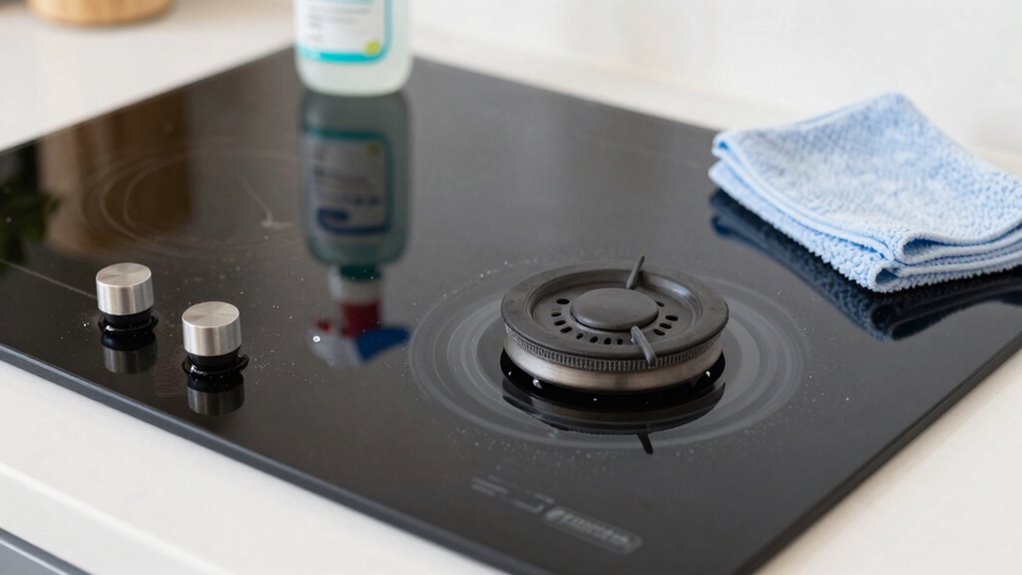

You need to use different cleaning methods on glass cooktops because their delicate surfaces can easily scratch or get damaged from harsh chemicals or abrasive tools. Regular household cleaners and scrubbers might seem convenient, but they can harm the shine and clarity. Using the right products, like cleaners made specifically for glass and soft cloths, helps protect the surface. Keep in mind, small tweaks in your cleaning approach can make a big difference. If you want to learn how to clean your cooktop safely, continue exploring these tips.

Get kitchen gear delivered free — and shop member deals
- Fast, free delivery on millions of items
- Access to Prime Big Deal Days deals on October 6–7
- Prime Video, Amazon Music and more included
Key Takeaways
- Glass cooktops have delicate surfaces that can easily scratch or cloud with harsh cleaning products.
- Their smooth, non-porous surface requires specific cleaners to prevent residue buildup and damage.
- Different components, like ceramic cookware and metal trims, need tailored cleaning techniques.
- Abrasive tools or metal utensils can scratch or damage the glass, so gentle methods are essential.
- Regular, proper maintenance preserves the appearance and functionality of glass cooktops over time.
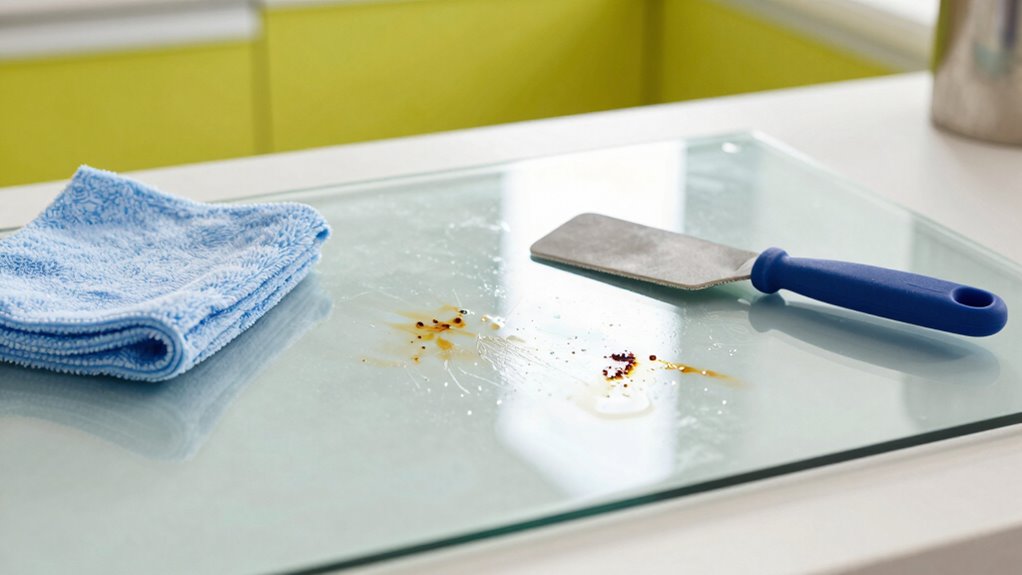
Glass cooktops offer a sleek and modern look in your kitchen, but they require proper cleaning to maintain their shine and performance. Unlike traditional coil stoves, glass surfaces are delicate and prone to scratching if not cleaned correctly. To keep your cooktop looking pristine, you need to understand why standard cleaning methods often fall short and how specific techniques are necessary for different materials, like stainless steel accents or ceramic cookware that you might use on your glass surface.
Glass cooktops need gentle, material-specific cleaning to stay shiny and scratch-free.
Since glass cooktops are smooth and flat, they make it easy to see spills, splatters, and burnt-on residue. However, you can’t just use any cleaning product or abrasive sponge. Harsh cleaners can leave scratches or cloudiness, diminishing the surface’s clarity. Instead, a gentle cleaner designed for glass, combined with a soft cloth or a non-abrasive scrubber, works best. When cleaning around stainless steel trim, you should avoid abrasive pads that could scratch both the steel and the glass. Instead, opt for a microfiber cloth and a cleaner formulated for stainless steel, which helps prevent streaks and keeps the trim gleaming without damaging the surface.
Ceramic cookware presents another challenge. While it’s great for even heating, it often leaves behind stubborn stains or scratches if not cleaned properly. Using metal utensils or rough scrubbers on ceramic cookware can damage both the cookware and your glass cooktop. To prevent this, always clean ceramic pots and pans with non-abrasive cleaners, and avoid dragging them across the surface. When removing burnt-on food or stubborn stains, a specialized glass cooktop scraper can be effective, but you need to use it carefully to avoid scratching the ceramic or glass surface. Understanding the material compatibility is key to choosing the right cleaning tools and products. Additionally, being aware of cleaning frequency can help prevent the buildup of residues, making maintenance easier over time. Regularly checking for manufacturer recommendations can prevent accidental damage and ensure safe cleaning practices. Moreover, selecting the appropriate cleaning tools that are designed for delicate surfaces can significantly extend the lifespan of your cooktop.
As an affiliate, we earn on qualifying purchases.
Frequently Asked Questions
Can I Use Abrasive Cleaners on Glass Cooktops?
You shouldn’t use abrasive cleaners on glass cooktops because they can cause glass damage. These harsh scrubbers scratch the surface, making it look cloudy or dull over time. Instead, opt for gentle cleaners specifically designed for glass surfaces. You’ll preserve the smooth, shiny appearance and prevent long-term damage. Remember, a soft cloth or sponge is your best tool for keeping your cooktop spotless without risking scratches.
How Often Should I Clean My Glass Cooktop?
You should clean your glass cooktop at least once a week—it’s the superhero of your kitchen, after all! Regular cleaning keeps it shining brightly and prevents stubborn stains from taking over. Incorporate a simple maintenance routine into your weekly schedule, and you’ll keep it looking brand new. Don’t wait for it to become a disaster zone; consistent cleaning frequency is your best defense against grime.
Are There Specific Tools Best for Cleaning Glass Surfaces?
You should use non-abrasive tools like a soft cloth or sponge and a specialized glass cooktop cleaner for stubborn stains. Avoid steel wool or harsh scrubbers, as they can scratch the surface. Regular cleaning, based on your cleaning frequency, helps prevent buildup. For tough spots, a plastic scraper can be helpful. Always follow the manufacturer’s instructions to keep your glass surface shiny and damage-free.
Can I Use a Steel Wool Pad on My Cooktop?
You shouldn’t use a steel wool pad on your glass cooktop, as it can scratch the surface. Instead, opt for stainless steel alternatives like non-abrasive scrubbing pads or specialized glass cooktop cleaners. For eco-friendly cleaning options, try a mixture of baking soda and vinegar or use eco-friendly glass cooktop cleaning products. These methods effectively remove grime without damaging your cooktop or harming the environment.
Is It Safe to Use Vinegar on Glass Cooktops?
Imagine vinegar as a gentle rain — safe when used properly. Yes, you can use vinegar on your glass cooktop, but avoid letting it sit to prevent vinegar residue buildup. If left too long, the acidity can cause surface etching, dulling the shine. Always dilute vinegar with water, apply with a soft cloth, and rinse thoroughly to keep your cooktop sparkling without risking damage.
As an affiliate, we earn on qualifying purchases.
Conclusion
Cleaning your glass cooktop is like tending to a delicate garden—you need gentle hands and the right tools to keep it shining. Using the proper cleaning methods guarantees your cooktop stays spotless and scratch-free, much like a pristine mirror reflecting your culinary efforts. Remember, a little care goes a long way in preserving its beauty and functionality. So, treat your glass cooktop with kindness, and it’ll continue to serve as a gleaming centerpiece in your kitchen.
stainless steel and glass cleaner
As an affiliate, we earn on qualifying purchases.
As an affiliate, we earn on qualifying purchases.
As an affiliate, we earn on qualifying purchases.
Evergreen bestsellers Picks
bestsellers
As an affiliate, we earn on qualifying purchases.