Some dishwashers clean better because they control water temperature effectively, ensuring it’s at the ideal 120°F to 140°F range. They use high-quality, properly matched detergents that break down grime and stains efficiently. When water heats consistently, detergents and their enzymes work better, resulting in cleaner dishes. If your dishwasher struggles, it might not be maintaining the right temperature or using the right detergent. Keep exploring to discover how to improve your cleaning results even more.
Key Takeaways
- Consistent water temperature within the optimal range (120°F to 140°F) enhances cleaning performance.
- High-quality detergents formulated for specific water temperatures improve grime and stain removal.
- Effective water temperature control ensures even heating and prevents residue buildup.
- Proper functioning of the heating element maintains consistent water temperature during cycles.
- Better dishwashers regulate temperature and detergent use, leading to superior cleaning results.
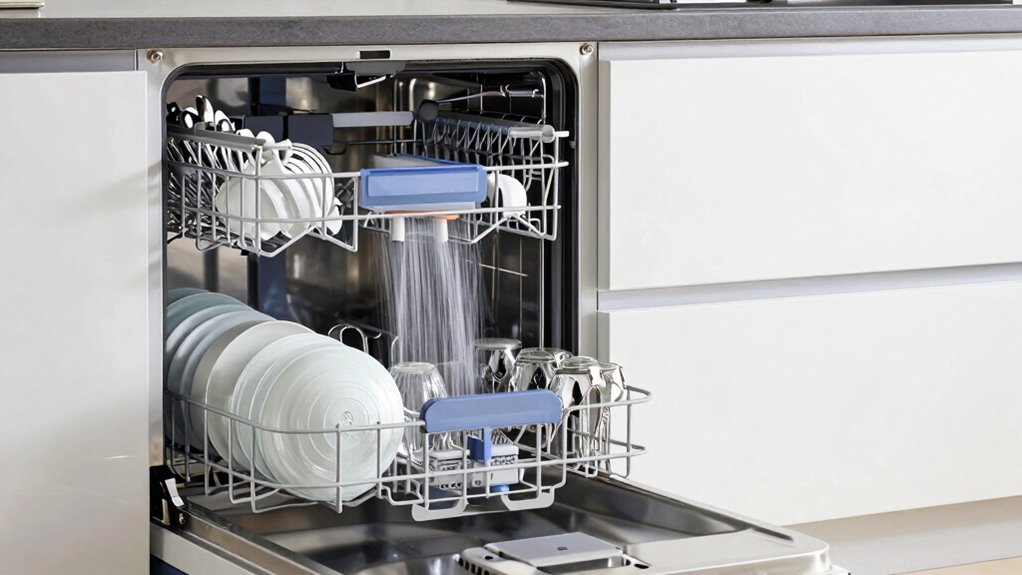
Have you ever wondered which dishwasher cleaning method is the most effective? The answer often comes down to a few key factors, with water temperature and detergent effectiveness playing essential roles. When you run your dishwasher, the temperature of the water can make a significant difference in how well dishes come out clean. If the water isn’t hot enough, grease and stuck-on food may not loosen properly, leaving residues behind. Conversely, water that’s too hot can damage delicate glassware or cause plastic items to warp. Ideally, your dishwasher should reach a temperature of around 120°F to 140°F to maximize cleaning without risking damage. This temperature range ensures that the detergent can work at its best, breaking down grime effectively. Proper water temperature control is crucial for achieving optimal cleaning results. Detergent effectiveness is another critical element that influences cleaning results. Not all detergents are created equal; some are formulated to perform better at certain temperatures or water hardness levels. When you choose a high-quality detergent, you’re giving your dishwasher the tools it needs to remove stubborn stains and food particles efficiently. Using the right amount of detergent is equally important—too little won’t clean thoroughly, and too much can cause residue buildup or oversudsing, which hampers performance. Additionally, some detergents contain enzymes that actively target proteins and starches, making them particularly effective in combination with the right water temperature. For example, enzyme-based detergents can significantly enhance cleaning efficiency, especially at optimal temperatures. Maintaining consistent water temperature throughout the cycle can prevent uneven cleaning and improve overall performance. Ensuring that your dishwasher’s heating element functions correctly can be a key factor, as inconsistent heating can lead to uneven results. The interaction between water temperature and detergent effectiveness is where many dishwashers either shine or fall short. If your dishwasher heats water effectively and maintains a consistent temperature throughout the cycle, your detergent can do its job at its best. This synergy helps break down food residues better, resulting in cleaner dishes and fewer streaks or spots. On the other hand, if your dishwasher struggles to reach or sustain an appropriate temperature, even the best detergent can’t compensate for this shortfall, leading to less satisfying results.
Frequently Asked Questions
How Does Water Temperature Affect Dishwasher Cleaning Performance?
Water temperature directly impacts your dishwasher’s cleaning efficiency. When you set it too low, dishes may not get thoroughly cleaned because the detergent doesn’t activate well or grease doesn’t loosen effectively. Ideally, you should use hot water, around 120°F, to help break down food and grease, ensuring your dishes come out spotless. Adjusting the temperature properly helps your dishwasher perform at its best and keeps your dishes sparkling clean.
Do Energy-Efficient Dishwashers Clean as Effectively as Traditional Models?
Energy-efficient dishwashers can clean as effectively as traditional models, especially when you use eco-friendly cycles designed to optimize water and energy use. These models often feature advanced technology, noise reduction, and specialized wash options to guarantee thorough cleaning. By selecting the right cycle and maintaining your dishwasher properly, you can enjoy excellent cleaning results while conserving resources and minimizing noise, making them a smart, eco-conscious choice.
What Role Does Detergent Type Play in Cleaning Quality?
Think of detergent type as the secret sauce in your dishwasher routine. The right detergent boosts cleaning effectiveness, ensuring your dishes come out spotless. If you choose a weak or incompatible detergent, it can leave behind detergent residue, affecting overall cleanliness. Using high-quality, enzyme-rich detergent helps break down food particles better, giving you a sparkling finish. Remember, the proper detergent makes all the difference in your dishwasher’s performance.
How Often Should I Run Cleaning Maintenance on My Dishwasher?
You should run a cleaning cycle once a month to keep your dishwasher in top shape. Regular dishwasher maintenance tips include removing debris, checking filters, and using a dishwasher cleaner. Pay attention to the cleaning cycle frequency; more frequent use may require more regular cleaning. This helps prevent buildup and guarantees your dishwasher works efficiently, giving you spotless dishes every time.
Can the Placement of Dishes Impact Cleaning Results?
Yes, the placement of dishes greatly impacts cleaning results. Using proper loading techniques and placement strategies guarantees water and detergent reach all surfaces effectively. Avoid overcrowding, and position items at angles that promote water flow. Place larger items on the sides or back and avoid blocking spray arms. By carefully loading your dishwasher, you help it clean more thoroughly and prevent debris buildup, resulting in sparkling dishes every time.
Conclusion
In the symphony of clean dishes, your dishwasher’s performance hinges on its design and features, much like a maestro guiding an orchestra. When you choose wisely, you’re conducting a harmonious blend of power, water flow, and clever technology, ensuring every plate shines like a star in a clear night sky. Remember, a well-chosen dishwasher isn’t just a machine; it’s your trusted conductor, transforming chaos into crystal-clear harmony with each cycle.