
Choosing a burr grinder over a blade grinder makes a big difference in your coffee’s flavor and consistency. Burr grinders crush beans evenly, helping you extract richer, more balanced flavors and keeping your coffee fresh longer. Blade grinders chop beans unevenly, leading to inconsistent taste and quick flavor loss. If you want better control over your brew quality, understanding these differences can help you pick the right tool—there’s more to discover below.

Get kitchen gear delivered free — and shop member deals
- Fast, free delivery on millions of items
- Access to Prime Big Deal Days deals on October 6–7
- Prime Video, Amazon Music and more included
Key Takeaways
- Burr grinders provide uniform grounds, ensuring consistent extraction and better flavor compared to the uneven particles produced by blade grinders.
- Using a burr grinder helps preserve coffee freshness and aroma, while blade grinders can accelerate flavor degradation due to inconsistent grinds.
- Burr grinders are more suitable for precise brewing methods like espresso and AeroPress, whereas blade grinders are better for quick, casual coffee.
- Although more expensive, burr grinders offer better long-term durability and control over grind size, impacting overall coffee quality.
- Blade grinders are simpler and more affordable but tend to produce uneven grounds, leading to less optimal extraction and flavor clarity.
Understanding the Mechanics of Burr and Blade Grinders

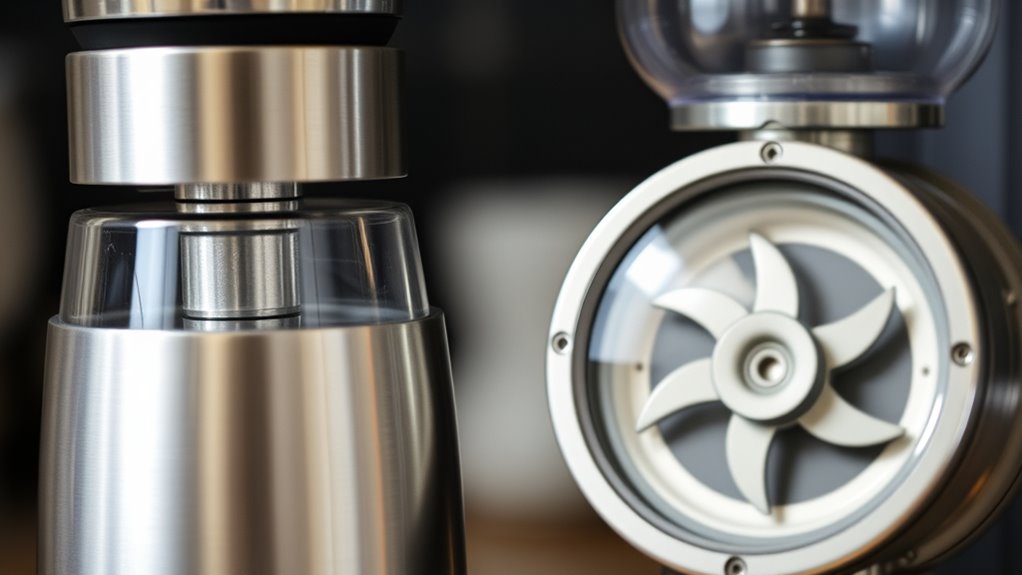
To understand how burr and blade grinders work, it’s important to know that they both use different mechanisms to crush coffee beans into grounds. Burr grinders use two revolving abrasive surfaces that crush beans uniformly, resulting in consistent grounds. Blade grinders, on the other hand, feature a spinning blade that chops beans randomly. This difference affects grinder noise; blade grinders tend to be louder due to their high-speed blades. When it comes to energy consumption, blade grinders usually use less power but are less efficient and produce uneven grounds. Burr grinders operate at a slower pace, which can mean higher energy use but better grinding consistency, which is crucial for achieving the desired flavor profile in your coffee. Additionally, the mechanical design of each grinder impacts how easily and safely they can be operated, influencing overall user experience.
Impact on Coffee Flavor and Consistency
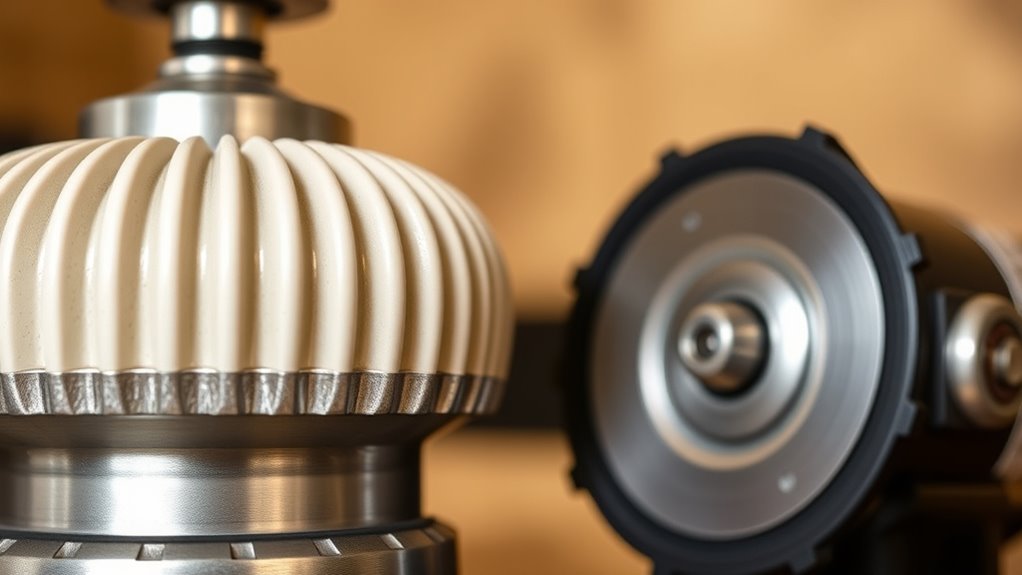
Your choice of grinder directly affects how your coffee tastes and how consistent each cup is. A burr grinder produces more uniform grounds, leading to better extraction and richer flavor, while a blade grinder can create uneven particles that impact taste. Over time, a burr grinder also helps preserve flavor by minimizing oxidation and degradation. Additionally, airless paint sprayers offer high pressure and smooth finishes that contribute to a more consistent application, similar to how a burr grinder ensures uniform grounds. Incorporating craftsmanship into your coffee routine can further enhance the quality and precision of your brew. Paying attention to body jewelry measurements and materials used in grinders can also influence the durability and performance of your equipment.
Grind Uniformity and Taste
The way a grinder produces coffee grounds considerably impacts both flavor and consistency. Uniform grind size ensures your coffee extracts evenly, resulting in balanced flavor. A burr grinder offers consistent grind size, reducing the chances of over- or under-extraction. In contrast, a blade grinder often produces uneven grounds, causing flavor inconsistencies. Additionally, the noise level varies: burr grinders tend to be quieter, allowing a calmer brewing experience, while blade grinders can be louder and more disruptive. For those interested in Free Floating design elements, selecting the right grinder can also influence how seamlessly your coffee setup integrates into your overall backyard or outdoor space.
Extraction Efficiency Differences
Consistent grind size plays a pivotal role in how effectively coffee extracts, directly impacting flavor and overall quality. Burr grinders produce a uniform grind size, ensuring even extraction and maximizing flavor clarity. This consistency allows hot water to evenly dissolve desirable compounds, resulting in a balanced cup. In contrast, blade grinders create uneven grind sizes, which can cause over-extraction of some particles and under-extraction of others, leading to inconsistent flavor. Additionally, the grinding noise from burr grinders tends to be steadier and quieter, reflecting their precise operation. Blade grinders can be louder and more erratic, potentially disturbing your brewing process. Overall, the extraction efficiency of a burr grinder helps you achieve a more consistent, flavorful coffee, whereas a blade grinder’s variability can compromise your brew’s quality. Understanding the importance of artistic expression] can inspire you to approach your coffee brewing with more curiosity and care.
Flavor Preservation Over Time
When it comes to preserving coffee’s fresh flavor, the type of grinder you use makes a significant difference over time. Burr grinders excel at maintaining coffee aroma because they produce consistent grind sizes, reducing exposure to oxygen and moisture that degrade flavor. Consistent grind size is essential for extracting the full spectrum of flavors during brewing, further emphasizing the importance of the right grinder type. Blade grinders, on the other hand, can create uneven grinds, causing some coffee particles to oxidize faster and lose flavor more quickly. Additionally, the grinding noise from blade grinders is often louder and more disruptive, which can lead to hurried grinding and less attention to freshness. Over time, these factors mean burr grinders help your coffee stay fresher longer, ensuring each cup retains its rich aroma and nuanced taste. Proper maintenance of your grinder, such as regular cleaning, also plays a crucial role in flavor retention, keeping your coffee tasting its best over time. Moreover, the material quality of your grinder components can influence the longevity and consistency of your coffee flavor.
Ease of Use and Maintenance Factors
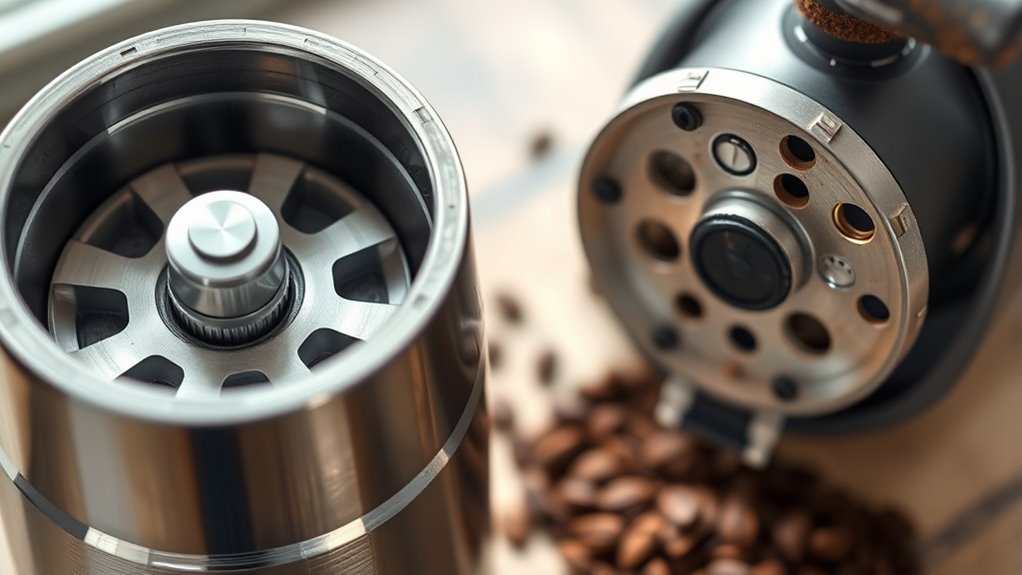
While both burr and blade grinders aim to simplify your coffee preparation, their ease of use and maintenance differ markedly. Burr grinders typically have a larger grinder size, which can make them bulkier to handle and store, but they often feature straightforward settings that let you control grind consistency easily. Maintenance usually involves regular cleaning of burrs to prevent buildup, which can be quick if you follow instructions carefully. Proper grinder maintenance can extend the lifespan of your device and ensure consistent performance. Additionally, burr grinders generally produce a more uniform grind size, which is crucial for a balanced extraction and better flavor. Blade grinders, on the other hand, are more compact and generally easier to operate—just add beans and press a button. However, they tend to be noisier, with a higher noise level during operation. Cleaning blade grinders is simple but may require more frequent attention to ensure the blades stay sharp and the grinder remains efficient. Moreover, grind consistency is generally better with burr grinders, which can impact the overall quality of your brew.
Cost and Long-term Investment Considerations
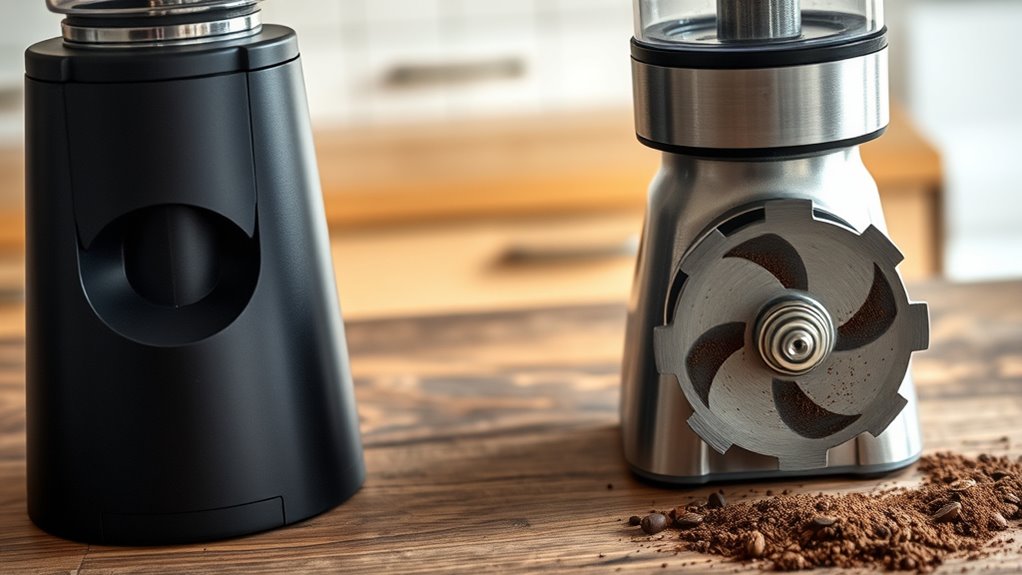
Burr grinders tend to have a higher upfront cost but can be a smarter long-term investment due to their durability and ability to produce consistent grounds. While the initial price comparison favors blade grinders, investing in a burr grinder often pays off with fewer repairs and better performance. Consider the warranty and support offered—burr grinders typically come with longer warranties, ensuring peace of mind. Here’s a quick overview:
| Feature | Burr Grinder | Blade Grinder |
|---|---|---|
| Price Comparison | Higher initial cost | Lower initial cost |
| Warranty & Support | Usually longer, better support | Shorter, limited support |
| Long-term Cost | Less maintenance, durable | More frequent replacements |
Choosing a burr grinder might cost more upfront but saves you money and hassle over time. Additionally, burr grinders are known for their ability to produce a more consistent grind, which is essential for brewing the perfect cup of coffee. Investing in quality burr grinders can also reduce waste and improve overall coffee flavor, making them a valuable purchase for serious coffee enthusiasts. Understanding the long-term benefits of a burr grinder can help justify the initial expense. Moreover, selecting a grinder with quality construction can significantly extend its lifespan and performance. Investing in a grinder with advanced features can further enhance your brewing experience and durability.
Suitability for Different Brewing Methods
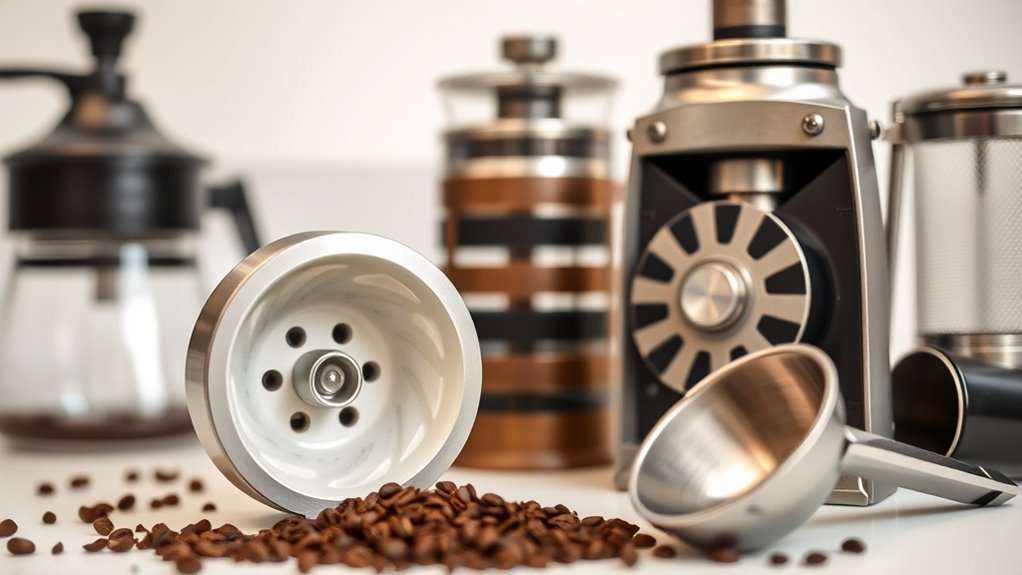
Choosing the right grinder depends heavily on your preferred brewing method. For methods like espresso or AeroPress, a burr grinder is ideal because it produces a consistent grind size, essential for controlling brewing temperature and extracting flavors effectively. If you brew with French press or drip coffee, a blade grinder can work, but it may result in uneven grounds, affecting extraction and flavor. The origin of your coffee beans also plays a role; some beans require a specific grind size to release their full potential. For delicate, high-quality beans, a burr grinder ensures uniformity, preserving nuanced flavors. Additionally, grinder consistency directly impacts the extraction process, making it a crucial factor in achieving the perfect brew. Using a grinder with high particle size uniformity helps maximize flavor extraction and enhances your overall coffee experience, and understanding quality assurance can guide you in selecting a reliable grinder that maintains consistent performance over time. Moreover, selecting a grinder with durability features ensures it continues to perform well through regular use. Incorporating artisanal techniques in the grinding process can further refine the quality of your coffee, especially for specialty brews.
Making the Right Choice for Your Coffee Routine
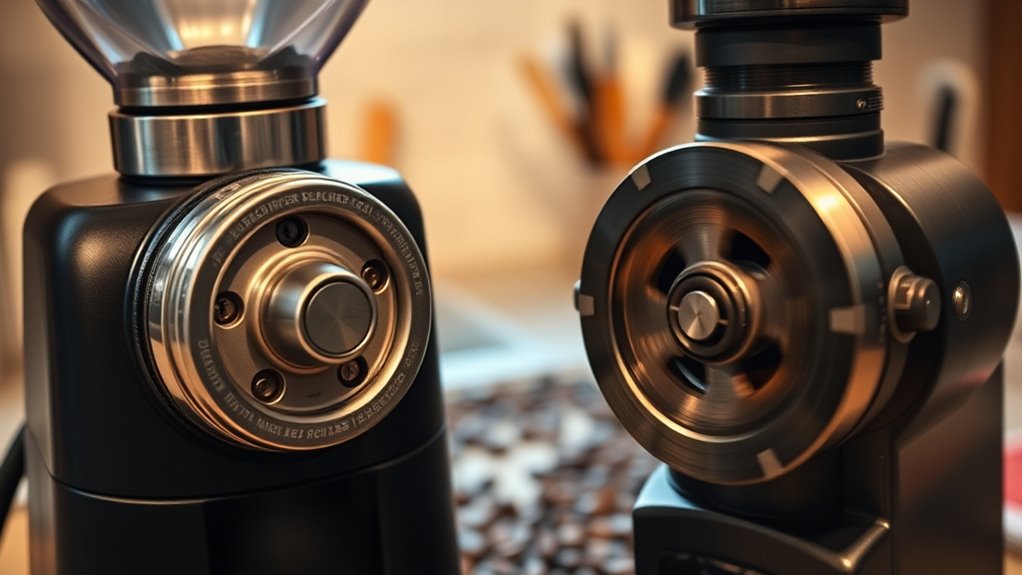
Your coffee routine shapes the type of grinder that will work best for you. If you value quiet operation and a sleek look, a burr grinder with low grinder noise and an aesthetic design might suit you better. Conversely, if you prefer quick, budget-friendly options, a blade grinder could fit your needs. Consider how much space you have and whether noise impacts your environment.
| Feature | Best For |
|---|---|
| Grinder noise | Quiet mornings, shared spaces |
| Aesthetic design | Modern kitchens, stylish setups |
| Speed & cost | Casual use, budget-conscious consumers |
Choose based on your priorities: quiet operation, style, or convenience. Making the right choice ensures your coffee experience aligns with your routine.
Frequently Asked Questions
Which Grinder Type Preserves Aromatic Oils Better?
A burr grinder preserves aromatic oils better because it provides grind uniformity, ensuring consistent particle size. This consistency minimizes over-extraction and helps retain more aroma during brewing. Blade grinders, on the other hand, produce uneven grounds that can damage delicate oils, reducing aroma retention. So, if you want to enjoy richer, more vibrant flavors, a burr grinder is your best choice to maintain those aromatic oils.
How Does Grind Size Affect Brewing Time?
It’s no coincidence that grind size directly influences brewing time; finer grinds increase surface area, leading to quicker extraction, while coarser grinds slow it down. When your grind isn’t uniform, brewing time varies, affecting flavor. Additionally, maintaining a consistent brewing temperature works best with a uniform grind, ensuring ideal extraction. Adjusting your grind size helps you control brewing time, so you get the perfect cup every time.
Are There Any Safety Concerns With Blade Grinders?
Yes, there are safety concerns with blade grinders. Safety hazards include the risk of injury from the moving blades if you’re not careful during use or cleaning. Additionally, blade wear over time can cause the blades to become dull or break, increasing the risk of shards contaminating your coffee. Always unplug the grinder before cleaning, handle blades carefully, and replace them when they show signs of wear to stay safe.
Can a Grinder’s Capacity Impact Grind Consistency?
Think of your grinder as a skilled orchestra conductor. If the capacity effects are too large, it’s like trying to coordinate too many musicians at once—leading to uneven performance. A bigger capacity can impact grind uniformity because the grinder might struggle to produce consistent results with larger batches. Smaller, controlled loads help maintain uniformity, ensuring each coffee particle is evenly ground for the perfect brew every time.
How Do Noise Levels Compare Between Burr and Blade Grinders?
You’ll notice that burr grinders generally produce quieter operational sounds compared to blade grinders. Burr grinders operate with a steady, consistent noise that’s less harsh, making your mornings less disruptive. Blade grinders, on the other hand, generate louder, more erratic noise due to their high-speed blades chopping beans quickly. If noise comparison matters to you, burr grinders are the better choice for a quieter, more peaceful coffee-making experience.
Conclusion
So, next time you grind your beans, remember that choosing between a burr and blade grinder isn’t just about price—it’s about giving your coffee the best chance to shine. Ironically, that cheap blade grinder might turn your morning brew into a muddy mess, while investing in a burr grinder could turn your kitchen into a barista’s sanctuary. After all, isn’t your perfect cup worth a little extra effort? Because in coffee, precision truly makes all the difference.
Fall Picks
fall essentials
As an affiliate, we earn on qualifying purchases.