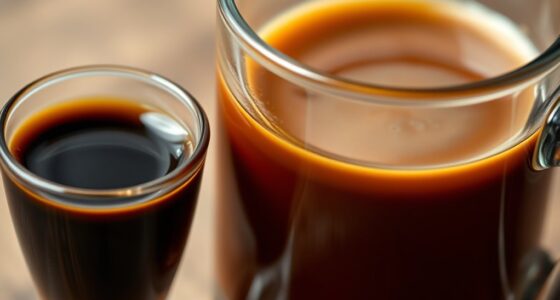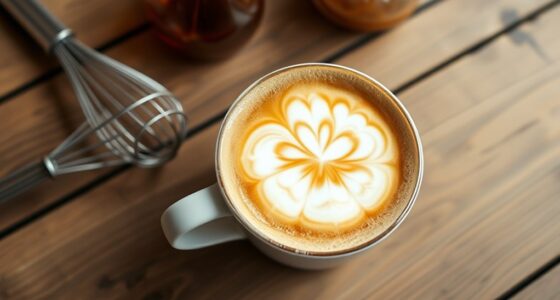
When it comes to caffeine and energy, coffee packs a punch with about 95 mg of caffeine per cup, while tea contains 40-70 mg. If you’re looking for a quick lift, coffee is your best bet. Tea, on the other hand, offers a gentler boost, making it ideal for a more gradual increase in energy. Both drinks have their unique charms, so stick around to explore how each one fits into different lifestyles and cultural practices.
Key Takeaways
- Coffee contains about 95 mg of caffeine per cup, providing a strong energy boost ideal for quick starts.
- Tea typically has 40-70 mg of caffeine per cup, offering a gentler, gradual increase in energy.
- The higher caffeine content in coffee makes it preferable for those needing immediate alertness.
- Tea’s lower caffeine is suitable for individuals seeking a calming effect without jitters.
- Choice between coffee and tea depends on personal taste, desired energy levels, and lifestyle preferences.
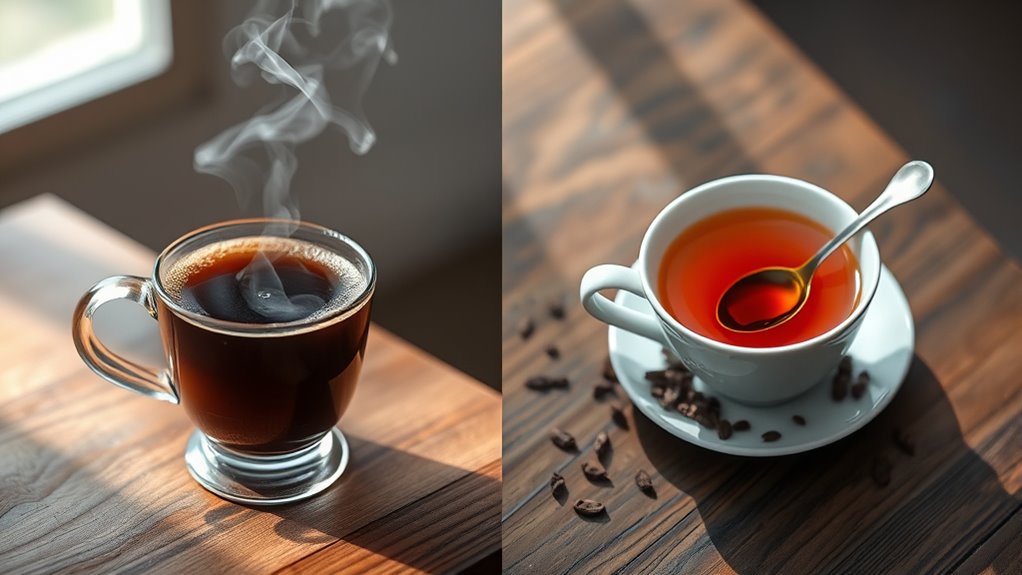
When it comes to your morning routine, have you ever wondered whether coffee or tea is the better choice? Both beverages have their passionate followers, and each brings unique benefits to your daily grind. Let’s explore the flavor profiles and cultural significance of both to help you make an informed decision.
Coffee is often praised for its bold and robust flavor. It can range from sweet and fruity to rich and nutty, depending on the beans and brewing method you choose. You might find yourself drawn to a dark roast that gives a deep, smoky taste or a lighter roast that highlights fruity undertones. On the other hand, tea offers a delicate spectrum of flavors, from the grassy, vegetal notes of green tea to the malty richness of black tea. Herbal teas can take you on a journey through fruity, floral, or spicy profiles. Depending on your mood and preference, both drinks can be a delightful experience.
Experience the bold flavors of coffee and the delicate notes of tea, each offering a delightful journey for your palate.
Culturally, coffee and tea hold significant places in societies around the world. Coffee’s cultural significance can be seen in its role in social gatherings, such as coffeehouses in Europe where artists and thinkers converge. In many countries, coffee rituals reflect local traditions, like the Turkish coffee ceremony, emphasizing hospitality and connection. Tea, however, boasts a rich history, particularly in Asian cultures. The Japanese tea ceremony embodies mindfulness and respect, showcasing the tea’s preparation as an art form. In British culture, afternoon tea serves as a cherished social occasion, pairing delightful snacks with various teas.
When it comes to caffeine content, coffee generally wins out, packing a stronger punch. A typical cup of coffee can contain about 95 milligrams of caffeine, while a cup of black tea has around 40-70 milligrams. If you’re looking for an energy boost to kickstart your day, coffee might be your go-to. However, tea’s lower caffeine levels can provide a gentler lift, perfect for those who prefer a more gradual increase in energy without the jitters.
In choosing between coffee and tea, consider not just the caffeine levels but how each fits into your lifestyle. Whether you enjoy the energizing effects of coffee or the calming nature of tea, both beverages have their unique charms. So, what will it be for you today?
Frequently Asked Questions
Can I Mix Coffee and Tea for Extra Caffeine?
Yes, you can mix coffee and tea for an extra caffeine boost! Blending beverages like these creates a unique flavor profile and enhances your caffeine synergy. By combining the rich taste of coffee with the lighter notes of tea, you’ll not only enjoy a delicious drink but also experience a more balanced energy lift. Just start with small amounts to find the perfect mix that suits your taste and caffeine needs.
Does Brewing Method Affect Caffeine Content in Coffee or Tea?
Yes, the brewing method definitely affects caffeine content in both coffee and tea. For coffee, higher brewing temperatures and longer extraction times usually lead to more caffeine. In contrast, tea’s caffeine levels depend on steeping time; the longer you steep, the more caffeine you extract. So, if you’re looking to boost your caffeine intake, pay attention to those brewing temperature and steeping time factors when preparing your drinks.
Are There Any Health Risks With High Caffeine Intake?
Yes, high caffeine intake can pose health risks. You might experience caffeine dependence, making it hard to function without it. Too much caffeine can lead to anxiety, insomnia, and digestive issues. Additionally, it can negatively impact your heart health, increasing blood pressure and heart rate. Moderation is key—keeping your consumption in check can help you enjoy the benefits without facing these potential health complications. Listen to your body and adjust accordingly.
How Do Caffeine Levels Vary Between Different Coffee Bean Types?
Ever wondered why some coffees pack a punch while others feel like a gentle hug? The caffeine variability among coffee bean varieties is the answer. For instance, Arabica beans generally have less caffeine compared to Robusta beans, which can contain nearly double the amount. So, if you’re seeking a stronger kick, go for Robusta. Each variety has its unique flavor profile, but it’s that caffeine content that can really make a difference in your energy levels.
Can Herbal Teas Provide Any Caffeine or Energy Boost?
Herbal teas generally don’t contain caffeine, so you won’t get the same energy boost as you would from traditional teas or coffee. However, they offer their own unique benefits, like promoting relaxation or aiding digestion. If you’re looking for a pick-me-up, consider herbal blends with natural energizing ingredients, like ginseng or yerba mate. These can provide a gentle lift, making them a great option for those seeking herbal tea benefits without caffeine.
Conclusion
When it comes to caffeine kick, coffee’s like a turbocharged car revving up your energy, while tea’s more like a smooth, steady ride. If you’re chasing that quick boost, coffee’s your best bet, packing about 95 mg of caffeine per cup compared to tea’s 30-50 mg. But if you want a gentle lift, tea’s your friend. So, whether you need a speedster or a reliable cruiser, choose your brew wisely to match your energy needs!