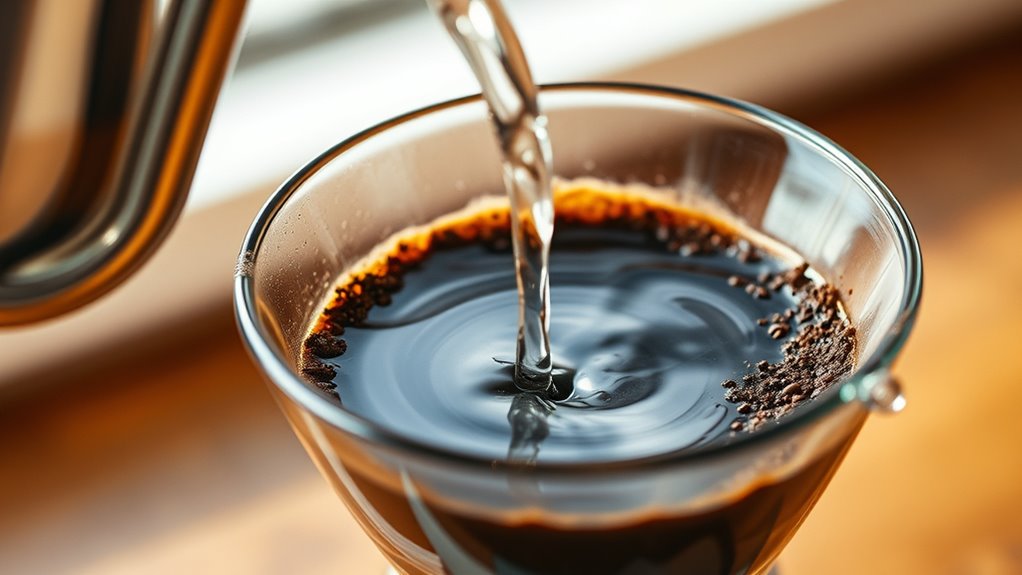

Water temperature greatly impacts how your coffee’s flavors develop. Brewing between 195°F and 205°F helps extract balanced acidity, sweetness, and aroma without scalding the grounds. Too hot, and you risk bitterness and over-extraction; too cold, and the flavors become weak and dull. Adjusting temperature based on bean type and roast enhances taste and clarity. For more tips on perfecting your coffee brew, you’re about to uncover the key to flavorful, consistent results.
Key Takeaways
- Water temperature influences the extraction of soluble compounds, affecting coffee’s flavor, aroma, and overall balance.
- Temperatures between 195°F and 205°F optimize flavor extraction without causing over-extraction or scalding.
- Higher temperatures extract more robust, bitter flavors, while cooler water preserves delicate aromas and subtle notes.
- Proper temperature control ensures consistent brewing results and highlights specific bean characteristics.
- Mineral content and vessel material interact with water temperature to influence flavor clarity and extraction efficiency.

DUPASU Electric Lunch Box Food Warmer, 1.8L Heated Lunch Box for Adults
- Rapid 100W Heating: Heats meals quickly and evenly
- Large 1.8L Capacity: Includes stainless steel container and salad box
- Leak-Resistant Design: Food-grade materials with silicone-sealed lid
As an affiliate, we earn on qualifying purchases.
Understanding Coffee Extraction

Have you ever wondered what happens during coffee extraction? It’s the process that releases the coffee’s rich aroma and flavors, making each cup unique. During extraction, hot water interacts with the coffee grounds, dissolving essential oils, acids, and soluble compounds. This creates the coffee aroma that entices your senses and influences taste. Achieving brewing consistency is vital; too little extraction results in weak, sour coffee, while over-extraction produces bitter, harsh flavors. Proper extraction ensures the right balance of aroma, flavor, and body. Factors like grind size, water contact time, and water flow rate all play a role. Water temperature affects solubility and overall extraction quality. Understanding the influence of water temperature allows brewers to optimize flavor extraction and craft a cup that highlights the coffee’s best qualities. Additionally, paying attention to extraction parameters helps in troubleshooting and refining brewing techniques. Recognizing the impact of temperature on solubility can lead to more consistent and desired flavor profiles.

EAST OAK Cordless Electric Lunch Box, Heated Lunch Box for Men with Timer
- Portable Battery Heating: Rechargeable 10,000mAh battery for on-the-go heating
- Smart Timer & Memory: Automatically heats and remembers last settings
- Large Capacity: Holds 5.5 cups for multiple servings
As an affiliate, we earn on qualifying purchases.
The Ideal Temperature Range for Brewing

You need to keep your brewing temperature within the ideal extraction zone to get the best flavor. Too hot or too cold, and you’ll notice a shift in taste and aroma. Understanding how temperature impacts flavor helps you fine-tune your brewing process for perfect results. Maintaining the correct water temperature ensures optimal extraction of flavors and preserves aromatic qualities. Additionally, consistent temperature control can prevent over-extraction or under-extraction, leading to a more balanced and enjoyable coffee experience. Practicing mindful experimentation by adjusting temperature settings allows you to discover the nuances of your preferred brew. Using accurate thermometers can help you maintain steady temperatures and achieve consistent results, which is crucial for flavor consistency in your coffee.
Optimal Extraction Zone
The ideal extraction zone for brewing lies within a specific temperature range that balances flavor extraction and clarity. Within this zone, water chemistry interacts best with coffee grounds, ensuring you get the best taste. Your brewing equipment also plays a role, as it can influence temperature stability and extraction consistency. To enjoy the full potential of your brew, keep these points in mind: 1. Maintain water temperature between 195°F and 205°F for balanced extraction. 2. Use quality brewing equipment that preserves temperature stability. 3. Understand how water chemistry affects solubility and flavor profile. 4. Avoid exceeding the upper limit to prevent over-extraction and bitterness. Staying within this prime zone helps you achieve clarity and richness in your coffee, making every cup perfectly balanced. Additionally, using a properly calibrated thermometer can help you monitor water temperature accurately, ensuring your brewing process remains within the optimal range. Ensuring consistent water temperature is essential for reliable extraction and optimal flavor, because fluctuations can lead to uneven extraction and undesirable taste variations. Moreover, being aware of water chemistry can further refine your brewing technique, as mineral content influences solubility and overall taste.
Temperature Impact on Flavor
Maintaining the right water temperature is key to revealing the full flavor potential of your coffee. When water is within the ideal range—around 195°F to 205°F—you extract balanced flavors without scalding the grounds. Water mineral content also influences flavor; minerals like calcium and magnesium enhance extraction and clarity. Lower mineral content can cause under-extraction, dulling taste, while too many minerals may lead to over-extraction and bitterness. The brewing vessel material impacts temperature stability; glass or thermal carafes retain heat better than metal, maintaining consistent brewing temperatures. Consistent temperature ensures superior extraction, highlighting the coffee’s nuanced flavors. Additionally, understanding water mineral content can help you customize your brewing process for optimal flavor. Adjusting water temperature based on mineral content and vessel material helps you craft a well-rounded, flavorful cup every time. Using appropriate filtration can also reduce unwanted minerals and impurities, further refining the final taste. Proper temperature control is also essential for preventing over-extraction, which can cause bitterness and dullness in your brew. Moreover, implementing advanced brewing techniques and paying attention to water temperature stability can optimize extraction and enhance overall flavor complexity.

TaskStar Heated Lunch Box, 100W Cordless Electric LunchBox with Scheduled Heating and Leakproof 1.2L Battery Operated Food Warmer for Car Travel Jobsite, Portable for Truck Drivers Workers Adults
- Cordless Heating: Fast, even heat without burnt edges
- High-Capacity Battery: 12000mAh for two full heating cycles
- Scheduled Heating Timer: Set heating times in advance
As an affiliate, we earn on qualifying purchases.
How Water Temperature Influences Flavor Profiles

Water temperature plays a crucial role in extracting flavors from grains and hops during brewing, directly impacting the beer’s taste and aroma. When you adjust the temperature, you influence flavor nuances and aroma enhancement, shaping the final profile. Higher temperatures tend to extract more robust flavors, emphasizing body and depth. Cooler temperatures preserve delicate aromas and subtle flavor notes, providing a lighter taste. Additionally, understanding the extraction process helps brewers optimize flavor profiles and achieve desired characteristics. Recognizing how temperature control affects extraction allows brewers to craft more balanced and refined beverages. Proper temperature management can also prevent over-extraction, which can lead to bitterness and harsh flavors. Consider these points: 1. Ideal temperatures highlight specific flavor nuances. 2. Higher temps increase aroma extraction but risk bitterness. 3. Cooler temps maintain delicate aroma profiles. 4. Precise control enhances overall flavor complexity.

TRAVELISIMO Electric Lunch Box for Adults 100W Heated Lunch Box For Men 1.5L Stainless Steel Portable Food Warmer, 12/24/110V for Travel & Work, Loncheras Electricas Para Calentar almuerzo
- Hot and Healthy Food: Enjoy warm, homemade meals on the go
- Versatile 3-in-1 Design: Works with 110V, 12V, and 24V power sources
- Fast Self-Heating: Heats food in 20-30 minutes
As an affiliate, we earn on qualifying purchases.
The Chemistry Behind Extraction and Temperature

Understanding the chemistry behind extraction reveals how temperature influences the solubility of flavor compounds in brewing. As water heats, it dissolves more soluble compounds from coffee grounds, enhancing extraction. Water mineral content plays a role by affecting solubility and flavor clarity; minerals like calcium and magnesium can either improve or hinder extraction efficiency. The materials of your brewing vessel also impact this process. For example, metal vessels conduct heat more evenly, maintaining consistent temperatures that maximize extraction, while glass or ceramic vessels may have slower heat transfer, affecting extraction rates. Temperature controls how quickly and thoroughly compounds like acids, oils, and sugars dissolve. Recognizing these interactions helps you fine-tune your brewing process for optimal flavor, ensuring the right balance of extraction without overdoing it. Additionally, understanding how heat transfer occurs between different materials can further optimize brewing conditions for the best flavor profile.
Furthermore, considering thermal conductivity of vessel materials can assist in achieving more precise temperature control during brewing.
Effects of Too Hot Water on Coffee Taste

When you use water that’s too hot, it can cause an increase in bitter flavors in your coffee. This over-extraction can also lead to the breakdown of delicate compounds, harming the overall taste. As a result, your brew might taste dull or unpleasant rather than rich and balanced. Using precision temperature control can help optimize extraction and preserve the nuanced flavors in your coffee.
Bitter Extraction Increase
Using water that’s too hot during brewing can considerably increase the extraction of bitter compounds from coffee grounds. This effect is influenced by factors like coffee bean varieties and brewing equipment considerations. When water exceeds ideal temperatures, it accelerates the release of tannins and polyphenols, making your coffee taste overly bitter. To avoid this, keep temperatures within the perfect range for your specific coffee beans and equipment. Here’s what to consider:
- Choose appropriate coffee bean varieties to minimize bitterness.
- Adjust brewing equipment settings to control water temperature accurately.
- Monitor water temperature closely during brewing to prevent overheating.
- Experiment with grind size for better extraction control and flavor balance.
Maintaining the right temperature helps prevent excessive bitterness and highlights the coffee’s true flavor profile.
Flavor Deterioration Risks
Pouring water that’s too hot can quickly degrade your coffee’s flavor, leading to a dull, burnt, or overly harsh taste. Excessive heat can cause undesirable extraction, highlighting bitterness and masking delicate notes. High water temperature can also intensify issues caused by poor water mineralization, amplifying metallic or off-flavors. Additionally, hot water can damage your brewing equipment over time, especially if it’s not designed to handle extreme temperatures. This deterioration may result in mineral buildup or corrosion, further influencing water quality and flavor stability. To avoid these risks, use water at the most suitable temperature for your brewing method, ensuring a balanced extraction that preserves nuanced flavors while protecting your equipment from unnecessary wear. Proper temperature control is key to maintaining coffee’s intended taste profile.
Consequences of Using Water That’s Too Cold

If the water you use for brewing is too cold, it can hinder the extraction of flavors from the grains and hops. This results in a weak, underdeveloped taste and missing aroma complexities. Cold water struggles to dissolve essential compounds, especially when water mineral content is high, which can further suppress flavor extraction. Additionally, the brewing vessel material, such as glass or metal, influences heat transfer, making it harder to reach ideal temperatures with cold water.
Using cold water hampers flavor extraction and results in a weak, underdeveloped brew.
To avoid these issues, consider these points:
- Use appropriately heated water for better flavor extraction.
- Be aware of your water mineral content to prevent flavor suppression.
- Choose a brewing vessel material that facilitates even heating.
- Avoid starting with cold water to ensure a balanced, flavorful brew.
Adjusting Temperature for Different Coffee Beans

You should adjust your brewing temperature based on the roast level of your coffee beans to get the best flavor. Light roasts often need slightly higher temperatures for full extraction, while darker roasts can be brewed at lower temps to avoid over-extraction. Paying attention to these temperature differences helps you optimize flavor and achieve ideal extraction for each bean type.
Bean Roast Compatibility
Adjusting the brewing temperature is essential because different coffee beans respond uniquely based on their roast level. Lighter roasts often need slightly higher temperatures to extract their delicate flavors, while darker roasts benefit from cooler water to prevent over-extraction. Bean origin also influences temperature choices, as beans from different regions have distinct density and oil content. To optimize your brew:
- Use higher temperatures for light roasts to release subtle notes.
- Slightly lower temps improve dark roast flavor clarity.
- Consider bean origin—African beans may need different temps than Latin American ones.
- Match roast level with brewing temperature to balance acidity, body, and aroma.
Optimal Extraction Temperatures
Ensuring extraction temperature is key to unlocking the full potential of your coffee beans. Different beans require specific temperatures to extract ideal flavors without over-extraction or under-extraction. Generally, lighter roasts benefit from slightly higher temperatures around 205°F, while darker roasts do better at lower temps like 195°F. Consistent temperature stability guarantees you get uniform extraction, highlighting subtle flavor notes. Water quality also impacts extraction; clean, mineral-balanced water enhances flavor clarity. Adjusting temperature for different beans involves understanding their unique profiles and maintaining precise control. Use the table below as a quick reference:
| Bean Type | Ideal Temperature | Notes |
|---|---|---|
| Light Roast | 205°F | Emphasizes bright, acidic notes |
| Medium Roast | 200°F | Balances acidity and body |
| Dark Roast | 195°F | Reduces bitterness |
| Specialty Beans | 203-205°F | Highlights unique flavors |
| Standard Beans | 195-200°F | Versatile for most roasts |
Techniques to Control Water Temperature During Brewing

Controlling water temperature during brewing is essential for extracting the best flavors from your ingredients. Precise temperature control ensures consistent results and ideal extraction. Here are four brewing techniques to manage water temperature effectively:
- Use a thermometer to monitor water temperature accurately.
- Employ a kettle with temperature control settings for precision.
- Preheat your brewing equipment to prevent temperature drops.
- Adjust brewing time based on the water temperature to maximize extraction.
Common Mistakes and How to Avoid Them

One common mistake is neglecting to monitor water temperature throughout the brewing process, which can lead to inconsistent flavors. When you don’t pay attention to water temperature, your coffee’s brewing consistency suffers, resulting in over-extraction or under-extraction. This inconsistency can mask the true flavor profile of your beans. To avoid this, use a reliable thermometer or temperature-controlled kettle to keep water within the ideal range. Skipping this step makes it easy to overlook subtle changes that impact taste. Remember, even small fluctuations in water temperature can alter extraction rates and affect flavor balance. Staying vigilant ensures each brew maintains prime water temperature, giving you a more consistent, enjoyable coffee experience every time. Proper control of water temperature is key to consistent brewing results.
Tips for Perfecting Your Coffee Brew at Home

Achieving a perfect cup of coffee at home starts with paying close attention to your brewing process. To enhance flavor, consider your water mineral content, as minerals influence extraction and taste. Use clean, high-quality water with balanced mineral levels. The material of your brewing equipment also matters; stainless steel or glass retain flavors better than plastic. Here are some tips to get it right:
For the best coffee, focus on water quality, equipment material, and precise measurements.
- Adjust water mineral content by using filtered water for better clarity.
- Use brewing equipment made of non-reactive materials like glass or stainless steel.
- Maintain consistent water temperature, ideally around 195-205°F.
- Measure coffee and water precisely to ensure maximum extraction.
Implementing these steps helps you enjoy a richer, more balanced coffee every time.
Frequently Asked Questions
How Does Water Mineral Content Affect Brewing Temperature Impact?
Mineral content in your water influences brewing temperature by affecting mineral extraction and pH balance. When minerals like calcium and magnesium are high, they enhance extraction, making your coffee more flavorful at specific temperatures. Conversely, low mineral content can lead to under-extraction. The pH balance also shifts, impacting acidity and overall taste. Using water with balanced minerals ensures ideal extraction and a richer, more balanced cup.
Can Temperature Fluctuations During Brewing Change the Final Coffee Flavor?
Sure, fluctuations in temperature can dramatically change your coffee flavor—ironic, isn’t it? You might think a slight temp shift won’t matter, but it disrupts temperature stability, leading to inconsistent extraction. That affects flavor consistency, leaving you with unpredictable taste notes. Keep your brewing water steady and precise to enjoy the rich, balanced cup you’re after, rather than a confusing flavor rollercoaster.
What Equipment Best Maintains Consistent Water Temperature During Brewing?
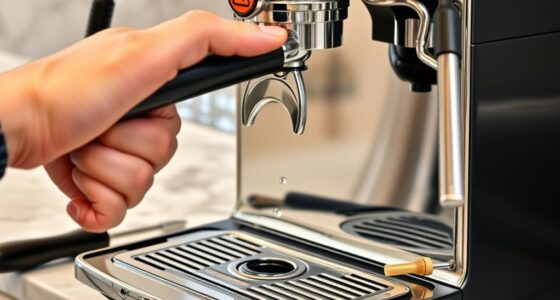
You should choose equipment with high thermal stability, like a high-quality pour-over kettle or an espresso machine with precise temperature controls. Regularly calibrate your equipment to guarantee consistent water temperature during brewing. Invest in devices with digital displays and thermostatic controls, as they help maintain stable temperatures, minimizing fluctuations. This way, you ensure your coffee’s flavor remains consistent, enhancing the overall brewing experience and taste.
How Does Altitude Influence the Ideal Water Temperature for Brewing?
Altitude affects your brewing precision by lowering boiling points, meaning higher altitudes require slightly cooler water temperatures. As you ascend, water boils at less than 212°F, so to extract ideal flavors, you should adjust your brewing temperature accordingly. By customizing water temperature to altitude effects, you enhance extraction, ensuring your coffee’s richness and robustness remain consistent, no matter how high you climb. Proper adjustments perfect your pour-over or press for peak flavor.
Are There Specific Temperature Recommendations for Different Coffee Brewing Methods?
For different brewing methods, aim for specific water temperatures to optimize flavor. For drip coffee, use 195-205°F; for French press, 200-212°F; and for espresso, around 190-196°F. Adjust your brew time accordingly and employ flavor extraction techniques like agitation or bloom to enhance taste. These temperature guidelines help you achieve the best balance of acidity, body, and aroma in your coffee.
Conclusion
Mastering water temperature is your secret weapon for a legendary cup of coffee. By dialing in the right heat, you’ll unlock rich flavors and avoid a mug that’s more burnt toast than bright brew. Think of it as your own personal alchemist’s touch—transforming humble beans into liquid gold. So, channel your inner barista, avoid the pitfalls of olden days, and craft that perfect brew every time, just like the artisans of yore would’ve dreamed.