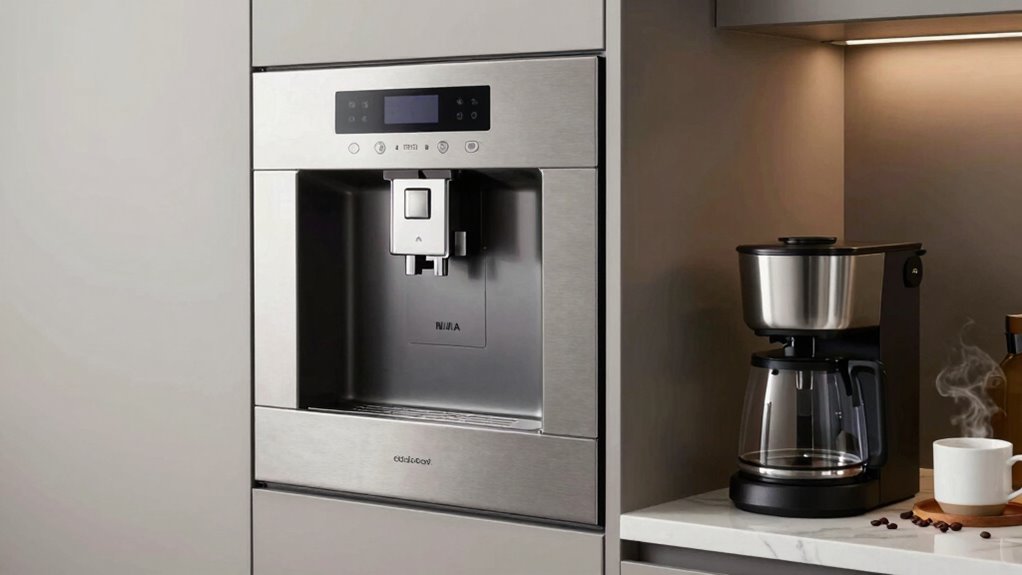
Built-in coffee machines are designed to blend seamlessly into your cabinetry, providing a sleek, permanent look but require professional installation and regular maintenance. Countertop brewers are portable, easy to set up, and simple to clean, making them ideal for flexible use and quick setup. While built-ins cost more upfront and need more upkeep, countertop models are budget-friendly and low hassle. To discover which option fits your lifestyle best, explore further for detailed insights.
Key Takeaways
- Built-in machines are integrated into cabinetry for a sleek look, while countertop brewers are portable and placed on the counter.
- Built-in systems require professional installation, whereas countertop models are simple to set up and move.
- Maintenance for built-in machines is more complex and often involves professional servicing, unlike the easier upkeep of countertop brewers.
- Built-in options have higher upfront costs and potential repair expenses; countertop brewers are generally more affordable and repair-friendly.
- Built-in machines suit those prioritizing a seamless kitchen design; countertop brewers cater to users valuing flexibility and convenience.
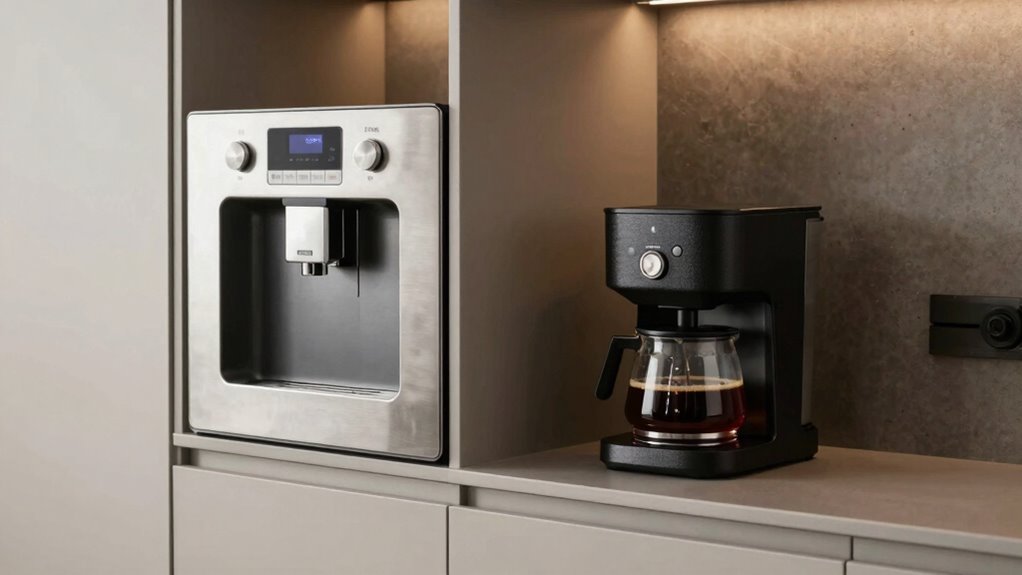
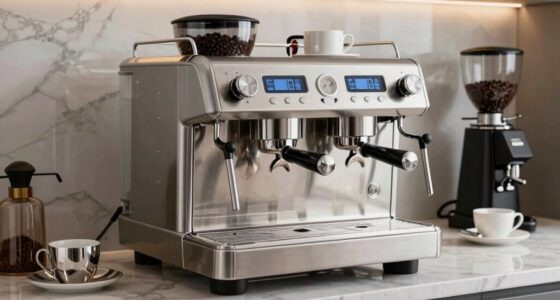
When choosing a coffee brewing system, you might wonder whether a built-in machine or a countertop brewer best suits your needs. The decision largely depends on your kitchen layout, daily routine, and how much effort you want to put into brewing coffee. Built-in coffee machines are designed to integrate seamlessly into your cabinetry, offering a sleek and permanent solution. Installing one involves a more complex process, known as coffee machine installation, which typically requires professional help to ensure proper electrical and plumbing connections. Once set up, these machines become a permanent fixture, saving counter space and providing a streamlined look. However, their installation can be costly and time-consuming, which is worth considering if you’re not planning to stay in the same home long-term.
Built-in coffee machines offer a sleek, permanent solution but require professional installation and long-term maintenance.
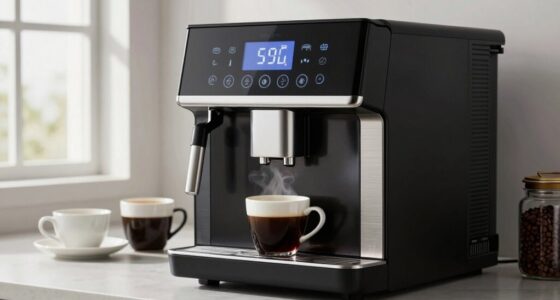
Countertop brewers, on the other hand, are portable, user-friendly, and require minimal setup. You simply place them on your counter, plug them in, and start brewing. This convenience makes them a popular choice for those who want flexibility and ease of use. Maintenance requirements for countertop brewers tend to be straightforward. Most models need regular descaling, filter changes, and occasional cleaning, which can be done quickly without specialized tools. Because they aren’t built into the cabinetry, you can easily move or replace them as your preferences change, and they don’t involve the same level of technical installation or potential repairs associated with built-in systems. Additionally, maintenance routines for these machines are generally less complex, making them suitable for users who prefer a low-maintenance option.
In terms of long-term upkeep, built-in coffee machines generally require more attention to maintenance. Since they’re integrated into your kitchen design, they often have more complex internal components that need professional servicing over time. Additionally, their cleaning routines can be more involved, requiring regular descaling and sometimes even professional maintenance to keep them functioning at their best. Many built-in models also incorporate advanced features, which can demand more specialized care and troubleshooting. It’s also important to consider the cost of installation, which can be significant depending on the complexity of the setup. Moreover, understanding the technical complexity involved in maintaining these systems can help prevent costly repairs in the future. Countertop brewers are usually simpler to maintain, with most users able to handle routine cleaning themselves. They tend to have fewer parts that can break down, and replacement is generally easier and less expensive.
Ultimately, your choice depends on your priorities: if you prefer a clean, integrated look and don’t mind the initial investment and upkeep, a built-in coffee machine might be right for you. If you value flexibility, ease of setup, and lower maintenance, a countertop brewer is likely a better fit. Both options can deliver excellent coffee, but understanding the differences in coffee machine installation and maintenance requirements helps you make an informed decision that aligns with your lifestyle.
Frequently Asked Questions
Can Built-In Coffee Machines Be Easily Repaired or Replaced?
Built-in coffee machines can be more challenging to repair or replace due to their integrated design. You might face maintenance challenges because these units are built into your cabinetry, making access difficult. Replacement costs tend to be higher compared to countertop brewers, since removing and installing a built-in model involves more work and potential cabinetry adjustments. If something breaks, expect both the repair process and expenses to be more complex and costly.
Are Built-In Coffee Machines Compatible With All Kitchen Designs?
Can a built-in coffee machine seamlessly blend into your kitchen? Yes, if you prioritize design integration, these machines can complement your kitchen aesthetics beautifully. They’re designed to fit custom spaces, matching cabinetry and appliances for a sleek look. However, they may not suit all kitchen designs, especially if your layout isn’t flexible. Consider your space and style preferences to guarantee the machine enhances, rather than clashes with, your overall decor.
Do Countertop Brewers Require Special Maintenance or Cleaning?
Countertop brewers do require regular maintenance, including cleaning frequency and a descaling process. You should clean the machine’s removable parts weekly to prevent buildup. Depending on your water hardness, you’ll need to descale the brewer every few months to keep it functioning properly. Following the manufacturer’s instructions for cleaning and descaling helps guarantee your coffee tastes fresh and the machine lasts longer.
What Is the Typical Lifespan of Built-In Versus Countertop Coffee Makers?
A built-in coffee machine generally lasts longer, often 10-15 years, thanks to sturdy design and seamless integration, while countertop brewers typically serve you well for around 5-8 years before needing replacement. You’ll appreciate the aesthetic appeal and ample brewing capacity of built-ins, which blend beauty with durability. Countertop models, though convenient, may face more wear and tear sooner. Your choice depends on your desire for durability, design, and daily drinking volume.
Can I Install a Built-In Coffee Machine Myself?
You can install a built-in coffee machine yourself, but be prepared for installation challenges, especially with electrical and plumbing connections. It’s essential to follow the manufacturer’s instructions carefully. Keep in mind, proper installation guarantees aesthetic integration with your kitchen design, creating a seamless look. If you’re unsure about handling these technical aspects, hiring a professional ensures safety and a polished finish, making your coffee station both functional and visually appealing.
Conclusion
So, which coffee maker suits your lifestyle better? Imagine waking up to a sleek built-in machine seamlessly integrated into your kitchen, or enjoying the flexibility of a countertop brewer that moves with you. Both options serve your coffee needs, but the choice depends on your space, style, and how you like your brew. Isn’t it time you decided which coffee experience will start your day just right?