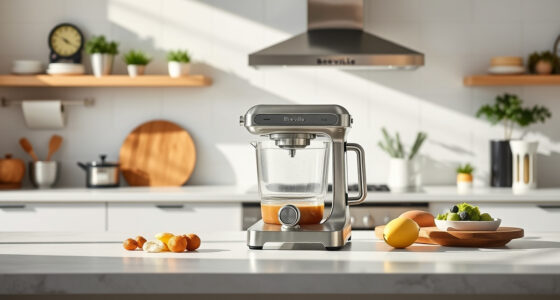

When choosing an espresso machine with a grinder, focus on key features like a powerful steam wand for creamy milk froth, a well-designed portafilter for even extraction, and easy-to-clean components to maintain your machine in top shape. Reliable temperature control and consistent grinding ensure great shots every time. User-friendly controls help simplify your routine. Keep these priorities in mind, and you’ll find a machine that elevates your coffee experience—more details await as you explore further.
Listen free for 30 days with Audible
Thousands of audiobooks and originals — cancel anytime.
As an affiliate, we earn on qualifying purchases.
Key Takeaways
- Effective milk frothing capabilities with adjustable steam control for dense, creamy froth.
- Well-designed portafilter with sturdy handle and balanced weight for consistent extraction.
- Automatic cleaning and maintenance features to ensure long-term performance and flavor quality.
- Intuitive controls and easy-to-clean components for user-friendly operation.
- Reliable temperature control to guarantee optimal espresso extraction and milk steaming.
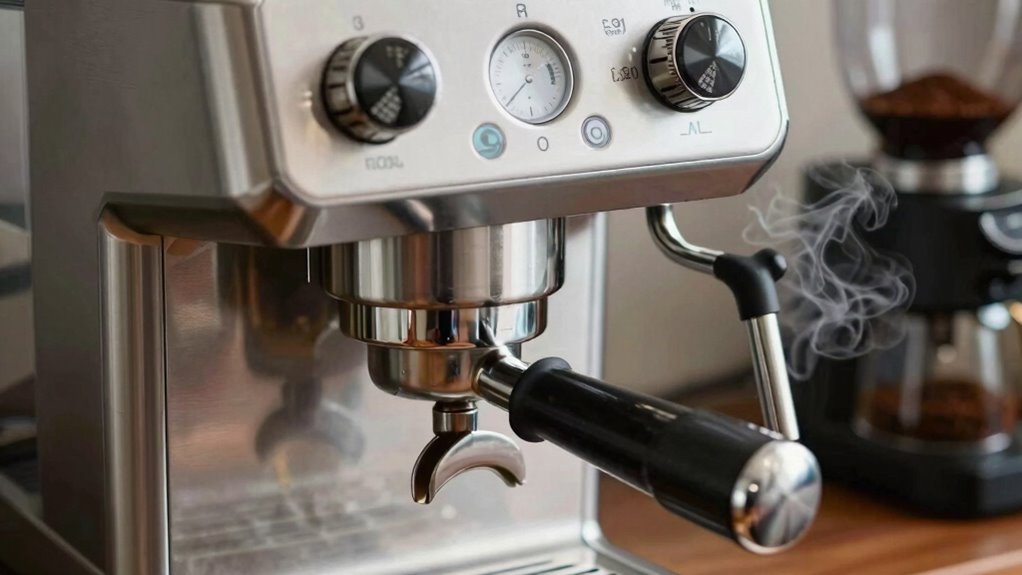
When choosing an espresso machine with a grinder, understanding which features truly matter can make all the difference in your coffee experience. One of the key aspects to consider is milk frothing. If you love lattes or cappuccinos, you’ll want a machine that offers excellent milk steaming capabilities. Look for models with a powerful steam wand that can produce dense, creamy froth. Some machines even come with adjustable steam controls, giving you more precision over temperature and froth consistency. This way, you can craft the perfect milk texture for your favorite drinks, whether it’s a silky flat white or a fluffy cappuccino. Good milk frothing isn’t just about the wand’s power; it’s also about how easy it is to use. A wand that’s easy to maneuver and clean can save you frustration and help you perfect your barista skills at home. Maintaining consistent temperature control is essential for achieving the ideal espresso extraction and milk steaming, ensuring every cup meets your expectations.
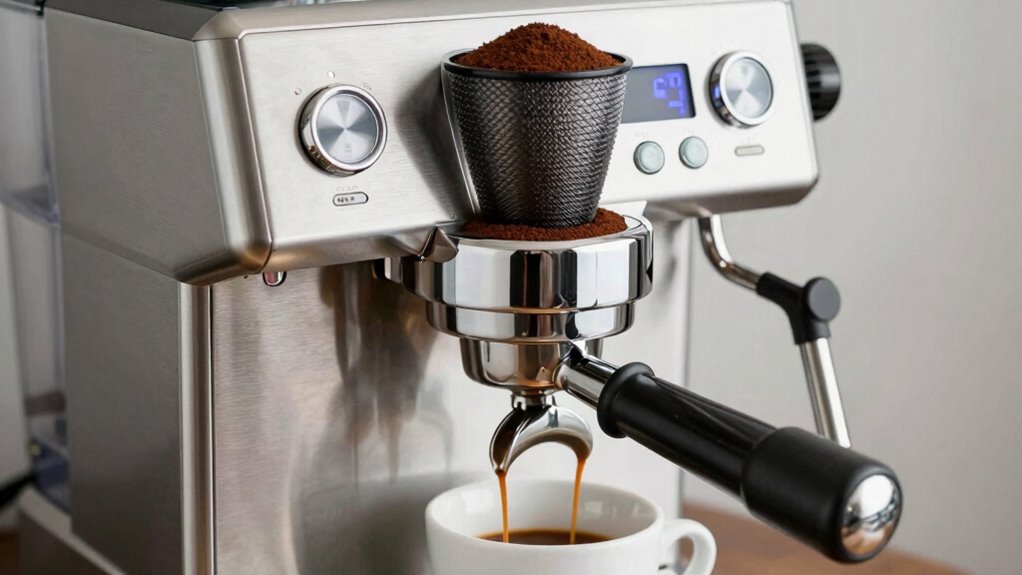
Another feature that can profoundly elevate your coffee game is the portafilter design. The portafilter is where you’ll place your ground coffee, so its design impacts how evenly the water extracts flavor from your beans. A well-designed portafilter typically has a sturdy handle and a balanced weight, making it easier to lock in securely and remove without mess. Many high-quality machines offer a commercial-style portafilter with a larger basket, allowing for more consistent extraction and better flavor. Some models come with dual-spout designs, which let you brew two shots simultaneously, saving time if you’re making multiple drinks. The quality of the portafilter also affects how easy it is to tamp the coffee evenly, which is essential for a balanced extraction. If tamping feels awkward or uneven, your espresso could taste bitter or weak. So, investing in a machine with a good portafilter design ensures you can create a more professional shot every time. Proper tamping technique and a well-crafted portafilter can significantly improve your brewing results.
Additionally, understanding the importance of sensor flush valves can help you maintain your machine more efficiently, ensuring consistent performance and longevity. Regular cleaning and maintenance, including cleaning the grinder, are crucial to preserving optimal flavor and preventing buildup that could affect brewing quality. Incorporating features like automatic cleaning cycles can further streamline upkeep, saving you time and effort. Beyond milk frothing and portafilter design, think about how user-friendly the machine is overall. Features like intuitive controls, easy-to-clean components, and consistent temperature control matter more than bells and whistles. When you focus on these core features, you set yourself up for a better brewing experience, with richer crema, perfectly textured milk, and shots that truly showcase the quality of your beans. Remember, the right machine should feel like an extension of your coffee routine—reliable, easy to operate, and capable of delivering the coffee you crave every morning.
espresso machine with steam wand
As an affiliate, we earn on qualifying purchases.
As an affiliate, we earn on qualifying purchases.
Frequently Asked Questions
What Is the Ideal Grind Size for Different Espresso Beans?
You should aim for a fine, consistent grind size for espresso beans, but it varies slightly depending on bean freshness and your machine. For fresh beans, a slightly coarser grind can prevent over-extraction, while older beans may need a finer grind for ideal flavor. Focus on grind consistency, as it directly affects extraction quality. Adjust your grind size in small steps until you get a balanced, rich shot of espresso.
How Often Should I Calibrate the Grinder?
You should calibrate your grinder every few weeks or whenever you notice inconsistent grind size, which often causes increased grinder noise. Use calibration tools to fine-tune the settings and guarantee the best espresso extraction. Regular calibration helps maintain consistent flavor and prevents wear on your grinder. If your machine starts making unusual noise or the espresso quality drops, it’s time for a quick recalibration to keep everything running smoothly.
Can I Use Pre-Ground Coffee With an Espresso Machine Grinder?
You can use pre-ground coffee with your espresso machine grinder, but it’s not *preferable*. Pre-ground coffee loses freshness quickly, affecting flavor and crema quality. Plus, it might cause more grinder noise and clogging since it’s already ground. For the best espresso, it’s better to grind fresh beans right before brewing, ensuring *ideal* coffee bean freshness and consistent grind size, which helps your machine operate smoothly.
What Maintenance Is Required for the Grinder?
You should follow a regular cleaning schedule for your grinder, ideally weekly, to prevent build-up and guarantee consistent coffee quality. Regularly remove and clean the burrs, and replace them when they become dull or damaged—usually after about 1-2 years, depending on use. This maintenance keeps your grinder functioning smoothly, preserves flavor, and extends its lifespan, so you can enjoy fresh, flavorful espresso every time.
How Does Tamping Pressure Affect Espresso Quality?
Think of tamping pressure as tuning a guitar string—you want just the right tension. When you apply consistent tamping techniques, you guarantee even extraction, resulting in a rich, balanced espresso. Too much pressure crushes the grounds, making the shot bitter; too little, and it’s weak and sour. Maintaining pressure consistency creates a harmonious brew, revealing the full flavor profile and elevating your espresso experience with every shot you pull.
automatic coffee machine with grinder
As an affiliate, we earn on qualifying purchases.
As an affiliate, we earn on qualifying purchases.
Conclusion
Choosing an espresso machine with a grinder isn’t just about fancy features—it’s about what truly enhances your brew. Focus on grind quality, temperature control, and user-friendly operation. Did you know that 80% of espresso enthusiasts say consistent grind size considerably improves flavor? So, prioritize those key features to craft your perfect shot every time. With the right machine, you’ll enjoy barista-quality espresso right at home, making every morning a special experience.
professional portafilter espresso machine
As an affiliate, we earn on qualifying purchases.
As an affiliate, we earn on qualifying purchases.
espresso machine with easy-clean features
As an affiliate, we earn on qualifying purchases.
As an affiliate, we earn on qualifying purchases.
NFL season / tailgating Picks
team gear
As an affiliate, we earn on qualifying purchases.