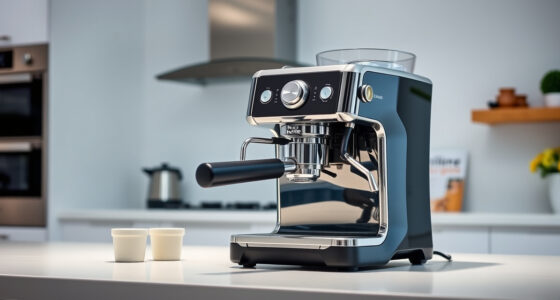
The pressure in your espresso machine forces hot water through coffee grounds, extracting oils, sugars, and aromas that shape flavor. If pressure is too low, your shot may taste weak and flat; too high, and it might turn bitter and over-extracted. Proper control—around nine bars—ensures balanced extraction, highlighting each coffee bean’s unique qualities. Maintaining consistent pressure helps you achieve rich, clear flavors. Keep exploring how mastering pressure can reveal even better espresso results.

Get kitchen gear delivered free with Prime
- Fast, free delivery on millions of items
- Prime Video, Amazon Music and more included
- Member-only deals all year
Key Takeaways
- Optimal pressure (around nine bars) ensures balanced extraction, highlighting coffee’s unique flavors.
- Incorrect pressure levels cause under- or over-extraction, leading to weak or bitter-tasting espresso.
- Precise pressure management preserves delicate characteristics of beans from different origins.
- Consistent pressure during brewing prevents flavor inconsistencies and enhances overall coffee clarity.
- Proper pressure control during milk frothing creates smooth microfoam, improving mouthfeel and flavor harmony.
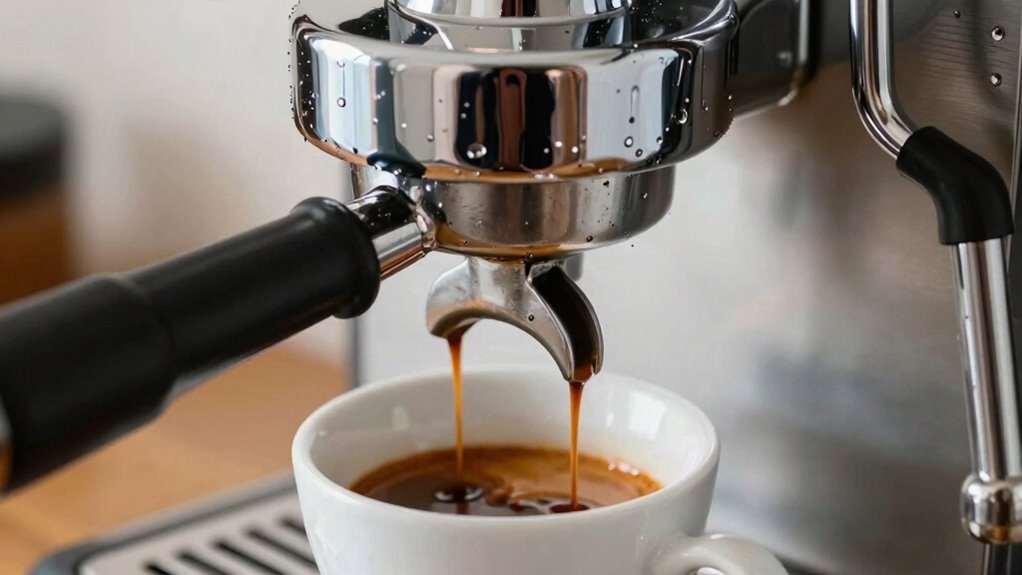
The pressure inside your espresso machine plays a essential role in extracting the rich, complex flavors you experience in each shot. When you pull a shot, the machine’s pressure forces hot water through the tightly packed coffee grounds, dissolving oils, sugars, and aromatic compounds. This process is highly sensitive to pressure adjustments; too little, and the water won’t extract enough flavor, resulting in a weak, underwhelming shot. Too much, and you risk over-extraction, which can make the coffee bitter and harsh. Perfect pressure—usually around nine bars—ensures a balanced extraction, highlighting the unique qualities of your coffee bean origin. For example, beans from Ethiopia, known for their bright, fruity notes, benefit from precise pressure to preserve their delicate flavors, while robust beans from Sumatra might need slightly different pressure settings to bring out their earthy depth. Consistent pressure control is crucial for optimizing extraction and flavor clarity. Additionally, pressure stability during brewing helps prevent inconsistencies that could impact flavor. Achieving steady pressure also depends on the espresso machine’s quality, which can significantly influence your brewing results. Regular machine calibration ensures your device maintains the correct pressure levels, directly affecting the flavor outcome. Adequate maintenance and calibration of your machine can maintain optimal pressure consistency, ensuring each shot is as flavorful as the last.
Your choice of coffee bean origin influences how the pressure should be managed, but equally important is your milk frothing technique. Proper milk frothing creates a velvety microfoam that complements your espresso, but the quality of this foam depends on both your technique and the pressure you apply. When steaming milk, maintaining consistent pressure ensures the milk heats evenly and develops a fine, glossy texture. If the pressure fluctuates, you might end up with overly frothy or thin milk, which can diminish the overall flavor profile of your coffee. A good milk frothing technique involves not only controlling the steam wand’s pressure but also positioning it correctly and keeping your milk at the right temperature. This results in a smooth, glossy foam that enhances the mouthfeel of your espresso, making each sip more satisfying.
As an affiliate, we earn on qualifying purchases.
Frequently Asked Questions
How Does Pressure Affect the Crema Quality in Espresso?
You control the pressure, which directly impacts the crema texture and flavor extraction. Higher pressure creates a thicker, more stable crema that enhances aroma and mouthfeel, while also ensuring flavors are fully extracted from the coffee grounds. Too low pressure results in a thin, weak crema, leading to under-extraction and muted flavors. Proper pressure balance is essential for achieving rich, flavorful espresso with a beautiful, lasting crema.
What Is the Ideal Pressure Range for Different Coffee Beans?
Think of brewing as tuning a musical instrument—you want the perfect pitch. For coffee bean varieties, 9 to 10 bars of pressure generally hits the sweet spot, but some beans, like lighter roasts, may benefit from slightly lower pressures, while denser beans might need a bit more. Adjust your brewing techniques accordingly, experimenting within the 8-12 bar range, to reveal the best flavor profile for each coffee.
Can Adjusting Pressure Improve Espresso Extraction Time?
Adjusting pressure can definitely improve your espresso extraction time. When you tweak pressure, it affects how water interacts with your coffee, so maintaining grind consistency and ideal water temperature becomes essential. If your pressure is too high or low, your shot might pull too quickly or too slowly. By fine-tuning pressure alongside consistent grind and water temp, you guarantee a balanced extraction, resulting in better flavor and proper shot timing.
How Does Pressure Influence the Bitterness and Acidity?
Like a wise old alchemist, you know pressure directly impacts bitterness and acidity, shaping your espresso’s flavor balance. Higher pressure enhances extraction dynamics, pulling out more bitter compounds, which can make your shot overly harsh. Conversely, lower pressure preserves acidity, brightening the cup. Adjusting pressure carefully allows you to fine-tune flavor, balancing bitterness and acidity for a harmonious espresso that delights the palate.
What Role Does Pressure Play in Espresso Temperature Stability?
Pressure plays a critical role in maintaining espresso temperature stability. When you guarantee pressure consistency, it helps prevent temperature fluctuations that can negatively affect your shot. Stable pressure keeps water flow steady, which maintains ideal extraction temperatures. If pressure varies, you might notice inconsistent flavors or over-extraction. So, by controlling pressure accurately, you support consistent temperature, leading to a more balanced and flavorful espresso every time.
As an affiliate, we earn on qualifying purchases.
Conclusion
Just like a delicate dance, espresso machine pressure guides the flavor journey from bitter to sweet. Too high, and you risk bitterness; too low, and your shot falls flat. Balancing pressure isn’t just technical—it’s crafting a moment of perfection in your cup. So, as you tweak and taste, remember: in espresso, as in life, the right pressure reveals richness where chaos might otherwise reign. Your perfect shot awaits with just the right touch.
coffee machine calibration tools
As an affiliate, we earn on qualifying purchases.
As an affiliate, we earn on qualifying purchases.
As an affiliate, we earn on qualifying purchases.
Halloween Picks
halloween
As an affiliate, we earn on qualifying purchases.