If your home is heavy on produce, whole slow juicers are a smart choice because they extract maximum nutrients at low speeds, keeping vitamins, enzymes, and minerals intact. They’re easy to clean with dishwasher-safe parts and gentle on produce, minimizing oxidation for fresher juice. These juicers handle large quantities quickly and efficiently, making healthy habits simple. Keep exploring to discover even more tips on choosing the perfect model for your needs.

Get kitchen gear delivered free — and shop member deals
- Fast, free delivery on millions of items
- Access to Prime Big Deal Days deals on October 6–7
- Prime Video, Amazon Music and more included
Key Takeaways
- Whole slow juicers operate at low speeds (~80 RPM) to maximize nutrient preservation from produce.
- They efficiently process large quantities, ideal for produce-heavy households focused on health.
- These juicers extract more vitamins, enzymes, and minerals while minimizing oxidation.
- Easy-to-clean, dishwasher-safe parts make regular maintenance simple and convenient.
- They produce smooth, nutrient-dense juice with minimal fiber, perfect for health-conscious consumers.
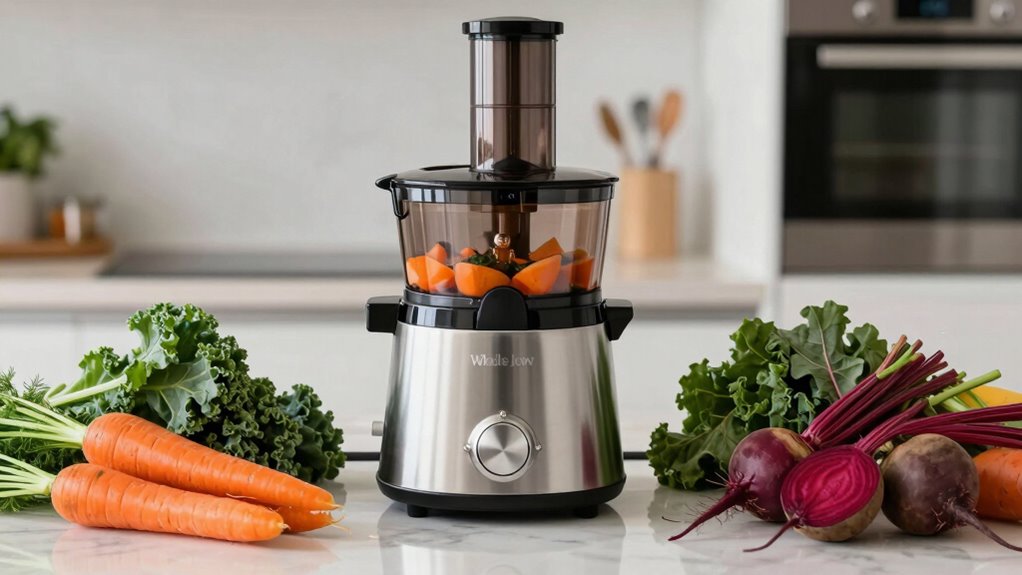
If you’re looking to maximize the nutrients in your juices, whole slow juicers are an excellent choice. These appliances excel at extracting the most from fruits and vegetables, making them ideal for produce-heavy homes. Unlike traditional high-speed juicers, whole slow juicers operate at low speeds, typically around 80 RPM, which helps preserve delicate enzymes, vitamins, and minerals. This slow process minimizes oxidation, guaranteeing you get a fresher, more nutritious juice with every use. For those who prioritize health and nutrient retention, a whole slow juicer becomes a valuable kitchen tool.
When contemplating juicing vs blending, it’s clear that each method offers different benefits. Juicing with a slow juicer separates the liquid from the pulp, giving you a smooth, nutrient-dense drink that’s easy to consume quickly. Blending, on the other hand, keeps the whole produce, including fiber, resulting in a thicker, more filling beverage. If your goal is to maximize nutrient intake without sacrificing fiber, juicing is often preferred. However, blending can be more versatile, allowing you to incorporate nuts, seeds, or oats for added nutrition. Your choice depends on your dietary goals and texture preferences, but a whole slow juicer specializes in producing pure juice with minimal fuss.
Ease of cleaning is another essential factor to consider. Whole slow juicers are generally designed with user convenience in mind. Many models feature wide feed chutes that reduce prep time, and their parts are often dishwasher safe, simplifying cleanup after each use. Unlike some high-speed juicers that have intricate pulp ejection systems, slow juicers tend to have straightforward assemblies, making disassembly and cleaning quicker. If you’re concerned about time spent on kitchen chores, knowing that your juicer is easy to clean can influence your decision to invest in one. Keeping your device in top shape guarantees optimal performance and longevity, so choosing a model with simple, accessible parts is a smart move.
whole slow juicer for produce-heavy homes
As an affiliate, we earn on qualifying purchases.
As an affiliate, we earn on qualifying purchases.
Frequently Asked Questions
How Do Slow Juicers Compare in Juice Yield to Traditional Blenders?
You’ll find that slow juicers generally offer better juice extraction than traditional blenders, especially for produce-heavy homes. They extract more liquid from fruits and vegetables, resulting in higher juice yield. Plus, their pulp efficiency is superior, leaving less waste behind. This means you get more nutritious juice with fewer leftovers, making slow juicers a smart choice if you prioritize maximizing juice from your produce.
Are Slow Juicers Easier to Clean Than Centrifugal Juicers?
Yes, slow juicers are generally easier to clean than centrifugal juicers. Their cleaning process is simpler because they have fewer parts and less pulp buildup. With user convenience in mind, many slow juicers feature removable, dishwasher-safe components, making cleanup quick and hassle-free. Unlike centrifugal juicers, which often have complex filters and screens that take time to clean, slow juicers allow you to maintain your juicing routine with less effort.
Can Slow Juicers Handle Leafy Greens Effectively?
Yes, slow juicers handle leafy greens effectively. Their gentle crushing process preserves more nutrients and extracts juice efficiently from greens like spinach and kale. You’ll notice improved juicer efficiency because slow juicers minimize oxidation and reduce foam, giving you richer, smoother juice. Unlike centrifugal models, slow juicers extract maximum juice from leafy greens, making them ideal for produce-heavy homes. Just make certain you load the greens properly for the best results.
What’s the Typical Lifespan of a Whole Slow Juicer?
Think of your juicer as a loyal companion—its lifespan hinges on your care. Typically, whole slow juicers last between 8 to 15 years, depending on Juicer durability and maintenance frequency. Regularly cleaning and inspecting parts extend its life, preventing wear and tear. While high-quality models might endure longer, diligent upkeep guarantees your juicer remains efficient, making every drop worth the investment for years to come.
Do Slow Juicers Retain More Nutrients Than Other Juicing Methods?
Yes, slow juicers generally retain more nutrients than other juicing methods. Their gentle, cold-pressing process minimizes heat and oxidation, leading to better nutrient preservation. As a result, you get higher juice quality with more vitamins, enzymes, and antioxidants intact. This makes slow juicers ideal for produce-heavy homes, where maximizing nutritional value is a priority. Plus, their efficient extraction means you get more juice from the same amount of produce.
As an affiliate, we earn on qualifying purchases.
Conclusion
So, if you’re tired of choking down bland, watered-down juice, a whole slow juicer is your game-changer. It transforms even the toughest produce into liquid gold, making your mornings feel like a luxury spa visit. With one of these, you’ll turn your kitchen into a juice haven, where fresh, nutrient-packed drinks flow endlessly. Don’t settle for less—embrace the power of whole slow juicers and experience the juice revolution firsthand!
low RPM juicer for maximum nutrients
As an affiliate, we earn on qualifying purchases.
As an affiliate, we earn on qualifying purchases.
As an affiliate, we earn on qualifying purchases.
Halloween Picks
halloween
As an affiliate, we earn on qualifying purchases.