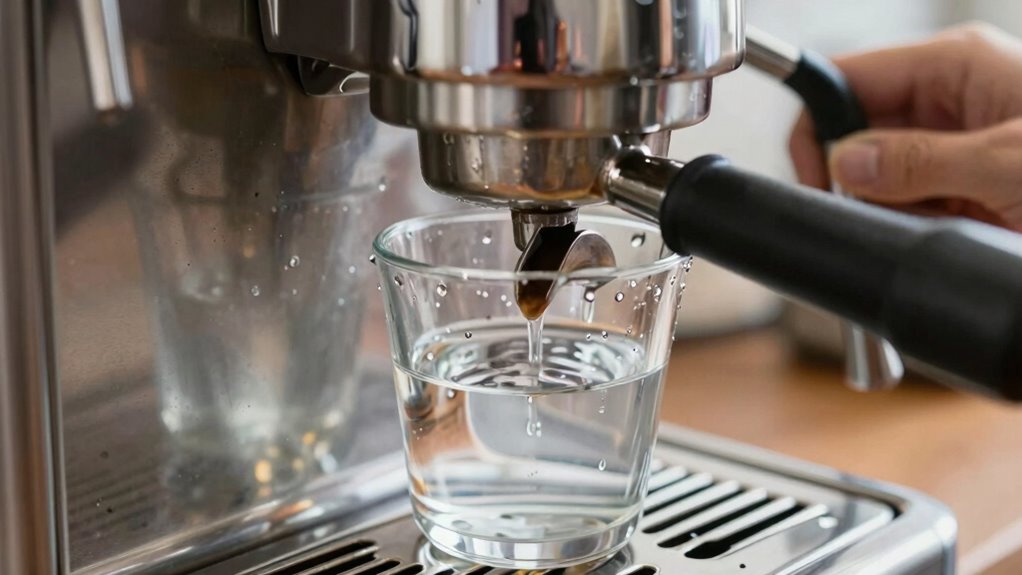

You need consistent water quality for your espresso machine because it directly affects flavor, machine performance, and longevity. Uneven mineral levels can cause scale buildup, clogging, and reduce efficiency. Properly balanced water ensures ideal extraction of flavors, keeps equipment in good shape, and lowers maintenance costs. Using the right filtration helps maintain this balance. Keep your machine working smoothly and your coffee tasting great—there’s more to discover about how water impacts your espresso experience.
Key Takeaways
- Consistent water quality ensures a stable extraction process, leading to uniform espresso flavor.
- Proper mineral levels prevent scale buildup, safeguarding equipment longevity and performance.
- Variations in water minerals can cause unpredictable taste, affecting coffee quality.
- Clean, balanced water reduces maintenance needs and extends machine lifespan.
- Reliable water quality supports optimal brewing efficiency and high-quality espresso production.
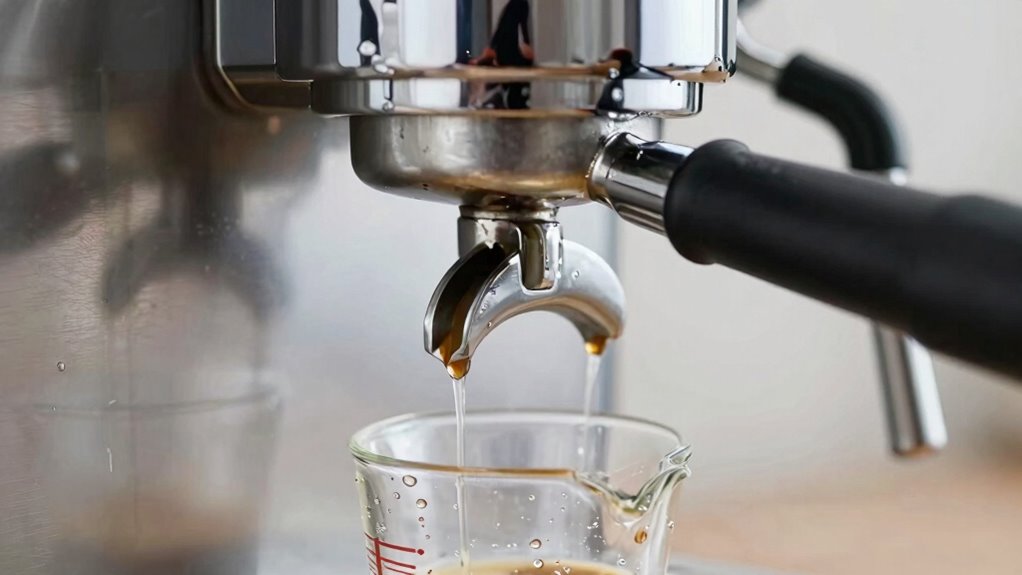
Have you ever wondered how water quality impacts the taste of your espresso? It’s more important than you might think. The quality of the water you use directly influences both the flavor of your brew and the longevity of your espresso machine. When water has inconsistent mineral content, it can lead to unpredictable results, making each shot less satisfying. That’s where understanding water mineralization and filtration methods becomes vital. Proper mineral balance ensures your espresso maintains a consistent taste, highlighting the rich, nuanced flavors of your beans. Too much mineral content, especially calcium and magnesium, can cause scale buildup inside your machine, reducing efficiency and increasing maintenance costs. Conversely, water that’s too soft, lacking essential minerals, can result in flat, dull flavors that don’t do justice to your coffee. Achieving the right water mineralization is essential for a balanced extraction, where flavors shine without the interference of unwanted mineral tastes or scale deposits. Utilizing landscaping to enhance natural beauty can also help create an environment where water quality is better preserved through natural filtration. Additionally, understanding water mineralization helps in selecting the appropriate filtration system tailored to your water source. Proper mineral content is especially critical when using electric bikes, as the efficiency and performance depend heavily on the quality of the energy source, similar to how water quality affects espresso taste. To maintain this delicate balance, you need effective filtration methods. Not all filters are created equal, and choosing the right one depends on your local water quality. Activated carbon filters can remove chlorine, odors, and some impurities, improving the overall taste. However, they don’t greatly alter mineral content. Reverse osmosis systems are more thorough, removing a wide range of contaminants and reducing mineral levels, but they can strip water of beneficial minerals altogether, potentially leading to flat-tasting espresso. To counteract this, some baristas add back minerals after filtration to restore proper mineralization. Water softening systems are also popular, especially in areas with hard water, as they reduce calcium and magnesium levels, preventing scale buildup. Whichever method you choose, the goal is to maintain consistent water mineralization that’s suited for espresso brewing. Using proper filtration methods isn’t just about taste; it’s about protecting your equipment. Scale buildup from mineral-rich water can clog pipes and ruin heating elements, leading to costly repairs and downtime. Consistent water quality helps extend the lifespan of your espresso machine, ensuring it performs at its best shot after shot. Plus, it simplifies your daily routine — you won’t have to constantly clean or descale due to mineral deposits. Ultimately, investing in the right filtration system and paying attention to water mineralization means you get better-tasting espresso, fewer maintenance issues, and a more reliable brewing experience. By controlling what goes into your machine, you’re taking an essential step toward consistently excellent coffee, ensuring that each cup meets your highest expectations.

Possiave 12-Pack Charcoal Water Filters Compatible with Breville BWF100 Machines, Breville Espresso Machine Water Filter Replacement
SUITABLE FOR MOST OF BREVILLE MACHINES – Well -designed for all Breville machine models: BES980XL, BES920XL, BES900XL, BES860XL,…
As an affiliate, we earn on qualifying purchases.
As an affiliate, we earn on qualifying purchases.
Frequently Asked Questions
How Does Mineral Content Affect Espresso Taste?
Mineral content directly influences your espresso’s taste by affecting mineral balance and flavor extraction. Too many minerals can lead to over-extraction, making your coffee bitter, while too few can cause under-extraction, resulting in a flat flavor. The right mineral levels guarantee ideal flavor extraction, giving your espresso a balanced, rich taste. By monitoring mineral content, you help your machine produce consistently delicious espresso with each shot.
Can Water Temperature Impact Machine Longevity?
Think of your espresso machine as a finely tuned instrument; if the water temperature fluctuates wildly, it’s like playing out of tune. Water temperature directly impacts machine durability—too hot or too cold can cause wear and tear over time. Maintaining consistent water temperature guarantees your machine runs smoothly, prolonging its lifespan and preserving the quality of each shot. Stable water temperature is key to both performance and longevity.
What Are Signs of Water Quality Issues in My Espresso?
You’ll notice signs of water quality issues in your espresso, like off-flavors or a metallic taste, which could be caused by high water hardness or chlorine presence. Chalky residue or scale buildup on your machine indicates hard water, while a strong chlorine smell suggests contamination. These issues can affect taste and damage your equipment, so regularly checking water quality and using filters can help maintain ideal espresso flavor and machine longevity.
How Often Should I Test My Water Quality?
Think of your espresso machine as a delicate garden—regular watering keeps it thriving. You should test your water quality weekly, especially if your water source varies. Use ideal test methods like digital testers or test strips for accuracy. Consistent water testing frequency helps catch issues early, ensuring your machine performs its best and your coffee remains flavorful. Stay proactive, and your espresso garden will flourish.
Do Different Water Sources Require Different Filtration?
Yes, different water sources require different filtration. You need to take into account factors like water hardness and pH balance, which vary by source. Hard water can cause mineral buildup, while imbalanced pH affects taste and machine longevity. Using appropriate filtration guarantees your espresso machine receives suitable water, preventing scale and maintaining flavor. Tailor your filtration system to your water source to keep your espresso consistently high quality.

iSpring RCC7AK, NSF Certified, 75 GPD, Alkaline 6-Stage Reverse Osmosis System, pH+ Remineralization RO Water Filter System Under Sink, Patented Top-Mounted Faucet Design for Easy Installation
PATENTED DESIGN – The top-mounted fastener allows for easy countertop installation entirely from above, eliminating the hassle of…
As an affiliate, we earn on qualifying purchases.
As an affiliate, we earn on qualifying purchases.
Conclusion
To keep your espresso machine humming smoothly, think of water quality as its lifeblood—without it, your machine’s performance is like a ship without a sail. Consistent water guarantees every shot tastes just right and your machine lasts longer. So, treat your water like a trusted friend, giving it the care it deserves. When you do, you’ll find that your mornings become a symphony of perfect espresso, turning everyday routines into moments of true craftsmanship.
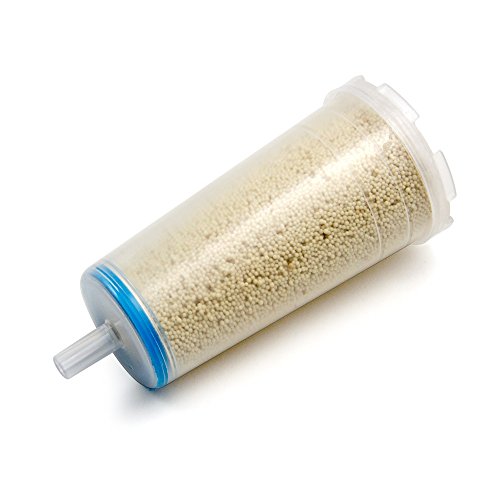
Espresso Machine Water Softener Filter for Ascaso, Isomac, Quickmill, Expobar, Lelit, VBM, and Many More!
Easy installation in seconds!
As an affiliate, we earn on qualifying purchases.
As an affiliate, we earn on qualifying purchases.

Descaler (2 Pack, 2 Uses Per Bottle) – Made in the USA – Universal Descaling Solution for Keurig, Nespresso, Delonghi and All Single Use Coffee and Espresso Machines
2-Pack Coffee Descaler and Cleaner – Clean and rinse away residue and oil buildup in your coffee maker…
As an affiliate, we earn on qualifying purchases.
As an affiliate, we earn on qualifying purchases.