
To prevent hot spots in your home oven, start by regularly calibrating it with an oven thermometer to guarantee accurate temperatures. Optimize airflow by keeping vents clear and avoiding overcrowding, which promotes even heat distribution. Arrange your cookware in the center of racks, leaving space around each piece to allow proper circulation. Rotate dishes midway and perform regular oven maintenance to keep heat consistent. If you want to discover more tips, keep exploring how to achieve perfectly even cooking every time.
Key Takeaways
- Regularly calibrate your oven using an oven thermometer to ensure accurate temperature settings.
- Improve airflow by avoiding blocking vents and placing dishes with space around them.
- Rotate food midway and adjust rack positions to promote even heat exposure.
- Keep the oven clean to prevent buildup that can disrupt heat circulation.
- Use appropriate, flat-bottom, oven-safe cookware for better heat conduction.
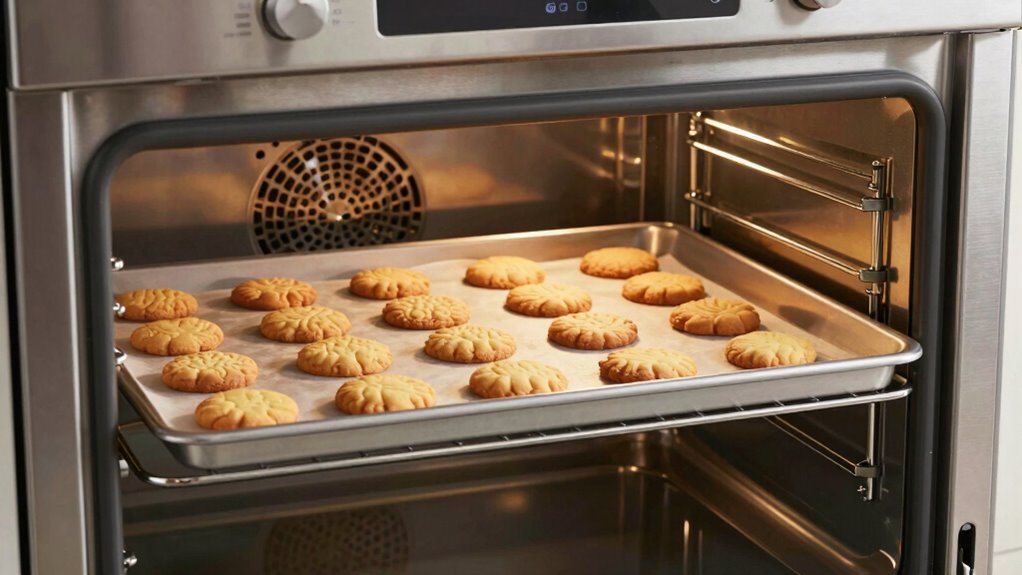
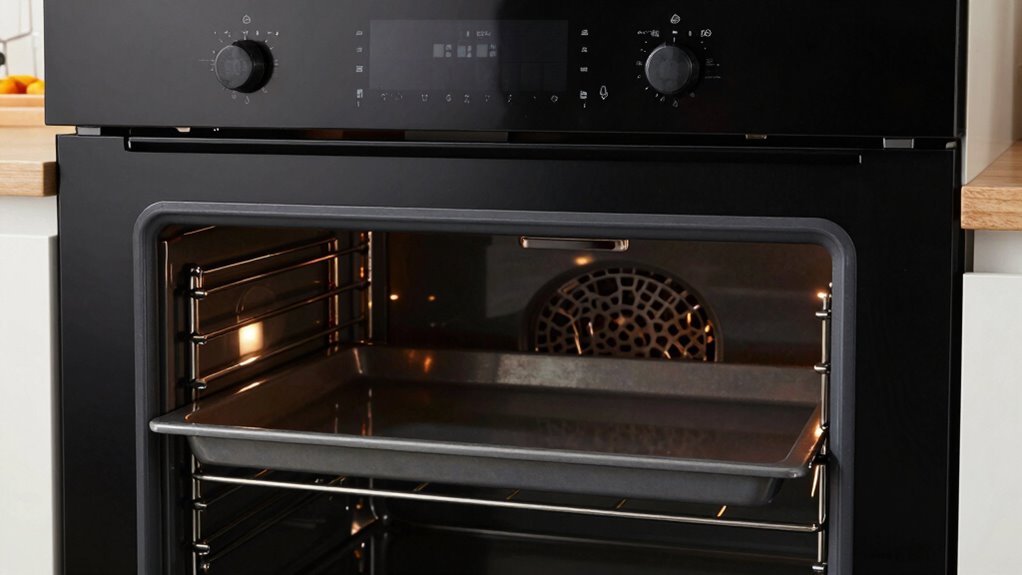
Hot spots in your home oven can cause uneven cooking and ruin your dishes, but luckily, they’re preventable. One of the first steps is to guarantee your oven is properly calibrated. Over time, ovens can drift from their original temperature settings, leading to inconsistent heat distribution. To check your oven’s accuracy, use an oven thermometer and compare the displayed temperature with the actual temperature. If there’s a discrepancy, refer to your oven’s manual to recalibrate it or contact a professional for assistance. Proper oven calibration helps assure that heat spreads evenly across the cooking chamber, minimizing the risk of hot spots that can burn or undercook your food. Additionally, understanding heat circulation within your oven can help you optimize placement and prevent uneven heating. Ensuring your oven has good airflow can further contribute to uniform heat distribution, reducing hot spots. An effective way to improve heat circulation is to avoid blocking vents or airflow pathways inside the oven, which can create localized hot zones. Another vital factor is cookware placement. How you position your bakeware inside the oven greatly impacts how heat circulates around your food. Avoid overcrowding the oven, as stacking multiple dishes or placing cookware too close together can block airflow, creating uneven heat zones. For even cooking, place your cookware in the center of each rack and leave space around each piece. This allows hot air to circulate freely, reducing the formation of hot spots. Using the right cookware also plays a part; heavy-duty, oven-safe pans with flat bottoms conduct heat more evenly than thin or warped pans. When placing items in the oven, keep in mind that the heat source, whether from the bottom or top, can create hot zones if items are positioned directly beneath or above heating elements. In addition, rotating your food during cooking can help counteract any uneven heat distribution. Check your dishes midway through the cooking process and turn or move them to different positions in the oven if needed. This simple step assures that all sides of your food receive equal heat exposure, leading to more consistent results. Also, consider the use of oven racks—adjusting their position can influence heat flow, especially if your oven has hot spots near the top or bottom. Regularly cleaning your oven is equally important; baked-on grime or grease buildup can interfere with heat distribution and amplify hot spots. Incorporating proper ventilation strategies, such as ensuring the oven door isn’t frequently opened during cooking, can also help maintain consistent heat levels. Finally, understanding how oven design affects heat flow can guide you in making better adjustments for more even cooking outcomes.
oven thermometer for accurate temperature calibration
As an affiliate, we earn on qualifying purchases.
As an affiliate, we earn on qualifying purchases.
Frequently Asked Questions
How Often Should I Clean My Oven to Prevent Hot Spots?
You should clean your oven at least once a month to prevent hot spots. Establishing a regular cleaning schedule helps maintain even heat distribution and keeps oven maintenance in check. When you remove grease and food buildup, your oven performs better and reduces the risk of uneven cooking. Don’t forget to check and clean the oven’s vents and fans periodically. Consistent cleaning and maintenance keep your oven functioning efficiently and prevent hot spots effectively.
Can the Oven’s Age Influence Hot Spot Development?
Yes, your oven’s age can influence hot spot development because older ovens often have worn oven insulation and aging heating elements. Over time, insulation deteriorates, causing uneven heat distribution, while heating elements may weaken or become uneven, creating hot spots. As your oven ages, it’s essential to check these components regularly and consider replacing them to maintain even heat, preventing hot spots and ensuring better cooking results.
Are There Specific Oven Brands Better at Avoiding Hot Spots?
Some oven brands are better at avoiding hot spots because they incorporate advanced oven insulation and even heat distribution features. Brands like KitchenAid and Wolf often prioritize superior insulation, which helps minimize hot spots. Using baking stones can also improve heat diffusion by absorbing and evenly distributing heat. Regularly rotating your trays and preheating thoroughly complements these features, ensuring consistent baking results and reducing the chances of hot spots regardless of your oven’s brand.
How Does Oven Rack Placement Affect Heat Distribution?
Rack placement considerably shapes heat flow, so positioning racks properly prevents hot spots. Placing your rack in the middle ensures even heat distribution, while higher or lower positions can cause uneven cooking. Avoid overcrowding the oven, allowing air to circulate freely. By balancing rack positioning, you promote consistent heat flow, guaranteeing your dishes cook thoroughly and evenly, preventing those pesky hot spots from ruining your culinary creations.
Should I Use a Fan or Convection Setting to Prevent Hot Spots?
Using a fan or convection setting helps prevent hot spots by promoting even heat distribution. The convection benefits include improved airflow, which guarantees that hot air circulates uniformly around your food. This fan efficiency reduces uneven cooking, giving you consistent results. When you activate the convection setting, you help eliminate hot spots, making your oven more reliable for baking and roasting, ultimately leading to better-cooked meals every time.
As an affiliate, we earn on qualifying purchases.
Conclusion
By understanding and addressing hot spots, you can guarantee your baked goods turn out perfectly every time. For example, imagine baking cookies that turn out unevenly because of uneven heat distribution. By rotating your tray and using an oven thermometer, you prevent those pesky hot spots from ruining your treats. With a little effort and awareness, you’ll enjoy consistently delicious results and avoid those frustrating burnt or undercooked spots in your home oven.
As an affiliate, we earn on qualifying purchases.
As an affiliate, we earn on qualifying purchases.