TL;DR

Get kitchen gear delivered free with Prime
- Fast, free delivery on millions of items
- Prime Video, Amazon Music and more included
- Member-only deals all year
Livingetc’s report describes four Japanese-inspired table-setting habits that can be adapted for autumn hosting: combine individual place settings with shared platters, choose some pieces for each diner, match vessels to food, and bring in seasonal tableware. The suggestions are design guidance, not a new study or formal announcement.
Livingetc has published four Japanese-inspired tablescaping lessons for autumn hosts, recommending a mix of individual place settings and shared dishes, personal bowls and chopsticks, vessels chosen to suit the food, and tableware that changes with the season. The report presents these as adaptable design ideas for Western dining tables, rather than formal rules or claims supported by research.
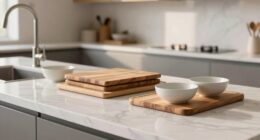
The first suggestion is to combine individual settings with shared platters. The report describes an oshiki, or flat tray, holding a rice bowl, soup bowl and small plate in front of each diner, while larger dishes sit in the middle for everyone to share. It calls each person’s space meimei no ba. For a Western meal, the approach can pair a clearly set place for each guest with food served family-style.
Second, the article advises choosing some tableware for the person who will use it instead of relying entirely on a matching set. It says family members may have their own rice bowls and chopsticks, selected for factors such as hand size and preferred grip. Third, it encourages hosts to consider the vessel’s feel and appearance alongside the food. The report invokes the phrase “the vessel is the kimono of the food” and recommends small plates, including mame-zara, which it describes as saucer-sized.
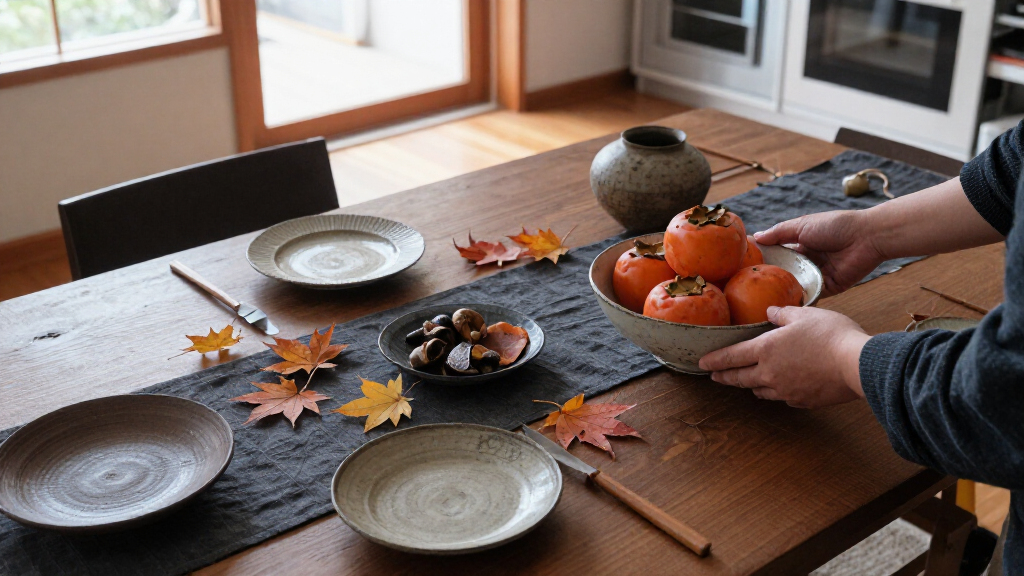
The fourth lesson is to make a seasonal change through the dishes themselves, rather than remaking the whole table. For autumn, Livingetc suggests warm-toned clay and glazed pieces in persimmon and rust shades, with a modest accent such as a chrysanthemum-shaped chopstick rest or a small plate. The report also describes introducing seasonal elements slightly before the season arrives as a practice in Japanese daily life.
Small Changes Shape Autumn Hosting
The article suggests that hosts can adapt the table without replacing all their dinnerware. Its recommendations combine shared serving dishes and personal place settings, and include using some pieces selected for individual diners.
For seasonal presentation, Livingetc recommends changing bowls or adding a small accent while leaving the rest of the table unchanged. These are editorial recommendations; the report does not provide evidence that a particular arrangement affects a meal or guests’ comfort.
Products Worth Considering

Traeger Woodridge Pro Wood Pellet Grill and Smoker, 970 sq. in., WiFIRE

Ninja PossibleCooker Plus 6-in-1 8.5 Qt Black (MC1010)

KitchenAid Go Cordless Citrus Juicer with Battery, KCJR161BM
As an affiliate, we earn on qualifying purchases.
The Japanese Table Setting Ideas
The report is an interiors and lifestyle article from Livingetc, based on four habits it says can be carried from Japanese autumn tablescapes into Western homes. It references Nakagawa, a craft maker and retailer founded in Nara in 1716, as part of its discussion of tableware. The supplied material does not describe a survey, a formal study or a broad review of Japanese households.
One historical reference in the article is Kitaōji Rosanjin, described as a potter who opened a Tokyo restaurant in 1925 and made vessels to suit the food served there. The article uses this example to support the idea that tableware and food can be considered together. Its practical suggestions range from meal layout to the color, texture and scale of individual pieces.
“The vessel is the kimono of the food.”
— Livingetc report
Limits of the Report’s Guidance
The source presents four design habits but does not establish how common each practice is across Japan, or whether they apply equally across households and regions. It also does not provide independent expert interviews or research to test the suggestion that these arrangements affect guests’ comfort. The claims should be read as the article’s guidance, not as universal descriptions of Japanese dining.
The supplied source gives no publication date, and it does not state whether the referenced products are currently available or what they cost. It is also unclear whether Livingetc’s recommendations were reviewed by a cultural specialist. Readers can use the ideas selectively rather than treating them as a fixed template.
Adapting the Ideas at Home
The article offers no scheduled follow-up or next formal milestone. For readers interested in trying the approach, its suggestions point to choices for an autumn meal: set a small place for each guest, serve some food communally, and add one or two seasonal bowls or plates rather than replacing every piece. Existing tableware can be mixed to suit the meal and the people at the table.
The report leaves the choice of arrangement to readers, based on the food, available dishes and personal preferences. It suggests considering which pieces already at home could be used for an autumn setting, and adding items only if they serve a purpose.
Key Questions
What are the four Japanese tablescaping lessons?
Livingetc recommends combining individual settings and shared platters, choosing some tableware for each diner, pairing vessels with the food, and changing dishes to reflect the season.
What is an oshiki?
The article describes an oshiki as a flat tray placed in front of a diner, holding items such as a rice bowl, soup bowl and small plate.
What does mame-zara mean in the report?
Mame-zara refers to small plates that the article describes as roughly saucer-sized. It suggests collecting and mixing them as accents or serving pieces.
How does the article suggest making a table feel seasonal?
For autumn, it recommends using warm-toned clay and glazed tableware, with a small seasonal detail such as a chrysanthemum-shaped chopstick rest. It does not suggest changing the whole table.
Source: livingetc.com