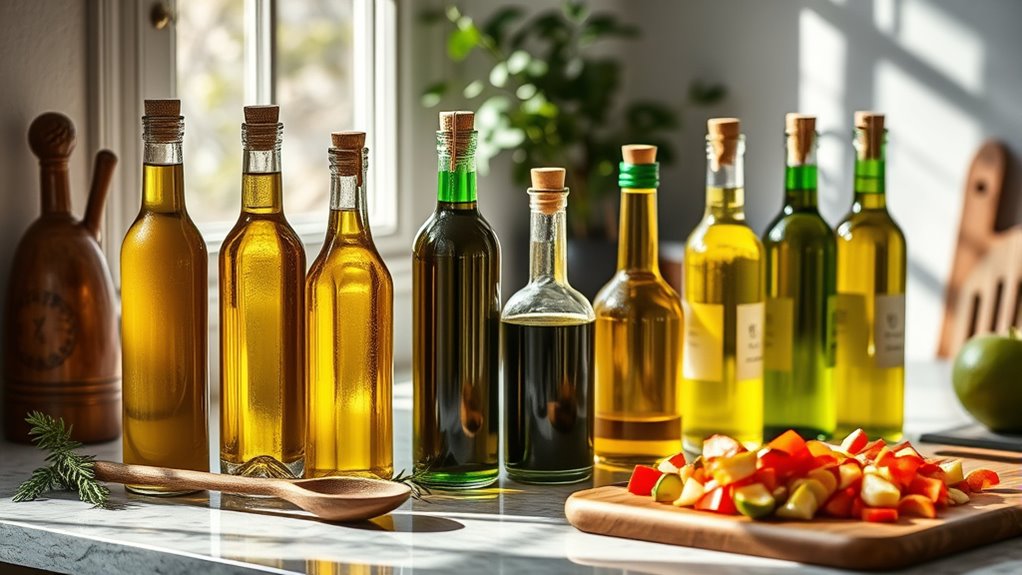

To choose the right cooking oil for each dish, consider both the oil’s smoke point and its flavor profile. Use high smoke point oils like avocado or refined canola for frying and sautéing. For grilling, try peanut or sunflower oil. Save lower smoke point oils, like extra virgin olive oil, for drizzling or finishing dishes. Also, think about the health benefits of different oils to elevate your meals. There’s more to explore about specific oils that can enhance your cooking!

Get kitchen gear delivered free — and shop member deals
- Fast, free delivery on millions of items
- Access to Prime Big Deal Days deals on October 6–7
- Prime Video, Amazon Music and more included
Key Takeaways
- Determine the cooking method: select high smoke point oils for frying and sautéing, and lower smoke point oils for drizzling or finishing dishes.
- Match the oil’s flavor profile to the dish: use oils like sesame or walnut for enhancing flavors, while neutral oils work for baking.
- Consider health benefits: choose oils rich in monounsaturated fats, omega-3 fatty acids, or medium-chain triglycerides to support overall health.
- Check smoke points: use oils like avocado or refined canola for high-heat cooking, and reserve oils like extra virgin olive oil for low-heat applications.
- Incorporate a variety of oils: diversifying your oil selection enhances flavor and nutrition, supporting a balanced diet and healthier cooking practices.
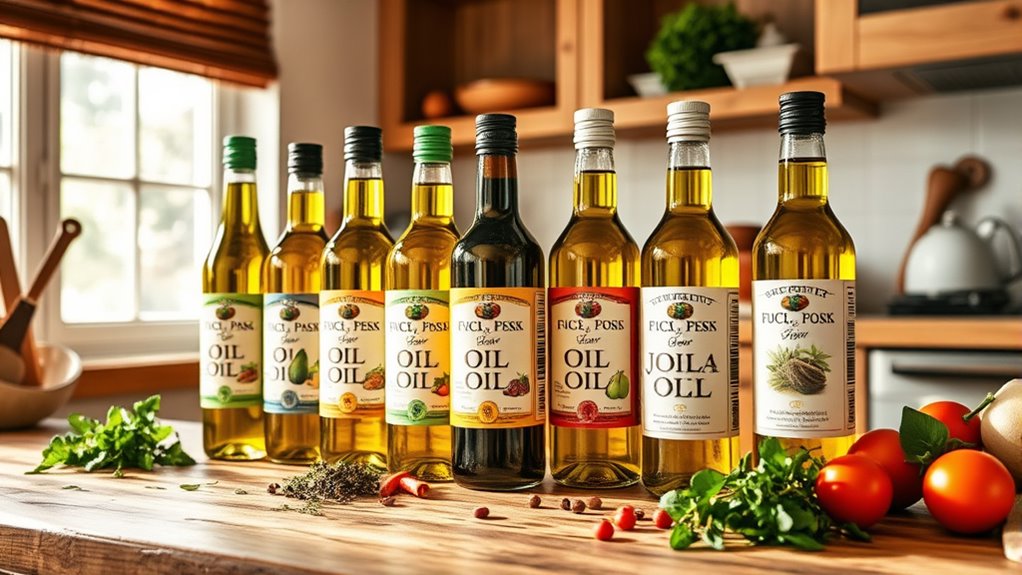
Have you ever wondered which cooking oil is best for your meals? With so many options available, it can feel overwhelming to choose the right one. The secret lies in understanding the unique properties of each oil, especially their health benefits and smoke points. These factors play a pivotal role in determining how well an oil performs in different cooking methods and how it affects your dishes’ flavor and nutrition.
When you’re cooking at high temperatures, you need an oil with a high smoke point. The smoke point is the temperature at which an oil begins to smoke and break down, releasing harmful compounds and imparting a burnt flavor to your food. For frying or sautéing, oils like avocado oil and refined canola oil are excellent choices due to their high smoke points, which can reach up to 520°F and 400°F, respectively. On the other hand, oils like extra virgin olive oil have a lower smoke point, around 375°F, making them better suited for drizzling over salads or finishing dishes rather than high-heat cooking.
Understanding the health benefits of cooking oils is equally important. Different oils offer various nutrients and fatty acids that can enhance your diet. For instance, olive oil is rich in monounsaturated fats and antioxidants, which promote heart health and reduce inflammation. On the flip side, coconut oil, while high in saturated fats, provides medium-chain triglycerides that some studies suggest may aid in weight management. If you’re looking for a source of omega-3 fatty acids, consider using flaxseed oil in your salad dressings, as it can support brain health and reduce the risk of chronic diseases. Additionally, incorporating oils with cutting-edge survival and camping technology can enhance your outdoor cooking experience, ensuring you stay nourished on your adventures.
Different cooking oils provide unique health benefits and nutrients, enhancing your diet while supporting heart health and brain function.
When selecting an oil, think about the dish you’re preparing. If you’re grilling or stir-frying, opt for oils with high smoke points, like peanut oil or sunflower oil. For baking or adding a subtle flavor, you might choose oils with lower smoke points, like sesame oil. Be mindful of the flavor profiles as well; some oils, like sesame or walnut oil, can considerably impact your dish’s taste.
In the end, the right cooking oil can elevate your meals while also providing essential nutrients. By knowing the smoke points and health benefits of various oils, you’ll be able to make informed choices that suit your cooking needs and health goals. So next time you’re in the kitchen, take a moment to consider which oil will enhance your dish the most!
best high smoke point cooking oils
As an affiliate, we earn on qualifying purchases.
As an affiliate, we earn on qualifying purchases.
Frequently Asked Questions
Can Cooking Oil Affect the Flavor of My Dish?
Absolutely, cooking oil can considerably affect the flavor of your dish. Different oils have distinct oil flavors that can enhance or overpower your cooking taste. For instance, olive oil adds a fruity note, while sesame oil imparts a nutty depth. Choosing the right oil can elevate your meal, making it more enjoyable. So, pay attention to the oil you use; it can transform a simple recipe into something extraordinary!
How Do I Store Cooking Oils Properly?
To store cooking oils properly, keep them in a cool, dark place, like a pantry or cupboard. Avoid exposing them to light and heat, which can reduce their shelf life. Use airtight containers to prevent oxidation, and check for expiration dates or shelf life guidelines on the packaging. Remember, oils like olive and avocado can last up to two years if stored right, while others, like sesame, may only last six months.
Is It Safe to Reuse Cooking Oil?
Yes, it’s safe to reuse cooking oil, but you need to be careful. After frying, let the oil cool, then filter it to remove food particles. Keep an eye on the oil’s smoke point; if it starts smoking at lower temperatures, it’s time to discard it. Store the filtered oil in a cool, dark place. Reusing oil can save money, but always prioritize safety and quality for your next dish.
What Are the Health Risks of Consuming Certain Oils?
Oh, you must love living on the edge! Consuming oils high in trans fat and omega-6 fatty acids can bring a plethora of health risks. They can raise your bad cholesterol and lower the good, pushing you closer to heart disease. Not to mention the potential inflammation that could leave you feeling less than fabulous. So, next time you drizzle that questionable oil, remember: your arteries might not appreciate your daring choice!
How Long Does Cooking Oil Last Before It Goes Bad?
Cooking oil typically lasts about 6 months to a year before it goes bad, depending on the type and how it’s stored. You should keep it in a cool, dark place to minimize oil rancidity. Check for off smells or changes in color, as these are signs it’s past its shelf life. If you notice any of these, it’s best to discard the oil to ensure your dishes remain flavorful and safe.
extra virgin olive oil for finishing dishes
As an affiliate, we earn on qualifying purchases.
As an affiliate, we earn on qualifying purchases.
Conclusion
In the world of cooking, picking the right oil can make your dish shine like a culinary superstar! Remember, each oil brings its own unique flavor and smoke point, so don’t just grab the first bottle you see. Whether you’re sautéing, frying, or drizzling, choosing wisely can transform your meal from ordinary to extraordinary. So go ahead, release your inner chef and let the right oil elevate your dishes to new heights of deliciousness!
healthy cooking oils with omega-3
As an affiliate, we earn on qualifying purchases.
As an affiliate, we earn on qualifying purchases.
As an affiliate, we earn on qualifying purchases.
Fall Picks
fall essentials
As an affiliate, we earn on qualifying purchases.