
To scale recipes up or down, start by adjusting ingredient quantities using simple math—multiply or divide them as needed. Remember, when increasing amounts, be cautious with seasonings; begin with smaller increments and taste as you go. Keep an eye on cooking times, as larger batches might take longer and smaller ones can cook faster. This process isn’t just about precision; it’s also an opportunity for creativity in your kitchen. Explore more tips for successful adjustments.

Get kitchen gear delivered free — and shop member deals
- Fast, free delivery on millions of items
- Access to Prime Big Deal Days deals on October 6–7
- Prime Video, Amazon Music and more included
Key Takeaways
- Record original ingredient quantities and use multiplication or division for accurate scaling to new amounts.
- Consider flavor impacts when substituting ingredients; adjust other components if necessary to maintain balance.
- Start with smaller amounts of seasonings and gradually increase to avoid overpowering flavors.
- Adjust cooking times accordingly; larger quantities may need longer cooking, while smaller portions may cook faster.
- Embrace experimentation with new combinations and practice scaling regularly for improved cooking skills.

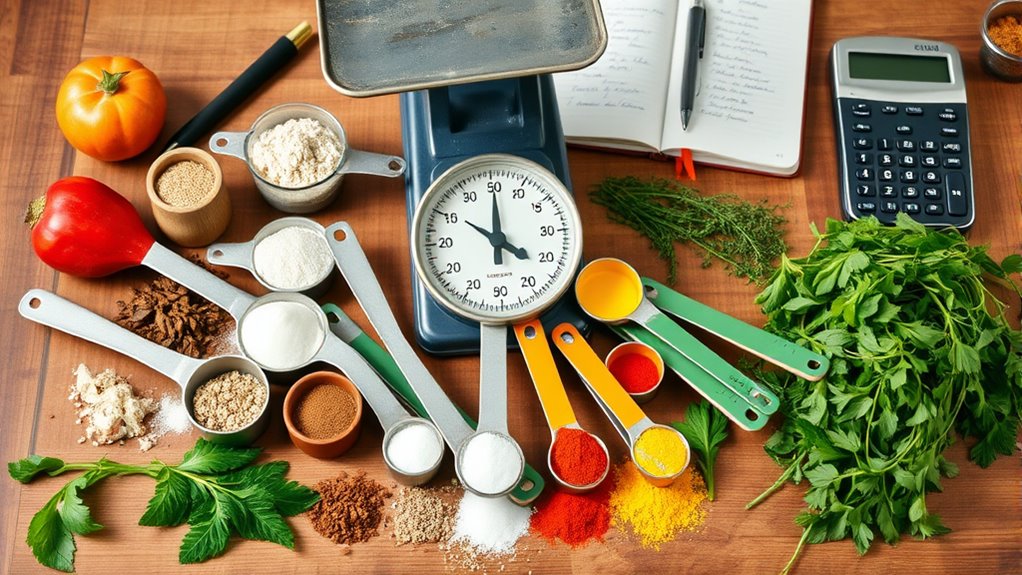
When you want to whip up a delicious dish but find yourself needing to adjust the quantity of ingredients, scaling recipes can seem intimidating. It’s vital to get it right, especially when you’re cooking for a crowd or just a smaller group. The first thing you should contemplate is the math. If you’re doubling or halving a recipe, take a moment to write down the original quantities and then calculate the new amounts. This simple act can help you visualize the adjustments you need to make.
Next, think about ingredient substitutions. Sometimes, you might not have everything on hand, and that’s okay. For example, if a recipe calls for buttermilk, you can easily substitute it with milk and vinegar or yogurt. Just remember, when you swap ingredients, it can affect the final flavor of your dish. So, if you’re using a different type of oil or a different kind of cheese, it’s vital to consider how these changes will impact the taste. Always taste as you go to guarantee you’re staying on track with the flavor balance.
Consider ingredient substitutions when cooking; they can alter flavor, so taste as you go to maintain balance.
Don’t forget the seasoning! When you scale up a recipe, it’s easy to lose track of how much salt or spices you originally used. A good rule of thumb is to start with a smaller amount when adjusting seasonings and then gradually increase. This way, you can achieve that perfect flavor without overwhelming the dish. For example, if you double the recipe, don’t double the salt right away; add a little, taste, and adjust accordingly.
Another key aspect to scaling recipes is cooking time. Larger quantities may require more time to cook, while smaller amounts might cook faster. Keep an eye on your dish as it cooks and use a food thermometer for proteins to ensure they reach the appropriate internal temperature. Adjusting cooking times can be tricky, but it’s vital for achieving the desired texture and flavor.
Lastly, don’t be afraid to experiment. Cooking is as much about creativity as it is about following recipes. Scaling up or down gives you the chance to try new combinations and discover what works best for you. So next time you need to adjust a recipe, embrace the challenge and enjoy the process. With practice, you’ll find scaling recipes becomes easier and more intuitive, leading to delicious results every time. Additionally, consider the benefits of energy-efficient cloud servers for managing your recipe collections and meal planning digitally, ensuring your culinary adventures are both sustainable and organized.
digital kitchen scale for recipes
As an affiliate, we earn on qualifying purchases.
As an affiliate, we earn on qualifying purchases.
Frequently Asked Questions
How Do I Convert Measurements Between Metric and Imperial Units?
To convert measurements between metric and imperial units, you’ll need to use specific conversion factors. For example, remember that 1 inch equals 2.54 centimeters and 1 liter equals about 4.23 cups. For measurement accuracy, always double-check your conversions with a reliable calculator or conversion chart. It’s helpful to keep a list of common conversions handy, so you can quickly switch between systems while cooking or baking without any hassle.
Can I Substitute Ingredients When Scaling a Recipe?
Absolutely, you can substitute ingredients when scaling a recipe, like swapping out a key ingredient in a symphony. Just remember, each ingredient plays its role in the overall flavor, so be mindful of those flavor adjustments. For instance, if you don’t have a specific spice, try a similar one that complements the dish. Experimenting with ingredient substitutions can lead to delightful surprises, transforming your dish into something uniquely yours.
What Tools Help With Scaling Recipes Accurately?
To scale recipes accurately, you’ll find digital kitchen scales and recipe scaling apps incredibly helpful. A digital kitchen scale lets you measure ingredients precisely, ensuring consistency every time. Meanwhile, recipe scaling apps can quickly adjust ingredient amounts based on your desired servings, saving you time and effort. With these tools, you can confidently modify any recipe without worrying about incorrect measurements or ratios. Just weigh and input, and you’re good to go!
How Do Cooking Times Change When Adjusting Recipe Sizes?
When you’re adjusting recipe sizes, you might think cooking times remain unchanged, but oh, how wrong you’d be! Larger batches need more time, while smaller ones cook faster. Keep an eye on those oven temperature modifications, too, as they might require tweaks for even cooking. Remember, cooking time adjustments aren’t just a suggestion; they’re a culinary survival skill. So, don’t be afraid to check, poke, and prod your dish to perfection!
Are There Specific Ratios for Scaling Different Types of Recipes?
Yes, there are specific ratios for scaling different types of recipes. Generally, you’ll want to maintain ingredient ratios to guarantee flavor balance. For instance, if you’re doubling a recipe, double the main ingredients, but be cautious with spices and seasonings—start with 1.5 times the amount and adjust to taste. Baking often requires more precise ratios, so make certain you follow the original proportions closely to achieve the desired texture and rise.
As an affiliate, we earn on qualifying purchases.
Conclusion
Now that you’ve learned how to scale recipes up or down, you’re ready to tackle any dish with confidence. Imagine you’re hosting a cozy dinner for two or a lively feast for a crowd; adjusting ingredients is like painting on a canvas, where each brushstroke creates the perfect masterpiece. With a little math and creativity, you can transform any recipe to fit your needs. So, grab your measuring tools and experiment—your culinary adventures await!
As an affiliate, we earn on qualifying purchases.
As an affiliate, we earn on qualifying purchases.
Halloween Picks
halloween
As an affiliate, we earn on qualifying purchases.