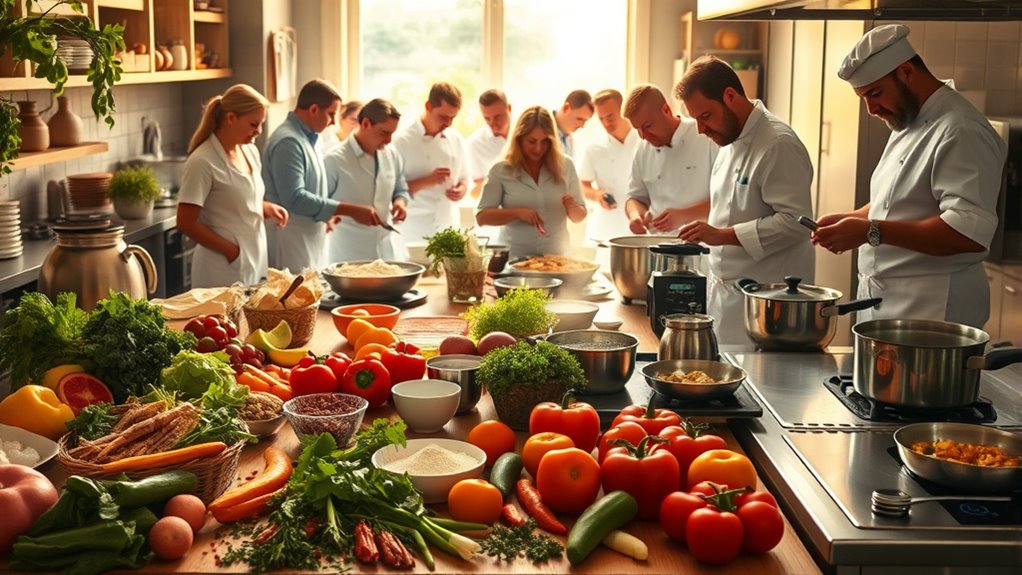

When cooking for a crowd, start by planning your guest count and choosing scalable recipes like casseroles or slow-cooked dishes. Make certain your kitchen setup includes larger pots and serving utensils. Prep ahead to ease stress, and organize your workspace for efficiency. Enlist help from friends to make the process smoother. With proper planning, you’ll enjoy the cooking experience. Stick around to discover more tips that will make your gathering a hit.

Get kitchen gear delivered free with Prime
- Fast, free delivery on millions of items
- Prime Video, Amazon Music and more included
- Member-only deals all year
Key Takeaways
- Determine guest count and choose scalable recipes, such as casseroles or slow-cooked dishes, that improve in flavor when prepared in advance.
- Ensure you have adequate kitchen equipment, including large pots and pans, and consider borrowing or renting if necessary.
- Create a detailed cooking timeline, prepping ingredients ahead of time to minimize last-minute stress during the event.
- Organize the kitchen workflow by setting up dedicated stations for prep, cooking, and serving while keeping essential tools within reach.
- Enlist help from friends or guests to share the workload, making the cooking experience enjoyable and less overwhelming.

Cooking for a crowd can feel overwhelming, but it doesn’t have to be. With proper meal planning and the right kitchen equipment, you can create a feast that impresses everyone. Start by determining how many people you’re feeding and what type of event it is. Whether it’s a birthday party, family reunion, or a casual get-together, knowing your guests will help you decide what to cook.
Cooking for a crowd may seem daunting, but with smart planning and the right tools, you can impress your guests effortlessly.
Once you’ve got a headcount, it’s time to plan your menu. Choose dishes that can easily be scaled up. Think about recipes that work well in large quantities, like casseroles, pasta dishes, or slow-cooked meals. These options not only feed a crowd but also often taste better after sitting for a while, making them perfect for gatherings. Don’t forget to consider dietary restrictions or preferences—having a vegetarian option or something gluten-free can make your meal more inclusive.
After you’ve settled on your menu, gather your kitchen equipment. Cooking for a crowd often requires larger pots, pans, and baking dishes. If you don’t have enough equipment, consider borrowing from friends or renting. A large stockpot is perfect for soups or stews, while a big roasting pan can accommodate a whole turkey or ham. Don’t overlook utensils either; having enough serving spoons, spatulas, and mixing bowls will make your prep go more smoothly. Additionally, ensure you have a reliable power backup to keep your appliances running during any unexpected outages while preparing your meal.
Next, create a timeline for your cooking. Break down each dish into manageable tasks, and decide which ones can be made ahead of time. For example, you can chop vegetables a day in advance or even prepare sauces that can be stored in the fridge. This way, when the day of the event arrives, you’ll spend less time rushing around and more time enjoying the company of your guests.
As you start cooking, keep the flow of your kitchen in mind. Organize your workspace so you can easily move from one task to another. Set up stations for prep, cooking, and serving. This will streamline your process and help you stay focused. Remember to clean as you go; it’ll make the aftermath much less daunting.
Finally, remember that it’s okay to ask for help. Whether you enlist a friend to chop veggies or have guests bring a dish, sharing the workload can ease some of the pressure. With thoughtful meal planning and the right kitchen equipment, you’ll turn what once felt overwhelming into a joyful cooking experience. Enjoy the process, and your guests will surely appreciate the effort you’ve put into the meal.
large capacity stockpot for cooking for a crowd
As an affiliate, we earn on qualifying purchases.
As an affiliate, we earn on qualifying purchases.
Frequently Asked Questions
How Do I Adjust Cooking Times for Larger Quantities?
To modify cooking times for larger quantities, start by batch cooking your recipes. As you scale your ingredients, remember that cooking times might not increase linearly. For instance, doubling a recipe doesn’t always mean doubling the time. Stir and check for doneness more frequently. In some cases, larger quantities may require a slightly longer cooking time, while others might cook faster, so keep an eye on it to ensure perfect results.
What Kitchen Tools Are Essential for Cooking for Large Groups?
When you’re cooking for large groups, think of your kitchen as a well-oiled machine. Essential tools include big pots, large mixing bowls, and industrial-sized baking sheets. Don’t forget quality knives and sturdy cutting boards for safety. A reliable food thermometer guarantees everything’s cooked properly while recipe scaling tools help adjust ingredient amounts. With these essentials, you’ll create a seamless cooking experience, keeping both safety and efficiency at the forefront.
How Can I Keep Food Warm During Serving?
To keep food warm during serving, use warming trays to maintain ideal temperatures. These trays distribute heat evenly, guaranteeing your dishes stay hot. Additionally, insulated containers are fantastic for holding heat, especially for soups or stews. You can preheat them with hot water before adding your food. By combining these methods, you’ll make sure your guests enjoy delicious, warm meals throughout the event. Keep an eye on the temperature to assure everything stays perfect!
What Are the Best Storage Options for Leftover Food?
The best storage options for leftover food include airtight containers that stack easily for efficient meal prep. Use glass or BPA-free plastic containers to keep your food fresh and prevent spills. Label each container with the date to track freshness. For larger portions, consider using food-safe bags that you can flatten to save space in your fridge or freezer. This way, you’ll maximize storage while keeping your leftovers organized and ready to enjoy later!
How Do I Accommodate Dietary Restrictions in a Large Group?
To accommodate dietary restrictions in a large group, start by asking guests about their needs ahead of time. When planning your menu, prioritize diversity, including vegetarian, vegan, gluten-free, and nut-free options. Label dishes clearly to avoid confusion. By considering dietary restriction accommodations, you guarantee everyone feels included and satisfied. It’s all about being proactive and creative, so your gathering is enjoyable for everyone, regardless of their dietary preferences.
professional serving utensils set
As an affiliate, we earn on qualifying purchases.
As an affiliate, we earn on qualifying purchases.
Conclusion
With a little planning and creativity, cooking for a crowd can feel like crafting a delicious tapestry, each dish woven together to create a feast of flavors. You’ve got the tools and techniques to scale your recipes, making mealtime a joyful gathering rather than a frantic race. So, roll up your sleeves, embrace the kitchen chaos, and watch as your efforts transform into cherished memories around the table. Happy cooking!
As an affiliate, we earn on qualifying purchases.
As an affiliate, we earn on qualifying purchases.
Columbus Day / Indigenous Peoples' Day Picks
long weekend sales
As an affiliate, we earn on qualifying purchases.