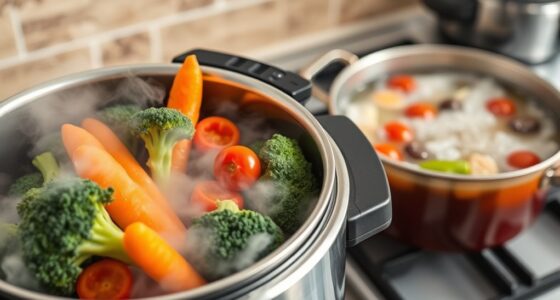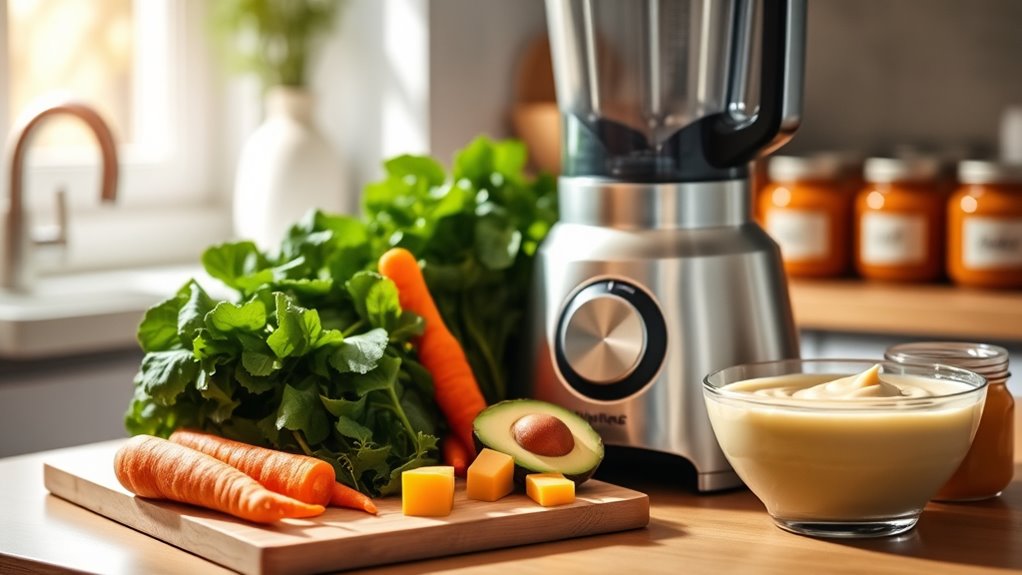

To make homemade baby food using a blender or processor, start by selecting fresh, in-season fruits and veggies. Wash and cook them until soft, then let them cool slightly. Blend the produce until you achieve a smooth consistency, adding water, breast milk, or formula as needed. Store portions in ice cube trays and freeze. When you’re ready to serve, thaw and warm the desired amount, ensuring it’s at a safe temperature for your baby. There’s plenty more to explore!
Key Takeaways
- Select fresh, in-season fruits and vegetables, and wash them thoroughly before cooking to ensure they are clean and safe for baby food.
- Cook the produce by steaming or boiling until soft, then let it cool slightly before blending for a smooth texture.
- Use a blender or food processor to achieve a smooth consistency, adding water, breast milk, or formula as needed to adjust the texture.
- Freeze single portions in ice cube trays, then transfer to labeled freezer bags, storing for up to three months for easy meal preparation.
- Thaw and warm portions gently before serving, ensuring the food is at a safe temperature for your baby.
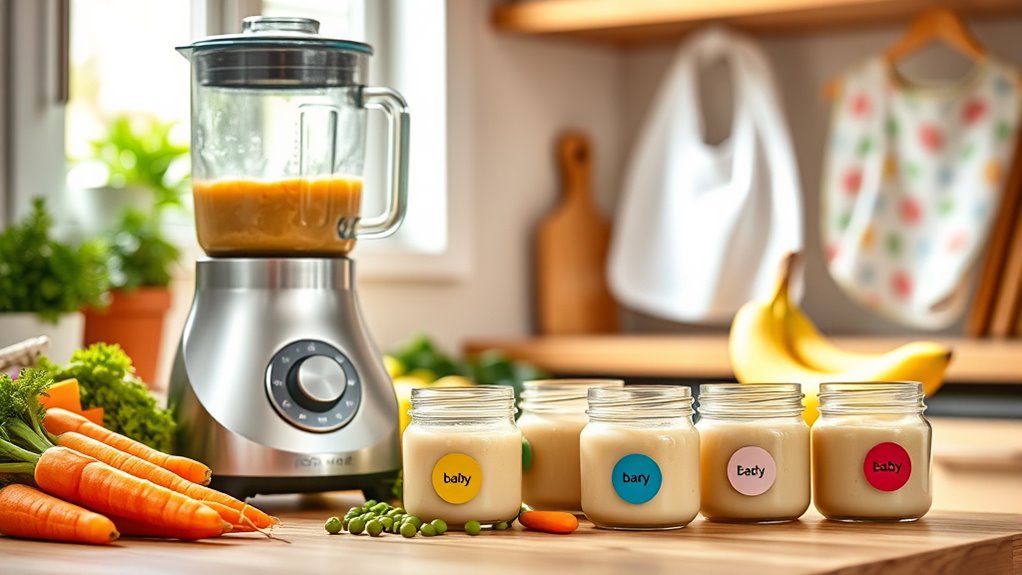
Making homemade baby food can be a rewarding experience, especially when you want to guarantee your little one gets the freshest ingredients. You’ve got control over what goes into your baby’s meals, and you can customize flavors and textures to suit their preferences. Plus, it’s often more economical than buying pre-packaged options. With just a blender or food processor, you can whip up nutritious meals for your growing infant.
Homemade baby food offers fresh ingredients, customizable flavors, and cost savings, ensuring nutritious meals for your little one.
To start, choose fresh fruits and vegetables that are in season. Carrots, sweet potatoes, peas, and apples are all great options for beginners. Make sure to wash and peel (if necessary) the produce before cooking it. Steaming or boiling is usually the best method to retain nutrients—just guarantee the food is soft enough for easy blending. Once it’s cooked, let it cool slightly before transferring it to your blender or food processor.
When you’re blending, aim for a smooth consistency, especially if your baby is new to solids. If you need to, add a little water, breast milk, or formula to help achieve the right texture. This is where you can get creative with your feeding techniques. For instance, you might want to introduce new flavors gradually. Mixing different ingredients can help your baby develop a taste for various foods, but do it one at a time to watch for any allergic reactions.
After blending, it’s crucial to store the baby food correctly. This is where your storage tips come into play. You can use ice cube trays to freeze portions, making it easy to thaw just what you need for each meal. Once frozen, transfer the cubes to freezer bags, labeling them with the date and type of food. This way, you’ll have a variety of options available, and you can keep track of how long they’ve been stored. Typically, frozen baby food can last up to three months in the freezer.
When you’re ready to serve, simply thaw the desired amount in the fridge overnight or warm it gently on the stove. Always check the temperature before feeding to ensure it’s not too hot for your baby. Making homemade baby food doesn’t just save money; it also allows you to share the joy of eating healthy and delicious meals with your little one. With the right feeding techniques and storage tips, you’ll be set for success on this rewarding journey. Additionally, ensuring the right color accuracy in food presentation can make mealtime more visually appealing for your baby.
Frequently Asked Questions
Can I Freeze Homemade Baby Food for Later Use?
Yes, you can definitely freeze homemade baby food for later use! It’s a great way to practice food preservation. Just make sure you use airtight storage containers or freezer bags to prevent freezer burn. Label each container with the date and contents for easy identification. When you’re ready to use it, simply thaw in the fridge or warm it up directly. This makes mealtime easier and keeps your baby’s food fresh!
How Long Can I Store Homemade Baby Food?
Storing homemade baby food is like keeping a garden; with the right care, it thrives. You can store it in the fridge for about 3 days or in the freezer for up to 3 months. Always check for spoilage signs, such as unusual smells or discoloration, before feeding. Remember, fresh is best, so try to use it within these timeframes to ensure your little one gets the healthiest meals possible.
What Ingredients Should I Avoid in Baby Food?
You should avoid certain ingredients in baby food, especially those that pose food allergies or choking hazards. Stay clear of honey, as it can cause botulism in infants. Avoid nuts and whole grapes, which can be choking risks. Also, skip added sugars and salt to maintain a healthy diet. Always check with your pediatrician about introducing new foods, especially if there’s a family history of allergies. Keep your baby safe and healthy!
When Can I Introduce Spices to Baby Food?
You can start introducing spices to baby food around 6 to 8 months, depending on your baby’s readiness. Begin with mild flavors like cinnamon, nutmeg, or basil to help develop their taste preferences. Gradually increase the variety as your baby gets used to different tastes. Just keep an eye out for any allergic reactions. Spice introduction can make mealtime exciting and encourage adventurous eating habits as they grow!
Is It Safe to Use a Microwave for Reheating?
They say, “A stitch in time saves nine.” When it comes to reheating baby food, using a microwave can be safe if you follow some reheating guidelines. Make certain you use microwave-safe containers and stir the food well after heating to avoid hot spots. Always check the temperature before serving. Keeping microwave safety in mind helps you provide a safe meal for your little one without compromising nutrition or flavor.
Conclusion
Now that you’ve mastered the art of making homemade baby food, your little one’s taste buds are ready to embark on a culinary adventure! With each vibrant puree, you’re not just feeding them; you’re opening the gates to a world of flavors that could rival a five-star restaurant. Imagine your baby savoring the rainbow of fruits and veggies, their tiny face lighting up like the Fourth of July! You’re not just a parent; you’re a gourmet chef in the making!