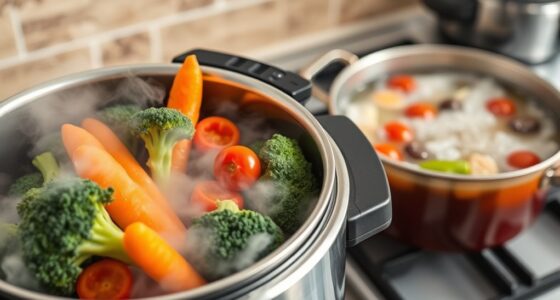

The science of slow cooking highlights why “low and slow” is unbeatable. Cooking at around 140°F breaks down tough collagen in meats into tender gelatin, enhancing texture and flavor. This method melds natural sugars, creating rich caramelization while preventing burning or drying out. You achieve deep, complex flavors that quick cooking just can’t match. Curious about how this process works? There’s more fascinating information to discover about the art of slow cooking.
Key Takeaways
- Cooking at low temperatures (around 140°F) ensures proteins denature gradually, resulting in tender textures without toughness.
- Extended cooking breaks down collagen in tough cuts, transforming it into gelatin for enhanced tenderness and rich flavor.
- Slow cooking prevents burning and drying out, preserving moisture and improving overall dish satisfaction.
- Flavor development is maximized as natural sugars caramelize, deepening taste profiles beyond what quick cooking can achieve.
- The “low and slow” method allows for thorough blending of flavors, creating a more complex and satisfying culinary experience.
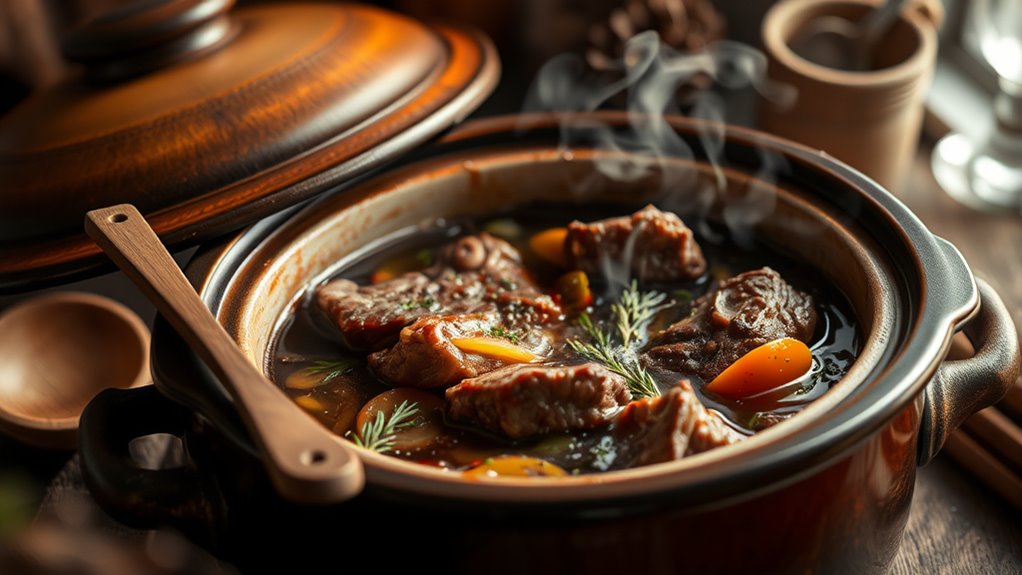
Slow cooking isn’t just about convenience; it’s a fascinating blend of science and culinary art. When you set your slow cooker to low, you’re engaging in a process that transforms tough cuts of meat and hearty vegetables into tender, flavorful dishes. This transformation is rooted in the science of temperature breakdowns and connective tissue breakdowns, and understanding these processes can enhance your cooking skills.
Slow cooking melds science and art, transforming tough meats and hearty vegetables into tender, flavorful dishes through temperature and connective tissue breakdowns.
As your meal cooks slowly, the low temperature allows the flavors to meld beautifully without the risk of burning or drying out. At around 140°F, proteins in your meat begin to denature, which is a fancy way of saying they unravel and lose their structure. This process is essential for achieving that melt-in-your-mouth texture you crave. If you crank up the heat, you’ll miss out on these delightful changes, which is why “low and slow” is the mantra of slow cooking enthusiasts.
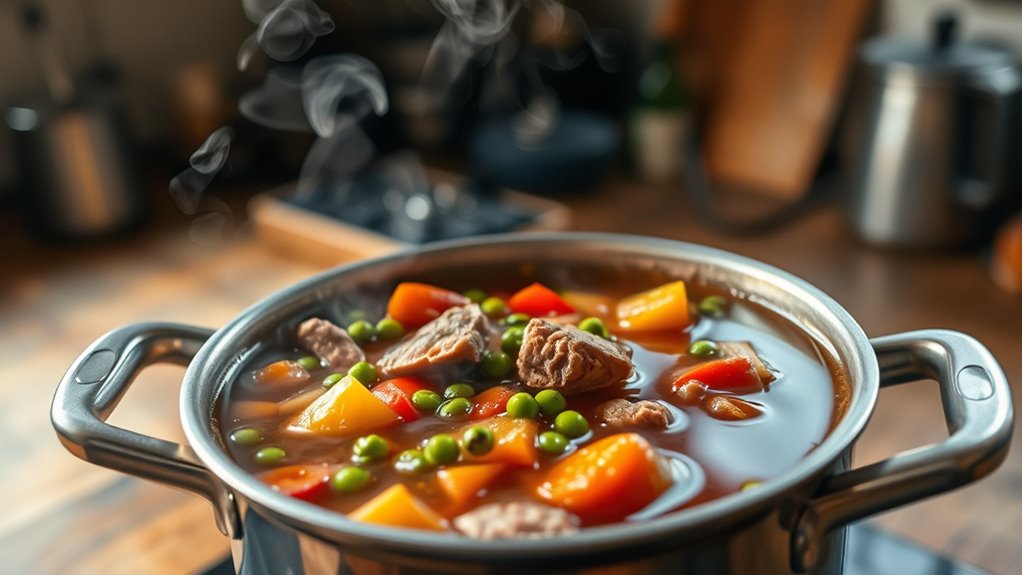
Connective tissue breakdowns are another critical aspect of this method. Tough cuts of meat, like brisket or chuck roast, contain collagen, a tough protein that requires time and the right conditions to break down. When you cook these cuts at low temperatures for extended periods, the collagen gradually converts into gelatin. This transformation not only tenderizes the meat but also adds a rich, luxurious texture to your dish. Imagine how a well-cooked pot roast feels in your mouth—smooth, succulent, and bursting with flavor.
Moreover, slow cooking allows for the release of natural sugars in vegetables and meats. As they break down over time, these sugars caramelize, enriching the overall taste of your meal. You’ll notice that flavors deepen and become more complex, offering a satisfying experience that quick cooking methods simply can’t replicate.
Frequently Asked Questions
Can I Use Frozen Meat in a Slow Cooker?
You shouldn’t use frozen meat directly in a slow cooker. Frozen meat can stay in the “danger zone” for too long, risking foodborne illnesses. To stay safe, thaw your meat in the fridge first. If you want to use your slow cooker, remember these tips: cut meat into smaller pieces for even cooking and make sure you add enough liquid. This way, you’ll guarantee your meal is both safe and delicious!
What Types of Dishes Are Best for Slow Cooking?
When it comes to slow cooking, you’ll find that braised dishes and hearty stews shine the brightest. Think of tender meats bathing in rich sauces, gently coaxed to perfection over time. You can whip up a comforting beef bourguignon or a rustic vegetable stew, letting flavors meld beautifully. Each dish benefits from that long, leisurely approach, transforming simple ingredients into something truly special. So, gather your favorites and let the magic unfold!
How Do I Prevent Food From Sticking to the Slow Cooker?
To prevent food from sticking to your slow cooker, use cooking spray on the inner surface before adding ingredients. Proper layering also helps; place hearty vegetables like potatoes at the bottom, followed by meat, and then lighter veggies on top. This keeps the food from direct contact with the cooker’s surface. Stir occasionally, if possible, to ensure even cooking. With these tips, you’ll enjoy perfectly cooked meals without the hassle of sticking.
Is It Safe to Leave a Slow Cooker Unattended?
Yes, it’s generally safe to leave a slow cooker unattended, as long as you follow proper food safety guidelines. Make sure your slow cooker’s in good condition, and check that it’s on a stable surface. Avoid overfilling it, and always cook at the recommended temperature. Regular appliance maintenance is key; clean it thoroughly after each use to prevent any buildup that could affect its performance. Enjoy your cooking without worries!
Can I Adapt Traditional Recipes for Slow Cooking?
Absolutely, you can adapt traditional recipes for slow cooking! Start by choosing the right ingredients; some may need substitution to withstand longer cooking times. For instance, tougher cuts of meat are fantastic here. As you adjust cooking times, don’t forget that flavors deepen and enhance over hours. Just imagine how those spices meld together! Keep an eye on the liquid levels, and you’ll reveal a whole new level of deliciousness.
Conclusion
In conclusion, embracing the “low and slow” method not only enhances flavor but also transforms tough cuts into tender delights. Imagine this: you toss a brisket in your slow cooker with spices and veggies before heading to work. By the time you return, your home is filled with mouthwatering aromas, and that once-rough meat has turned into a melt-in-your-mouth masterpiece. So, next time you cook, remember that patience truly pays off in the kitchen!