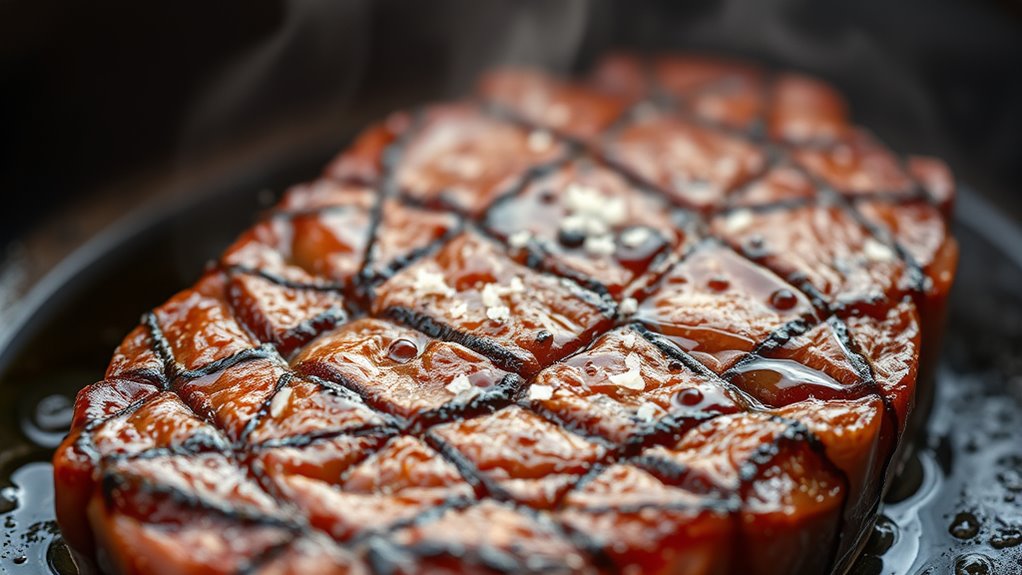

To achieve the perfect brown crust when searing meat, start with a hot, preheated skillet over medium-high heat. Pat the meat dry after marinating, then place it in the pan without moving it for a few minutes to allow a crust to form. Flip it only when it releases easily. Remember to maintain high heat and consider finishing thicker cuts in the oven for even cooking. Stick around, and you’ll learn more tips for mastering this technique.

Get kitchen gear delivered free — and shop member deals
- Fast, free delivery on millions of items
- Access to Prime Big Deal Days deals on October 6–7
- Prime Video, Amazon Music and more included
Key Takeaways
- Preheat your skillet or grill to medium-high or high heat to ensure a proper sear and avoid steaming.
- Use a marinade with acidic ingredients and oils, then pat meat dry to enhance flavor and crust formation.
- Place the meat in the hot pan and resist moving it to allow a crust to develop; flip when it releases easily.
- Maintain consistent high heat throughout the searing process for even browning and optimal flavor.
- For thick cuts, consider finishing in the oven to ensure the inside is cooked without burning the exterior.

When you sear meat, you’re not just cooking; you’re creating a flavorful crust that locks in juices and enhances the overall taste. The process of searing involves applying high heat to the meat’s surface, allowing those natural sugars and proteins to caramelize. This browning effect not only adds depth to the flavor but also gives your dish an appealing aesthetic. To achieve that perfect sear, you need to focus on two key elements: the right cooking temperature and the marinade flavors.
First, let’s talk about cooking temperature. You want your pan or grill to be hot—really hot. If you’re using a skillet, preheat it over medium-high to high heat for several minutes. You can test if it’s ready by flicking a few drops of water onto the surface; they should sizzle and evaporate immediately. This high temperature creates that beautiful crust. If your pan isn’t hot enough, your meat will end up steaming rather than searing, resulting in a less-than-ideal texture and flavor.
To achieve a perfect sear, ensure your pan is extremely hot to create a flavorful crust.
Now, let’s delve into marinade flavors. Marinades can elevate searing by infusing the meat with additional tastes before it hits the heat. When you marinate, you’re not only adding flavor but also tenderizing the meat. A combination of acidic ingredients like vinegar or citrus, oils, and spices works wonders. Just remember that certain marinades can burn if they contain high sugar content, so keep an eye on your meat as it cooks. A good rule of thumb is to pat the meat dry after marinating; this prevents excess moisture from interfering with that nice, crusty exterior.
As you place the meat in the hot pan, resist the urge to constantly move it around. Let it sit for a couple of minutes, allowing that crust to form. You’ll know it’s time to flip when the meat releases easily from the surface. If it sticks, give it a little more time. Once flipped, allow the other side to sear as well.
After achieving that perfect golden-brown crust, consider finishing your meat in the oven if it’s thick. This way, you can make certain it cooks through without burning the outside. Searing isn’t just a technique; it’s an art that transforms simple ingredients into a culinary masterpiece. With practice, you’ll master the balance of temperature and flavors, turning every meal into a delightful experience.
Frequently Asked Questions
What Type of Pan Is Best for Searing Meat?
The best pans for searing meat are cast iron and stainless steel. Cast iron retains heat exceptionally well, giving you that beautiful brown crust you want. It’s perfect for high-heat cooking. On the other hand, stainless steel is great for its durability and even heat distribution. Both options work well, so choose based on your preference. Just make sure to preheat your pan adequately to achieve that perfect sear every time!
How Do I Know When the Meat Is Ready to Flip?
You’ll know the meat is ready to flip when it releases easily from the pan and has a nice brown crust. Check the cooking temperature—aim for around 130°F for medium-rare. Gently press the meat to assess its tenderness; it should feel firm but springy. If it sticks or feels mushy, it needs more time. Trust your instincts, and don’t rush the process for that perfect sear!
Can I Marinate Meat Before Searing?
Absolutely, you can marinate meat before searing. Think of marinade effects as a warm hug that enhances flavor and tenderness. Just be mindful of your marinating duration; too long can make the meat mushy. A few hours to overnight is ideal, depending on the marinade’s acidity. This pre-searing step infuses rich flavors, making your final dish even more delightful. So go ahead, elevate your meat with a marinade and enjoy the results!
Should I Oil the Meat or the Pan?
You should oil the pan rather than the meat. This method helps maintain the right cooking temperature and guarantees the meat sears properly without sticking. Before you heat the pan, season the meat with your preferred seasoning techniques; this enhances flavor and allows for an even crust. When the oil shimmers, add the meat, and you’ll achieve that perfect sear. Remember, the right approach makes all the difference!
How Do I Clean My Pan After Searing?
Cleaning your pan after searing can feel like battling a dragon, but it’s easier than you think! Start by letting the pan cool slightly, then pour in some warm water to loosen the stuck bits. Use a wooden spatula to scrape away residue, and if needed, sprinkle in some baking soda for extra power. Rinse it clean, and don’t forget to season it lightly before the next cooking adventure at high temperatures!
Conclusion
So there you have it—searing meat is practically an Olympic sport. With your newfound skills, you’ll impress your friends, who’ll think you’re a culinary genius, while secretly you’re just a glorified meat magician. Remember, if it doesn’t sizzle, it’s just sad. So fire up that pan, embrace the smoke alarms, and revel in your quest for the perfect brown crust. After all, who needs a Michelin star when you can have a perfectly seared steak?
Fall Picks
fall essentials
As an affiliate, we earn on qualifying purchases.