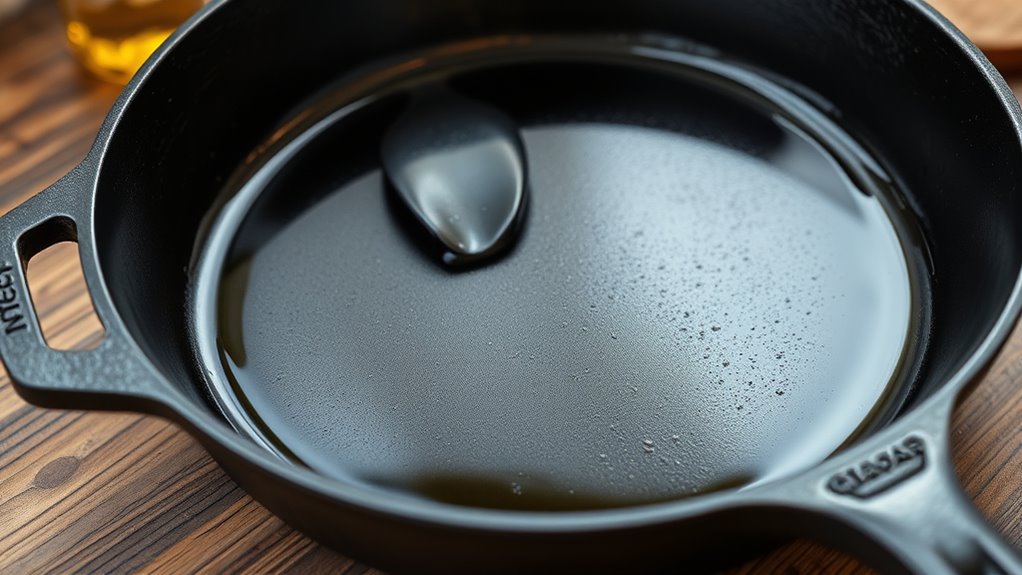

To properly season your cast iron skillet, start by cleaning it thoroughly to remove rust and debris, then dry it completely. Apply a thin, even layer of high smoke point oil, covering all surfaces including the handle. Bake the skillet upside down at around 450°F for an hour, then let it cool. Regularly maintain by applying light oil after each use and storing it in a dry place. Keep observing for issues to keep your skillet in top shape.
Key Takeaways
- Clean the skillet thoroughly with hot water and a stiff brush, removing rust and debris before seasoning.
- Apply a very thin, even layer of high smoke point oil across all surfaces of the skillet.
- Bake the skillet upside down in a preheated oven at around 450°F for about an hour to build a durable seasoning layer.
- After use, wipe with a light coat of oil to maintain the seasoning and prevent rust.
- Regularly inspect and re-season as needed, especially after rust removal or if the surface becomes dull or sticky.
Preparing Your Skillet Before Seasoning

Before you begin seasoning your cast iron skillet, it’s important to start with a clean surface. Remove any rust, debris, or old food residue by scrubbing with hot water and a brush or steel wool. Once the skillet is dry, you can consider the oil types for seasoning—vegetable oil, flaxseed oil, or shortening work well because of their high smoke points. The choice of oil affects the seasoning duration; some oils require a longer bake time to build a durable layer. Make sure the skillet is completely dry before applying oil, as moisture can interfere with proper seasoning. Taking these steps guarantees a smooth start, creating a foundation for a seasoned skillet that will improve with each use. Additionally, proper cleaning methods are essential for maintaining the seasoning and longevity of your cast iron skillet over time. Regular cleaning with gentle scrubbing and avoiding harsh detergents helps preserve the seasoned surface and prevents rust, which is crucial for preventing corrosion. Using proper storage techniques can further protect your skillet from moisture and potential damage, extending its lifespan and ensuring it remains in excellent condition for years to come.
Applying the First Layer of Oil
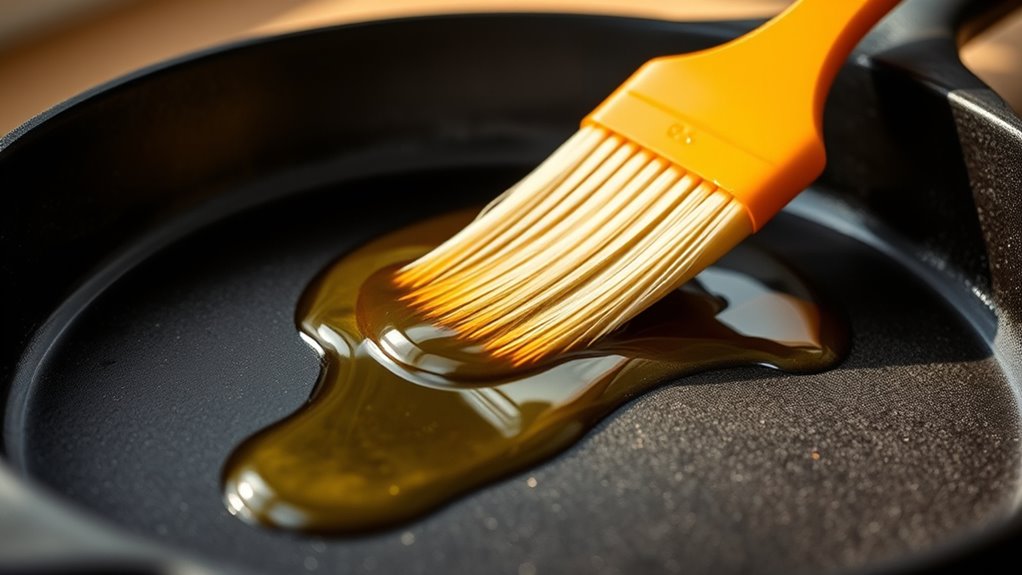
Start by choosing an oil with a high smoke point, like flaxseed or grapeseed oil, to guarantee a durable coating. Then, apply a thin, even layer across the entire skillet, making sure to cover all surfaces. Finally, heat the skillet in the oven to cure the oil properly and create a strong, non-stick surface.
Choose the Right Oil
Choosing the right oil is essential for a successful seasoning, as it forms the foundation of a durable, non-stick surface. You want an oil with a high smoke point to prevent smoking during heating, which can lead to uneven seasoning. Oils like flaxseed, vegetable, or canola are popular choices because they tolerate high temperatures without smoking excessively. When selecting oil, check its smoke point to ensure it won’t burn or produce unwanted flavors. Using an oil with a low smoke point can result in a sticky, uneven coating or a burnt smell. By choosing an oil suited for high heat, you help create a smooth, resilient seasoning layer that bonds well to the skillet’s surface, ensuring long-lasting non-stick performance. Additionally, selecting an oil with a high smoke point is crucial for achieving a proper seasoning that withstands regular cooking use. Understanding the chemical properties of the oil can also influence how well the seasoning bonds and how durable it will be over time.
Apply Thin, Even Coats
After selecting a high-smoke-point oil, it’s important to apply it correctly to guarantee a strong, even seasoning layer. Start by pouring a small amount of oil onto the skillet’s surface. Use a cloth or paper towel to spread it evenly, ensuring a thin, uniform coating. Proper oil application relies on controlling the coating thickness; too thick, and it may lead to uneven seasoning or tackiness. To help visualize, consider this table:
| Coating Thickness | Result |
|---|---|
| Thin | Even seasoning, minimal buildup |
| Moderate | Risk of uneven spots, longer curing time |
| Thick | Sticky surface, potential flaking |
Additionally, controlling the Free Floating can help prevent excess oil buildup and promote a more durable seasoning. Regularly inspecting and adjusting the seasoning layer ensures optimal performance and longevity of your skillet.
Heat for Proper Curing
Heating the skillet properly is essential to make certain the oil bonds effectively during curing. Proper temperature control ensures the oil reaches the ideal range without exceeding its smoke point, which can cause uneven curing or damage the seasoning. To achieve the best results:
- Preheat your oven or stovetop gradually, monitoring the temperature closely.
- Use an oil with a high smoke point, like flaxseed or vegetable oil, to prevent burning.
- Heat the skillet until it just starts to smoke lightly, then remove it from the heat immediately.
This process helps create a durable, non-stick surface by allowing the oil to polymerize correctly. Maintaining control over temperature and smoke points during curing guarantees a smooth, long-lasting seasoning layer.
Baking the Skillet for a Durable Coating
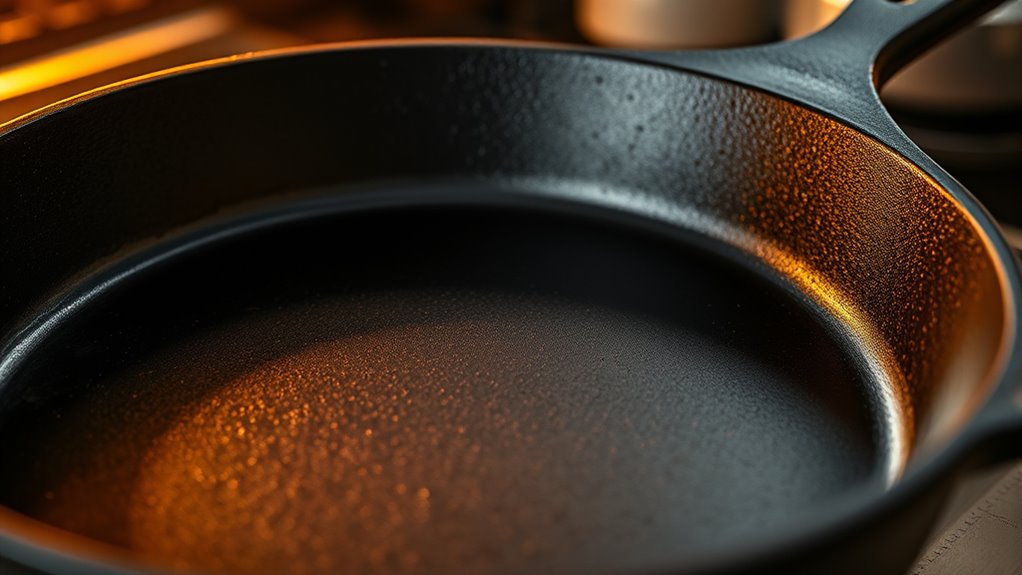
Baking the skillet is an essential step in creating a durable, non-stick coating. To do this effectively, set your oven to around 450°F (232°C), ensuring the heat is high enough to bond the seasoning. Choose the right oil type—curing oils like flaxseed or grapeseed work best because they polymerize well under heat. Apply a thin, even layer of oil over the entire skillet, including the handle and exterior. Place the skillet upside down in the oven to prevent excess oil from pooling, with a sheet of foil on the rack below to catch drips. Bake for about an hour, then turn off the oven and let the skillet cool inside. Proper heat distribution during baking ensures an even seasoning layer, enhancing the skillet’s performance and longevity. Additionally, maintaining consistent temperature control throughout the process helps develop a smooth, durable surface that improves with each use.
Regular Maintenance and Re-Seasoning
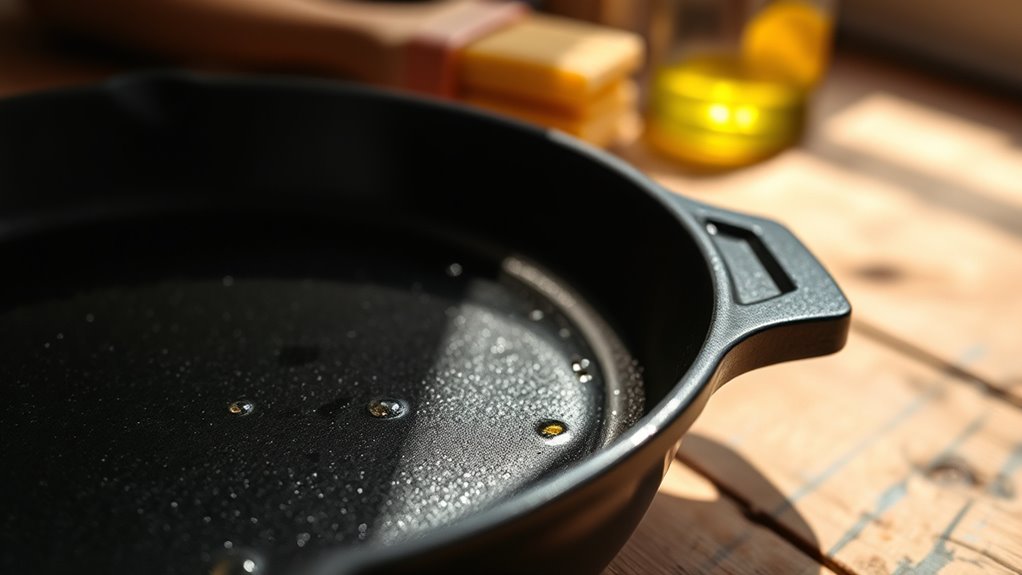
Maintaining your cast iron skillet’s non-stick surface requires regular upkeep and occasional re-seasoning. Proper metal care helps prevent rust and ensures longevity. To keep your skillet in top shape, follow these steps:
- Regularly apply a thin layer of oil after use to maintain the seasoning and protect against moisture.
- Store in a dry place, and consider placing a paper towel between the skillet and lid to prevent rust.
- Re-season the skillet every few months or after any rust removal, baking it at 450°F with a light coat of oil to restore its natural non-stick surface.
- Embrace seasoning techniques about your cookware’s materials and maintenance techniques to deepen your understanding and improve your care routine. This helps you adapt your care routine based on the specific type of oil or seasoning method used. Additionally, utilizing smart home automation can remind you to perform regular seasoning and maintenance tasks, ensuring your skillet stays in optimal condition. Regular cleaning and proper storage are also essential components of effective cast iron care.
Consistent care preserves your skillet’s seasoning, prevents rust, and keeps it performing beautifully for years.
Cleaning and Storing Your Cast Iron
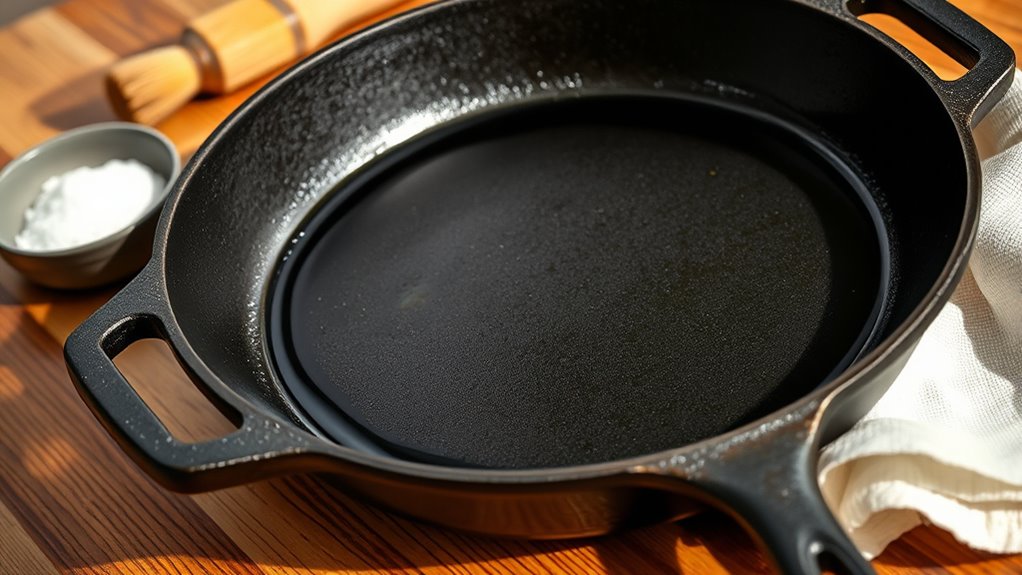
Cleaning and storing your cast iron skillet properly is essential to preserve its seasoning and prevent rust. After cooking, clean your skillet with warm water and a stiff brush or non-abrasive scrubber. Avoid using soap or dishwasher, as these can strip the seasoning. For stubborn residue, scrub with coarse salt and a damp cloth, then rinse thoroughly. Dry the skillet immediately with a towel or place it on low heat to evaporate remaining moisture. Proper cast iron cleaning prevents rust and maintains the seasoning layer. When storing, keep your skillet in a dry place, and if stacking with other cookware, place a paper towel or cloth inside to absorb moisture and prevent scratches. These storage tips help keep your skillet in excellent condition for years to come. Regularly inspect your cookware to catch any signs of rust early and address them promptly. Additionally, applying a light oil coating before storage can help protect the surface from moisture and maintain the seasoning. Regular seasoning maintenance and proper storage techniques are crucial for longevity, and understanding the proper cleaning methods can help extend your skillet’s life for generations.
Troubleshooting Common Seasoning Issues

If your skillet has sticky residue or uneven seasoning, don’t worry—these issues are common and fixable. Peeling or flaking can also happen if the layer wasn’t applied or cured properly. Let’s walk through how to identify and resolve these seasoning problems to keep your cast iron in top shape. To prevent recurring issues, it’s important to understand proper seasoning techniques and maintenance routines. Additionally, maintaining a proper cleaning method helps preserve the seasoning and prevents damage over time. Incorporating ventilation considerations can also help with humidity control, which influences seasoning quality and longevity. Regularly practicing mastering the art of bug out bags can also teach you about the importance of proper preparation and storage, which applies to seasoning your skillet as well. Proper material selection and understanding the intrinsic properties of cast iron are key to achieving a durable seasoning layer.
Sticky Residue Problems
Have you ever ended up with a sticky residue on your cast iron skillet after seasoning? This usually results from excess oil buildup or improper residue removal. To fix this, start by cleaning the skillet thoroughly. Here are some steps to follow:
- Use coarse salt and a stiff brush or scrubber to scrub away sticky residue.
- Rinse with hot water to remove loosened oil and debris.
- If residue persists, apply a small amount of dish soap, scrub again, then rinse thoroughly.
Avoid using too much oil during seasoning, as excess oil can cause stickiness. Regular maintenance and proper residue removal prevent oil buildup, ensuring your skillet develops a smooth, durable seasoning layer.
Uneven Seasoning Layers
Uneven seasoning layers often happen when you don’t apply oil evenly or skip multiple thin coats during the seasoning process. If you notice patches that are dull or sticky, it means the oil application wasn’t consistent. To fix this, remove the skillet’s current seasoning by scrubbing it with steel wool or oven cleaner, then dry it thoroughly. When reseasoning, apply a very thin, even layer of oil using a cloth or paper towel. Make sure to cover all surfaces smoothly, avoiding excess oil that can cause uneven layers. Bake the skillet at the recommended temperature, and repeat the process if needed. Proper oil application with consistent, thin coats is key to developing a smooth, even seasoning layer that improves with use.
Peeling or Flaking
Peeling or flaking seasoning often occurs when the oil layer wasn’t properly bonded to the skillet’s surface, usually because it was applied too thickly or the skillet wasn’t heated enough during seasoning. This can lead to spots where the seasoning flakes off, exposing bare metal and increasing the risk of rust formation. To fix this, you should:
- Remove the loose flakes by scrubbing the skillet with steel wool or a stiff brush, ensuring all seasoning is stripped away.
- Reseason the skillet with a thin, even layer of oil, heating it slowly to promote bonding.
- Regularly maintain your skillet to prevent uneven seasoning and avoid seasoning removal, which can cause peeling or flaking. Proper care ensures a durable, non-stick surface.
Frequently Asked Questions
Can I Use Soap to Clean My Cast Iron Skillet?
Yes, you can use dish soap to clean your cast iron skillet, but it’s best to do so sparingly. Modern cleaning methods recommend a small amount of soap if needed, especially after cooking sticky or greasy food. Just scrub gently with a brush or sponge, rinse thoroughly, and dry immediately to prevent rust. Avoid harsh soaps or soaking, and always reseason lightly if you notice the skillet losing its non-stick surface.
How Often Should I Re-Season My Cast Iron Skillet?
You should re-season your cast iron skillet whenever the surface begins to look dull, shows signs of rust, or food starts sticking. Generally, this means seasoning frequency might be every few months or as needed. To maintain it, follow simple maintenance tips like cleaning properly, avoiding soap, and applying a thin layer of oil after use. Regular re-seasoning keeps your skillet non-stick and rust-free for years.
Is It Okay to Cook Acidic Foods on a Seasoned Skillet?
Cooking acidic foods on a seasoned cast iron skillet is okay occasionally, but it can affect the seasoning durability over time. Acidic ingredients, like tomatoes or citrus, can break down the surface’s seasoning layer. To protect your skillet, limit acidic cooking or re-season it regularly. This way, you keep the seasoning intact and enjoy your skillet’s non-stick surface longer, ensuring your cast iron remains in great condition.
What Is the Best Type of Oil for Seasoning?
When it comes to seasoning, the best oils are those that polymerize well, creating a durable non-stick surface. Look for seasoning oils like flaxseed, vegetable, or canola oil, which are high in polyunsaturated fats. These oils form a tough, protective layer, like a suit of armor. Steer clear of heavily processed or low-smoke point oils, as they can turn your skillet into a sticky mess instead of a culinary treasure chest.
How Do I Remove Rust From My Cast Iron Skillet?
To remove rust from your cast iron skillet, use a steel wool or a stiff brush to scrub away the rust spots. Rinse with water, then dry thoroughly to prevent further rusting. Apply a thin layer of oil before storing to help with rust prevention techniques. Regularly maintaining your skillet by keeping it dry and seasoned will keep it rust-free and in great condition over time.
Conclusion
With proper seasoning, your cast iron skillet transforms into a trusty, non-stick companion that’s as resilient as a seasoned warrior. Keep up with regular maintenance, and you’ll carve out a lifetime of perfectly cooked meals. Think of your skillet as a canvas—each layer of oil and seasoning adding to its story. Treat it well, and it’ll serve you deliciously for generations, a timeless treasure that only gets better with age.